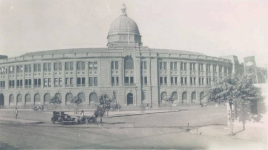
The maritime history of Karachi Port, colonial evolution and a story untold from official records...
By 1852, Karachi had established itself as a major international seaport.
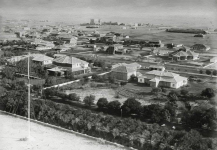
The early infrastructure of the modern port was shaped by the construction of the Napier Mole, the Napier Bridge, the Native Jetty, and the China Creek.
In 1882, the regular construction of the Harves began, which was completed by 1914 to the final completion of the East Wharf and the Napier Mole Boat Wharf. Later, between 1927 and 1944, the expansion of the wharf's repair shops, including the Lighter Births and the Ship Repairers' Quarters, further consolidated Karachi Port as the region's central maritime and commercial hub.
The Port of Karachi, in its form as 'Ghas Bandar'
٭٭٭٭٭٭٭٭٭٭٭٭٭٭٭٭
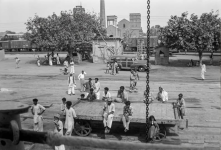
The Port of Karachi is essentially composed of three major complexes: the Wharf, the Oil Terminal, and the East Wharf of the Wharf. Of these, the East Wharf is the most modern, busiest, and busiest dock, housing 17 official berths. In addition to these 17 official berths, there is another ancient dock within the port limits, locally known as 'Ghas Bandar'—this is the site that was previously used as a center for local fishing and fishing before the arrival of the British in 1839.
"Ghas Bandar" serves as a mandatory and essential platform for Karachi Port Trust, from where export cargo is dispatched to the Middle East via old wooden launches.
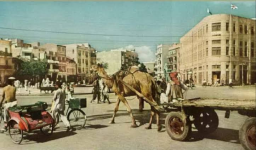
Historically, camels, goats, and organic fertilizers have been included in this traditional export trade, which has been a staple in the local economy.
This place, located near the port, is a well-known crossroads and a symbol of the region, which has been referred to as "Ghas Bandar" in English writings; however, officially, no birth name is formally listed as "Ghas Bandar" in the port's official maps or records of the Karachi Port Trust.



 Federal cabinet gives nod to imposition of emergency in KP; summary sent to president (13 Viewers)


 Makkah Defence Alliance: Turkey, Saudi Arabia, and Pakistan, news & updates (49 Viewers)