ghazi52
THINK TANK: CONSULTANT


- Thread starter
- #781
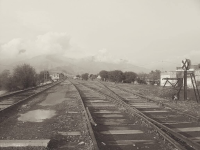
Malakand Pedia - When the Nowshera-Dargai Railway Line was formally inaugurated.
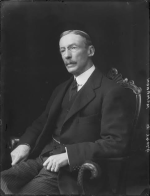
Sir Arthur Henry McMahon, Political Agent of the Malakand Agency, records in his Malakand diary dated 9 January 1901 that on 1 January 1901, I inaugurated the Nowshera-Dargai Railway Line and travelled to Dargai in the first train.
Security arrangements:
I discussed the arrangements with the railway officers who have today taken over the line from the civil engineers, so that levies can be posted to protect the Dargai Railway Station and Lakhora Bridge.
These British officers expressed surprise that they came to know for the first time today that the railway line has gone beyond the boundaries of British territory.
Station condition:
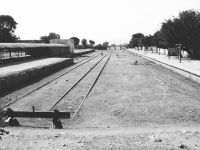
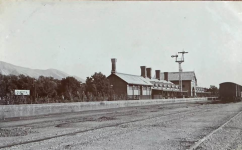
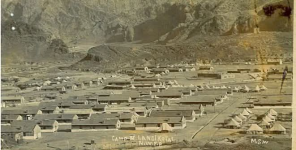
At present, Dargai Station consists of a few tents pitched in the open field, which is some distance from the existing fort. A new fort is being built which will serve as a strong defensive railway station.
Public Interest:
The local people are taking a great interest in the railway. Many people are having to stop at every station due to lack of space in the train.
Sir Arthur Henry McMahon further writes that on February 9th,
the Manager of the North Western Railway visited Durgai to inspect the new Nowshera-Durgai railway line. I recently felt it necessary to inform him that the inadequate quantity of rolling stock (rail cars and other equipment) on this line is causing serious difficulties to passengers and traders.
The passenger carriages are so small that 40 or more people are being pushed into compartments that can accommodate 21 people. Although additional freight wagons have been added to carry passengers, many passengers are still left on the platforms at various stations. The fight for seats is often very fierce.
The levy guard posted on the Durgai platform even approached the higher authorities to ask whether he was authorized to fire on the unruly crowd!
The traders are not yet using this line much, but despite this, the goods remain at each station for a long time because they cannot be removed in time. The available rolling stock on this line seems to be very inadequate to meet the traffic requirements.
The manager of the North Western Railway told me that every effort will be made to solve this problem and has proposed to run a second train daily between Nowshera and Durgai, but due to shortage of rolling stock, it is very difficult to implement this.
In his diary for February 22nd, he writes that.
On February 22nd, Sir Arthur Henry McMahon left for Durgai to meet the manager of the North Western Railway, who had once again come to inspect the Nowshera to Durgai railway line.
He informed that a second daily train will be run between Nowshera and Dargai from March 1.
The pressure of passengers and freight on this new railway line is amazing.
The trains available at present (for passengers and freight) are grossly inadequate to meet the present requirement.
I am informed that more trains are being ordered from England.