Navigation
Install the app
How to install the app on iOS
Follow along with the video below to see how to install our site as a web app on your home screen.
Note: This feature may not be available in some browsers.
More options
Style variation
You are using an out of date browser. It may not display this or other websites correctly.
You should upgrade or use an alternative browser.
You should upgrade or use an alternative browser.
Operation Ghazab Lil Haq (Pakistan - Afghanistan War)
- Thread starter ghazi52
- Start date
More options
Who Replied?


ghazi52
THINK TANK: CONSULTANT
- Thread starter
- #2,149
The atmosphere earlier yesterday had been markedly positive, with participants describing “encouraging progress” and “serious engagement” from both delegations.
However, by nightfall, it appeared that the process had once again hit a roadblock. According to the participants, the Afghan Taliban delegation continued to resist putting anything in writing, especially on the issue of providing verifiable guarantees to end support for the TTP.
“We kept hoping that we would be able to sign a mutual document with Afghanistan soon, followed by a joint statement, but it still remains out of our reach,” one source said yesterday.
“The hosts understand Pakistan’s concerns,” one Pakistani official said, “but people in Kabul and Kandahar are not willing to commit“.
“It is a difficult phase,” another source admitted, reflecting the growing sense of frustration within the room as stalemate persisted.
“The Afghan side has made it clear that tensions benefit no one,” one member of the delegation said. “We are hopeful that these talks will produce a positive outcome.”
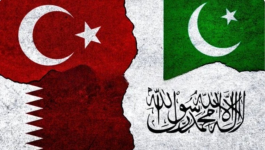
Mediators from Turkiye and Qatar were said to share this sentiment. “Even if the talks didn’t produce a breakthrough, the fact that both sides stayed engaged for three straight days is important,” one mediator said. “It shows that neither wants the process to collapse.”
The tone on Monday contrasted with the pessimism that followed Sunday’s nine-hour discussions, when Pakistani officials said Islamabad had presented its final position to the Taliban delegation. “Pakistan has made it clear that the ongoing patronage of terrorists by the Afghan Taliban is unacceptable,” a senior security official had said.
However, by nightfall, it appeared that the process had once again hit a roadblock. According to the participants, the Afghan Taliban delegation continued to resist putting anything in writing, especially on the issue of providing verifiable guarantees to end support for the TTP.
“We kept hoping that we would be able to sign a mutual document with Afghanistan soon, followed by a joint statement, but it still remains out of our reach,” one source said yesterday.
“The hosts understand Pakistan’s concerns,” one Pakistani official said, “but people in Kabul and Kandahar are not willing to commit“.
“It is a difficult phase,” another source admitted, reflecting the growing sense of frustration within the room as stalemate persisted.
“The Afghan side has made it clear that tensions benefit no one,” one member of the delegation said. “We are hopeful that these talks will produce a positive outcome.”
Mediators from Turkiye and Qatar were said to share this sentiment. “Even if the talks didn’t produce a breakthrough, the fact that both sides stayed engaged for three straight days is important,” one mediator said. “It shows that neither wants the process to collapse.”
The tone on Monday contrasted with the pessimism that followed Sunday’s nine-hour discussions, when Pakistani officials said Islamabad had presented its final position to the Taliban delegation. “Pakistan has made it clear that the ongoing patronage of terrorists by the Afghan Taliban is unacceptable,” a senior security official had said.
ghazi52
THINK TANK: CONSULTANT
- Thread starter
- #2,150
Pak-Afghan talks in Istanbul may resume if Kabul signals shift in attitude: Defence Minister Asif
Dawn.com | Abdullah Momand
Published October 30, 2025
Defence Minister Khawaja Asif on Thursday said talks between Pakistan and Afghanistan on cross-border terrorism could resume if Kabul signalled a shift in its attitude.
Discussions between Pakistani and Afghan Taliban delegations had begun in Istanbul on Saturday, but Islamabad’s long-standing concern of terror attacks emanating from Afghanistan had been a bone of contention, resulting in a stalemate.
“While the talks have not begun [again], our delegation is still in Istanbul,” Asif said in an exclusive interview with Geo News.
He added that “discussions could still restart” if there was “some development that indicates a material change in Kabul’s attitude on the insistence of these two friendly countries (Turkiye and Qatar)”.
“Our stance, that there will not be any attacks on us (Pakistan) from their land and they will not back such attacks, is a sticking point. If an understanding can be reached on that, [well and good], it will be a good thing,” Asif said.
The minister noted, “There has been no breakthrough so far. There has been no development that you can have high hopes from.”
However, he added that the defence ministers and intelligence chiefs of the mediating countries were making efforts to end the stalemate in talks.
Asif said the Pakistani delegation had even reached the airport in Istanbul to depart, but a request was made by Turkiye and Qatar to “give us one more chance”. He said Turkish officials offered to speak to Kabul’s delegation and “pave a way out”.
The minister noted that bilateral trade and investment should take place, but added that it was in the “hands of Kabul if it wanted to play a constructive role in this”.
ghazi52
THINK TANK: CONSULTANT
- Thread starter
- #2,151
A security official said the Pakistani delegation in Istanbul was about to return, but would extend its stay there.
However, the source stressed that the discussions will be held on Pakistan’s “main demand” that Afghanistan takes “clear, verifiable and effective action” against terrorists.
It was decided to “give another chance to peace” by continuing the talks, the security official said. They added that Pakistan again underscored that Afghan soil will not be used to carry out terrorist attacks against Pakistan.
Pakistan has witnessed a rapid deterioration in ties with Afghanistan, with both sides over the past few weeks engaging in border skirmishes, counter-statements and allegations.
A first round of Pak-Afghan talks mediated jointly by Qatar and Turkiye in Doha on October 18-19 had extended an initial 48-hour truce between the neighbouring countries. The Doha talks had come after days of fighting along the Pak-Afghan border and strikes by Islamabad on Gul Bahadur group camps in Afghanistan.
The second round of dialogue in Istanbul failed to “bring about any workable solution”, Information Minister Attaullah Tarar said late on Wednesday after four days of deliberations. The statement was followed by strongly worded remarks by Asif, who warned Kabul of strikes deep in Afghanistan if terrorist activities continued to target Pakistan.
However, the source stressed that the discussions will be held on Pakistan’s “main demand” that Afghanistan takes “clear, verifiable and effective action” against terrorists.
It was decided to “give another chance to peace” by continuing the talks, the security official said. They added that Pakistan again underscored that Afghan soil will not be used to carry out terrorist attacks against Pakistan.
Pakistan has witnessed a rapid deterioration in ties with Afghanistan, with both sides over the past few weeks engaging in border skirmishes, counter-statements and allegations.
A first round of Pak-Afghan talks mediated jointly by Qatar and Turkiye in Doha on October 18-19 had extended an initial 48-hour truce between the neighbouring countries. The Doha talks had come after days of fighting along the Pak-Afghan border and strikes by Islamabad on Gul Bahadur group camps in Afghanistan.
The second round of dialogue in Istanbul failed to “bring about any workable solution”, Information Minister Attaullah Tarar said late on Wednesday after four days of deliberations. The statement was followed by strongly worded remarks by Asif, who warned Kabul of strikes deep in Afghanistan if terrorist activities continued to target Pakistan.
ghazi52
THINK TANK: CONSULTANT
- Thread starter
- #2,152
Obstacles in reaching agreement
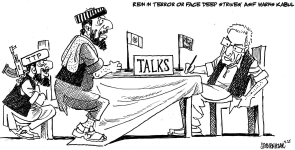
According to Asif, the Afghan Taliban acknowledged that the banned Tehreek-i-Taliban Pakistan (TTP) must be stopped from carrying out attacks and “that they use our (Afghan) soil”.However, the other side “was not ready” to give the assurance in writing, despite agreeing with them, the minister told reporters at Parliament House yesterday.
Asif stated that Pakistan was not offered to include the TTP in the talks, and even if it had been, the proposal would not have been accepted. He said the Afghan delegation was in continuous contact with Kabul, which was colluding with India and preventing an agreement.
In a separate interview with Al Arabiya, the minister said he had evidence to back his assertions that New Delhi was “pulling the strings” during talks with Taliban representatives in Doha and Turkiye.
Asif asserted that “India is actually waging a low-intensity war against us from the Afghan territory and trying to settle the score“ after the May conflict with Pakistan, where it was “defeated”.
The talks in Turkiye had began with the aim of finalising a mechanism to monitor Afghan Taliban actions aimed at preventing cross-border terrorist attacks.
The agenda included dismantling known TTP sanctuaries, arresting or expelling key figures and defining clear timelines and benchmarks for measurable action such as raids, arrests and destruction of safe houses.
ghazi52
THINK TANK: CONSULTANT
- Thread starter
- #2,153
To ensure implementation, Islamabad had planned to propose mechanisms for intelligence-sharing, cross-border coordination and real-time monitoring of militant movements and financing.
Pakistan also supports establishing a third-party oversight structure, potentially co-chaired by Turkiye and Qatar, to verify progress and address non-compliance.
Additional priorities included securing Afghan assurances against providing safe havens to hostile groups, strengthening border control, ensuring financial transparency on militant funding and holding regular review meetings to assess compliance.
Pakistan also supports establishing a third-party oversight structure, potentially co-chaired by Turkiye and Qatar, to verify progress and address non-compliance.
Additional priorities included securing Afghan assurances against providing safe havens to hostile groups, strengthening border control, ensuring financial transparency on militant funding and holding regular review meetings to assess compliance.
ghazi52
THINK TANK: CONSULTANT
- Thread starter
- #2,155
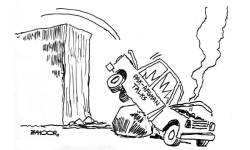
 Terrorism from Afghan soil is unacceptable. Pakistan’s red lines are non-negotiable. Dialogue — yes, but only for firm guarantees, not optics.
Islamabad’s approach remains principled, not pressured —firm on sovereignty, focused on a peaceful, stable, terror-free region.
ghazi52
THINK TANK: CONSULTANT
- Thread starter
- #2,156
Failed talks
EditorialOctober 30, 2025
DESPITE the efforts of friendly states to broker a long-term peace and resolve differences between Pakistan and Afghanistan through dialogue, the talks between Islamabad and Kabul in Istanbul have collapsed.
According to Pakistani officials, the Afghan Taliban’s stubbornness is to blame for the failure. In particular, the Taliban’s refusal to give ironclad, verifiable guarantees that their soil will not be used against Pakistan by terrorist groups such as the TTP proved to be the biggest stumbling block towards an agreement.
From this point, we stand at a delicate juncture. The defence minister has used strong language, vowing to strike Afghanistan in case of further terrorist attacks, while also observing that Pakistan’s western neighbour had become a “congregation of international terrorism”. The UN, meanwhile, has observed that even through dialogue may have collapsed, it is hoped that there would be no fresh hostilities between the two states.
The sense of betrayal in Pakistan at the Taliban’s intransigence is understandable. Ever since the hard-line movement was formed in the mid-1990s, the Pakistani state has kept channels open with its leadership. This country was one of only three in the international community to recognise the earlier Taliban regime in Kabul.
Many senior Taliban leaders are believed to have sought refuge in Pakistan after the US invasion in 2001. And after the Taliban successfully took Kabul in 2021, the then ISI chief was snapped in the Afghan capital having tea.
Even aside from the Taliban, Pakistan has hosted millions of Afghan refugees from the days of the Soviet invasion to the present. Therefore, the fact that the Taliban were unwilling to stop their TTP ‘guests’ and other terrorist groups from attacking Pakistan has justifiably struck a raw nerve in Islamabad.
ghazi52
THINK TANK: CONSULTANT
- Thread starter
- #2,157
As per the defence minister, an agreement was close at the Istanbul talks, but the Taliban negotiators could not get the nod from Kabul. He also added that Kabul was apparently following the Indian line. It is a fact that from being foes, New Delhi and the Taliban have suddenly warmed to each other; it would not be wrong to say that India is cultivating the Taliban to pressurise Pakistan.
At this stage, there are few good choices for Pakistan. The state should certainly keep its guard up, and infiltration attempts by terrorists based in Afghanistan must be thwarted. The defence of the country is non-negotiable. Yet, diplomatic efforts should also continue. It must be remembered that Afghanistan-based terrorism threatens the whole region, not just Pakistan.
Therefore, a regional approach to tackle the problem could bear results. The Taliban need Chinese and Russian investment and recognition, therefore together with these and other friendly states, Pakistan must continue diplomatic efforts until the Taliban disown their terrorist friends.
At this stage, there are few good choices for Pakistan. The state should certainly keep its guard up, and infiltration attempts by terrorists based in Afghanistan must be thwarted. The defence of the country is non-negotiable. Yet, diplomatic efforts should also continue. It must be remembered that Afghanistan-based terrorism threatens the whole region, not just Pakistan.
Therefore, a regional approach to tackle the problem could bear results. The Taliban need Chinese and Russian investment and recognition, therefore together with these and other friendly states, Pakistan must continue diplomatic efforts until the Taliban disown their terrorist friends.
ghazi52
THINK TANK: CONSULTANT
- Thread starter
- #2,158
Eagle Eye
@zarrar_11PK
Istanbul Talks: Interim Agreement and Progress Towards Peace in the Region
 For last six days Pakistan and Afghan Taliban delegations remained involved in highly significant negotiations in Istanbul. For Pakistan the sole aim of the negotiations was to achieve progress on a single key demand: effectively preventing Afghan soil from being used for terrorism against Pakistan, and taking decisive action against Indian-backed terrorist groups, particularly Tehreek-e-Taliban Pakistan (TTP) and Balochistan Liberation Army (BLA).
On multiple occasions these negotiations appeared to stall. On 29 October, when the deliberations failed to make any headway, the Pakistani delegation prepared to leave Istanbul. However, at the request of the hosts, Turkey and Qatar, and following an appeal from the Afghan Taliban delegation, Pakistan once again agreed to continue the negotiation process to give peace another chance.
On resumption of talks on 30th afternoon, an interim mutual agreement has been reached. Key points are as follows:-
1. All parties agreed to conduct negotiations with the aim of consolidating the ceasefire agreed upon in Doha.
2. All parties reaffirmed their commitment to maintain ceasefire. However, this consent is conditional on the non-occurrence of terrorism against Pakistan from Afghan territory: this means that the Afghan Taliban will take clear, verifiable, and effective action against terrorist groups that is Fitna al-Khawarij and Fitna al-Hindustan).
3. The next meeting will be held in Istanbul on November 6 to finalize details and reach an implementation mechanism.
4. A joint monitoring and verification mechanism will be established, which will not only ensure peace but also have the authority to penalize any party that violates the agreement.
5. Turkey and Qatar have appreciated the active participation of both parties. They have assured that they will continue to cooperate with both sides for lasting peace and stability.
During the negotiations, the Pakistani delegation remained steadfast with arguments, evidence, and principled positions. The perseverance, insight, and logical basis on which the Pakistani delegation presented its demands was a prime example of professional excellence. Ultimately, the victory of public interest prevailed, and the Afghan delegation was compelled to agree to an interim settlement.
In this entire context, the interim progress achieved should be regarded as a positive milestone not only for the peoples of Pakistan and Afghanistan but also for peace, stability, and global security in the region.
This achievement is the result of steadfast reasoning, prudence, and commitment to national interest despite the obstacles. The seriousness, wisdom, and national dignity with which Pakistan participated in the negotiations are commendable.
At the same time, hosting and mediation by brother countries like Turkey and Qatar played a key role in making this interim success possible.
The state of Pakistan, leadership, and people will continue their efforts for peace, but this also constitutes a clear declaration that no compromise will ever be made on national sovereignty, national interest, and the safety of the people.
Pakistan's political and military leadership is united, determined, and fully aligned on this stance, assuring its nation that it will confront every internal and external threat with full preparedness, resources, and resolve.
3:52 PM · Oct 30, 2025
@zarrar_11PK
Istanbul Talks: Interim Agreement and Progress Towards Peace in the Region
For last six days Pakistan and Afghan Taliban delegations remained involved in highly significant negotiations in Istanbul. For Pakistan the sole aim of the negotiations was to achieve progress on a single key demand: effectively preventing Afghan soil from being used for terrorism against Pakistan, and taking decisive action against Indian-backed terrorist groups, particularly Tehreek-e-Taliban Pakistan (TTP) and Balochistan Liberation Army (BLA). On multiple occasions these negotiations appeared to stall. On 29 October, when the deliberations failed to make any headway, the Pakistani delegation prepared to leave Istanbul. However, at the request of the hosts, Turkey and Qatar, and following an appeal from the Afghan Taliban delegation, Pakistan once again agreed to continue the negotiation process to give peace another chance. On resumption of talks on 30th afternoon, an interim mutual agreement has been reached. Key points are as follows:-1. All parties agreed to conduct negotiations with the aim of consolidating the ceasefire agreed upon in Doha.
2. All parties reaffirmed their commitment to maintain ceasefire. However, this consent is conditional on the non-occurrence of terrorism against Pakistan from Afghan territory: this means that the Afghan Taliban will take clear, verifiable, and effective action against terrorist groups that is Fitna al-Khawarij and Fitna al-Hindustan).
3. The next meeting will be held in Istanbul on November 6 to finalize details and reach an implementation mechanism.
4. A joint monitoring and verification mechanism will be established, which will not only ensure peace but also have the authority to penalize any party that violates the agreement.
5. Turkey and Qatar have appreciated the active participation of both parties. They have assured that they will continue to cooperate with both sides for lasting peace and stability.
During the negotiations, the Pakistani delegation remained steadfast with arguments, evidence, and principled positions. The perseverance, insight, and logical basis on which the Pakistani delegation presented its demands was a prime example of professional excellence. Ultimately, the victory of public interest prevailed, and the Afghan delegation was compelled to agree to an interim settlement. In this entire context, the interim progress achieved should be regarded as a positive milestone not only for the peoples of Pakistan and Afghanistan but also for peace, stability, and global security in the region. This achievement is the result of steadfast reasoning, prudence, and commitment to national interest despite the obstacles. The seriousness, wisdom, and national dignity with which Pakistan participated in the negotiations are commendable. At the same time, hosting and mediation by brother countries like Turkey and Qatar played a key role in making this interim success possible. The state of Pakistan, leadership, and people will continue their efforts for peace, but this also constitutes a clear declaration that no compromise will ever be made on national sovereignty, national interest, and the safety of the people. Pakistan's political and military leadership is united, determined, and fully aligned on this stance, assuring its nation that it will confront every internal and external threat with full preparedness, resources, and resolve.3:52 PM · Oct 30, 2025
Users who are viewing this thread
Total: 86 (members: 0, guests: 86)
Pakistan Defence Latest


Country Watch Latest
-
Iran - Israel/US War: Israel-US declare war on Iran, Iran responds (780 Viewers)
- Latest: BananaRepublic
-
 UAE passport ranks world's most powerful in 2026, offering access to 182 destinations (9 Viewers)
- Latest: clutch
-

-

-
Latest Posts
-
Iran - Israel/US War: Israel-US declare war on Iran, Iran responds (780 Viewers)
- Latest: BananaRepublic
-

-
Makkah Defence Alliance: Turkey, Saudi Arabia, and Pakistan, news & updates (72 Viewers)
- Latest: KingQamaR
-

-
UAE passport ranks world's most powerful in 2026, offering access to 182 destinations (9 Viewers)
- Latest: clutch