Pakistan’s Military Campaign in Afghanistan Is Here to Stay
Pakistan’s recent strikes signal that it is prepared to take the fight directly to the Taliban leadership’s inner circle if the Taliban regime’s support for anti-Pakistan groups continues.
By Umair Jamal
March 16, 2026
Pakistan’s ongoing
military campaign in Afghanistan, which has now stretched into its fourth week, marks a departure from the sporadic border skirmishes between the two countries that defined Islamabad’s relations with the Afghan Taliban regime since their return to power in August 2021. What apparently began as targeted responses to cross-border attacks that Islamabad alleges emerge from Afghanistan has evolved into a sustained campaign, which appears to be aimed at dismantling the Taliban regime’s capacity to shelter and support anti-Pakistan militant networks.
Islamabad has named the ongoing operation “
Ghazab Lil Haq,” which means “Rage for the Righteous Cause.” The operation’s scope, intensity, and stated objectives suggest this is no fleeting retaliation but a new doctrinal baseline for dealing with Kabul as part of Islamabad’s new approach to deal with threats posed by the Tehreek-e-Taliban Pakistan (TTP).
The ongoing escalation unfolded in stages, and there are reasons to believe that Pakistan’s military campaign may not end anytime soon.
It started when Pakistan conducted airstrikes on TTP and Baloch militant targets on the Afghan side of the border more than three weeks ago. In response, the Afghan Taliban formally announced an
offensive against Pakistani positions by framing it as retaliation for those earlier strikes. The Taliban perhaps did not read the mood in Islamabad correctly and calculated that this was just another episode of contained border skirmishes, which they could later celebrate as a victory in the form of another ceasefire.
Islamabad, however, had other plans. It immediately launched its own campaign under Operation Ghazab Lil Haq, which had been in the works for some time. The focus of the operation has been precise. It has targeted arms storage sites, weapons depots, intelligence apparatus, fuel depots, air bases, military headquarters, and other infrastructure that sustains the Taliban regime’s ability to project power and perhaps protect allied groups such as the TTP.
So far, Pakistani forces have relied heavily on the air force for deep strikes. This has been further supplemented by the use of drones and long-range artillery. These standoff capabilities have allowed Islamabad to hit targets across multiple provinces in Afghanistan without committing large ground formations or troops.
The Taliban leadership appears to have been stunned by Pakistan’s response. They are ill-prepared to mount a conventional military response. For instance, the Taliban have attempted to retaliate occasionally by using rudimentary armed drones or by sporadic firing at border posts. These attempts, however, have been met with overwhelming military responses from Pakistan. Clearly, the asymmetry in capability is stark and can be seen from Pakistan’s ability to inflict
heavy damage on Taliban military infrastructure. Pakistan has, so far, shown no sign of easing the pace of its attacks or military campaign.
Amid the onslaught, Kabul has signaled a willingness to
open dialogue with Pakistan. Moreover, there have been other
backchannel efforts, including from China, to start dialogue between the two sides that could lead to another ceasefire. Islamabad, however, appears uninterested in talks at this stage.
Pakistan’s reluctance to enter into dialogue largely stems from its experience with four years of diplomatic efforts that ultimately yielded no results. These efforts failed to get Kabul to change its stance of support for the outlawed TTP and other terrorist groups operating from Afghan soil.
In the past, Pakistan has tried trade incentives, diplomatic backing, direct negotiations, and even mediation involving Qatar, Turkiye, Saudi Arabia, and China to engage the Afghan Taliban over the issue of the TTP. The goal was to persuade the Taliban to sever ties with the TTP and stop allowing the latter to use Afghan soil as a launchpad.
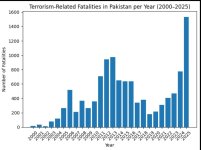
Instead, more than 4,000 Pakistani soldiers have died in attacks linked to Afghan-based militants during the last four years, when diplomacy remained the main means of dealing with Kabul. However, the Taliban’s policy has remained unchanged. The Taliban leadership continues to hedge its bets on the TTP as leverage against Islamabad. The fact that the TTP continues to receive support from the Afghan Taliban to conduct cross-border attacks in Pakistan is well documented and has even been noted by the
United Nations in its monitoring reports.
Pakistani leaders appear to have concluded that returning to the negotiating table after every skirmish with the Afghan Taliban simply restores the status quo. The Taliban have repeatedly portrayed ceasefires as victories forced upon Pakistan while they have conceded nothing in return. Moreover, even third-party involvement has failed to extract meaningful behavioral change in Kabul.
For instance, after more than three weeks of active hostilities, Kabul still insists on framing the fighting with Pakistan as a bilateral border dispute rather than acknowledging the militant sanctuaries that triggered it. For Islamabad, this denial only confirms that the Taliban remain unwilling to grasp the seriousness of the situation or the costs they are now incurring. From Islamabad’s perspective, these costs for the Taliban need to be raised further to force the Taliban into changing their approach toward the TTP.
This understanding appears to have hardened into a policy change in Pakistan.
Pakistan’s military campaign on March 14 entered a sharper phase when Pakistani strikes hit a military unit linked to Taliban Supreme Leader Hibatullah Akhundzada in Kandahar. The message from that strike was obvious — Pakistan is prepared to take the fight directly to the Taliban leadership’s inner circle if support for anti-Pakistan groups continues. This was not a reactive move but part of a broader strategic posture that has defined Pakistan’s latest military campaign. Islamabad’s policy is now clear: any future attack inside Pakistan will be answered inside Afghanistan by targeting those who enable the attackers.
The results on the ground point to Pakistan gaining the advantage. Since the operation began, TTP attacks inside Pakistan have dropped noticeably. Moreover, groups that rushed to announce solidarity attacks in support of the Afghan Taliban have so far failed to deliver anything significant.
Pakistani officials see these developments as validation of their policy change. For Islamabad, an intact Afghan military infrastructure near the border has translated directly into more organized and better-supported infiltration routes for militants. By systematically degrading border posts, training facilities and supply lines, Pakistan has disrupted the Taliban’s ability to facilitate cross-border movement with relative impunity.
There appears to be little room for dialogue or ceasefire unless the Taliban are prepared to deliver verifiable concessions, which include either handing over the TTP leadership or dismantling the networks that operate with their tacit approval. Anything short of that will only see the military pressure intensifying in Afghanistan.
It is unlikely that Islamabad is pursuing regime change in Kabul. Pakistan’s approach appears to be more calibrated and limited in scope, at least at this stage. By steadily raising the military costs, the campaign aims to exploit
existing fissures among Taliban leaders over differences on the question of relations with the TTP and internal power struggles that have simmered for years. For now, what is clear is that the era when the Taliban could extend safe haven to groups like the TTP without paying a price has ended.
Arguably, Pakistan’s leadership has learned through bitter experience that talks without leverage will not achieve much when dealing with the Afghan Taliban. Whether this new dynamic in the relationship compels a genuine policy shift in Kandahar and Kabul remains to be seen.
Pakistan’s recent strikes signal that it is prepared to take the fight directly to the Taliban leadership’s inner circle if the Taliban regime’s support for anti-Pakistan groups continues.
thediplomat.com