Operation Ghazab Lil Haq (Pakistan - Afghanistan War)

What I don't get is that they believe in pusthun and afghandu nationalism yet want to live in Pakistan???????.......if they love their ethno-nationalism and hate Pakistan so much then why don't they F**k off to afghandustan, india or WHEREVER else their ethnicity comes from. NO-ONE is forcing them to stay in Pakistan.

IF ANYONE is promoting ethnocentrism or advocating separatism in Pakistan then eliminate them, their supporters and families. Leave NO trace of their physical existence in this world. F**k all of them.

They want to merge KPK and Balochistan into Afghanistan so the afghan pashtuns can dominate Pakistani Pashtuns and the other ethnicities of Afghanistan so they can have full access to the coast.

Then they will start attacking Punjab and Sindh to loot Indus like they used to.

They became Bin Laden worshippers because he promised the talibs this and harems of virgin Pakistani girls and boys in Islamabad and control of Pakistan's nukes, coastline and agriculture, these are all fantasies of the taliban. This became a cornerstone of the Epsteinian radicalization project in this region during the the 80s.

Their backup plan is Balochistan seperates and they can have an informal agreement for access to the coastline and then once Pakistan is no longer a power they will start attacking the Baloch and even genocide them in an attempt to conquer them.

Afghaniat is an existential threat to Pakistan just like RSS hinduvita. These are primitive tribal psychopaths that have been plundering and looting the region for centuries.

Pakistan needs to rewrite their textbooks and prepare their children on this threat and make them understand that a mass casuality event in Afghanistan may be required and that it will not reflect poorly on the conscience of Pakistanis because this is for survivial just like how 180 nukes are aimed directly at India and everyone is prepared for nuclear winter if India decide to invade.
 
Last edited:
They want to merge KPK and Balochistan into Afghanistan so the afghan pashtuns can dominate Pakistani Pashtuns and the other ethnicities of Afghanistan so they can have full access to the coast.

Then they will start attacking Punjab and Sindh to loot Indus like they used to.

They became Bin Laden worshippers because he promised the talibs this and harems of Pakistani girls and boys in Islamabad and control of Pakistan's nukes, coastline and agriculture.

Their backup plan is Balochistan seperates and they can have an informal agreement for access to the coastline and then once Pakistan is no longer a power they will start attacking the Baloch and even genocide them in an attempt to conquer them.

Afghaniat is an existential threat to Pakistan just like RSS hinduvita. These are primitive tribal psychopaths that have been plundering and looting the region for centuries.


These are DEFINITELY the most dumbest people on the planet. They want to merge KPK and Balochistan with afghandustan yet NONE of them want to live in afghandustan.............. :ROFLMAO: :ROFLMAO: :ROFLMAO: :ROFLMAO: :ROFLMAO: :ROFLMAO: :ROFLMAO: :ROFLMAO: :ROFLMAO: :ROFLMAO:

Harem of Pakistani girls and boys?????????.........the afghandus and taliban are giving away their women and girls to get impregnated by indian hindus and sikhs.........remember the taliban spokesman saying that, "the dna of indians and afghans are the same"............:ROFLMAO::ROFLMAO::ROFLMAO::ROFLMAO::ROFLMAO::ROFLMAO:

The more these guys talk, the more obvious it is becoming that there is ALOT of envy of Pakistan and Pakistanis by our enemies and that Pakistanis are racially superior to afghandus indians and these separatists types in Pakistan.
 
What I am surprised at is that Pakistan hasn't repeated the heavy bombing of Afghan cities that it carried out last winter. It won't bring in HVT casualties for sure, unless backed by high-quality intelligence, but it will force the Taliban govt to think and pause persuade TTP/BLA to go slow on attacks in PAK. It will give PAK LEAs some breathing space.

Shouldn't take much financial outlay nor attract much international opprobrium (barring India). Seems to me a low-cost option which is being overlooked.

Regards
Taliban regime has internal cracks and also increasing challenges from rival warlords. It's just a matter of time before Taliban will fight for their own survival. Why would Pakistan make them heroes in Afghanistan by killing their leaders and then deal with headless chickens everywhere.
 
Fazl ur Rahman speech is questionable ...lots of crucial issues he raised. But so strange , no action against him.

To view this content we will need your consent to set third party cookies.
For more detailed information, see our cookies page.

Did malvi Fazal attack military installations? His statement is offending but he or his goons didn't attack and burn military installations, destroyed fighter jets, and disgraced Shuhada monuments. There is a difference between his followers and yo*thias.
 
Did malvi Fazal attack military installations? His statement is offending but he or his goons didn't attack and burn military installations, destroyed fighter jets, and disgraced Shuhada monuments. There is a difference between his followers and yo*thias.
1784387322579.png
 
1784388368780.png


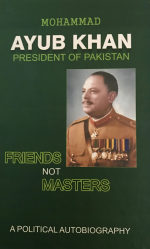
January 1959

On several occasions we have discussed our mutual problems at different levels. Our experience has been that the Afghan claims become stronger and more strident when there is a weak government in Pakistan. When Pakistan has a strong and stable government Afghanistan’s claims become vague and less insistent. Of course, the Afghans have taken good care never to define their stand on ‘Pakhtoonistan’. In the past they produced maps showing areas right down to the Indus, in fact right down to Karachi, as part of ‘Pakhtoonistan’. But whenever we have seriously asked them to let us know what worries them they have explained that they have no territorial claims; all they are interested in is the welfare of the people of ‘Pakhtoonistan’ and that they should have an opportunity to express their will. When we remind them that the Pakhtoons have already expressed their will in a free and fair referendum held at the time of Partition, and that every major tribe was then consulted, they have no answer but they remain dissatisfied.

I had a long meeting with Prince Naim in January 1959. I explained to him that Pakistan had come into existence as a result of the struggle of the Muslims of the sub-continent to free themselves from British and Hindu domination. British India had been divided on the basis of religious majority areas and not on a racial basis. On achieving independence, we naturally looked to the Muslim world, especially the Muslim countries in the Middle East, for understanding, friendship, and support. We were disappointed that Afghanistan adopted an attitude of open hostility from the very day of our independence.

Ironically enough, Afghanistan was the only country that opposed our admission to the United Nations. Since then we had been subjected to a campaign of vilification and slander in the Afghan press and radio. On one occasion our Embassy in Kabul was sacked by a mob and our people hounded out of Afghanistan. It was difficult for us to comprehend the Afghan attitude. They had defined ‘Pakhtoonistan’ in a variety of ways—as a separate independent State, as an autonomous area, as a unit within Pakistan to be called ‘Pakhtoonistan’, and sometimes only as a demand for a reference to be made to the Pathans to indicate whether they were happy with Pakistan. I told Prince Naim that we could well understand why the proposal they had in mind was being kept deliberately obscure. The Afghan rulers obviously wanted to create a right of interference in the internal affairs of Pakistan before starting on other ventures. What was not realized was that this kind of talk was patently unwarranted and amounted to aggression across an international frontier, the Durand Line, which had been, time and again, solemnly confirmed by the Afghan authorities. The original agreement arrived at in 1893 was confirmed in 1905, reaffirmed in the Anglo-Afghan Treaty in 1919, and finally endorsed when the present ruling family in Afghanistan came to power.

The Afghan attitude could only be interpreted as an indirect attempt at expansionism. The preposterous claims which the Afghan rulers were making could only lead to trouble. All this concern for the Pathans in Pakistan was based on the claim that at one time in history Afghanistan held sway over some parts of what is now West Pakistan. But there were also times, of much longer duration, when Delhi’s sovereignty extended up to Kabul and beyond. If old conquests were to be our guide then Pakistan should have more interest in the future of Pathans living in Afghanistan. The world had moved away from old historical positions and life in modern times was not governed by legends of past glories. Pakistan’s patience should not be taken for weakness or lack of resolution. I appealed to Prince Naim to abandon the policy of hostility toward Pakistan. "It would be to our mutual advantage to live as friendly neighbours", I told him.
 
View attachment 206939


January 1959

On several occasions we have discussed our mutual problems at different levels. Our experience has been that the Afghan claims become stronger and more strident when there is a weak government in Pakistan. When Pakistan has a strong and stable government Afghanistan’s claims become vague and less insistent. Of course, the Afghans have taken good care never to define their stand on ‘Pakhtoonistan’. In the past they produced maps showing areas right down to the Indus, in fact right down to Karachi, as part of ‘Pakhtoonistan’. But whenever we have seriously asked them to let us know what worries them they have explained that they have no territorial claims; all they are interested in is the welfare of the people of ‘Pakhtoonistan’ and that they should have an opportunity to express their will. When we remind them that the Pakhtoons have already expressed their will in a free and fair referendum held at the time of Partition, and that every major tribe was then consulted, they have no answer but they remain dissatisfied.

I had a long meeting with Prince Naim in January 1959. I explained to him that Pakistan had come into existence as a result of the struggle of the Muslims of the sub-continent to free themselves from British and Hindu domination. British India had been divided on the basis of religious majority areas and not on a racial basis. On achieving independence, we naturally looked to the Muslim world, especially the Muslim countries in the Middle East, for understanding, friendship, and support. We were disappointed that Afghanistan adopted an attitude of open hostility from the very day of our independence.

Ironically enough, Afghanistan was the only country that opposed our admission to the United Nations. Since then we had been subjected to a campaign of vilification and slander in the Afghan press and radio. On one occasion our Embassy in Kabul was sacked by a mob and our people hounded out of Afghanistan. It was difficult for us to comprehend the Afghan attitude. They had defined ‘Pakhtoonistan’ in a variety of ways—as a separate independent State, as an autonomous area, as a unit within Pakistan to be called ‘Pakhtoonistan’, and sometimes only as a demand for a reference to be made to the Pathans to indicate whether they were happy with Pakistan. I told Prince Naim that we could well understand why the proposal they had in mind was being kept deliberately obscure. The Afghan rulers obviously wanted to create a right of interference in the internal affairs of Pakistan before starting on other ventures. What was not realized was that this kind of talk was patently unwarranted and amounted to aggression across an international frontier, the Durand Line, which had been, time and again, solemnly confirmed by the Afghan authorities. The original agreement arrived at in 1893 was confirmed in 1905, reaffirmed in the Anglo-Afghan Treaty in 1919, and finally endorsed when the present ruling family in Afghanistan came to power.

The Afghan attitude could only be interpreted as an indirect attempt at expansionism. The preposterous claims which the Afghan rulers were making could only lead to trouble. All this concern for the Pathans in Pakistan was based on the claim that at one time in history Afghanistan held sway over some parts of what is now West Pakistan. But there were also times, of much longer duration, when Delhi’s sovereignty extended up to Kabul and beyond. If old conquests were to be our guide then Pakistan should have more interest in the future of Pathans living in Afghanistan. The world had moved away from old historical positions and life in modern times was not governed by legends of past glories. Pakistan’s patience should not be taken for weakness or lack of resolution. I appealed to Prince Naim to abandon the policy of hostility toward Pakistan. "It would be to our mutual advantage to live as friendly neighbours", I told him.

As it was in January 1959 so it is in 2026.

afghandus should realise that if the existence of Pakistan is threatened, Pakistan should nuke ALL of afghandustan and wipe out ALL afghandus.
 

Users who are viewing this thread

Pakistan Defence Latest

Back
Top