Opinion: Russia enters Indian Ocean

This is the charm of Indian-style propaganda. Of course, countries around the world are happy to cooperate with this Indian propaganda model because they earn huge profits from India every year.

Let me give you an example:
India's proudly touted "generic drug" industry.
1. Drug formulas.​
2. Instruments and equipment used for testing and analysis during the drug manufacturing process.​
3. Production line equipment for drug manufacturing and packaging.​
4. Raw materials needed to manufacture the drugs.​
Guess what percentage of these aspects are imported by India?
The Indian government and media will tell you how much profit India earns from exporting pharmaceuticals to the world every year. But they won't tell you that the vast majority of these profits are taken by other countries. They also won't tell you that the entire supply chain is completely controlled by foreign suppliers.

When it comes to the defense industry, instead of studying media reports and data, you should take a good look at your soldiers.

To date, has the Indian army deployed any standard equipment on a large scale that is entirely (100%) manufactured in India?
Standardisation is a slow process for us. Right now it's a hodge podge of imported weapons (Sig 716 and Ak 203 etc, the only actual attempt ie. Insas failed).

Arjun and Tejas weren't completed in time and due to shifting goalposts can be said to be a partial success only for the experience. Preference for foreign stuff is partly to blame we call such individuals as "Chandigarh lobby" in India.

LCH Prachand and the new Zorawar Light Tank (under trials) are successes. They progressed from planning stage to manufacturing and induction stage relatively quickly.

A lot of our defence budget goes towards pensions as of now.

Also only private defence companies can bridge the gap. Indian private defence industry is very nascent like only a decade old but it has already started manufacturing and exporting stuff to both Indian army and abroad.

The best way to go forward is PPP model ie. Public Private Partnership. That's what we are doing for a lot of our new joint developments.

Also you have a skewed approach, western pro India news is propoganda but anti India news is gospel? Everything has a combination of truth and wrong.
 
Last edited:
Yeah great info. But nowhere it says we are going to pay Russians to maintain their fleet. You believe what you like it believe.
Indian thinking is indeed unique. Even when faced with irrefutable evidence, they can always find a way to comfort themselves.

1. This nuclear submarine returned to the shipyard in 2003 for repairs. However, it did not undergo any major repairs. Why?
2. In 2022, the Russian Navy deemed it unreasonable to restore it to combat readiness. Why?

If this nuclear submarine were leased to India, India would pay for the repair and modernization costs. Where would this money be spent?
Russia has long lost the capability to repair this submarine. If India doesn't lease this submarine, Russia will still have to spend money to decommission it. For Russia, this is a liability.
But now it's being leased to India. India's $2 billion will allow Russia to rebuild its nuclear submarine maintenance facilities. In effect, it will allow Russia to rebuild its nuclear submarine shipyard. Based on the history of Russian-Indian military cooperation, this deal will likely increase in price. Do you remember the case of "India buying a Russian aircraft carrier for $1"? History will repeat itself.
 

Finally, Russia enters Indian Ocean

Farhat Ali
Published December 13, 2025

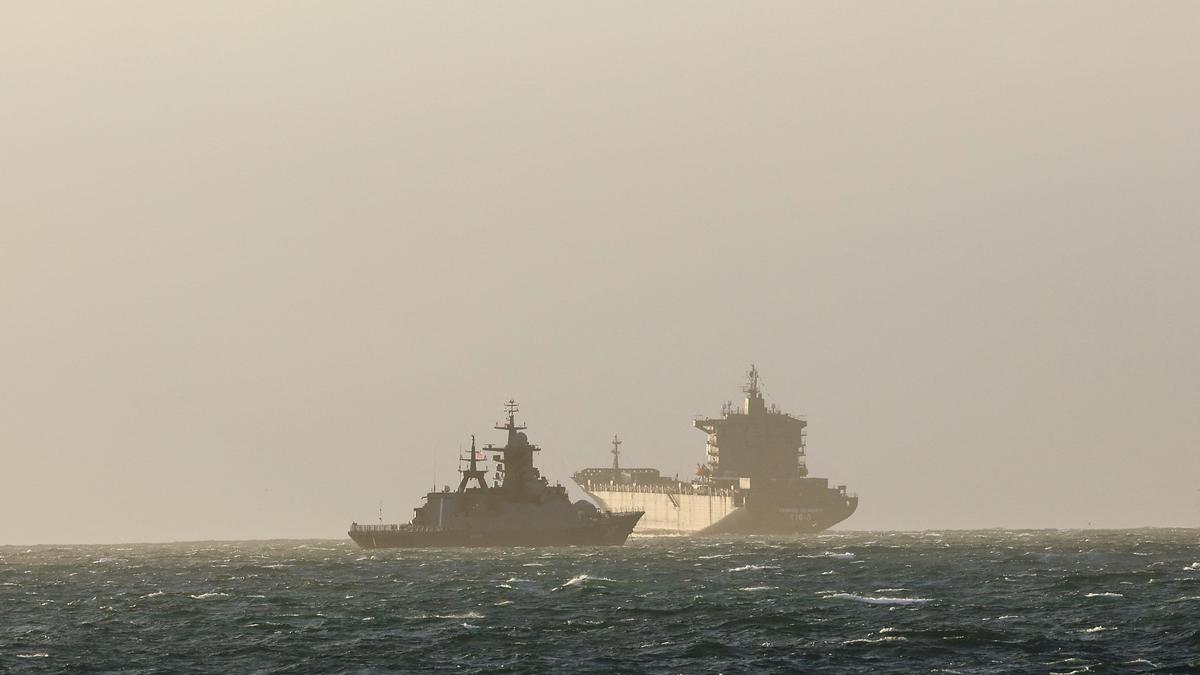
View attachment 165199

Russia’s century-old dream of reaching warm waters quietly materialised during President Vladimir Putin’s recent visit to India. For generations, Russian strategists—from the Tsars to the Soviet admiralty—sought reliable access to the Indian Ocean, the gateway to global trade and energy. That ambition had always been blocked by geography, rival powers, or political constraints.

The agreement termed ‘RELOS’ changed that in one stroke. With India opening its ports and logistics network to the Russian Navy, Putin’s trip to New Delhi early this month effectively turned a historic aspiration into operational reality. Russia is now no longer confined to the frigid northern seas—it has finally secured a southern maritime foothold in the world’s most strategic ocean.

What looks like a bureaucratic logistics pact is, in fact, the breaking of a strategic monopoly.

The ‘RELOS’ logistics pact between India and Russia has triggered one of the most profound shifts in the global power architecture since the end of the Cold War. For the first time, Moscow now gains routine naval access to the Indian Ocean through India’s ports, airfields, and maintenance facilities. This breaks the long-standing US monopoly over the world’s most strategic maritime space—the artery of global oil, energy routes, and Asia–Middle East shipping.

‘RELOS’ is not a routine military agreement. It hands Russia the ability to refuel and repair thousands of kilometres from home, opening a new front in great-power competition.

In return, which is hardly a counterbalance, India’s navy and air force gain reliable access to Russian facilities across the Arctic and Pacific, including ports along the Northern Sea route, enhancing sustained maritime presence and operations in previously inaccessible waters.

The reaction across capitals is unprecedented: panic in Washington, calculation in Beijing, alertness in Moscow, and pressure on New Delhi. The Indian Ocean is becoming the frontline of the next great-power contest, and India faces the most consequential strategic dilemma of its century: remain the anchor of a US-led Indo-Pacific strategy, or emerge as the southern pillar of a Russia-centered Eurasian arc.

The United States has three core interests in the Indian Ocean: control of energy routes, dominance of chokepoints, and denial of access to rival navies. ‘RELOS’ undermines all three.

Washington’s alarm was immediate. The sudden dispatch of US Deputy Trade Representative Rick Switzer this week to New Delhi is not about tariffs; it is about strategic retrieval.
It is a strategic intervention aimed at pulling India back into the American orbit at the very moment when New Delhi and Moscow are knitting together deeper military, naval, and energy architecture beyond Western oversight.

At stake is America’s Indo-Pacific strategy, which depends on India serving as the democratic counterweight to China and the southern anchor of US maritime dominance.

Now that assumption is collapsing. Washington’s concern goes far beyond military logistics. ‘RELOS’ coincides with India’s purchase of discounted Russian oil, the expansion of India–Russia defence ties, and the quiet emergence of a Eurasian energy-security bloc that excludes Western influence.

Will the US attempt containment? Yes—through diplomatic urgency, economic incentives, and subtle threats. India will face pressure on arms purchases, oil imports, technology access, and strategic cooperation within the Quad. But India understands that the US needs India to balance China far more than India needs exclusive alignment with Washington. That could give New Delhi rare leverage.

China’s reaction could be complex—but far from hostile. It is likely to be pragmatic

A more independent India—one that is not fully under US influence—helps Beijing by preventing the encirclement strategy Washington envisions through the Quad.

It could benefits from any development that prevents the Indian Ocean from becoming a US-controlled lake. A Russian naval footprint makes the region multipolar, which suits Beijing’s long-term calculus.

However, China will interpret ‘RELOS carefully’.

A Russian naval footprint in the Indian Ocean introduces another big-power actor in China’s maritime backyard. Beijing will want assurances that Russia’s presence does not drift into an anti-China coalition subsidized by India.

Beijing will watch Indian ambitions carefully, but Russia’s entry serves as a balancing force, ensuring India does not emerge as the sole gatekeeper of the Indian Ocean.

‘RELOS’ reshapes the region well beyond India. Central Asian republics already tethered to Moscow may align more closely. ‘RELOS’ has created a gravitational pull toward a broader Eurasian coalition. South Asia and Asia Pacific now have options to play within the multipolar maritime order evolving in its proximity.

Pakistan faces both concern and opportunity. On one hand, India-Russia naval alignment raises concerns about enhanced Indian reach in the Arabian Sea.


‘RELOS’, most likely, would not undermine CPEC or Gwadar port. If anything, Russia’s southward search for access could breathe new life into Gwadar as an additional logistical node. The region’s shift toward multipolarity reduces US surveillance over Chinese projects.

Iran is arguably the biggest winner.
‘RELOS’ strengthens the north–south axis linking Russia, Iran, and India. Tehran’s Chabahar Port gains new relevance, and Russia’s need for diversified southern access expands Iran’s geopolitical value—especially as it pushes back against Western pressure.

Afghanistan becomes an unavoidable transit node for Eurasian connectivity. Any stable future in Afghanistan strengthens the Russia–India–Iran corridor, giving the landlocked state fresh relevance despite its internal challenges.

Middle Eastern states, particularly Saudi Arabia and the UAE, would welcome the diversification. A Russian naval presence reduces exclusive US dominance and gives Gulf monarchies more strategic bargaining power in energy and security affairs.

The Indian Ocean is no longer unipolar. Russia is in. China is entrenched. The US feels cornered. India is emerging as the pivot between continental Eurasia and maritime Asia.

‘RELOS’ marks the start of a new maritime century—one in which no single power controls the Indian Ocean and the global energy routes. India redraws the maritime map.

The decisions New Delhi makes in the next decade will define Asia’s balance of power for the next fifty years.

The challenges for India are severe and several. ‘RELOS’ is India’s biggest strategic gamble — Russia enters a maritime earthquake India cannot reverse. Whereas, India is at the crossroads: US pressure vs Eurasian alignment.

Farhat Ali
The writer is a former President - Overseas Investors Chamber of Commerce & Industry and a noted analyst on current affairs
Please don't change article title. Warning ⚠️
 
So, Russia is measuring up to similar US naval agreement with India earlier. It will be interesting to see in the end which one Russia or US that India puts on higher priority or India is going to play the balancing act between the two, tight rope to walk ?

India is the only country on whose name, there is a Ocean name, the Indian Ocean :)
we call it as "Hind Mahasagar", representing the Hind Land of this region/Asia. here, we dont address the nation as Jai India, but its the "Jai Hind"👍


.
=>
"India" (Greek: Ἰνδία) is a name derived from the Indus River

.
=>
its all about providing security to Trade from the Indian Ocean, and we always find Moscow share this interests with us in this region.
Moscow and New Delhi both are listed in "Blue Water Navies", with having credible assets-personnel serving in this Red Flag bloc 👍

🇮🇳
 
Last edited:
Russia is expanding its strategic footprint in the Indian Ocean Region (IOR) to secure vital sea lanes, counter Western influence, and boost maritime trade, frequently conducting joint naval exercises with partners like India, China, and Iran. Key strategies include the RELOS pact for logistical support from India and exploring a naval base in Port Sudan.

+5

Key Aspects of Russia's Indian Ocean Presence:

Strategic Partnerships: The RELOS (Reciprocal Exchange of Logistic Support) agreement with India is crucial, allowing the Russian Navy to use Indian ports for refueling, repair, and rest, acting as a logistical shortcut in the Indian Ocean.
Military & Naval Diplomacy: Russia conducts regular joint exercises, such as the MILAN 2026 exercise, maritime security drills with Iran and China, and anti-piracy operations.

Key Bases & Access: Besides India, Russia has sought to establish a naval base in Port Sudan to gain a permanent footprint in the Red Sea.
Objectives: These efforts aim to secure trade routes (including the North-South Transport Corridor), protect energy interests, and counter the dominance of the US and other Western powers in the region.

Challenges & Dynamics: Russia's growing ties with China and its reliance on India create a complex, multi-polar dynamic in the region.

.
 

Iran, Russia to conduct joint drills in the Sea of Oman

1788197644779.png

1788197683949.png
Iran and Russia will conduct naval manoeuvres in the Sea of Oman on Thursday (February 19, 2027), following the latest round of talks between Tehran and Washington in Geneva, Iranian media reported.

On Monday, the Revolutionary Guards, the ideological arm of Iran's military, also launched exercises in the strategic Strait of Hormuz, a challenge to U.S. naval forces deployed in the region.

"The joint naval exercise of the Islamic Republic of Iran and Russia will take place tomorrow (Thursday) in the Sea of Oman and in the northern Indian Ocean," the ISNA agency reported, citing drill spokesman, Rear Admiral Hassan Maghsoudloo. :coffee:

"The aim is to strengthen maritime security and to deepen relations between the navies of the two countries," he said, without specifying the duration of the drill.

The war games come as Iran struck an upbeat tone following the second round of Oman-mediated negotiations in Geneva on Tuesday.

Previous talks between the two foes collapsed following the unprecedented Israeli strike on Iran in June 2025, which sparked a 12-day war that the United States briefly joined. ☕


US President Donald Trump has deployed a significant naval force in the region, which he has described as an "armada."

Iranian officials have repeatedly threatened to block the Strait of Hormuz, particularly during periods of tension with the United States, but it has never been closed. :coffee:

A key passageway for global shipments of oil and liquefied natural gas, the Strait of Hormuz has been the scene of several incidents in the past and has returned to the spotlight as pressure has ratcheted amid the US-Iran talks.

Iran announced on Tuesday that it would partially close it for a few hours for "security" reasons during its own drills in the strait.
🇷🇺🇮🇳
.
 

Finally, Russia enters Indian Ocean

Farhat Ali
Published December 13, 2025

View attachment 165199

Russia’s century-old dream of reaching warm waters quietly materialised during President Vladimir Putin’s recent visit to India. For generations, Russian strategists—from the Tsars to the Soviet admiralty—sought reliable access to the Indian Ocean, the gateway to global trade and energy. That ambition had always been blocked by geography, rival powers, or political constraints.

The agreement termed ‘RELOS’ changed that in one stroke. With India opening its ports and logistics network to the Russian Navy, Putin’s trip to New Delhi early this month effectively turned a historic aspiration into operational reality. Russia is now no longer confined to the frigid northern seas—it has finally secured a southern maritime foothold in the world’s most strategic ocean.

What looks like a bureaucratic logistics pact is, in fact, the breaking of a strategic monopoly.

The ‘RELOS’ logistics pact between India and Russia has triggered one of the most profound shifts in the global power architecture since the end of the Cold War. For the first time, Moscow now gains routine naval access to the Indian Ocean through India’s ports, airfields, and maintenance facilities. This breaks the long-standing US monopoly over the world’s most strategic maritime space—the artery of global oil, energy routes, and Asia–Middle East shipping.

‘RELOS’ is not a routine military agreement. It hands Russia the ability to refuel and repair thousands of kilometres from home, opening a new front in great-power competition.

In return, which is hardly a counterbalance, India’s navy and air force gain reliable access to Russian facilities across the Arctic and Pacific, including ports along the Northern Sea route, enhancing sustained maritime presence and operations in previously inaccessible waters.

The reaction across capitals is unprecedented: panic in Washington, calculation in Beijing, alertness in Moscow, and pressure on New Delhi. The Indian Ocean is becoming the frontline of the next great-power contest, and India faces the most consequential strategic dilemma of its century: remain the anchor of a US-led Indo-Pacific strategy, or emerge as the southern pillar of a Russia-centered Eurasian arc.

The United States has three core interests in the Indian Ocean: control of energy routes, dominance of chokepoints, and denial of access to rival navies. ‘RELOS’ undermines all three.

Washington’s alarm was immediate. The sudden dispatch of US Deputy Trade Representative Rick Switzer this week to New Delhi is not about tariffs; it is about strategic retrieval.
It is a strategic intervention aimed at pulling India back into the American orbit at the very moment when New Delhi and Moscow are knitting together deeper military, naval, and energy architecture beyond Western oversight.

At stake is America’s Indo-Pacific strategy, which depends on India serving as the democratic counterweight to China and the southern anchor of US maritime dominance.

Now that assumption is collapsing. Washington’s concern goes far beyond military logistics. ‘RELOS’ coincides with India’s purchase of discounted Russian oil, the expansion of India–Russia defence ties, and the quiet emergence of a Eurasian energy-security bloc that excludes Western influence.

Will the US attempt containment? Yes—through diplomatic urgency, economic incentives, and subtle threats. India will face pressure on arms purchases, oil imports, technology access, and strategic cooperation within the Quad. But India understands that the US needs India to balance China far more than India needs exclusive alignment with Washington. That could give New Delhi rare leverage.

China’s reaction could be complex—but far from hostile. It is likely to be pragmatic

A more independent India—one that is not fully under US influence—helps Beijing by preventing the encirclement strategy Washington envisions through the Quad.

It could benefits from any development that prevents the Indian Ocean from becoming a US-controlled lake. A Russian naval footprint makes the region multipolar, which suits Beijing’s long-term calculus.

However, China will interpret ‘RELOS carefully’.

A Russian naval footprint in the Indian Ocean introduces another big-power actor in China’s maritime backyard. Beijing will want assurances that Russia’s presence does not drift into an anti-China coalition subsidized by India.

Beijing will watch Indian ambitions carefully, but Russia’s entry serves as a balancing force, ensuring India does not emerge as the sole gatekeeper of the Indian Ocean.

‘RELOS’ reshapes the region well beyond India. Central Asian republics already tethered to Moscow may align more closely. ‘RELOS’ has created a gravitational pull toward a broader Eurasian coalition. South Asia and Asia Pacific now have options to play within the multipolar maritime order evolving in its proximity.

Pakistan faces both concern and opportunity. On one hand, India-Russia naval alignment raises concerns about enhanced Indian reach in the Arabian Sea.


‘RELOS’, most likely, would not undermine CPEC or Gwadar port. If anything, Russia’s southward search for access could breathe new life into Gwadar as an additional logistical node. The region’s shift toward multipolarity reduces US surveillance over Chinese projects.

Iran is arguably the biggest winner.
‘RELOS’ strengthens the north–south axis linking Russia, Iran, and India. Tehran’s Chabahar Port gains new relevance, and Russia’s need for diversified southern access expands Iran’s geopolitical value—especially as it pushes back against Western pressure.

Afghanistan becomes an unavoidable transit node for Eurasian connectivity. Any stable future in Afghanistan strengthens the Russia–India–Iran corridor, giving the landlocked state fresh relevance despite its internal challenges.

Middle Eastern states, particularly Saudi Arabia and the UAE, would welcome the diversification. A Russian naval presence reduces exclusive US dominance and gives Gulf monarchies more strategic bargaining power in energy and security affairs.

The Indian Ocean is no longer unipolar. Russia is in. China is entrenched. The US feels cornered. India is emerging as the pivot between continental Eurasia and maritime Asia.

‘RELOS’ marks the start of a new maritime century—one in which no single power controls the Indian Ocean and the global energy routes. India redraws the maritime map.

The decisions New Delhi makes in the next decade will define Asia’s balance of power for the next fifty years.

The challenges for India are severe and several. ‘RELOS’ is India’s biggest strategic gamble — Russia enters a maritime earthquake India cannot reverse. Whereas, India is at the crossroads: US pressure vs Eurasian alignment.

Farhat Ali
The writer is a former President - Overseas Investors Chamber of Commerce & Industry and a noted analyst on current affairs

From what i understand the Russians have been using Indian naval facilities for decades, in the form of the Soviets.
So what's new?
 
From what i understand the Russians have been using Indian naval facilities for decades, in the form of the Soviets.
So what's new?
For what purpose? As permanent logistical facilities or just port calls?
 
For what purpose? As permanent logistical facilities or just port calls?

Maintenance, repairs and Logistics, everything required for an operational presence in the Indian Ocean region. It varied at various times, but such an arrangement did exist.


"
While India would permit Soviet ships to refit and refuel at Indian ports, similar privileges were granted to both British and French ships.107 Ultimately, Gandhi “condoned a Soviet naval presence in the Indian Ocean but successfully resisted pressure for the establishment of Soviet military facilities in India.”108

From a military perspective, India began to play a “vital role in the Soviet Indian Ocean strategy” with the Soviet Union transferring an “unprecedented” level of naval hardware and technology to India by the early 1980s. The level of naval hardware sold and technology transferred to India even exceeded what was offered to Warsaw Pact countries. While India did not officially permit Moscow to establish Soviet military bases on Indian territory, it was suspected that the two sides agreed to “a secret protocol giving the Soviet Navy base rights at the Indian navy’s submarine base of Vishakhapatnam.”
"

https://tnsr.org/2024/11/the-main-drivers-of-soviet-foreign-policy-towards-india-1955-1991/
 
Last edited:

Users who are viewing this thread

Latest Posts

Back
Top