Ousted PM Sheikh Hasina seeks passport in sign of Bangladesh return plan

MNZGamerX

Trusted Member
Joined
Dec 12, 2023
Messages
2,050
Reaction score
2,319
Reputation
1,663.2
Country of Origin
Country of Residence
Hasina, who has been living in India for two years, has promised to return to Bangladesh in December.
AFP__20251117__849B2CQ__v1__HighRes__FilesBangladeshPoliticsTrial-1763916972.webp

By Al Jazeera Staff and Reuters
Published On 9 Nov 2026

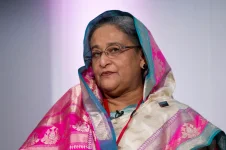
Bangladesh’s ousted Prime Minister Sheikh Hasina has requested a new passport and identity card to allow her to return from self-imposed exile in India.

The request is the clearest sign that Hasina, who has been living in India for two years, plans to make good on her promise that she would return to Bangladesh in December.

Hasina told the Reuters news agency that she intended to surrender before a court in Bangladesh, and her aides said on Monday the date would be announced once various formalities were completed.

Bangladesh’s war crimes court sentenced Hasina to death in absentia last November for ordering a deadly crackdown on student protests that swept the country in 2024. As many as 1,400 people may have been killed in the violence, according to United Nations estimates.

Hasina’s letter to the Bangladeshi government, cited by Reuters, asked that her request be processed “expeditiously” on the basis of her Bangladeshi nationality.

Home Minister Salahuddin Ahmed said the foreign and law ministries were looking into the matter, including whether there was any legal basis for the applications and whether Hasina was legally entitled to apply for the documents, the Dhaka-based English-language New Age daily reported.

Last week, Junior Minister for Foreign Affairs Humaiun Kobir said Bangladesh wants Hasina returned under an extradition treaty with India. New Delhi has declined to hand her over.

“We want Hasina to be handed over. She will be handed over. She is a terrorist. She is a fugitive. There is an active extradition treaty between Bangladesh and India,” he told reporters in Dhaka on Thursday.

Hasina is the daughter of Bangladesh’s founder and first president, Sheikh Mujibur Rahman. She served as prime minister from 1996 to 2001, and again from 2009 to 2024.

Hasina’s potential return raises the prospect of renewed legal and political issues in the country.

She still enjoys support among parts of the population, and her return could affect the Bangladeshi government’s efforts to stabilise the country and its economy after two years of disruption.

Hasina was ousted by a popular, student-led mass protest movement that broke out after the Supreme Court restored a job quota system that had prioritised the descendants of the country’s liberation activists.
 
Did Matrix fail to submit Sheikh Hasina’s authorisation for passport application?

Missing authorisation could derail Hasina’s passport request, while Dhaka examines legal grounds for refusal amid her reported December return plans

by Enayet Kabir
November 9, 2026

1-27.png

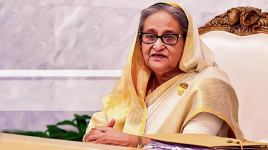
The Bangladesh High Commission in New Delhi has received an email from Matrix Chambers, a London-based British law firm, requesting the issuance of a new passport and National Identity Card (NID) for ousted Prime Minister Sheikh Hasina.

The email seeks a new passport and NID for Hasina. A diplomatic source in New Delhi confirmed on Monday morning that the communication had been received.

Earlier, Reuters, citing a letter in its possession, reported that Sheikh Hasina had sought a new passport and National Identity Card to facilitate her return to Bangladesh. She reportedly submitted an application to the Bangladesh High Commission in New Delhi today.

Immediately after receiving the email, the Bangladesh High Commission in New Delhi informed the Ministry of Foreign Affairs in Dhaka and sought instructions on the next course of action.

However, a source at the Foreign Ministry indicated that the application could be rejected on the grounds that Matrix had failed to submit an authorisation from Sheikh Hasina along with the application.

The email sent by the law firm contained no document or other evidence establishing that Hasina had authorised it to act on her behalf. When an organisation submits an application on behalf of an individual, it is ordinarily expected to provide proof of that person’s authorisation.

A source at the Foreign Ministry in Dhaka confirmed that the New Delhi High Commission had received such an email and immediately informed the ministry. State Minister for Foreign Affairs Humayun Kabir is expected to brief journalists shortly on the matter.

According to sources familiar with the communication, the email from Matrix begins with a lawyer stating that he is contacting the authorities on behalf of Sheikh Hasina in his capacity as her legal representative. The email then sets out several points and requests the issuance of a new passport and National Identity Card.

The communication states that the interim government and other authorities have reportedly cancelled Sheikh Hasina’s existing Bangladeshi passport and National Identity Card. It requests the High Commission to take the necessary steps to issue her new Bangladeshi travel and identity documents.

Sheikh Hasina, who is currently living in self-imposed exile in India, is seen as having taken her clearest step yet towards implementing plans to return to Bangladesh. She is reportedly planning to return home in December.

The possible grounds for rejecting the application are now being examined.

Where does the Bangladesh government derive its legal authority to deny Sheikh Hasina a passport? Article 6 of the Bangladesh Passport Order, 1973, specifies several grounds on which a passport application may be refused. What provisions could the government invoke?

Public interest: Under Section 6(2)(c), the government may refuse to issue a passport if, in its opinion, doing so would be contrary to the public interest.

The government could seek to invoke this provision in view of the verdict against Sheikh Hasina by the International Crimes Tribunal and the ongoing judicial proceedings. The legitimacy of the tribunal’s verdict is contested.

National security: Under Section 6(2)(a), refusal of a passport is mandatory if the government has reasonable grounds to believe that an individual, while abroad, may engage in activities prejudicial to Bangladesh’s sovereignty, territorial integrity or security.

However, the specific conditions prescribed under this provision must be fulfilled. It may be difficult for the government to establish that those conditions apply in Sheikh Hasina’s case.

Risk of evading judicial proceedings: Under Section 6(1)(e), a passport may be refused if an individual is avoiding, or is likely to avoid, appearing in proceedings before a criminal court in Bangladesh in connection with a pending case.

However, since Sheikh Hasina has indicated that she intends to return to Bangladesh and surrender before the court, the applicability of this provision to her case could raise legal questions.

Conviction for specified offences: Section 6(1)(c) provides grounds for refusing a passport to a person who, within the preceding five years, has been sentenced to imprisonment for at least two years for an offence involving moral turpitude.

Whether the death sentence pronounced against Sheikh Hasina falls directly within the scope of this provision would have to be determined by examining the precise language of the law and the nature of the verdict.

The extradition argument: The government could argue that, rather than issuing Sheikh Hasina an ordinary passport to facilitate her return, it intends to bring her back through the extradition treaty between Bangladesh and India.

On November 5, 2026, State Minister for Foreign Affairs Humayun Kabir publicly stated that the government did not want to issue her a passport and instead intended to bring her back through the extradition process.

However, the extradition treaty itself does not constitute an independent legal ground for refusing a passport.

An important legal consideration is that a decision to refuse a passport must be communicated through a written order, and the reasons for refusal must ordinarily be recorded. Articles 5 and 7 of the Bangladesh Passport Order contain provisions relating to these requirements.

Essentially, the most direct legal ground available to the government for withholding Sheikh Hasina’s passport appears to be Section 6(2)(c), concerning public interest.

However, given that she has expressed an intention to return to Bangladesh and face the courts, whether the government can justify refusing her a passport on the grounds that she may evade judicial proceedings remains an important legal question.

 
Sheikh Hasina’s passport request is political stunt: ICT Chief Prosecutor

Amader Barta English Desk
Published: 09 November, 2026

Aminul-Islam-medium.webp

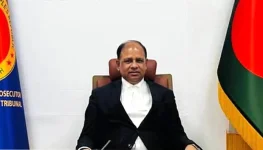
International Crimes Tribunal (ICT) Chief Prosecutor Md Aminul Islam today characterised reported statements regarding ousted Prime Minister Sheikh Hasina seeking a passport as a "political stunt," asserting that she has no genuine intention of returning to the country to face justice.

Speaking to reporters on the tribunal premises in Dhaka, the Chief Prosecutor clarified that the fugitive former prime minister has initiated no formal legal or administrative steps to return to Bangladesh or surrender before the court.

"This is nothing but a political stunt of hers," Chief Prosecutor Aminul Islam told journalists, adding that such public declarations aim to confuse the public and divert attention from her status as a convicted fugitive.

The Chief Prosecutor recalled that Sheikh Hasina fled to India on August 5, 2024, amidst a mass student-people uprising that toppled her government. She has since remained in India while facing prosecution at the International Crimes Tribunal for atrocities committed during the crackdown on anti-discrimination student movement protesters.

Highlighting the judicial context, Aminul Islam noted that ICT-1, headed by Justice Md Golam Mortuza Mozumder, sentenced Sheikh Hasina and former Home Minister Asaduzzaman Khan Kamal to death in absentia for crimes against humanity committed during the July–August 2024 uprising.

The tribunal verdict also mandated the complete forfeiture of all personal assets belonging to Sheikh Hasina and Asaduzzaman Khan Kamal, directing that confiscated funds be allocated toward compensating the families of martyrs and providing medical relief to those injured in the movement.

On tribunal proceedings, the Chief Prosecutor cited key testimony from former Inspector General of Police (IGP) Chowdhury Abdullah Al-Mamun, who turned state witness. His full confession provided critical evidentiary proof of command responsibility, resulting in a reduced sentence of five years' imprisonment.

Aminul Islam reiterated that if the deposed leader harboured any legitimate intent to abide by the law, she would pursue established legal and diplomatic channels rather than relying on political rhetoric. He affirmed that the prosecution team continues to pursue all legal avenues to execute the tribunal's judicial directives.

 
not a political stunt. Awamis know that BNP is a party of darpooks and buzdils. It was said during elections time, bnp and India via engineer waqar have an understanding.

7/8 months after the elections things will fall a apart because bnp is full of illiterate low iq people who lack any serious intelligence.

We are in that phase now.

If BNP actually had the balls, they would sentence the BAL leaders in jail instead they are producing judgements for all the leaders in abscondia.
 

Users who are viewing this thread

Back
Top