CSAW
Trusted Member


- Thread starter
- #466
Maintaining the Conventional deterrence
May 2025
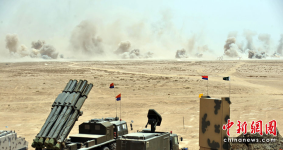
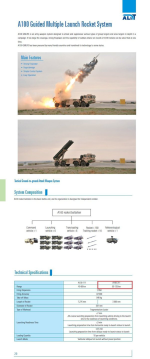
"Pakistan since around 2019 possesses the A-100, a Chinese multi-launch rocket system (MLRS) which is similar to the Russian 9K-58 Smerch.
The primary purpose was to attack ground targets like airfields, command centers, radar stations, artillery or missile batteries, locations where troops are concentrated and other targets of military importance.
Back then - The latest version of the A-100 was the AR1A in which Pakistan was taking keen interest and had procured some for trials. This version is called the A-100E in Pakistan and is of improved accuracy. This was purchased in response to India’s purchase of the 9A52-2T Smerch from Russia.
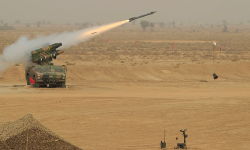
It was reported in open media that Pakistan inducted Chinese origin A-100 rocket in Multiple Launch Rocket System (MLRS) into its arsenals, boosting the strength of Artillery Crop on January 4, 2019.
The missile system since then have been "indigenously improved" by Pakistani scientists and engineers.
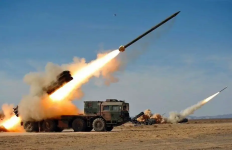
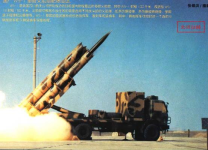
The WS-1B was developed by China and is a long range artillery rocket weapon. It is the advanced version of the Chinese WS-1 which is in operation in the army of the People’s Republic of China. This system helps to bridge the gap between a conventional self-propelled artillery system and surface-to-surface tactical missiles. It could have both offensive and defensive roles and could be deployed against targets which are deep beyond the enemy lines. These include military bases, massed armoured divisions, missile launch site, airports, airstrips, harbours and military industrial bases.
Like India’s indigenous PINAKA multi-barrel rocket launcher (MBRL), it has been reported that Pakistan possesses an indigenous MBRL, the KRL-21, designed by the Kahuta Research Laboratories, which is equipped with a global positioning system (GPS). The same has also been transferred by Pakistan to the Bangladesh Army.
The KRL-122 is a rocket launcher system based on the BM-21 Grad MLRS system, initially mounted on an Isuzu truck chassis and later adapted to the Reo M35 truck platform. Some sources refer to this system as "Ghazab".
The KRL-122 can launch both original Soviet rockets and the indigenous Yarmuk Rocket developed by Pakistan Ordnance Factories. It has the capability to reach a maximum range of over 40 kilometers with its enhanced 122mm rockets.

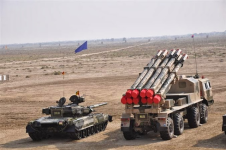
MLRS which comprise of two main elements: Rocket munitions
A self-propelled platform to carry and launch those rockets
is designed to disrupt enemy’s mobilization. MLRS is unguided rocket against enemy position in artillery minded sense within conventional deterrence spectrum
 en.missilery.info
May 2025
"Pakistan since around 2019 possesses the A-100, a Chinese multi-launch rocket system (MLRS) which is similar to the Russian 9K-58 Smerch.
The primary purpose was to attack ground targets like airfields, command centers, radar stations, artillery or missile batteries, locations where troops are concentrated and other targets of military importance.
Back then - The latest version of the A-100 was the AR1A in which Pakistan was taking keen interest and had procured some for trials. This version is called the A-100E in Pakistan and is of improved accuracy. This was purchased in response to India’s purchase of the 9A52-2T Smerch from Russia.
It was reported in open media that Pakistan inducted Chinese origin A-100 rocket in Multiple Launch Rocket System (MLRS) into its arsenals, boosting the strength of Artillery Crop on January 4, 2019.
The missile system since then have been "indigenously improved" by Pakistani scientists and engineers.
The WS-1B was developed by China and is a long range artillery rocket weapon. It is the advanced version of the Chinese WS-1 which is in operation in the army of the People’s Republic of China. This system helps to bridge the gap between a conventional self-propelled artillery system and surface-to-surface tactical missiles. It could have both offensive and defensive roles and could be deployed against targets which are deep beyond the enemy lines. These include military bases, massed armoured divisions, missile launch site, airports, airstrips, harbours and military industrial bases.
Like India’s indigenous PINAKA multi-barrel rocket launcher (MBRL), it has been reported that Pakistan possesses an indigenous MBRL, the KRL-21, designed by the Kahuta Research Laboratories, which is equipped with a global positioning system (GPS). The same has also been transferred by Pakistan to the Bangladesh Army.
The KRL-122 is a rocket launcher system based on the BM-21 Grad MLRS system, initially mounted on an Isuzu truck chassis and later adapted to the Reo M35 truck platform. Some sources refer to this system as "Ghazab".
The KRL-122 can launch both original Soviet rockets and the indigenous Yarmuk Rocket developed by Pakistan Ordnance Factories. It has the capability to reach a maximum range of over 40 kilometers with its enhanced 122mm rockets.
MLRS which comprise of two main elements: Rocket munitions
A self-propelled platform to carry and launch those rockets
is designed to disrupt enemy’s mobilization. MLRS is unguided rocket against enemy position in artillery minded sense within conventional deterrence spectrum
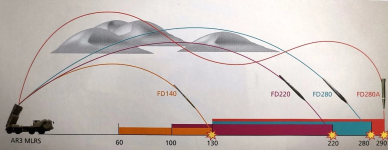
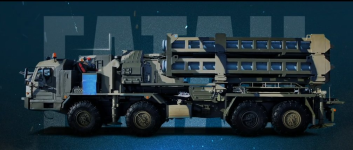
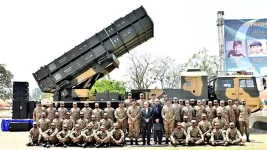
Since then, Pakistan has inducted Fatah series in the domain of Guided rockets and SSBM weapon systems with far greater accuracy and depressed trajectories in various ranges from 140 km to 450 km , with 700km variant in testing phase.
it started with the Fatah-1 which incorporates a guidance suite, allowing it to be vastly more accurate than its unguided brethen
A further development already marked within PA was the introduction of a laser-guidance kit to transform the Fatah rockets into precision-guided munitions that can hit targets marked by Pakistani U(C)AVs. T
his capability already exists in Turkey and Azerbaijan through the TRLG-230 MRL, and significantly increases the capabilities of both the UAV and the MRL. It is precisely this type of synergy between reconnaissance and precision-guided munitions that proved a gamechanger during the Nagorno-Karabakh War, allowing Azerbaijan to strike Armenian targets without ever knowing what hit them.
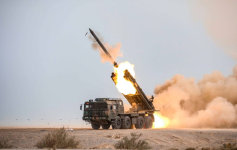
302 mm multiple launch rocket system WS-1B (WS-1) | Missilery.info
The WS-1B multiple launch rocket system (MLRS) is designed to strike critical targets located deep in the enemy's defense, including military bases, troop concentration sites, missile launchers,
en.missilery.info
In view of S-400 induction & Clod start doctrine by India , PA strategically also deploys instruments such as Nasar & Systems like the Original Hatf–II Abdali which features a smaller warhead with decreased accuracy compared to the Fatah-1.
The presence of both type of systems in the ranks of the Pakistani Army hugely increases its operational flexibility & means to retaliate in various forms and ranges."
Last edited: