US Defies India: $488M F-16 Radar Upgrade for Pakistan Sparks New Airpower Tensions in South Asia
US proceeds with $488 million Northrop Grumman radar sustainment contract for Pakistan’s F-16 fleet despite India’s objections, raising concerns over network-centric warfare capabilities and shifting South Asia airpower dynamics.
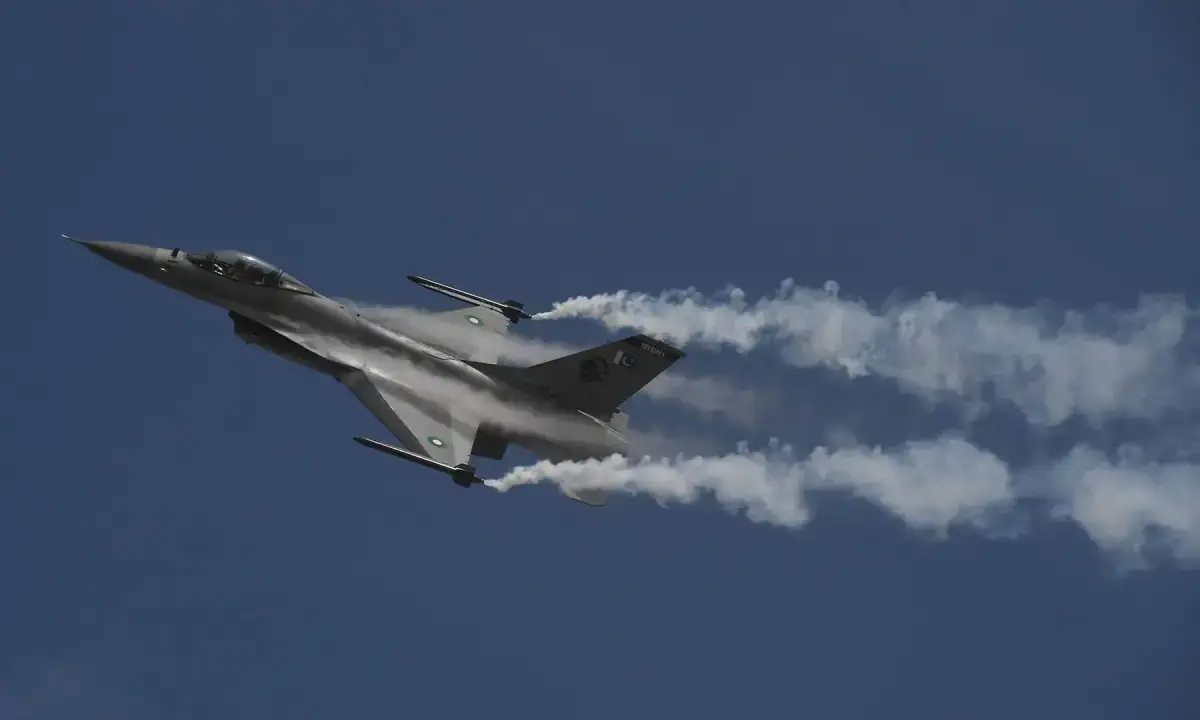
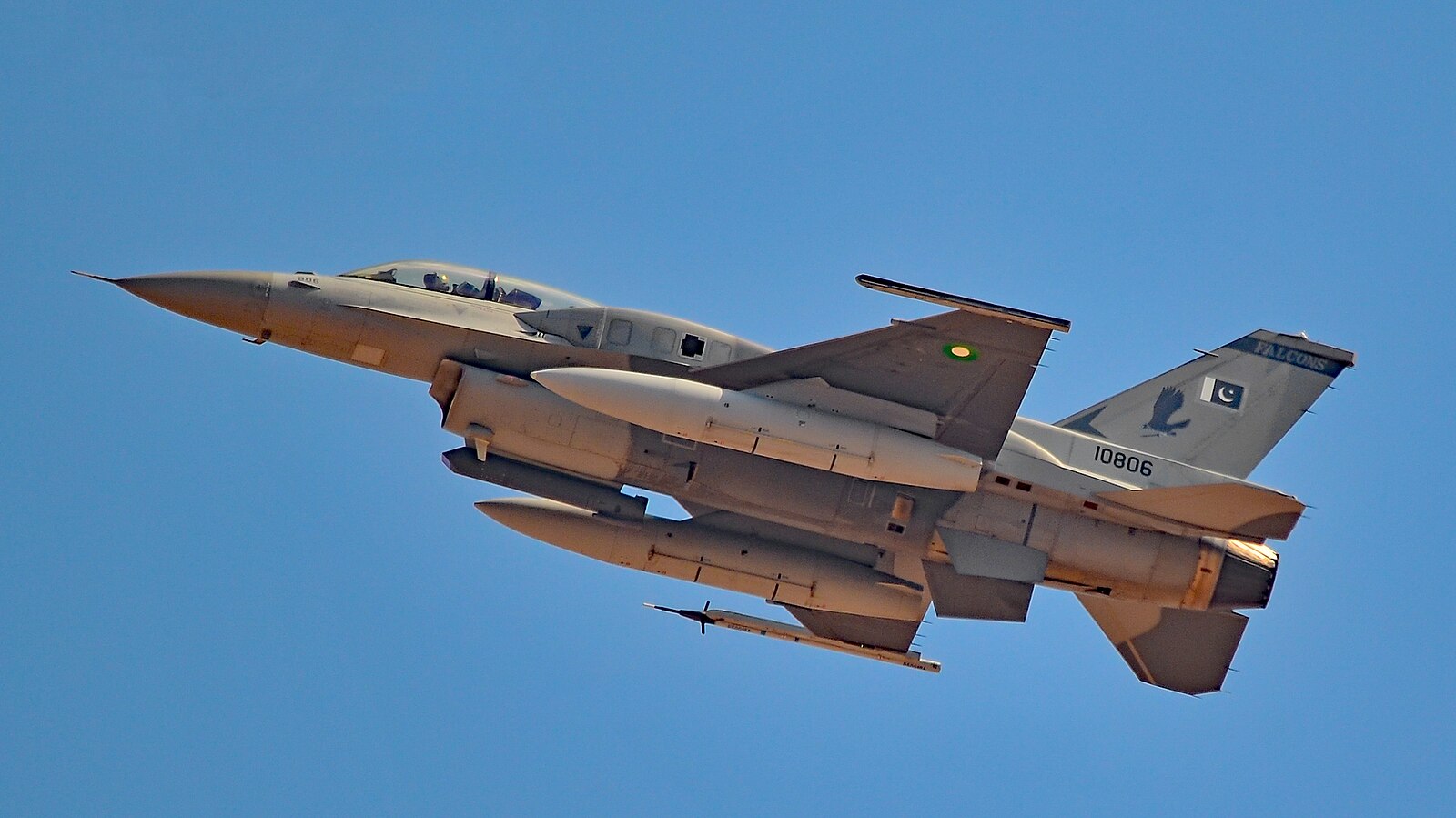
(DEFENCE SECURITY ASIA) — The United States’ decision to proceed with a US$488 million (RM1.85 billion) radar sustainment contract involving Northrop Grumman has injected renewed volatility into South Asia’s already fragile airpower equilibrium by reinforcing Pakistan Air Force operational resilience despite explicit Indian objections.
The approval—framed within a broader Indefinite Delivery/Indefinite Quantity (IDIQ) engineering support framework—demonstrates Washington’s persistent willingness to sustain legacy F-16 Fighting Falcon capabilities in Pakistan even as it deepens strategic convergence with India across Indo-Pacific security architectures.
“This is not about new offensive capability but ensuring platform viability under strict end-use monitoring conditions,” a US defence official stated, a position that contrasts sharply with Indian assessments warning that even sustainment upgrades can alter network-centric combat effectiveness in contested airspace scenarios.
The April 2026 contract, announced amid heightened regional sensitivities following India’s May 2025 “Operation Sindoor” air base strikes, underscores a recurring structural contradiction in US South Asia policy—balancing counterterrorism cooperation with Pakistan while simultaneously expanding defence-industrial and strategic ties with India.
Indian analysts interpret the radar sustainment package as a latent force multiplier that enhances Pakistan’s situational awareness, electronic resilience, and multi-target engagement capacity without triggering formal escalation thresholds typically associated with new weapons acquisitions.
The deal’s timing and framing reflect a calibrated US approach that avoids introducing advanced AESA radar systems such as the APG-83 SABR while still extending the operational relevance of mechanically scanned AN/APG-66 and AN/APG-68 radars across allied fleets.
This layered ambiguity—technically defensive yet operationally consequential—has historically defined US military support decisions in South Asia, ensuring continuity of capability without overtly shifting the regional balance of power.
By maintaining Pakistan’s F-16 fleet within a viable operational envelope, the contract reinforces a minimum deterrence threshold that complicates India’s air dominance assumptions without providing Islamabad a decisive technological breakthrough.
At the same time, the incremental enhancement of radar performance and electronic resilience subtly compresses reaction timelines in potential air engagements, increasing the probability that future crises could escalate faster under network-centric warfare conditions.
This dynamic introduces a persistent strategic grey zone in which sustainment-driven capability improvements reshape operational realities without crossing the political thresholds that would normally trigger overt countermeasures or alliance recalibrations.
Radar Sustainment or Strategic Upgrade: Technical Enhancements with Operational Impact
The US$488 million (RM1.85 billion) IDIQ contract provides engineering and technical support aimed at sustaining and incrementally improving legacy AN/APG-66 and AN/APG-68 radar systems deployed across multiple US Air Force and Foreign Military Sales partner fleets, including Pakistan.
While not introducing Active Electronically Scanned Array (AESA) capabilities, the upgrades focus on enhancing signal processing algorithms, improving resistance to electronic countermeasures, and enabling more efficient multi-target tracking in contested electromagnetic environments.
These improvements, although categorized as sustainment, directly influence combat survivability by reducing radar vulnerability to jamming and increasing detection reliability against low-observable or maneuvering targets within beyond-visual-range (BVR) engagements.
From a systems integration perspective, firmware and software enhancements also enable better compatibility with modern data link architectures, particularly when paired with prior upgrades such as Link-16 integration approved under the US$686 million (RM2.61 billion) 2025 package.
The cumulative effect of these upgrades is not a generational leap in capability but a significant extension of platform relevance within a network-centric warfare environment increasingly defined by sensor fusion and real-time battlefield data exchange.
For the Pakistan Air Force, which operates approximately 75–80 F-16 aircraft across multiple blocks including ex-Jordanian units, these enhancements mitigate obsolescence risks while maintaining interoperability with US-origin systems.
The absence of AESA radar integration suggests a deliberate US constraint designed to prevent escalation concerns while still preserving Pakistan’s ability to operate effectively within coalition or counterterrorism frameworks.
However, in high-intensity conflict scenarios against a technologically advancing adversary, even incremental radar improvements can translate into measurable gains in engagement timelines, target discrimination, and survivability under electronic warfare pressure.
This technical nuance forms the core of Indian concerns, which argue that capability sustainment underestimates the cumulative operational impact of iterative upgrades across interconnected combat systems.
India’s Strategic Objection: A Four-Decade Pattern of Resistance
India’s opposition to US military support for Pakistan’s F-16 fleet is rooted in a consistent strategic assessment that these aircraft are primarily oriented toward conventional deterrence against India rather than counterterrorism operations.
Since the initial Reagan-era “Peace Gate” deliveries of F-16A/B aircraft in the early 1980s, New Delhi has viewed US-Pakistan defence cooperation as a direct challenge to its air superiority calculus.
This perception was reinforced during the 1990 Pressler Amendment sanctions episode, when halted F-16 deliveries highlighted both proliferation concerns and the volatility of US commitments in the region.
Subsequent deals in 2005–2006 under the Bush administration’s “de-hyphenation” policy further entrenched Indian scepticism, as Washington simultaneously engaged both India and Pakistan with advanced defence sales.
The 2016 proposal for additional F-16 Block 52 aircraft and the 2022 US$450 million (RM1.71 billion) sustainment package triggered formal diplomatic protests from India, including direct engagement by senior defence and foreign affairs officials.
India’s position is reinforced by claims that F-16 platforms were used in offensive operations during the February 2019 aerial clashes following the Balakot crisis, challenging US assertions regarding end-use restrictions.
In the current context, Indian analysts argue that radar sustainment upgrades contribute to enhanced network-centric warfare capabilities, potentially narrowing the technological gap with the Indian Air Force in specific operational domains.
This argument is less about immediate balance-of-power shifts and more about cumulative capability erosion over time, where incremental upgrades gradually reshape engagement dynamics without triggering overt escalation.
The persistence of these objections reflects a structural distrust of US assurances, particularly regarding end-use monitoring and the intended operational scope of F-16 deployments within Pakistan’s force posture.
US Strategic Calculus: Balancing Counterterrorism and Regional Stability
The United States continues to justify F-16 sustainment and upgrade packages for Pakistan within the framework of counterterrorism cooperation and interoperability requirements.
Official statements consistently emphasize that such deals do not alter the “basic military balance” in South Asia, a formulation that has become a standard component of US defence export messaging.
End-use monitoring agreements require Pakistan to certify that F-16 platforms are not employed in offensive operations against India, although enforcement mechanisms and verification processes remain a point of contention
From Washington’s perspective, maintaining Pakistan’s F-16 fleet ensures continued access and operational alignment in areas such as counterterrorism, intelligence sharing, and regional stability operations.
At the same time, the US has significantly expanded defence cooperation with India, including advanced technology transfers, joint exercises, and strategic coordination within frameworks such as the Quad.
This dual-track approach reflects a broader US strategy of managing competing partnerships rather than prioritizing one actor at the expense of another, particularly in a region characterized by nuclear deterrence and high escalation risks.
The decision to limit upgrades to sustainment rather than introducing new offensive capabilities indicates a calibrated effort to avoid triggering major geopolitical backlash while maintaining operational relevance for Pakistan’s fleet.
However, this balancing act inherently generates friction, as each approval is interpreted through the lens of strategic signalling rather than purely technical or operational necessity.
Pakistan’s Perspective: Capability Preservation and Strategic Signalling
Within Pakistan, the April 2026 radar support contract has been widely portrayed as a “major radar boost” for the Pakistan Air Force, reflecting both domestic narratives and strategic messaging objectives.
Officials emphasize that the upgrades reinforce the survivability and effectiveness of a core fleet asset that remains central to Pakistan’s conventional deterrence posture.
Given the aging nature of the F-16 fleet, sustainment measures are critical to extending service life and ensuring continued operational readiness in an environment of evolving air combat technologies.
The integration of improved radar performance with existing avionics and data link upgrades enhances Pakistan’s ability to operate within a network-centric warfare framework, even without introducing new-generation sensors.
From a strategic signalling perspective, continued US support is interpreted as validation of enduring defence ties, countering narratives of complete strategic realignment toward other partners.
This perception carries implications beyond immediate operational considerations, influencing regional diplomatic dynamics and alliance perceptions.
However, the limitations of the upgrades—particularly the absence of AESA radar integration—highlight constraints on the extent of US willingness to enhance Pakistan’s offensive capabilities.
This balance reflects both technical and political considerations, ensuring capability preservation without fundamentally altering regional power dynamics.
Regional Implications: Incremental Shifts in Airpower Dynamics
The cumulative effect of the 2025 avionics modernization package and the 2026 radar sustainment contract represents a layered approach to maintaining Pakistan’s F-16 fleet viability through incremental capability enhancements.
While each package individually may appear limited in scope, their combined impact contributes to improved situational awareness, enhanced electronic resilience, and greater interoperability within network-centric combat environments.
For India, this raises concerns about gradual erosion of qualitative advantages, particularly in scenarios where sensor performance and data integration play critical roles in determining engagement outcomes.
However, the absence of new weapons systems or AESA radar integration suggests that the upgrades do not constitute a transformational shift in offensive capability.
Instead, they represent a form of capability stabilization, ensuring that Pakistan’s existing fleet remains operationally relevant rather than technologically obsolete.
This distinction is central to US messaging but does not fully address Indian concerns regarding cumulative effects over time.
From a broader regional perspective, the episode reinforces a recurring pattern in South Asia defence dynamics, where incremental changes generate disproportionate political and strategic reactions due to underlying mistrust and historical precedents.
The persistence of this cycle highlights the challenges of managing stability in a region where even limited technical adjustments are interpreted through the lens of long-term strategic competition.
Strategic Conclusion: Sustained Tension Without Structural Resolution
The April 2026 US$488 million (RM1.85 billion) radar support contract underscores the enduring complexity of South Asia’s defence landscape, where technical sustainment decisions carry significant geopolitical implications.
By proceeding despite India’s objections, the United States has reaffirmed a strategic approach that prioritizes flexibility and balance over alignment with a single regional partner.
For Pakistan, the upgrades ensure continued operational viability of a key airpower asset, reinforcing deterrence without fundamentally altering capability thresholds.
The US has approved a $488M radar upgrade for Pakistan’s F-16 fleet despite strong Indian opposition, raising concerns over South Asia airpower balance, network-centric warfare capabilities, and regional military stability.

defencesecurityasia.com