PAF F-16 | Discussions

I am finding conflicting information about the APG-83 SABR AESA radar. This is the radar that equips the F-16V Upgrade and the F-16 Block-70/72.

It has gotten me a bit stumped.

One version states that it is quite an easy, ready-to-use plug-and-play upgrade for the older F-16 blocks. It is air-cooled and touts a detection range of 120 km for a 5m^2 RCS target.

This version doesn't seem to have any range advantage over the mechanically scanned APG-68(V)9 of our Block-52+ and the Block-15 MLUs, to speak of. The only advantage is that it is LPI and has multiple concurrent operational modes, and it is also jamming resistant.

This same version also states that it is a distant second to the APG-80 AESA of the Block-60 of the UAEAF.

Then there is another version, which states that it has a detection range of over 200 km or even over 300 km against a 5m^2 RCS target. This version doesn't mention whether it is air or liquid-cooled. And that it is considerably better than the APG-80.

Can anybody kindly explain which version is closer to the truth?
 
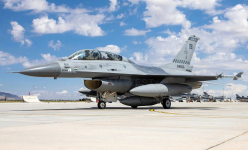
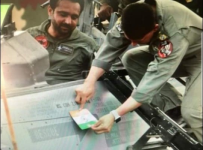
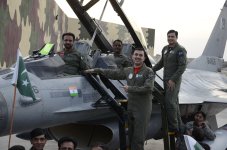
PAF F-16 Block 15 MLU, Tail No 84606 from No.11 Squadron 𝘼𝙧𝙧𝙤𝙬𝙨, Part of No 38 Multi-Role Wing Southern Air Command, Deployed at Shehbaz Airbase (Jacobabad), Proudly Carries an 𝐈𝐧𝐝𝐢𝐚𝐧 𝐅𝐥𝐚𝐠 under Canopy, Representing Su-30MKI Kill during Op Swift Retort.
 
PAF F-16 Block 15 MLU, Tail No 84606 from No.11 Squadron 𝘼𝙧𝙧𝙤𝙬𝙨, Part of No 38 Multi-Role Wing Southern Air Command, Deployed at Shehbaz Airbase (Jacobabad), Proudly Carries an 𝐈𝐧𝐝𝐢𝐚𝐧 𝐅𝐥𝐚𝐠 under Canopy, Representing Su-30MKI Kill during Op Swift Retort.
 
I am finding conflicting information about the APG-83 SABR AESA radar. This is the radar that equips the F-16V Upgrade and the F-16 Block-70/72.

It has gotten me a bit stumped.

One version states that it is quite an easy, ready-to-use plug-and-play upgrade for the older F-16 blocks. It is air-cooled and touts a detection range of 120 km for a 5m^2 RCS target.

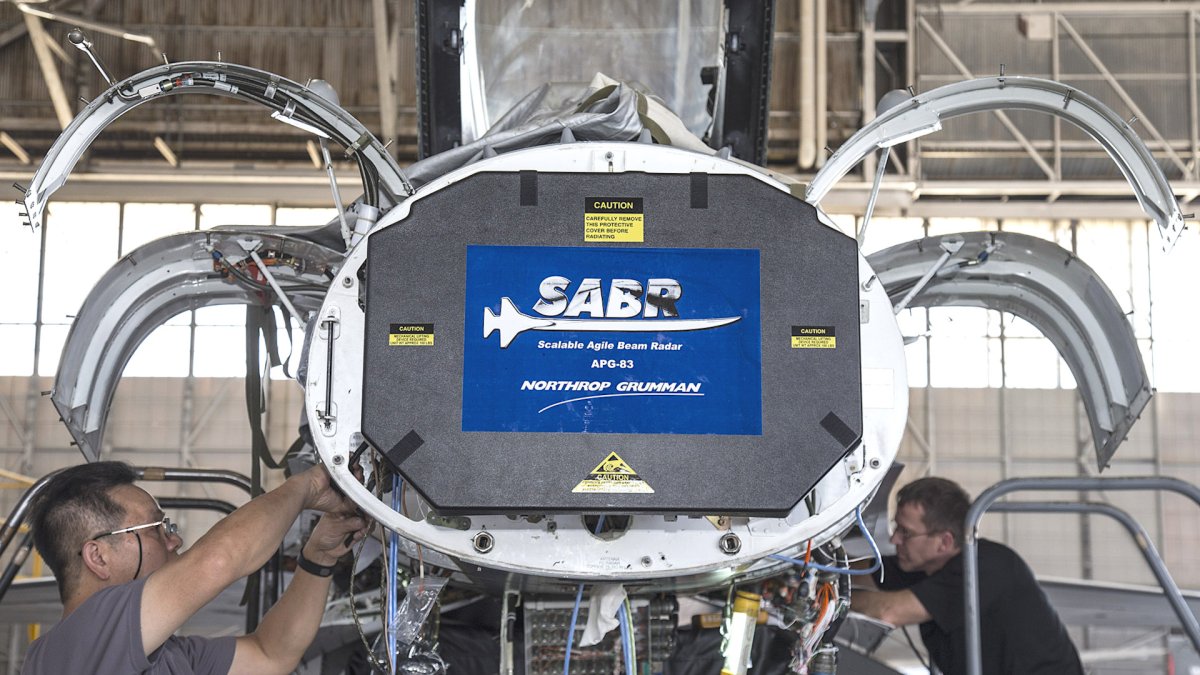
SABR is liquid cooled. It is plug and play and the install can be done in the field. NG supplies EVERYTHING needed. The wiring looms are preinstalled on bracket. The computers are all LRU's. New brackets are provided and the LQ system hooks up to the F-16s air supply, providing the heat exchanger with cool air over its fins. Its actually pretty amazing, they take the 4 LRU's behind the antenna, combine it into a single unit, then the antenna is another LRU and swapped for the SABR phased array. So youve taken 5 'bits' and integrated them into 2.

We can actually do this upgrade in Pakistan at home. On the line even under the sun. no special facilities needed.

This version doesn't seem to have any range advantage over the mechanically scanned APG-68(V)9 of our Block-52+ and the Block-15 MLUs, to speak of. The only advantage is that it is LPI and has multiple concurrent operational modes, and it is also jamming resistant.
This is never the case so id avoid simplifying things into "the only advantage", because neither you nor i know the full ins and outs of either system. Clearly its an extremely capable system if legacy ones are being ditched.

This same version also states that it is a distant second to the APG-80 AESA of the Block-60 of the UAEAF.
related to the F-35's radar moreso

Then there is another version, which states that it has a detection range of over 200 km or even over 300 km against a 5m^2 RCS target. This version doesn't mention whether it is air or liquid-cooled. And that it is considerably better than the APG-80.
Nobody knows, but itll likely be very high performance system

Can anybody kindly explain which version is closer to the truth?
 
Arsalan already pointed out the radar is liquid cooled.
You will not find any specs on AESA radars anywhere as these are highly guarded and advanced weapon systems. But you can get an idea from what has been written in various articles to understand it is many time more effective than legacy radars.


It is particularly notable that SABR’s liquid cooling system – which Rossi described as being akin to a “very sophisticated car radiator” – is entirely self-contained to the radar itself. In this system, developed for Northrop Grumman by a company called PDT, the coolant is then chilled using bleed air fed in from an existing system on the Viper that was originally designed to cool the AN/APG-68.

All told, Rossi said that it only takes a day and a half to swap in a new AN/APG-83 on an F-16.
 
Arsalan already pointed out the radar is liquid cooled.
You will not find any specs on AESA radars anywhere as these are highly guarded and advanced weapon systems. But you can get an idea from what has been written in various articles to understand it is many time more effective than legacy radars.


It is particularly notable that SABR’s liquid cooling system – which Rossi described as being akin to a “very sophisticated car radiator” – is entirely self-contained to the radar itself. In this system, developed for Northrop Grumman by a company called PDT, the coolant is then chilled using bleed air fed in from an existing system on the Viper that was originally designed to cool the AN/APG-68.

All told, Rossi said that it only takes a day and a half to swap in a new AN/APG-83 on an F-16.
The folks might not appreciate the amount of real-life testing required to fine tune the AESA parameters for the optimal ops. They put scores of engineers inside a gigantic Boeing a/c teeming with test and measurement equipment for 100s of hours on-the-fly experiments. Only the USA and China can afford this. No wonder the IAF Rafales remained clueless during the recent Indo-Pak aerial battles.....
 
It is hard to believe that SABR which can guide AIM120D missiles would be limited to just 120-150km detection range.

The brochure doesn't mention anything specific, but I am assuming it would be 200km range atleast since the F-16 nose size is pretty big too.
 
So realistically how many existing PAF F16s can get V upgrade? What would be the main advantages overall?
18 new BLK52s that were acquired in 2004-5

then the previous 40+ from original 1980s order.

So i am assuming around 60 or so jets can be upgrade to V standard. Now how many can actually be structurally fit for another 15 years at least, that will be determined. But I am assuming PAF would want two full squadrons definitely (40+ jets) to account for attrition as well.
 
18 new BLK52s that were acquired in 2004-5

then the previous 40+ from original 1980s order.

So i am assuming around 60 or so jets can be upgrade to V standard. Now how many can actually be structurally fit for another 15 years at least, that will be determined. But I am assuming PAF would want two full squadrons definitely (40+ jets) to account for attrition as well.
It's just the the 18 blk 52s, with the rumour of PAF acquiring J-10Cs I don't think they are getting the F-16V or atleast not beyond the single Blk 52 squadron.
 
It's just the the 18 blk 52s, with the rumour of PAF acquiring J-10Cs I don't think they are getting the F-16V or atleast not beyond the single Blk 52 squadron.
Like i said, the older 1980s F-16s upgrades depend on their structural life or if LM can offer in that regard as well.

PAF F-16s are used extensively, so PAF might want to have two squadrons and the older/less structurally fit F-16s being relegated to training and or spares salvaging roles.
 
I am finding conflicting information about the APG-83 SABR AESA radar. This is the radar that equips the F-16V Upgrade and the F-16 Block-70/72.

It has gotten me a bit stumped.

One version states that it is quite an easy, ready-to-use plug-and-play upgrade for the older F-16 blocks. It is air-cooled and touts a detection range of 120 km for a 5m^2 RCS target.

This version doesn't seem to have any range advantage over the mechanically scanned APG-68(V)9 of our Block-52+ and the Block-15 MLUs, to speak of. The only advantage is that it is LPI and has multiple concurrent operational modes, and it is also jamming resistant.

This same version also states that it is a distant second to the APG-80 AESA of the Block-60 of the UAEAF.

Then there is another version, which states that it has a detection range of over 200 km or even over 300 km against a 5m^2 RCS target. This version doesn't mention whether it is air or liquid-cooled. And that it is considerably better than the APG-80.

Can anybody kindly explain which version is closer to the truth?

AESA provides you with frequency hopping and broad spectrum scans in all conditions. Whether the range is the same or more compared to existing radars, that's a different issue. But AMRAAM-D 1's are near 180 km missiles, while SM series missiles have 300 km range and AMRAAM D-3's are over 200 km. So it's sufficient to say that current EXPORT AESA's at minimum will give you around 200 km for a 3M2 and around or above 250 KM on 5M2 as a standard.

The main issue in today's environment is to remain functional and capable facing heavy electronic resistance. That's where AESA can come in handy. Traditionally, the ranges are also higher. Usually not disclosed due to confidentiality, or, for mere reasons of adding limitations per the buyer. For USAF, the range will be X, for Israel, some degradation to Y and for say UAE or Indonesia, below Israel to have Z range.

I don't think Pakistan will or should upgrade ALL of it's F-16's to V standard. The capability is the real issue here. The block 52 or V, will remain second tier air defense fighters, because at MAX, the US will give us AMRAAM C-8's or D-1's. These are still a generation behind in range and capability compared to our PL-15 and future PL-16's.

The rest of 45 F-16's, we should bring back to front line service if we opt for Turkish Murad. The US will allow us that upgrade. The beauty is, with Murad, we can in near future use Gokdogan and Gokbora missiles, which will be similar in range compared to PL-15's.
 

Users who are viewing this thread

Pakistan Defence Latest

Country Watch Latest

Latest Posts

Back
Top