Regarding your concerns, I suggest you try playing the game yourself. You'll find the answers there.
@harpy1
Why Rafales and not Su57 chosen
If you truly want to know the answer to this question, and its deeper implications, I have a suggestion for you:
You are using multiple AI tools simultaneously for in-depth discussions. However, you must first add a paramount rule: maintain absolute rationality, objectivity, and neutrality, analyzing only from a scientific perspective and without introducing any political viewpoints or stances.
You will gain a wealth of knowledge.
BTW. After debating with several AIs for a long time, I came to the following conclusions:
India...
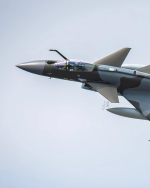
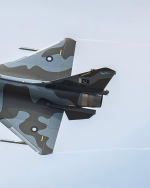
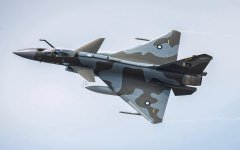
If IAF goes for 114 Rafales, especially the F4/F5 standards, that’s a serious short‑term boost. Rafale is already proven, and with upgrades across the fleet, plus Meteor BVRAAM and advanced EW (SPECTRA), it becomes a tough opponent. PAF’s J‑10C and JF‑17 Block III with PL‑15 (~200 km range) help balance the BVR equation, but Rafale’s electronic warfare sophistication will still complicate things.
On the other hand, Su‑57 offers stealth and payload advantages, but it’s still maturing. Export versions may not match Russian domestic ones, and logistics/support are uncertain. If IAF commits to Su‑57 in large numbers, PAF would need to accelerate counter‑stealth measures — low‑frequency radars, passive detection, and long‑range SAMs — while also considering stealth parity through J‑35 acquisition.
We also can’t ignore the “
Super Sukhoi” program. Upgraded Su‑30MKIs with AESA radar and Astra BVR missiles add depth to IAF’s fleet. Even without Rafale or Su‑57 expansion, these MKIs remain a persistent headache for PAF.
So for PAF, the path forward is clear but difficult: expand J‑10C numbers, fully operationalize JF‑17 Block III with PL‑15, and seriously consider inducting around 40 J‑35s for stealth parity. Even then, Rafale F4/F5 upgrades and Super Sukhoi modernization mean the challenge will remain significant.