PAF J-10CE News, Updates and Discussion

Status
Not open for further replies.
They reason they are testing new seats is because they have installed Martin Baker seats. Even the old PAF F6s had MB seats.
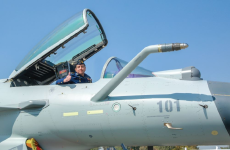
Not testing ejection seats. Training the ground crew on maitenance of Chinese ejection seats.

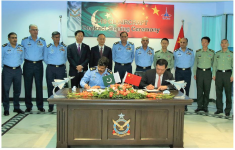
AVIC #China recently completed “intensive” training programs for the ejection seat and training on 7 other systems for the ground crew of the J-10C, for the #Pakistan Air Force in #Chengdu.
 
Credit:

tphuang​

On the topic of why JF-17 engine choice vs J-10. Pakistan has a long established maintenance process for RD-93s. It really would be costly and annoying for PAF to deviate from that. WS-13/21 is also a new engine that's just being used on a few UAVs and FC-31 prototypes. I can completely understand PAF looking at it as not worth the risk or the cost. The bigger question is why does PAF find RD-93MA to be not satisfactory? Is Klimov incapable of improving on a 40 year old design? That would fit the long pattern of Russians over-promoting something and not being able to deliver on time. It would also make sense given how little investment Russia has put into Mig-29/RD-33 series in the past 30 years.

Since PAF does not have any similar attachment for AL-31FN, it really doesn't make sense for PAF to deal with the additional hassle of Russian export licenses or possibly delivery issues with Salyut. China's ability to produce everything on J-10C internally is a major factor on why it can deliver this many J-10Cs so soon. Also, keep in mind that WS-10 is now in service with J-20, J-10C, J-11B and J-16. It should be quite reliable by this point. Its production levels are also quite good. In fact, they've already been able to upgrade it to 142kN thrust with WS-10C. That's as good as any Russian engine in production. That should tell you the current Chinese engine makers have more experience with developing new engines and upgrading existing engines than Russian ons. I would be surprised if WS-15 joins service later than Izdeliye 30.

For the same reason that US does not export F-22, China is unlikely to ever export J-20. The most realistic path for PAF is to work with CAC to develop a more multi-role version of J-10 that can conduct that J-10Cs are currently not asked to do. Another path is for PAF to work with PLAAF and CAC to develop a more stealthy version of J-10 that both air forces would have use for.
 
Credits:

serenity​

akistan working with CAC on something new even if based on J-10 is unlikely. It will cost Pakistan money. Even buying a few dozen J-10C at the same price PLAAF buys is still a lot of money. Developing something new just for PAF only means Pakistan shoulders the entire cost of such programs and then they will be buying it although at no real profit for CAC except the cost of overhead and all development expenses. That is simply not realistic.

All these sorts of programs cost so much money really only five countries in the world can afford to develop so many fighter programs and buy those fighters. China, USA, France, UK, Russia, and Sweden sort of at least in the past. Japan can do one project with available budget. Korea is doing well but partnered with USA for KFX project. India says they will do AMCA and India is a huge country and barely can do one program at a time.

Whatever Pakistan wants to develop out of some past CAC ideas like the other members mentioned would either require China to pay much of the bill or eat into Pakistan's funding for other things. Pakistan is a nuclear power. It's aim shouldn't be to create an equal counter force to India but to be able to make it too expensive for India to do anything conventionally damaging with losing sovereignty of Pakistan which doesn't count Kashmir. If it comes to Pakistan's own sovereignty at threat due to conventional war, Pakistan can resort to nuclear. That means its conventional forces should just aim to keep up slightly with India but not to equal it. That will bankrupt Pakistan and ensure its forever poverty.

By partnering up together, both countries can try to maximize Pakistan's effectiveness in thwarting any Indian aggression on smaller scale and on larger scale, India will not dare as long as Pakistan has almost an equal nuclear force to India.

That is enough. The rest for future fighter plans should look at 5th generation and beyond. If you have limited funds to spend, it is not smart to have block 3 JF-17, J-10C even if just 36 units or 20 something, and also some other 4.5 generation CAC project idea that requires deep investment and time for full development, then also AZM program and possibly merging AZM with other programs outside Pakistan or if not, then two separate 5th generations!? no way. Pakistan is sounding like it is Switzerland but 10 times the size? Come on even rich European countries barely buy or try and do one fighter project.

J-10C is to counter Rafale and be PAF's modern medium fighter because block 52 F-16 is not effective in this era with no phased radar and same 2000s missile as its absolute best one. If there is some CAC project that was shelved due to J-20 and other priorities from PLAAF which won't buy 2 or 3 separate fighter types of 4th generation, Pakistan doesn't have the money to develop and buy it fully and if it does have the money, it really shouldn't be wasting it in that way.
 
credit:

tphuang​

here is a couple of things I want to address here. First of all, I would consider WS-10 to be quite mature by this point. It's true that back in 2015, AL-31F probably did have long service life and reliability than WS-10. But we've gone through several years of flying now and PLAAF have been using its on J-10C for a couple of years without any major incidents. The original design spec for WS-10 had higher MTBO requirements than AL-31. Now that both engines are mature, I would imagine WS-10B currently would have better in service MTBO period than AL-31FN. More importantly, China is now producing massive quantities of WS-10 every year. You are probably going to have better after service care from China on WS-10B than you would from Russians on AL-31FN. IAF's AL-31FP issues with Russians is pretty well known. I'm not sure why people are acting like Russia is the hallmark of reliability. It's pretty bad.

Secondly, we've only had the one known J-10C prototype with TVC. It would be quite crazy for PAF to opt for that.

Thirdly, I actually don't think F-16V is a good choice for PAF at this point. It probably is an adequate option against Rafale, but there is not much growth left in the F-16 platform. F-16 at this point is maxed out in terms of what you can fit in there. It's already lost agility in order to fit AESA radar in there. In comparison, I think J-10C at this point can fit more larger/more powerful radar and electronics in there and will probably have more powerful engine to support that. There should be some growth left in J-10 program still.

Fourth, I don't get this fascination with saying that PAF never compromises on quality and always needs the best. That's simply not true for any Air Force, let alone when that faces a massive resource disadvantage again its biggest rival. The only Air Force who can always get the best is USAF. Everyone else, including China, needs to be realistic about their options based on who they can acquire from and what their budgets are. If you want to use IAF's strategy of shooting for the moon and fantasizing about exporter's marketing brochures, then you are going to end up as a smaller and weaker version of IAF. That would be a terrible strategy for PAF. PAF needs to make cost conscience decisions on what's most available that can immediately improve its capability and allow it continue to be a strong deterrence to an opponent with massive resource advantage. Getting J-10C now is about getting a strong deterrence against an obvious threat to balance of power in the form of Rafale. PAF cannot wait 5 years and sink a bunch of money into getting something else that looks good on paper. It wants IAF to continue to keep doing that.
 
As fortune would have the Thunder well endowed with such a long-ranged FCR, can anyone hazard a guesstimate as to what would be the max detection range of the J-10C's radar? With more TR Modules, the latter should have a longer range, shouldn't it?

The exact range really isn't that important. It's great for exporters to promote themselves and for fanboys to boast online, but it's really not that important. Keep in mind that Indian fanboys for years have been spreading online how great Su-30MKI's BARS radar is and how it can search 400 km all. And then, Russian exporters have been boasting about Su-35's Irbis radar having 350 km range vs 3m^2 target. But here is an analysis on why this is significantly overstated.
theaviationgeekclub.com

An in-depth analysis of why the Sukhoi Su-35 is the most overhyped 4th generation fighter aircraft - The Aviation Geek Club

An in-depth analysis of why the Sukhoi Su-35 is the most overhyped 4th generation fighter aircraft
theaviationgeekclub.com

Without knowing the scenario that these numbers are achieved, it's impossible to tell how capable the radar system is.
‘Despite being marketed as 4++ gen, Su-35 has the least capable avionics suite among its competitors. It’s the only major 4th gen. aircraft without an AESA radar or any form of Sensor Fusion. The Irbis-E is marketed as having a 350 km range against 3 m^2 target while in reality that’s only in cued-search in a tiny FoV. What’s rarely stated is that in normal volume search that range shrinks down to 200 km.


‘More importantly, Su-35’s radar has a maximum targeting range of 250 km – even for a B-52 like target.

We also see this in Irbis-E’s flight test video where it allegedly detected a single target from 268 km but wasn’t able to get a track until 100 km – all the while having just a single target to track.
Click to expand...

Btw, I have not independent verified claims from that link. My point is that exporter claims of a radar's range is meaningless without knowing how they arrived at that number. There is a reason why after China got Su-35, they just couldn't believe how behind the radar and avionics technology on there is compared to J-16. Of course, that has not stopped Indian fanboys online from claiming that their great MKI's radar is as good as J-16's radar. It takes some level of delusion to think Russian radar technology from 15 years ago is as good as China's radar technology from 6 years ago.

Of course, aside from just tracking range, it also matters how well a radar hides itself from RWR of opposing fighter jet. It also matters how well a radar counters EW signals the other side. Back when Rafale was still using PESA radar, they only advertised a detection range of 100 km. But that was against 1 m^2 targets. On top of that, Thales also claimed to have achieved LPI on their PESA radar, which is normally only possible on AESA radar. Nowadays, Rafale apparently have range of 200 km against 3 m^2 targets with its 800+ modules AESA radar. If we just go by range, it's half as good as BARS radar. Does anyone in their right mind think Rafale's radar is half as good as BARS?

But here are things to like about J-10C's radar vs both JF-17 and Rafale
1) There are more T/R modules which should theoretically allow for generation of more radar power, making it less susceptible to jamming, allow for greater tracking resolution and better ability in tracking multiple targets in the air and ground/sea.
2) It also has a larger radar aperture which (along with more T/R modules) theoretically allows radar beam to more accurately steered in a narrow beam to target area allowing for LPI by surrounding aircraft. Just imagine a wide beam emitting strong RF to the entire frontal FOV vs many smaller beams beaming at different targets. How much easier is it to pick up the former vs the latter?
3) Much greater thrust than JF-17, which will allow AESA radar to power EW suite to do stronger jamming.
4) Most likely GaN modules vs GaA modules on Rafale. Greater power in the former.

None of this says J-10C's radar and EW suite is better than Rafale's system. But it seems like they have managed to fit a larger equipment with more power and greater radar aperture on there than Rafale. It would be hard to know if what J-10C has is better for multi-target tracking or for EW warfare, but the potential is there. If we make the assumption that what's on the newly flown J-20S (developed in the past couple of years) is ahead of Rafale's RBE2-AA radar and EW suite (which was developed over 10 years ago using GaA T/R modules) in technology, then it should not surprise people if J-10C could adopt similar technology that will make it better than what Rafale has. There is just much faster improvement in the Chinese military industrial complex than European ones right now due to the much greater resources and investment. When PAF buys J-10C right now, it's buying present capability as well as future capability.

So when thinking about radar range, we should also think about what is its effective range vs Rafale or Sukhoi. What the range is against multiple targets? How hard it is for opposing aircraft to pick up your signals? How hard it is for opposing aircraft to jam/fool your radar? How well does your system present that information to the pilot? A lot of this won't be found out until you start training and find what works and what doesn't work. For example, when China first picked up Su-27, it realized very quickly that su-27's radar gives off its position really quickly and kept losing in training against J-7s. They learnt over time that they had to keep radar off until they get closer to the target.
 
Credit:

tphuang

I don't recall exactly, since I read those parts 7 to 8 years ago. It did open up my mind to just how much closer the actual engagements are taking place despite the maximum search range of radar and of the BVR AAMs. If J-7s could beat Su-27s, that means Su-27s cannot effectively keep tracking a small aircraft at more than 30 km out or utilize R-27s at more than 15 km out that all the engagements all end up as WVR engagements. Maybe Su-27s were detecting J-7s sooner, but J-7s noticed with RWR where Su-27s were coming from and were able to counteract that by breaking that tracking. And just as importantly, BVR AAMs range really don't mean much when the NEZ against a small, fast maneuvering aircraft is under 20 KM. Especially for a semi-active guided missile like R-27, Su-27/Mig-29 will also have to keep lock on the opposing aircraft for pretty much their entire duration. I also remember reading 10 years ago that USAF really wasn't using AIM-120 beyond 30 km against other fighter jet.

Of course, technologies have improved since then. The seekers on the active guided AAMs have gotten better. In the case of PL-15, it even has jam resistant AESA seekers. The newest missiles have better kinetic performance. AESA radars with LPI properties are also allow fighter jets to turn on their radar at longer range. Even with that, you still probably don't want to be firing at a 4th generation aircraft from more than 50 to 60 km out even with the most capable medium/long range AAMs like AIM-120D/PL-15/Meteor. Just think about that little missile seeker coupling with long range guidance from launching or friendly fighter trying to find a fast turning 4th/5th generation jet with the latest generation ECM. After some time, it will run out of energy. Of course, all of this could allow the attacking jet to move closer and fire off second or third missiles to destroy the target jet. On the other hand, it could also cause the target jet fly away more quickly and expose the attacking jet's position to other jets.

As a whole, I don't know if we can just use maximum range of these AAMs to compare them. It's good to know they have long NEZ. That means they have a lot of energy to chase targets. It's also good to know they have advanced seekers and anti-jamming properties, because that will allow them to lock onto target sooner and have better chance of hunting them down. But a lot of times, the engagement will still happen within WVR where SRAAM with the latest IIR seekers, strong IRCCM capabilities and 90 degree off bore sight allow better chance of hunting down advanced, high maneuvering and stealthy fighter jet.

I know I keep coming back to Russians, but they are really behind everyone else in missile, missile seeker and missile CCM technology. The most fanciful aircraft platform isn't going to be able to do that much with 90s era R-73 or early 2000s R-77 against modern fighter jet.
 

1647419855171.png

Why Pakistan’s New J-10C Fighters Have F-22-Style ‘Golden’ Stealth Canopies​

Military Watch Magazine
March-14th-2022

Military Watch Magazine


militarywatchmagazine.com


In the 13 years between the entry into service of the first J-10A fighters in 2005, and the latest most advanced variant the J-10C in the spring of 2018, the design has seen radical improvements going from a relatively basic fourth-generation jet into an aircraft with fifth generation capabilities in all aspects of performance other than its lack of stealth. Most notable improvements have included entirely new avionics, with new network centric warfare capabilities, helmet mounted sights and electronic warfare countermeasures making a very significant difference to combat potential, as well as integration of an AESA radar paired with PL-15 and PL-10 air to air missiles that are overwhelmingly more capable than the missiles of the original J-10, and the use of thrust vectoring engines. While not built around a stealth airframe like the fifth generation J-20, the ‘4++ generation’ J-10C has nevertheless seen its radar cross section reduced drastically complementing reductions to its radar section from its new sensor suite to make it more difficult to target at long ranges.


article_622edba06786b6_48098700.jpeg


J-10C with PL-15 and PL-10 Missiles


With an estimated 200 J-10C fighters entering service in the Chinese People’s Liberation Army over four years from March 2018, the aircraft saw its first exports confirmed in December 2021 with Pakistan expected to by several dozen and possibly over 100 fighters. The first of these landed in the country on March 4, and were formally inducted into service on March 11. Pakistan’s J-10Cs are considered far more likely to see combat than those in China itself, with the Pakistani Air Force engaging in combat far more frequently whether in skirmishes with neighbouring India or conducting airstrikes against various insurgent groups domestically. The Pakistani purchase has thus drawn new attention to the fighter’s features, as has the possible sale of the J-10C to Iran which has been widely speculated, with the fighters considered the most likely to equip the Iranian Air Force should it seek to modernise its fleet with imported jets.


article_622edbb4a907b4_59190981.jpeg


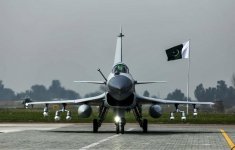
Pakistani Air Force J-10C with PL-15 and PL-10 Missiles


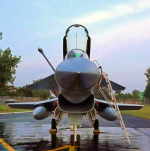
One feature of the J-10C which has gained considerable attention in Iran is the fighter’s ‘golden canopy,’ which is highly unusual for fourth generation aircraft but was previously seen on the J-20 and its American competitor the F-22 Raptor. Under some light conditions J-10C canopies appear golden due to an Indium Tin Oxide electroconductive film coating between the layers of optical glass, which provide this colouring and serve to scatter radio waves from the canopy to reduce the fighter’s radar cross section. It does so while maintaining transparency to visible radiation. The feature represents one of several next generation technologies being newly introduced into Pakistani service, and which it is the first in the region to benefit from. With the J-10C expected to form the elite of the Pakistani fleet for years to come, its ‘golden’ canopy serves to symbolise the aircraft’s status much as it does for the F-22 and J-20 in U.S. and Chinese service.
 
40f1-7caaf402ab4ad4d9824f414447bf0b01.jpg


According to US media, one feature of the J-10CE that has attracted considerable attention is the fighter's "golden canopy", which is very rare on fourth-generation aircraft, but in the J-20 and the US F-22 "Raptor". "I've seen it on a fighter jet. Under certain lighting conditions, the canopy of the J-10CE appears golden yellow due to an indium tin oxide conductive film coating between the optical glass layers. This color coating is mainly used to scatter radio waves from the cockpit to reduce the fighter's radar cross-section.

A window member composed of a transparent resin or inorganic glass with a transparent conducting film such as gold or ITO (indium tin oxide) coated thereon, is used as an electromagnetic wave shield window for stealth aircraft. Applying such transparent conducting film enables, while maintaining transparency to visible radiation, both a radio wave stealth property which scatters radio waves in various directions so as not to be detected by radar, and an electromagnetic wave shield property which prevents harmful electromagnetic waves, except for visible radiation, from invasion into an aircraft.

This feature is one of several new technologies introduced in Pakistan, the first country in the region to benefit from the technology. As the J-10CE is expected to become an elite fighter in the Pakistan Air Force in the coming years, its golden canopy symbolizes the aircraft's status.
 
J-10C is a 4.5+ generation, ultra-modern, omni-role fighter aircraft enabled with long-range first-shot Beyond Visual Range (BVR) capability which would offset any fighter capability possessed by our adversary.

To view this content we will need your consent to set third party cookies.
For more detailed information, see our cookies page.


Equipped with the latest avionics such as modern AESA radar, integrated EW suite, informationized fused sensor systems as well as the capability to carry a variety of modern weapons, the aircraft is capable to deny enemy advantage in the domains of air, land and sea warfare.

1702391937519.png

Owing to its excellent performance in all combat regimes and altitudes, matchless maneuverability and advanced integrated electronic warfare suite; the aircraft can take on any contemporary aerial and ground threats with a high degree of precision.

1702391773949.png

Owing to vigorous engagement by the leadership of PAF, a strategic framework was signed on April 21, 2021 which was followed by an immediate visit of PAF’s team to China. The contract for the acquisition of the J-10C weapons system was signed with Chinese Original Equipment Market (OEM) on June 25, 2021, which included the provision of jets and associated weaponry along with initial training of the air and ground crew.

1702391834798.png

Owing to the visionary leadership, an energetic team, immense cooperation, coordination and collaboration from China, availability of the aircraft was made possible within a record time of eight months, which is truly unprecedented. Immense and earnest support of the Chinese government played a pivotal role in the timely production of aircraft and training of PAF air and ground crew.

1702391672448.png

To view this content we will need your consent to set third party cookies.
For more detailed information, see our cookies page.


" PAF is inducting next generation combat system with always concept of state of the art technology
and weaponry last such event was in 1982 when F-16 aircraft joined the PAF fleet. NO 15
Sqn also known as cobras is the first PAF Sqn to be equipped with J10c dragons.

NO 15 Sqn has a glorious history of service to Pakistan was during was during war and in peace.

J10 c has a fully integrated weapons avionics and EW suite that make it a potent combat
system under the contemporary environment of noncontact warfare.

The aircraft is configured with. Undoubtedly PAF have always been fully motivated train and
skilled to deter any aggression and misadventure regardless of the contemn of threat. "

CAS Speech 11 March 2022


To view this content we will need your consent to set third party cookies.
For more detailed information, see our cookies page.


To view this content we will need your consent to set third party cookies.
For more detailed information, see our cookies page.


To view this content we will need your consent to set third party cookies.
For more detailed information, see our cookies page.
 
Last edited:

Mav3rick


It is not just about the Missile(s) but the SPECTRA suite on Rafale which sets the French jets apart from most competition. With SPECTRA, the Jets virtually become stealth and do not appear on enemy sensors.
SPECTRA- the term it seems is more for marketing and has done its job by ensuring most think it makes the plane invisible. It is an advanced ECM and probably ECCM suite. Every modern aircraft has one. Depends on one's ECM or jamming and the adversaries active seekers, any aircraft can do what spectra is believed to do.
 
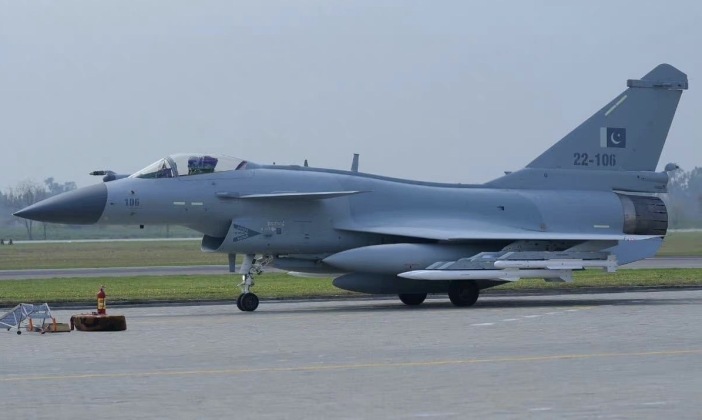
A Pakistan Air Force J-10C Omnirole Fighter Aircraft


Image
 
Status
Not open for further replies.

Users who are viewing this thread

Back
Top