Navigation
Install the app
How to install the app on iOS
Follow along with the video below to see how to install our site as a web app on your home screen.
Note: This feature may not be available in some browsers.
More options
Style variation
You are using an out of date browser. It may not display this or other websites correctly.
You should upgrade or use an alternative browser.
You should upgrade or use an alternative browser.
PAF J-10CE News, Updates and Discussion
- Thread starter amuqeetk
- Start date
- Status
- Not open for further replies.
More options
Who Replied?


Reichmarshal
Trusted Member
L 15 with its avionics package n weaponry that it can carry, are in place to prepare young pilots fresh off the academy to be able to fly 4.5 n 5th gen fighter ac.It is possible that the FT-7PGs and F-7PGs both get replaced by the L-15 provided the L-15 is(and is assumed so) capable of firing and using BVR weaponry. That would allow it to be combat effective when needed.
It will operate from mianwali in an FCU.
We all need to understand that the manufacturer advertises as an add on n not as the ac core capabilities.
Eg k8 also has a2a n a2g capabilities n airforces like Sudan used them great effect.....but in case of AF the size of PAF were to use its trainers in anger then it signals that we have lost the conflict.

Harbyharb
Registered Member


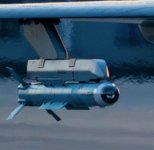
PL-10 WVR IR missile. 4th gen cooled starring array, 60G load capacity, gas rudder.What's this?

FuturePAF
THINK TANK: CONSULTANT
I will grant you it may sound like a wish list, but it is not an implausible composition for the PAF, neither in numbers nor composition (it makes no sense to induct the KAAN or the J-31 unless they are procure in numbers large enough to change the outcome of any conflict with India). What I suggest the PAF to procure is based the types of platforms that have allowed other air forces to deal with similar kinds of threats. Smaller numbers of similar platforms at a qualitative edge to the PAF and complicate the IAF’s planning, as seen with Swift Retort. For the time being, for example, if the PAF can’t procure and field a squadron or two of J-10 in a dedicated jammer configuration, the PAF could look to make one squadron of dedicated JF-17B twin seaters in the EW configuration, with jammers in different bands distributed over multiple planes while other planes carry Chinese equivalents of the Mald-J to Stand-in Jamming. Furthermore, the ZDK-03 planes that are being retired have all the networking intact for high bandwidth comms associated with an AWACS. These planes should be turned into the equivalent of the EC-130 Compass call and become dedicated comms jammers. Jamming Indian comms from multiple platforms across the EM spectrum, will maximize disruption, and offset any advantage they may have in numbers.By seeing your posts got an idea are solely either on assumption or on wish list.
You need to understand that any procurement of weapons are never based on whims or on assumptions & always there is a thought process & careful consideration behind it, whether geopolitical or geostrategic.
They key as always will come down to our economy and if we can come up with another offset strategy to achieve the same goals; deterring India.
As in a recent interview Ayesha Siddiqa, said any aircraft procured by Pakistan from China are being sold (not granted) and being funded by a loan by China to Pakistan. Furthermore, she said our two most pressing threats are the internal threats and the threat emanating from Afghanistan. IMHO, Both of which could be better addressed with money being spend on economic development (which in the long term could generate tax revenues to fund whatever military procurements we need). As well as a better domestic social contract and comprehensive diplomatic effort to synchronize Afghan prosperity to Pakistani stability.
So for the next 5 years at least, we should stick to increasing J-10 numbers IMHO, and capping the JF-17 numbers at their current fleet size. Even if not produced in numbers large enough to completely replace the Mirages, the availability of the new J-10, should make them more capable than the mirages. We have around 180 Mirages. Even a J-10 fleet, with high availability, of 90 should be adequate to replace the Mirages. 65 more J-10s on top of the current 25 procured.
In the mean time, PAF engineers should look at making the JF-17 and J-10 operate like the Gripen, in terms of turn around time and quick diagnostics and maintenance, so in wartime, sortie rates can be at least 3-5 per day. Furthermore, exploring the use of CFTs and OBOGS can really extend the duration of patrols decreasing the necessity of more and more platforms to do the same tasks.
Last edited:

Qureshi
Registered Member

I will grant you it may sound like a wish list, but it is not an implausible composition for the PAF, neither in numbers nor composition (it makes no sense to induct the KAAN or the J-31 unless they are procure in numbers large enough to change the outcome of any conflict with India). What I suggest the PAF to procure is based the types of platforms that have allowed other air forces to deal with similar kinds of threats. Smaller numbers of similar platforms at a qualitative edge to the PAF and complicate the IAF’s planning, as seen with Swift Retort. For the time being, for example, if the PAF can’t procure and field a squadron or two of J-10 in a dedicated jammer configuration, the PAF could look to make one squadron of dedicated JF-17B twin seaters in the EW configuration, with jammers in different bands distributed over multiple planes while other planes carry Chinese equivalents of the Mald-J to Stand-in Jamming. Furthermore, the ZDK-03 planes that are being retired have all the networking intact for high bandwidth comms associated with an AWACS. These planes should be turned into the equivalent of the EC-130 Compass call and become dedicated comms jammers. Jamming Indian comms from multiple platforms across the EM spectrum, will maximize disruption, and offset any advantage they may have in numbers.
They key as always will come down to our economy and if we can come up with another offset strategy to achieve the same goals; deterring India.
As in a recent interview Ayesha Siddiqa, said any aircraft procured by Pakistan from China are being sold (not granted) and being funded by a loan by China to Pakistan. Furthermore, she said our two most pressing threats are the internal threats and the threat emanating from Afghanistan. IMHO, Both of which could be better addressed with money being spend on economic development (which in the long term could generate tax revenues to fund whatever military procurements we need). As well as a better domestic social contract and comprehensive diplomatic effort to synchronize Afghan prosperity to Pakistani stability.
So for the next 5 years at least, we should stick to increasing J-10 numbers IMHO, and capping the JF-17 numbers at their current fleet size. Even if not produced in numbers large enough to completely replace the Mirages, the availability of the new J-10, should make them more capable than the mirages. We have around 180 Mirages. Even a J-10 fleet, with high availability, of 90 should be adequate to replace the Mirages. 65 more J-10s on top of the current 25 procured.
In the mean time, PAF engineers should look at making the JF-17 and J-10 operate like the Gripen, in terms of turn around time and quick diagnostics and maintenance, so in wartime, sortie rates can be at least 3-5 per day. Furthermore, exploring the use of CFTs and OBOGS can really extend the duration of patrols decreasing the necessity of more and more platforms to do the same tasks.
The PAF think tanks will receive your message and be advised to get in touch with you if they require a planner.
Below is merely a recollection recall.....
By seeing your posts got an idea are solely either on assumption or on wish list.
You need to understand that any procurement of weapons are never based on whims or on assumptions & always there is a thought process & careful consideration behind it, whether geopolitical or geostrategic.

FOOLS_NIGHTMARE
Elite Member

As the ZILZAAL-2 Joint Exercise between PAF and QEAF commences, the performance of Eastern J-10C against the Western Eurofighter Typhoon will be an interesting spectacle.
The expected better performance of J-10 may force GCC nations to reconsider West as their fighter jet supplier!
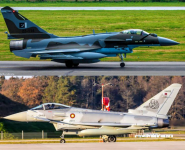
The expected better performance of J-10 may force GCC nations to reconsider West as their fighter jet supplier!

Quwa
Research Partner
The PAF never committed to a fighter without planning for at least 80-90 units.
So, the minimum for both the J-10CE and J-31 would be 5 to 6 squadrons, each. However, their respective procurement timelines are also at different points.
For the PAF, the J-10CE is their main play through the rest of the 2020s and, possibly, early 2030s. If we speak in practical terms at this moment, the J-10CE is the only fighter that matters. Yes, the J-31 is on the roadmap on paper, but the J-10CE is already in production, the PAF has the infrastructure, and it is relatively cost-effective. So, from this point and until the J-31, only the J-10CE matters.
The timeline for the J-31 could start around 2030~2035. However, the key point isn't the start point, but the ending point, which will be indefinite (until a 6GFA becomes a thing). So, the PAF may not reach its target fleet size for the J-31 until very, very far (like 2040s or 2050s), but from the 2030s, that'll be the direction it takes.
So, by 2032, I think the PAF fleet would be:
Until then, I'll make a few controversial points.
First, I think there's a fair chance that further JF-17 production may be capped and, instead, the PAF will lean into J-10CEs. No disrespect to the JF-17C's multirole capabilities, but if the PAF gains a larger asset (like J-31 or even KAAN), then why does it need the JF-17C's SOW capabilities? If the J-10CE is the superior air-to-air asset, then why does the PAF need more JF-17Cs? We're down to LIFT, COIN, and CAS -- yet the PAF is seeking the L-15B.
Remember, the JF-17 was developed to handle the needs of today, and we've reached that point with the near-170 aircraft inducted. From this point on, the PAF's procurement plans have to look at the 2030s, 2040s, and 2050s. From a capability standpoint, the more optimal route is to invest in additional J-10CEs and, when available, J-31s.
Second, the induction of a multi-layered 'workhorse' SAM (GIDS LoMADS, range of 7 km to 100 km) and long-range SAMs will reduce the required number of air defence fighters. This isn't to say that the PAF is moving away from such fighters; rather, it'll invest in a more sizable number of J-10CEs to manage the air-to-air need. However, it'll likely work to replace the JF-17s with fewer higher-performance fighters (IMO: 90~120 J-10CE in total).
What's left is the local area, point-defence fighter and CAS/COIN platform. If not for the PAF's interest in the L-15B, I could see the PAF continuing with the JF-17. However, we also got the L-15B apparently on the roadmap.
So, here's what I'm seeing:
Beyond that - the question of replacing old F-16s and old JF-17 (Block-I/IIs) - it looks like the PAF would prefer J-31 and J-10CE for the offensive and denial roles, respectively.
So, the minimum for both the J-10CE and J-31 would be 5 to 6 squadrons, each. However, their respective procurement timelines are also at different points.
For the PAF, the J-10CE is their main play through the rest of the 2020s and, possibly, early 2030s. If we speak in practical terms at this moment, the J-10CE is the only fighter that matters. Yes, the J-31 is on the roadmap on paper, but the J-10CE is already in production, the PAF has the infrastructure, and it is relatively cost-effective. So, from this point and until the J-31, only the J-10CE matters.
The timeline for the J-31 could start around 2030~2035. However, the key point isn't the start point, but the ending point, which will be indefinite (until a 6GFA becomes a thing). So, the PAF may not reach its target fleet size for the J-31 until very, very far (like 2040s or 2050s), but from the 2030s, that'll be the direction it takes.
So, by 2032, I think the PAF fleet would be:
- ~90 J-10CE
- ~18 Block-52+
- ~50 Block-15 ADF/MLU
- 12~16 J-31 - the NGFA starts replacing these F-16s
- ~30 JF-17C
- ~26 JF-17B
- ~62 JF-17 Block-II+ (upgraded with AESA radars & HMD/S)
- ~50 JF-17 Block-I
Until then, I'll make a few controversial points.
First, I think there's a fair chance that further JF-17 production may be capped and, instead, the PAF will lean into J-10CEs. No disrespect to the JF-17C's multirole capabilities, but if the PAF gains a larger asset (like J-31 or even KAAN), then why does it need the JF-17C's SOW capabilities? If the J-10CE is the superior air-to-air asset, then why does the PAF need more JF-17Cs? We're down to LIFT, COIN, and CAS -- yet the PAF is seeking the L-15B.
Remember, the JF-17 was developed to handle the needs of today, and we've reached that point with the near-170 aircraft inducted. From this point on, the PAF's procurement plans have to look at the 2030s, 2040s, and 2050s. From a capability standpoint, the more optimal route is to invest in additional J-10CEs and, when available, J-31s.
Second, the induction of a multi-layered 'workhorse' SAM (GIDS LoMADS, range of 7 km to 100 km) and long-range SAMs will reduce the required number of air defence fighters. This isn't to say that the PAF is moving away from such fighters; rather, it'll invest in a more sizable number of J-10CEs to manage the air-to-air need. However, it'll likely work to replace the JF-17s with fewer higher-performance fighters (IMO: 90~120 J-10CE in total).
What's left is the local area, point-defence fighter and CAS/COIN platform. If not for the PAF's interest in the L-15B, I could see the PAF continuing with the JF-17. However, we also got the L-15B apparently on the roadmap.
So, here's what I'm seeing:
- J-10CE outperforms JF-17C in A2A
- L-15B a better fit than JF-17B in LIFT
- L-15B can also handle COIN/CAS, emergency A2A
- J-31 will outperform JF-17C in A2A, A2G, and AShW
Beyond that - the question of replacing old F-16s and old JF-17 (Block-I/IIs) - it looks like the PAF would prefer J-31 and J-10CE for the offensive and denial roles, respectively.
Last edited:

GriffinsRule
THINK TANK: CONSULTANT
What about it's flight performance? Can it match a fighter jet like F-7?Following are the characteristics of L15B...
And many more & F7PGs won't have majority of above, hence your claim that F7PG is frontline fighter & L15B can't replace, it is needs to be reconsider.
- Equipped with X-band PESA radar.
- 9 Hard points
- HUD & HOTAS
- Twin Engines
- PL-12 active, radar-guided, beyond visual-range, air-to-air missiles
- PL-10 infrared-homing, short-range, air-to-air missiles
- PL-8 infrared-guided, short-range, air-to-air missiles,
- LT-2 laser-guided bombs
- LS-6 precision-guided bombs.
Secondly, let me brief you the thought process/logic behind acquiring this bird & it's role in PAF.
- L15B fills the technical gap before cadets gets their hands on JF17s since after completing their intermediate training on K8s, they are required to have a LIFT platform. Currently, F7PGs are performing this role which is not up to that level.
- This bird can be use for DACT/CCS or COIN/CT operations.
Even a propeller driven Tucano carriers more and varies weapons compared to the F-7.
Qureshi
Registered Member
What about it's flight performance? Can it match a fighter jet like F-7?
Even a propeller driven Tucano carriers more and varies weapons compared to the F-7.
Well below is the answer with power plant comparison....
F-7PG (Single Engine)
- Powerplant: 1 × Liyang Wopen-13F afterburning turbojet, 44.1 kN (9,900 lbf) thrust dry, 64.7 kN (14,500 lbf) with afterburner
L-15B (Twin Engine)
- Maximum thrust: 2520 kgf / 24.7 kN (5,552.78 lbf) in takeoff mode (non-afterburning), 4200 kgf / 41.2 kN (9,262.13 lbf) afterburning.
Quwa
Research Partner
The L-15B has more thrust/power, a greater payload, a longer-ranged radar (PESA no less, possibly changed to an AESA for the PAF), a tactical data-link system, and compatibility with BVRAAM, PGBs, and targeting pod and LGBs/LGMs. It's functionally a better fighter platform than the F-7PG.What about it's flight performance? Can it match a fighter jet like F-7?
Even a propeller driven Tucano carriers more and varies weapons compared to the F-7.

Oscar
Moderator
Disagree with that sentence entirely - there is no signal of defeat in using those assets nor is that even a thought. For years now - FT-5, and the K-8s have been trained to wartime roles for anti-UAV operations. This has been documented in AFML 15 with its avionics package n weaponry that it can carry, are in place to prepare young pilots fresh off the academy to be able to fly 4.5 n 5th gen fighter ac.
It will operate from mianwali in an FCU.
We all need to understand that the manufacturer advertises as an add on n not as the ac core capabilities.
Eg k8 also has a2a n a2g capabilities n airforces like Sudan used them great effect.....but in case of AF the size of PAF were to use its trainers in anger then it signals that we have lost the conflict.

Dreamer
Registered Member
Do you think that when the JF-17 Blk 3 order was reduced from 50 to 30, it was because remaining 20 were to be J-10C's?The PAF never committed to a fighter without planning for at least 80-90 units.
So, the minimum for both the J-10CE and J-31 would be 5 to 6 squadrons, each. However, their respective procurement timelines are also at different points.
For the PAF, the J-10CE is their main play through the rest of the 2020s and, possibly, early 2030s. If we speak in practical terms at this moment, the J-10CE is the only fighter that matters. Yes, the J-31 is on the roadmap on paper, but the J-10CE is already in production, the PAF has the infrastructure, and it is relatively cost-effective. So, from this point and until the J-31, only the J-10CE matters.
The timeline for the J-31 could start around 2030~2035. However, the key point isn't the start point, but the ending point, which will be indefinite (until a 6GFA becomes a thing). So, the PAF may not reach its target fleet size for the J-31 until very, very far (like 2040s or 2050s), but from the 2030s, that'll be the direction it takes.
So, by 2032, I think the PAF fleet would be:
I don't think the KAAN would even be in the conversation in the 2030s. Yes, the PAF seems to be interested in it, but it's not on the roadmap as of yet. Perhaps an aspirational get, but not a real plan for the time being. KAAN could be a post-2040 thing, but by that point, we're talking about a very different situation where improvements in GBADS and the availability of UCAVs may change how the PAF views its need for fighter aircraft.
- ~90 J-10CE
- ~18 Block-52+
- ~50 Block-15 ADF/MLU
- 12~16 J-31 - the NGFA starts replacing these F-16s
- ~30 JF-17C
- ~26 JF-17B
- ~62 JF-17 Block-II+ (upgraded with AESA radars & HMD/S)
- ~50 JF-17 Block-I
Until then, I'll make a few controversial points.
First, I think there's a fair chance that further JF-17 production may be capped and, instead, the PAF will lean into J-10CEs. No disrespect to the JF-17C's multirole capabilities, but if the PAF gains a larger asset (like J-31 or even KAAN), then why does it need the JF-17C's SOW capabilities? If the J-10CE is the superior air-to-air asset, then why does the PAF need more JF-17Cs? We're down to LIFT, COIN, and CAS -- yet the PAF is seeking the L-15B.
Remember, the JF-17 was developed to handle the needs of today, and we've reached that point with the near-170 aircraft inducted. From this point on, the PAF's procurement plans have to look at the 2030s, 2040s, and 2050s. From a capability standpoint, the more optimal route is to invest in additional J-10CEs and, when available, J-31s.
Second, the induction of a multi-layered 'workhorse' SAM (GIDS LoMADS, range of 7 km to 100 km) and long-range SAMs will reduce the required number of air defence fighters. This isn't to say that the PAF is moving away from such fighters; rather, it'll invest in a more sizable number of J-10CEs to manage the air-to-air need. However, it'll likely work to replace the JF-17s with fewer higher-performance fighters (IMO: 90~120 J-10CE in total).
What's left is the local area, point-defence fighter and CAS/COIN platform. If not for the PAF's interest in the L-15B, I could see the PAF continuing with the JF-17. However, we also got the L-15B apparently on the roadmap.
So, here's what I'm seeing:
Pakistan has finite money, and with the PAF creating pathways for these other platforms, I can't see where additional JF-17s would fit. The PAF's focus could shift towards retaining JF-17s for an extended timeframe (especially JF-17B/C) via SLEP. But, IMO, it looks like the PAF is phasing out remnant old planes with J-10CE, L-15B, and the current 30 JF-17Cs.
- J-10CE outperforms JF-17C in A2A
- L-15B a better fit than JF-17B in LIFT
- L-15B can also handle COIN/CAS, emergency A2A
- J-31 will outperform JF-17C in A2A, A2G, and AShW
Beyond that - the question of replacing old F-16s and old JF-17 (Block-I/IIs) - it looks like the PAF would prefer J-31 and J-10CE for the offensive and denial roles, respectively.
Secondly while it remains to be seen if JF-17 numbers will increase or not, I don't agree that those numbers will go down anytime soon by retiring even Blk-1's, let alone Blk-2's. I think these will stay for quite some time.
Quwa
Research Partner
Tbh I think the original Block 3 plans were split between the JF-17B and JF-17C. They're based on the same core platform, e.g. same new FBW, meant to carry an AESA radar, etc.Do you think that when the JF-17 Blk 3 order was reduced from 50 to 30, it was because remaining 20 were to be J-10C's?
Secondly while it remains to be seen if JF-17 numbers will increase or not, I don't agree that those numbers will go down anytime soon by retiring even Blk-1's, let alone Blk-2's. I think these will stay for quite some time.
except f-7pg is mach 2 v/s mach 1.4 that is L15The L-15B has more thrust/power, a greater payload, a longer-ranged radar (PESA no less, possibly changed to an AESA for the PAF), a tactical data-link system, and compatibility with BVRAAM, PGBs, and targeting pod and LGBs/LGMs. It's functionally a better fighter platform than the F-7PG.
Quwa
Research Partner
True, but a lot of the legacy fighters cross Mach 2, whereas the 4/4.5-gen ones tend to top out at Mach 1.8 or Mach 1.6. IIRC, the JF-17 reaches about Mach 1.6 to Mach 1.8. It's the overall package that counts now.except f-7pg is mach 2 v/s mach 1.4 that is L15
- Status
- Not open for further replies.
Users who are viewing this thread
Total: 4 (members: 0, guests: 4)
Pakistan Defence Latest
-
-
KP govt backs out of counterterrorism commitments during talks: Naqvi (2 Viewers)
- Latest: White Privilege
-
-

-
Country Watch Latest
-
-
 Trump orders military base mass shooter to be executed by firing squad (9 Viewers)
- Latest: Vikramaditya1
-
-

-

Latest Posts
-
-
-
Makkah Defence Alliance: Turkey, Saudi Arabia, and Pakistan, news & updates (41 Viewers)
- Latest: NA71
-

-