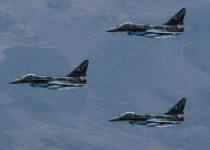
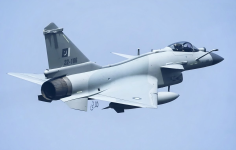
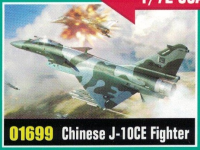
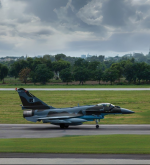
PAF J-10CE News, Updates and Discussion

Status
Not open for further replies.
simply put u.s will never let its leverage slip away in Pakistan.
Especially in the context of mulling of taking control over the Wakhan Corridor to directly connect to the CA via the shortest possible land routes. President Trump hasn't forgotten Afganistan. He might need to show some ROI from the Afgan "cost center" to insult the Biden administration by exposing them how much loser it was. Trumpism is all about showing how "stupid" the other folks are and getting votes by tons....

Now, getting an approval from the Congress might be an issue provided the Bharati influence, and Pakistan is always a low hanging fruit to appease Bharat. Another possibility might be allowing the PAF F-16s to have OZGUR updates with options to put some US systems bypassing the Congress. Recent postive change in the overture of the Western policies toward Turkey might make it possible. Thus, you can kill the snake without breaking the stick.....
 
Last edited:
That is the general rule of thumb, but there have been instances of PAF having an "interim" type in smaller numbers like the A-5 and the H-5 Bomber.

Could be we just decided on 36 J-10Cs to counter the Rafale and keep us in AESA/PL-15s till the J-35s arrive?

Once J-35s start getting delivered we need to go all out on it
Yes, niche requirements could be the exception, which would explain the A-5 and H-6.

But the J-10CE is a solid multirole platform, the type that you can use to build a very good fighter fleet on its own terms. So, my hunch is that the PAF signed onto the J-10CE with the intent to acquire 80-90+ units.

That said, and I'll retract my earlier statement a bit, but the J-35A might actually be the niche requirement. For the PAF, the J-35A embodies everything it'd need for an offensive platform, one that can form the center of future Swift Retort-scale operations.

So, in that sense, the PAF wouldn't need that many J-35As, especially if the offensive operations also leverage UCAVs, like the Bayraktar Kızılelma for example.

So, in that context, the PAF's roadmap for J-35As may be for 40~50 aircraft in total (plus a similar number of large UCAVs). That is purely for offensive operations.

The defensive posture would be carried by the J-10CE, JF-17 Block-2+/3/OCU, and air defence systems like HQ-9BE, HQ-16FE, LoMADS, etc. If they can throw in upgraded F-16 Block-52+ and LIFTs with AESA radars and BVR, then all the better, shore it all up.
 
Especially in the context of mulling of taking control over the Wakhan Corridor to directly connect to the CA via the shortest possible land routes. President Trump hasn't forgotten Afganistan. He might need to show some ROI from the Afgan "cost center" to insult the Biden administration by exposing them how much loser it was. Trumpism is all about showing how "stupid" the other folks are and getting votes by tons....

Now, getting an approval from the Congress might be an issue provided the Bharati influence, and Pakistan is always a low hanging fruit to appease Bharat. Another possibility might be allowing the PAF F-16s to have OZGUR updates with options to put some US systems bypassing the Congress. Recent postive change in the overture of the Western policies toward Turkey might make it possible. Thus, you can kill the snake without breaking the stick.....
PAF has congressional approval to buy 18 brand new F 16
 
Let me give you an example, Iran recently has approached Pakistan for JF-17 Thunder jets but before it Iran went to China to acquire J-10C but the deal was not finalized as Iran wanted to pay the cost in crude oil which reportedly China disagreed with so the point is that Pakistan is no different than Iran in terms of paying money for the jets but since China considers Pakistan as a strategic ally so they provided us these J-10Cs on soft loans which option they didn't offered to Iran so that speaks everything.
There is no correlation between your example and my analysis. Also, your example has a large element of reverie and is not informative.

1, The Chinese view of international relations is completely different from the Pakistani view. China's contractual program to sell J-10CE to Pakistan cannot be compared with other countries. In Chinese view, if they want to buy Chinese fighters, they need to offer the right deal. This is normal trade relationship.

2, Selling JF-17 is not Pakistan's exclusive right. Both China and Pakistan can sell JF-17 to a third party (the contract needs to be agreed by both China and Pakistan). I.e., they can negotiate with China or with Pakistan, but the final contract needs to be agreed by both China and Pakistan.

As to whether Iran is negotiating with China for the J-10CE, and the exact terms of the negotiations, I won't comment. I will not comment on whether Iran seeks to buy JF-17 from Pakistan. They have no relevance to my question.

Let me express my views in a more direct way.
My view. Both Pakistan and India have common problems in developing their weaponry. Namely, they are seriously detached from autonomy and real-world combat and have a very high degree of formalism. Weapons and equipment are being developed more for political propaganda than for real warfare. Fortunately, both sides are in exactly the same situation on this issue.
This is my honest opinion. When the Chinese express strongly controversial topics, they usually use more subtle hints rather than direct descriptions. This is easily misunderstood by others.
 
There is no correlation between your example and my analysis. Also, your example has a large element of reverie and is not informative.

1, The Chinese view of international relations is completely different from the Pakistani view. China's contractual program to sell J-10CE to Pakistan cannot be compared with other countries. In Chinese view, if they want to buy Chinese fighters, they need to offer the right deal. This is normal trade relationship.

2, Selling JF-17 is not Pakistan's exclusive right. Both China and Pakistan can sell JF-17 to a third party (the contract needs to be agreed by both China and Pakistan). I.e., they can negotiate with China or with Pakistan, but the final contract needs to be agreed by both China and Pakistan.

As to whether Iran is negotiating with China for the J-10CE, and the exact terms of the negotiations, I won't comment. I will not comment on whether Iran seeks to buy JF-17 from Pakistan. They have no relevance to my question.

Let me express my views in a more direct way.
My view. Both Pakistan and India have common problems in developing their weaponry. Namely, they are seriously detached from autonomy and real-world combat and have a very high degree of formalism. Weapons and equipment are being developed more for political propaganda than for real warfare. Fortunately, both sides are in exactly the same situation on this issue.
This is my honest opinion. When the Chinese express strongly controversial topics, they usually use more subtle hints rather than direct descriptions. This is easily misunderstood by others.

Dear I agree with you but do remember the Chinese approach to warfare differs significantly from that of Pakistan, India, and the rest of the world. The Chinese prioritize non-military strategies and strive to achieve victory through political, economic, and social means. They often seek to avoid direct physical conflict, employing tactics such as diplomacy, economic pressure, and information warfare to weaken their adversaries before resorting to military force. Military force is used as a last resort and often when they have already gained a significant advantage. In contrast, countries like Pakistan and India, among others, may not always prioritize long-term strategic planning and may be more inclined towards immediate military responses. This can lead to different approaches to conflict resolution. I am not suggesting that the Chinese approach is superior or that the Pakistani and Indian approaches are inferior. I am simply stating that they differ, and this leads to different ways of conducting warfare. There are reason Pakistan and India are not at chinese level and they are very solid whether we like it or not. Unfortunately.
 
Dear I agree with you but do remember the Chinese approach to warfare differs significantly from that of Pakistan, India, and the rest of the world. The Chinese prioritize non-military strategies and strive to achieve victory through political, economic, and social means. They often seek to avoid direct physical conflict, employing tactics such as diplomacy, economic pressure, and information warfare to weaken their adversaries before resorting to military force. Military force is used as a last resort and often when they have already gained a significant advantage. In contrast, countries like Pakistan and India, among others, may not always prioritize long-term strategic planning and may be more inclined towards immediate military responses. This can lead to different approaches to conflict resolution. I am not suggesting that the Chinese approach is superior or that the Pakistani and Indian approaches are inferior. I am simply stating that they differ, and this leads to different ways of conducting warfare. There are reason Pakistan and India are not at chinese level and they are very solid whether we like it or not. Unfortunately.
I can continue this discussion with you if MODS thinks it is not off topic.

1, In national competition, military competition is the foundation. It is the underpinning of the use of non-war means in national competition. That is, any competition of non-war means is based on the foundation of strong military power. Without strong military power as a foundation, all other means are nonsense. Many countries in the world, they either join military alliances or seek the shelter of military powers. Only then are they qualified to talk about other means of competition. The building of a country's military power does not represent the means it now uses. The fact that China is now prioritizing the use of non-war means does not represent the direction of China's military force building.
If not for the PLA as a strong backing for China, the Americans would not have any interest in engaging in a tech and trade war with China.
真理只在大炮射程之内,尊严只在剑锋之上!(Truth lies only within the range of artillery, dignity only at the point of a sword.)

2. The autonomy of the development of weaponry and equipment and the practicality of military force have nothing to do with the country's current strength or diplomatic environment. It has only to do with the country's sense of national independence. Of course, it also has nothing to do with the country's current strength. It depends only on your desire and determination.
North Korea. A globally recognized backward country. It is able to produce many of its own weapons independently. While these weapons may be very backward, North Korea does manage to manufacture them independently. However, so far, India and Pakistan have been unable to manufacture a passable rifle bullet completely independently.

3. The basic rule of international military trade is that it must not threaten their own security.
Pakistan and India are among the world's top importers of arms, and both are able to purchase a wide range of advanced weapons from many countries around the globe.
Let us put our thinking in a different direction.
Why are these countries willing to export arms to them?
Why are these countries not worried that these weapons will threaten their security?
Why are these countries not worried that India and Pakistan will copy these weapons?
Why is it that when India and Pakistan come up with a program of self-development of weapons, various military-industrial powers actively cooperate with them instead of blocking them?
If we go on, here are a million “why's” ......
 
Last edited:
To view this content we will need your consent to set third party cookies.
For more detailed information, see our cookies page.


To view this content we will need your consent to set third party cookies.
For more detailed information, see our cookies page.


To view this content we will need your consent to set third party cookies.
For more detailed information, see our cookies page.
 
The Chinese prioritize non-military strategies and strive to achieve victory through political, economic, and social means. They often seek to avoid direct physical conflict, employing tactics such as diplomacy, economic pressure, and information warfare to weaken their adversaries before resorting to military force. Military force is used as a last resort and often when they have already gained a significant advantage. In contrast, countries like Pakistan and India, among others, may not always prioritize long-term strategic planning and may be more inclined towards immediate military responses. This can lead to different approaches to conflict resolution.
The way you describe Chinese approach to diplomacy and warfare making sound as if China is the only mature country in the world and the rest are just brutes ready for a good fight. The reality is that must civilized countries approach international relationships like the Chinese. Only few leaders such as Modi would resort to violence to placate its own Hinduva extremist at home. Do you think Pakistani leaders are like Modi?
 
Status
Not open for further replies.

Users who are viewing this thread

Back
Top