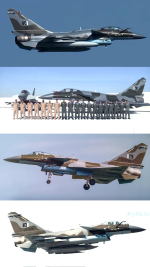
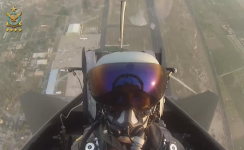
Be dazzled
THINK TANK: CONSULTANT


True. Keep this on j10c guys.Can we please leave out Egypt and it's maybe ambitions with China? It's irrelevant in this thread!
Follow along with the video below to see how to install our site as a web app on your home screen.
Note: This feature may not be available in some browsers.
True. Keep this on j10c guys.Can we please leave out Egypt and it's maybe ambitions with China? It's irrelevant in this thread!
all these aircrafts, which true BVR missile they can fire?It seems that you do not know anything about the Egyptian economy
Egypt's largest trading partner is China, the trade volume is now $25 billion
The second largest investor in Egypt now is China after the Emirates
Egyptian-American trade exchange is less than $7 billion out of a trade volume of $130 billion
European Union trade exchange with Egypt is the reason for the size of Egyptian purchases
The European Union is looking for investment in Egypt because Egypt is using the refugee card 15 million not the cooperation package between $39 billion in investments and 8 billion reduced loans is not a pressure tool on their part but Egypt's reaction
It is the one that saved the German shipyards and turned the French arms industry into profitability as a result of Egypt's purchases of French weapons
Egypt is restructuring its trade and the largest country cooperating with Egypt now is China, Russia, India followed by the Gulf and Egypt is focusing mainly on Africa as its main market
The Egyptian Air Force, like the Russian, American and Chinese, all trends are towards heavier fighters and fifth generation fighters, so Egypt has established New fighter jets are being assembled in the world for a fifth-generation fighter project already
The J-10C represents a replacement for the light fighters in the Egyptian Air Force Mirage-5 F-7 MIG-21 and is not considered
View attachment 98315
Egypt is parallel to the French Rafale aircraft. The Chinese aircraft should not be compared to the French aircraft due to the difference in categories and capabilities, away from the propaganda that no one can be convinced by that the two aircraft are parallel in capabilities
The Rafale is not just an aircraft that Egypt buys, it is a defense partnership program
Egypt owns 28 two-seat aircraft, some of which were used to train pilots for the Emirates, Serbia and Iraq in the future because Egypt is the training center and part of the supply chains for components by exploiting the Egyptian aircraft factory and the engine factory
The Rafale acquisition program includes a cooperation program between 7 countries that own the aircraft and develop the aircraft. The program for developing the gradual engines with capacities from 7.5 tons to 11 tons over 40 years for the Rafale is agreed upon, although it is not announced. India requested a version with 8.3 tons of engines for the engine capacity and the arrival Production engines to a capacity of 8.5 currently and the entry of the Emirates as a financier for the benefit of Rafale users
What applies to the engine development program applies to avionics and Egypt aims to obtain 72-100 Rafale aircraft
Egypt's request for 28 two-seat aircraft to be the leadership of the loyal wing in addition to 26 single-seat Rafale fighters is from the gradual development of the Egyptian Air Force, meaning that the Rafale program is only within the continuous development of this aircraft within the Egyptian Air Force in addition to Egypt's special relations with France in the field of equipping Dassault Falcon 7X aircraft with advanced electronic warfare and reconnaissance systems in addition to Falcon aircraft for other missions quietly and without noise
View attachment 98314
The light fighter that is currently the main workhorse is the F-16, which is gradually being removed from service and will be replaced by fifth-generation aircraft. The J-10C aircraft is not considered a temporary solution. Also, Egypt does not need to develop the F-16 simply because it is no longer the main aircraft. It completes its work in Egypt as an aircraft closer to CAS / COIN. Egypt is not naive to continue In relying on the United States for fighters again
Some people create a fictitious comparison that the J-10CE and the Rafale are parallel or superior, no one takes that seriously, as there are multiple defects in the J-10CE, whether the reliability of the engines, avionics, or radar. Egypt is an old customer of Chinese fighters since the seventies. You have to learn that no one sells a product for less than its value, and bitter experience with Chinese fighters and training aircraft. If the aircraft was priced higher than the prices at which it is sold, it would be sold at that price. Rather, they are waiting for the opportunity to impose their conditions on others, such as the Americans, but the modesty of the product is what holds them back.
Therefore, the head of the Chinese delegation at the El Alamein Air Show confirmed that they are working on developing the aircraft to match the Egyptian requirements of raising the aircraft's capabilities, so we also see an acceleration in the process of developing the Chinese aircraft by adding more capabilities to it.
Any air conflict means rapid wear and tear on the fighters, which is one of the reasons why Egypt requests cheap aircraft, as Egypt has a clear policy.
Why would I develop a fighter like the MIRGE-2000 for $40 million? And I develop an aircraft like the F-16 for $30 million while I can get 100 new aircraft in two batches for $50 million each and a complete armament package and a long life.
Egypt developed F-16 fighters by extending the lifespan of the structures and engines at a limited cost through American funding. It is a program that lasted 7 years and is about to end.
Egypt acquired the J-10CE aircraft instead of the FA-50 aircraft that the Koreans offered with a structure lifespan of 16,000 flight hours instead of 10,000 flight hours and an ESR-500 radar with a range almost twice that of the PhantomStrike radar. Therefore, the lack of readiness of the Korean aircraft, which will not be ready before 2028 with the specifications, in addition to the price that Egypt wants, which is only $35 million from the 100 purchase package, made Egypt turn to the Chinese aircraft that will be delivered faster after the modifications requested by Egypt.
Although the Koreans wanted to obtain the LIFT training version contract, Egypt postponed it due to the acceleration of threats in the Middle East, and the Chinese solution was Egypt is heading to increase the number of fighters and also raise the level of the Egyptian Air Force fighters by increasing the number of 4++ fighters equipped with AESA radars quickly.
This gives Egypt the opportunity and enough time until the Russians finish completing the MIG-29/35 fighters in the field of radars, avionics and engines to develop the first batch, which will not be ready before 2026 to enter service with Russia first.
I think you understand why Egypt is heading to the aircraft because of the possibility of rapid supply and readiness for it, not because it is the best and most superior or that it is equal to the Rafale.
The Egyptian Air Force is supposed to have no less than 400 to 600 fighters, which will be between fourth and fifth generation fighters, which is a pressure factor on the budget.

Don’t you think with the PL-17 on the J-10C, if an export variant is approved, the J-10 in the PAF, could then outstick any current known or planned opposition, with the key being, should Pakistan be able to pony up the funds (~$3 Billion), the fleet can be increased rather quickly (a couple of years) to the 80-90 aircraft.Storm in a teacup - but I think the whole “game changer” perception is a mix of subjective gauge and waxed praise.
Does the J-10C change the game for Pakistan?
Yes - it provides a fairly potent capability with the most advanced avionics fit in the fleet coupled with METHODS of sensor fusion and data gathered which other assets cannot match in accuracy, precision nor volume.
And
While its impact is in single digit percentages in terms of the overall change planned by the PAF - the more rapid change it brought in terms of warfighting techniques is game changing compared to the slower pace but broader impact of other programs in progress.
Is it game changing as a aerial threat to Pakistan’s foes? No - it puts a ding in terms of BVR edge but it’s what is happening fleetwide to the PAF that has more impact. If it was to change the game it would be 80 aircraft landed that would cause much more consternation (isnt it already?)
Does it represent some game changing product from China?
Not really - it uses tech from the J-20 - which changed the game - but a lot of that tech and more advanced aspects of it now percolate across PLAAF and PLAN fleets.
Does it change the game from an export market perspective?
Not really - The eurocanards are better all round aircraft and the potential buyers that can pony up the amount for the J-10C either are tied back by western interests or China cannot sell to them for sanctions sake.
So really - it comes down to how you measure things rather than saying “Pakistan is in the top ten most powerful airforces list” type of juvenile nonsense

You are jumping the gun too much.Don’t you think with the PL-17 on the J-10C, if an export variant is approved, the J-10 in the PAF, could then outstick any current known or planned opposition, with the key being, should Pakistan be able to pony up the funds (~$3 Billion), the fleet can be increased rather quickly (a couple of years) to the 80-90 aircraft.
While the J-10CE’s radar may not have the range, that doesn’t preclude the use of other platforms (in the air and on the ground, as well as perhaps in space) to get a reasonable track on large targets such as AWACS or P-8 MPA, and send the missile in that direction. There is also the use of multimode seekers, RF and IR seekers, with the use of AI, to recognize, identify and take out high value hostile threats, as has been tested on other missiles by other countries, decades ago.You are jumping the gun too much.
The PL-17 is an ultra-long range air-to-air missile, and its maximum range exceeds the radar range of all current fighters. This means that it has to use the “A-fire, B-guide” mode to accomplish ultra-long-range attacks, and no fighter in the world today can use the PL-17 to accomplish ultra-long-range attacks while operating alone. It needs the cooperation of other fighters or AWACS to accomplish the ultra-long range attack operation.
PAF's J-10CE theoretically has the capability of “A-shooting and B-guiding”. However, PAF has not demonstrated that their J-10CE has this capability, and the PL-15E purchased by PAF also has the capability of “A-firing and B-guiding”. Therefore, PAF can test and demonstrate the “A-fire, B-guide” capability of J-10CE+PL-15E under the existing conditions. However, we have not seen any report or evidence about it.
As far as the radar performance of J-10C/J-10CE is concerned, PL-15/PL-15E is already at its working limit in stand-alone mode.
My personal opinion.
PLAAF's J-10C test mounted PL-17. it is just a test. But in practical use, I think it would make more sense for the J-16 to carry the PL-17.
PL-15 is too far because of its range, it has shortened its range when it was exported to Pakistan. So PL-17 is more unlikely to be exported to Pakistan.


The PL-15 already does that for known opposition - @Michael has provided you the reasons why PL-17 is both expensive and somewhat wasted - and since PAF has chose to concentrate on its own datalink for growth on the SAAB-2000 the PL-17’s true potential can never be realized.Don’t you think with the PL-17 on the J-10C, if an export variant is approved, the J-10 in the PAF, could then outstick any current known or planned opposition, with the key being, should Pakistan be able to pony up the funds (~$3 Billion), the fleet can be increased rather quickly (a couple of years) to the 80-90 aircraft.
At that range the J-10 is just the launching platform, so looking at the recent visit by President Zardari to see that the PAF is working on, shows an indigenous AWACS program, or at least the AESA for it, as well as a lot of work on Drones. We can’t discount, especially in the face of the constant threat of systems like the S-400 close to the border and covering. Deep into Pakistan, the possibility that the PAF will seek Low observable unmanned platforms to operate as AWACS. The work China is putting into kill chains and kill webs, even derivative export approved tech could make a system like the PL-17 a useful and realistic quiver to have in our arsenal. Especially if it has a home on jam or home on EM transmit capability, to take out enough enemy nodes to change the outcome of key engagements.The PL-15 already does that for known opposition - @Michael has provided you the reasons why PL-17 is both expensive and somewhat wasted - and since PAF has chose to concentrate on its own datalink for growth on the SAAB-2000 the PL-17’s true potential can never be realized.
That doesn’t preclude export controls nor does it rule it out completely - as there may be some advantages of having a long stick like the PL-17 fired well within its envelope; it will have a lot of energy available to expend and chase down an opponent at 145km as compared to lets say a PL-15. But then it needs constant target data updates which means the firing platform cannot drag or flow cold and is at risk.
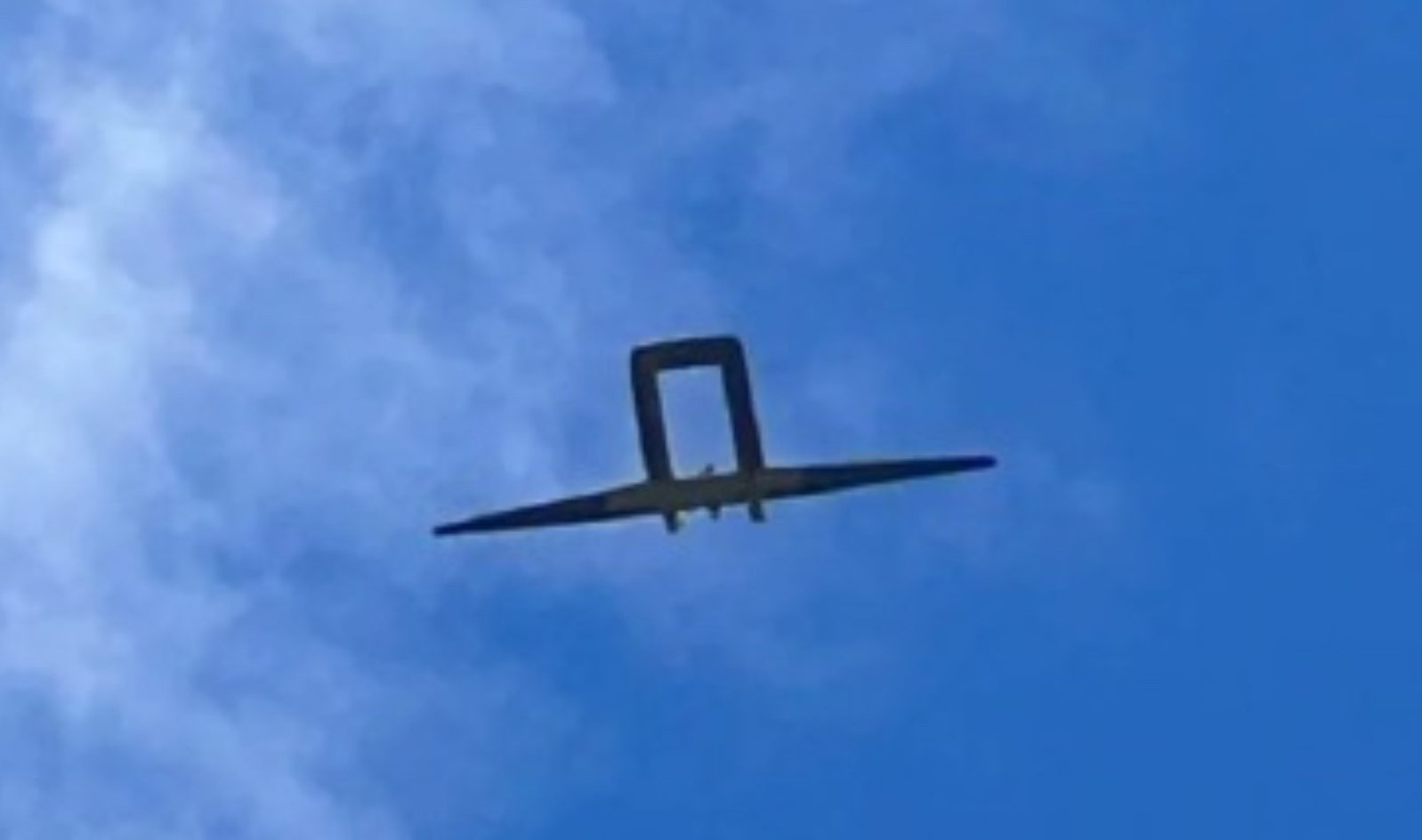
 theaviationist.com
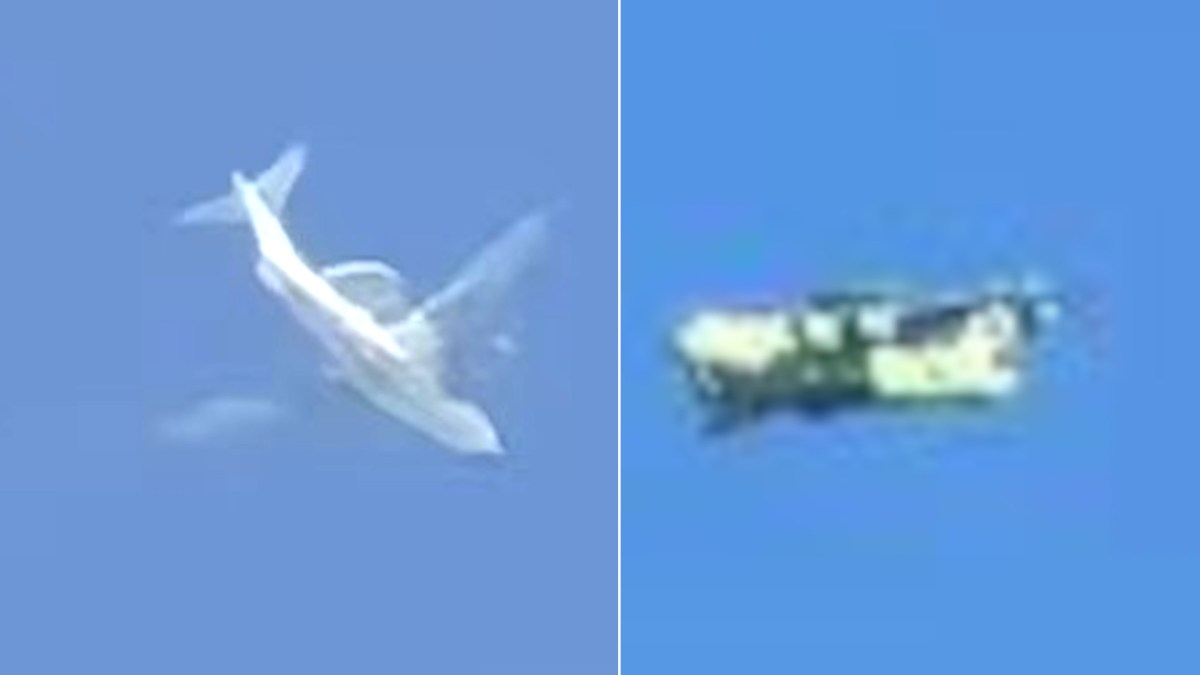
 www.twz.com
 spacesecurity.wse.jhu.edu
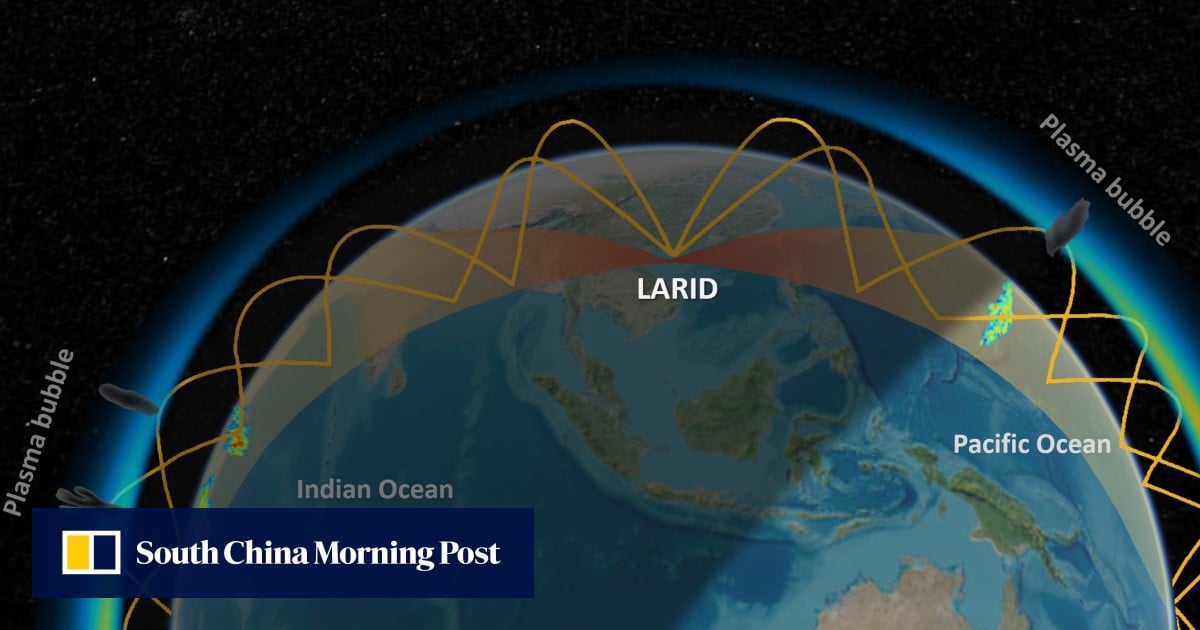
 www.scmp.com
R-77
Mica-Ng
Under delivery Meteor
PL-15 EGYPT ORDER FOR LOCAL PRODUCTION FIRST BATCH 1000 EVEN ALGERIA WILL GET 200 FROM no source
EGYPTIAN PRODUCTION LINE
Old AIM-7M
You're absolutely right. the J-10 is just the launching platform.At that range the J-10 is just the launching platform