PAF SAM based Air Defense System - News, Discussion & Updates

Within the PLA’s weapons architecture, there is a term: "fourth-generation air defense system." One of its core characteristics is "flexible networking."

This means that the various components of an air defense system—such as its launch units, radar units, and command units—are no longer locked into a fixed, closed configuration; instead, they form an open system capable of flexible networking. Users can select any radar supported by the system’s technical architecture to suit their specific needs. Furthermore, these radars are not restricted to serving only a single type of launch unit.

Thanks - understood.

So, we can only at most assume that the PAF is looking to increase the range, depth and coverage of the radar fleet as these are generic radars, that by their nature cannot suggest any follow on order that must be made since there is no dependency. Hence it is incorrect to assume the HQ-9C( which is soo new that there is no export variant designation yet of it ) or the HQ-19.
 
So, we can only at most assume that the PAF is looking to increase the range, depth and coverage of the radar fleet as these are generic radars, that by their nature cannot suggest any follow on order that must be made since there is no dependency. Hence it is incorrect to assume the HQ-9C( which is soo new that there is no export variant designation yet of it ) or the HQ-19.
Currently unknown!

But, I believe this is part of the PAF’s effort to strengthen its modern air combat support ecosystem. It serves as a force multiplier for 4.5-generation fighter jets and provides an essential environment for 5th-generation fighters.
 
Thanks - understood.

So, we can only at most assume that the PAF is looking to increase the range, depth and coverage of the radar fleet as these are generic radars, that by their nature cannot suggest any follow on order that must be made since there is no dependency. Hence it is incorrect to assume the HQ-9C( which is soo new that there is no export variant designation yet of it ) or the HQ-19.

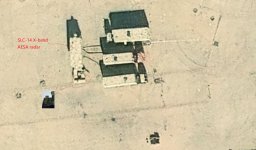
The device on the left in the picture is the SLC-14 X-band radar, which is characterized by an extended equipment cabin on one side. The HQ9 series air defense system does not require X-band radar support for operation. Only the HQ-19, which performs BMD tasks, requires a high-precision X-band radar to perform radar imaging on targets to eliminate decoys disguised as warheads.SLC-14.jpg
 
Within the PLA’s weapons architecture, there is a term: "fourth-generation air defense system." One of its core characteristics is "flexible networking."

This means that the various components of an air defense system—such as its launch units, radar units, and command units—are no longer locked into a fixed, closed configuration; instead, they form an open system capable of flexible networking. Users can select any radar supported by the system’s technical architecture to suit their specific needs. Furthermore, these radars are not restricted to serving only a single type of launch unit.
I do also believe that Pakistan may be testing the radars independent of the SAM system, and to integrate into its own AD network. These SAM radars are very powerful, have great resolution and robustness, and built to operate independently so their integration into a network will bring a great amount of value.
 

Users who are viewing this thread

Pakistan Defence Latest

Back
Top