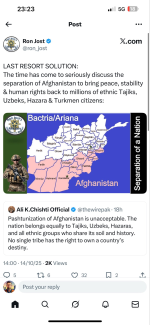
Toppling the Afghan government is the easy part. Maintaining control afterward is the true challenge. For perspective, the U.S. launched its invasion of Afghanistan on October 7, 2001, and just 37 days later, on November 13, 2001, Kabul fell. However, two decades and 2.3 Trillion dollars later, Taliban return to the power.
I don't understand what fuels our arrogance? Do we believe we surpass the formidable U.S. of the 2000s, with its earth-shaking B-52s and daisy cutters? It’s delusional to think we can tame Afghanistan. We’re heading towards a war that will fill countless coffins with our fallen.
May Allah grant wisdom to end this recklessness. The Taliban (TTA) represent the best prospect for a stable Afghanistan and region.
No - we are not interested to tame Afghanistan. Taliban has been continously to attack us since 2021, we are running out of patience with them and even travelled to India for no reasons.
People of Afghanistan wanted to get rid of Talibans (TTA/TTP).
Here's full details
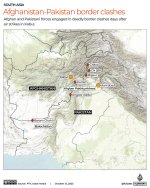
Pakistan–Afghanistan border clashes are neither sudden nor unjustified.
When the Taliban took Kabul in 2021, the entire world vacated its embassies, Pakistan kept its mission open and even acted as a conduit for evacuees during the chaotic withdrawal.
In the post-US withdrawal UN-led conferences on Afghanistan, Pakistan consistently called for unfreezing Afghanistan’s $9 billion assets, and even used regional forums like ECO to lobby for the same.
Pakistan hoped for peace and stability. Instead, Afghanistan became a safe haven for TTP militants.
Yet, despite repeated betrayals, Pakistan tried every peaceful route. It engaged the Taliban regime through religious, tribal, and official channels.
In July 2022, an 8-member ulema delegation led by Mufti Taqi Usmani visited Kabul to convince TTA and TTP to stop attacks. A few days later, a 17-member tribal jirga also went to Kabul with the same message.
On February 22, 2023, a high-level delegation led by Defence Minister Khawaja Asif and DG ISI Lt Gen Nadeem Anjum visited Kabul to push for peace.
In July 2024, Interior Minister Naqvi led another delegation for security cooperation.
Pakistan’s diplomatic efforts weren’t empty words. Special Envoy Muhammad Sadiq worked to enhance trade ties, leading to the Early Harvest Programme (EHP) reducing tariffs on eight key agricultural items to benefit both sides.
But what did Pakistan get in return?
According to Pakistan Institute for Peace Studies (PIPS) data:
•2021: 89 attacks
•2022: 262 attacks
•2023: 306 attacks
•2024: 521 attacks
•2025 (Jan–Oct): 585 attacks
The worst betrayal came during Pakistan’s 4-day war with India in May 2025, when Afghanistan sent a 40-member TTP tashkeel, including the son of a Taliban official, to attack from the western front.
What triggered Pakistan’s recent strikes? Just one day is enough to understand.
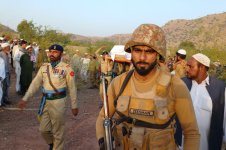
On October 8, 12 soldiers, including a Lt Col and two Majors, were martyred in IBOs in Orakzai and D.I. Khan, carried out by TTP militants from Afghanistan.
Pakistan’s patience had run out.
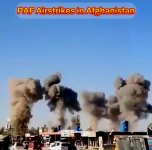
Pakistan’s recent strikes were targeted and precise, aimed only at TTP terrorists being hosted in Afghanistan.
How did the Taliban respond?
By sending groups like Tahaffuz-e-Imarat-e-Islami Force (TIF) to attack the Police Training School in D.I. Khan, martyred seven policemen, and by launching a full blown cross border attack across Af-Pak Border.
Now decide for yourself.
Is Pakistan the aggressor, or a state defending its people from cross-border terrorism?