Pakistan Agriculture News / Discussions


Farmers owning under 12 acres eligible for new federal subsidy scheme

Syed Irfan Raza
April 15, 2026

ISLAMABAD: The federal government on Wednesday announced a special subsidy programme for farmers to mitigate the adverse impact of the global energy crisis.

According to an official announcement, farmers owning less than 12 acres of land will be eligible for the subsidy.

Eligible farmers can register for three easy subsidy packages through the Pakistan Asaan Khidmat application.

Farmers can enrol in the programme by uploading their personal and other relevant information, along with documentary evidence, on the application.

Meanwhile, a senior official told Dawn that the government would provide a subsidy of Rs1,500 per acre to farmers owning less than 12 acres of land.

The amount, he said, will be transferred directly into farmers’ bank accounts or through mobile wallets such as JazzCash and Easypaisa.

On April 3, the federal government announced targeted relief measures for motorcyclists, small farmers and transporters.

Punjab reported that more than one million farmers now hold Kissan Cards, and that total wheat sowing has exceeded 16 million acres. It has also been stated that farmers and goods transporters have been provided digital access through Kissan Cards, digital accounts, or cash vouchers.
 

Punjab launches wheat procurement at official rate of Rs3,500 per maund

The Newspaper's Staff Reporter
April 15, 2026

LAHORE: Chief Minister Maryam Nawaz has announced an immediate commencement of wheat procurement at Rs3,500 per maund and the provision of free gunny bags worth Rs6 billion to the farmers across the province.

Registered farmers will be provided 10 gunny bags per acre through the purchase centres.

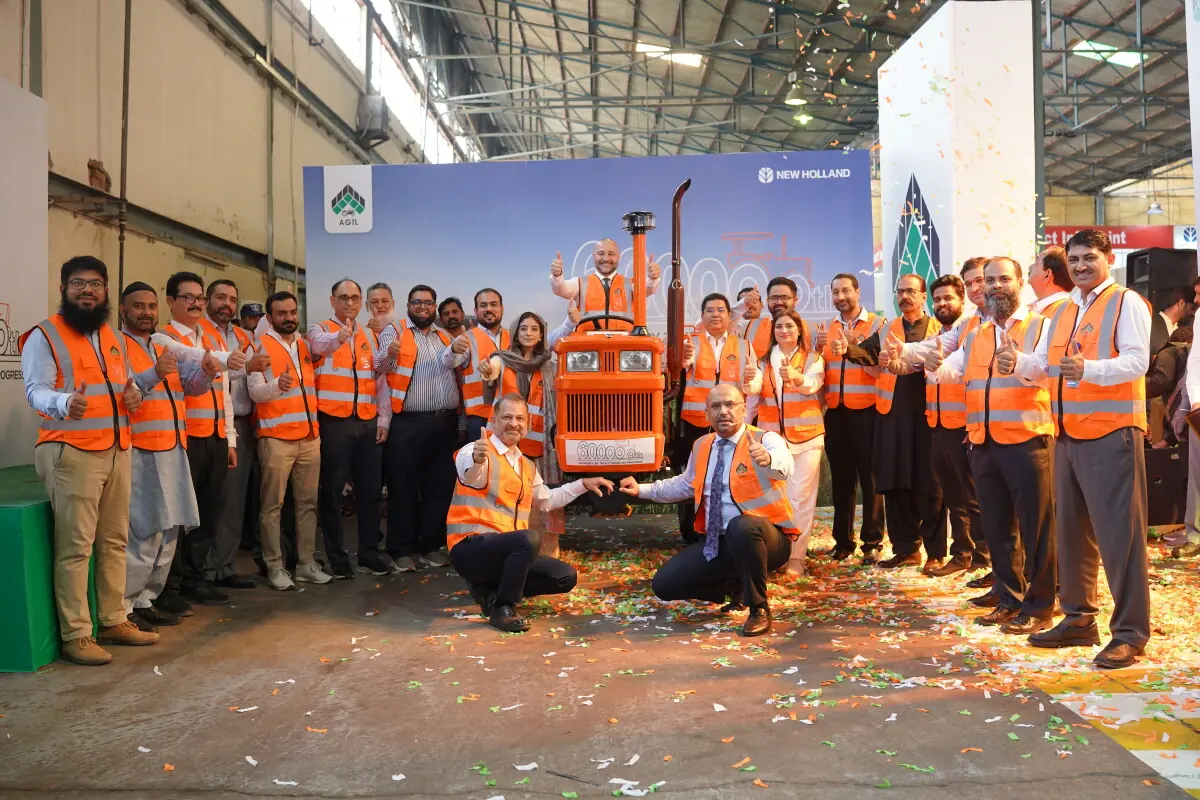
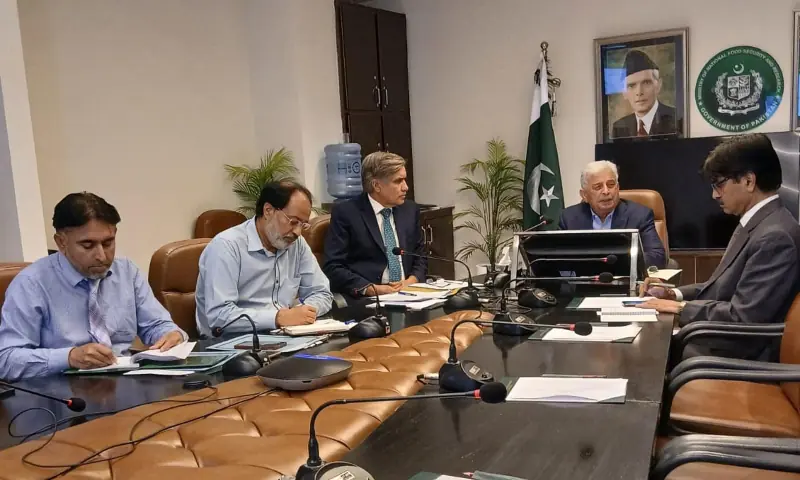
Presiding over a meeting on wheat procurement, gunny bags distribution and the Green Tractor Scheme here on Tuesday, the chief minister directed that procurement from farmers be started without delay.

It was decided in principle that wheat would be purchased on a priority basis from farmers holding Kissan Card.

She further ordered that payments to farmers must be ensured within 72 hours of procurement at the fixed rate of Rs3,500 per maund.
 

Wheat harvest goes high-tech, but at a cost​

Farmers face higher expenses as labourers lose seasonal employment

The growing use of modern harvesting machinery is rapidly transforming wheat farming in Khanewal district, offering efficiency and time savings but also creating new economic challenges for farmers and labourers.

Khanewal is among the major wheat-producing districts of Pakistan, where traditional harvesting practices have long been a defining feature of rural life. In the past, fields would be filled with labourers cutting wheat manually with sickles, often working for days to complete the harvest.

However, this landscape has changed significantly with the introduction of modern harvester machines, which can cut and process acres of wheat within hours. The machines separate grain and straw simultaneously, eliminating much of the labour-intensive work.

Local farmer Chaudhry Liaqat said that while mechanisation has reduced the risk of crop damage due to adverse weather and saved valuable time, it has also increased production costs.


"Machinery has made harvesting easier and faster, but rising diesel prices and high rental costs have added to our financial burden," he said, adding that harvesting costs have increased from around Rs5,000 per acre in the past to nearly Rs8,000 per acre. He noted that the increase in fuel prices has also driven up the cost of fertilisers, pesticides and other agricultural inputs, further straining farmers.

On the other hand, labourers have been adversely affected by the shift towards mechanisation. Tariq, a farm worker from the same area, said that seasonal employment opportunities have declined sharply.

"Earlier, we used to get work for several days during harvesting season and were often paid partly in wheat, which helped sustain our families for months," he said. "Now, machines complete the work in a few hours, leaving little employment for labourers."

Experts say that while agricultural modernisation is essential, it must be accompanied by measures to support rural labourers, including alternative employment opportunities and social protection.

They also point out environmental concerns, noting that increased use of machinery leads to higher fuel consumption and noise, which can affect the rural ecosystem.

Mehar Aftab Sargana, associated with the harvesting machinery business, said that the cost of purchasing harvesters runs into millions of rupees, while maintenance and spare parts add further expenses.

"Farmers hire machinery based on seasonal needs, and rates have increased due to rising diesel prices and expensive spare parts," he said.
 
To view this content we will need your consent to set third party cookies.
For more detailed information, see our cookies page.


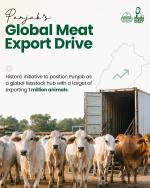
Punjab set Target of 1 million animal exports!

1777134085614.png
 

Punjab to export 1M livestock under Maryam Nawaz plan

Summary​

  • Punjab is set to export one million livestock under a new development initiative launched by Chief Minister Maryam Nawaz Sharif, aiming to boost meat exports, strengthen rural livelihoods, and modernise the livestock sector.

  • A Chinese firm, Global Meat, in collaboration with PAMCO, will set up a boiler and processing unit to support large-scale export of meat products.

  • The chief minister has also doubled the quota for free livestock distribution among rural women.
Punjab is set to export one million livestock under a new development initiative launched by Chief Minister Maryam Nawaz Sharif, aiming to boost meat exports, strengthen rural livelihoods, and modernise the livestock sector.

A high-level meeting was held via video link under the chairmanship of the chief minister, where officials presented a detailed briefing on ongoing reforms and future targets in the livestock sector. Provincial Livestock Minister Ashiq Hussain Kirmani shared updates on new partnerships and policy measures.


Under the initiative, Punjab has signed memorandums of understanding (MoUs) with seven organisations, including a Chinese company. These agreements are focused on increasing meat exports and improving processing facilities in the province. A Chinese firm, Global Meat, in collaboration with PAMCO, will set up a boiler and processing unit to support large-scale export of meat products.

As part of the plan, companies will import around 300,000 ready-for-export animals for meat processing. In addition, targets have been set to fatten 300,000 cattle and buffaloes and 300,000 sheep and goats locally. Another 100,000 goats and sheep will be specially raised for export purposes.

The government has also introduced livestock mechanisation for the first time. Farmers will receive up to 60 percent subsidy on modern equipment such as milk chillers, feed mixers, and weighing machines. Officials say this step will improve productivity and reduce losses in rural farming.


To strengthen veterinary services, state-of-the-art hospitals will be established in every tehsil across Punjab. In addition, four mobile veterinary units per tehsil will provide treatment and support in remote rural areas.

The chief minister has also doubled the quota for free livestock distribution among rural women. Thousands of animals have already been distributed to widows and divorced women in South Punjab under earlier phases of the program.

Officials further reported that livestock identification and tracking are being improved, with plans to tag two million animals. Another two million semen doses will be provided on subsidy to improve breeding quality and productivity.


The meeting was also informed that no major outbreaks of lumpy skin disease or hemorrhagic septicemia have been reported in Punjab since 2022, even after recent floods. Locally produced vaccines are now available at significantly lower costs compared to imported alternatives
 
To view this content we will need your consent to set third party cookies.
For more detailed information, see our cookies page.
 
To view this content we will need your consent to set third party cookies.
For more detailed information, see our cookies page.


Finally a provincial government that is working to earn dollars and increase exports. First large scale shrimp farms and now this.
 

Wheat harvesting — changing dynamics and fallout

Khalid Saeed Wattoo, Dr Waqar Ahmad
April 27, 2026

The wheat harvest season is currently in full swing in Punjab, while in Sindh, it is drawing to a close. Over time, wheat harvesting practices have steadily evolved in response to technological advancement and a range of emerging challenges, including climate change, a shrinking harvest window, and growing labour constraints.

In this changing environment, four distinct wheat harvesting methods are now widely practised. However, farmers’ preferences vary across regions, shaped by factors such as farm sizes, the need for wheat chaff (toori), the risk of erratic rainfall, access to harvesting and threshing machinery, and relative cost considerations.

For the past several decades, farmers across most districts have relied on the traditional method: manually cutting the crop with sickles, tying it into bundles, leaving them in the field for a few days to reduce moisture, and then threshing with tractor-driven threshers. This method remains particularly attractive for smallholders, as it produces high-quality chaff (toori), highly valued as livestock feed.

A slightly mechanised variant involves tractor-mounted reapers — costing around Rs200,000 — for cutting, while labour is still employed to tie the crop into bundles, which are then fed into the thresher.

A more advanced version, the reaper-cum-binder, performs both cutting and binding simultaneously. However, it increases cost as the binding thread alone costs around Rs2,500 per acre, compared to traditional rope made from rice straw.

The rapid shift towards capital-intensive harvesting is transferring income from small farmers and labourers to machinery service providers, further widening the rich-poor gap

Once popular among farmers, the use of threshers and reapers is now declining rapidly in Pakistan, as farmers increasingly shift towards combine harvesters.
 
1778136653121.png

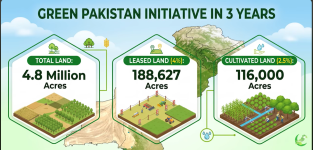
Game changer project for Pakistan agricultre. Cultivating barren, desert land with modern tech.
 

Users who are viewing this thread

Back
Top