Pakistan Agriculture News / Discussions

The decline is expected to significantly impact export earnings. Pakistan generated around USD 110 million from mango exports last season, but revenues this year are projected to fall to between USD75 million and USD 80 million.

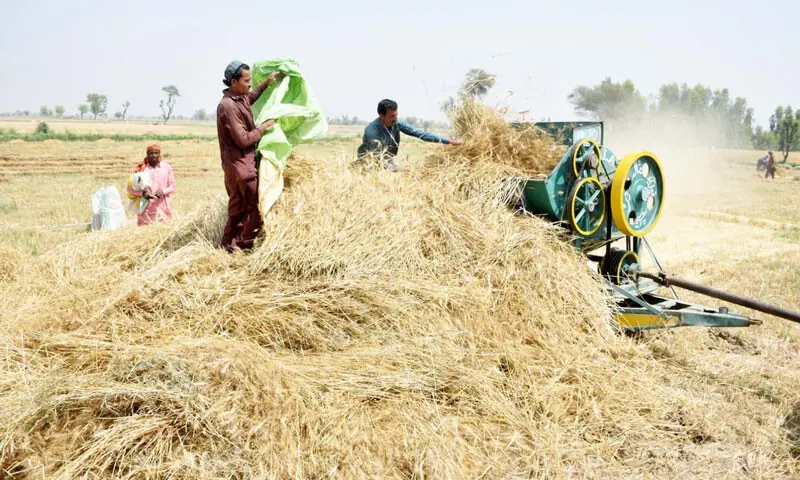
The revised wheat target of 29.68 million tons also unlikely to be achieved as the total production of wheat likely to remained around 29.31 million tons during the 2025–26 Rabi season, slightly below the target of 29.678 million tons.
 
unusual climate patterns will continue to effect agricultural production. More contingency planniing should be undertaken
 
To view this content we will need your consent to set third party cookies.
For more detailed information, see our cookies page.
 
ISLAMABAD: Pakistanis are consuming less wheat, rice, pulses, milk and meat than they did six years ago, while intake of cheaper, less nutritious vegetable ghee has risen sharply, a stark indicator that rising food prices and shrinking incomes are squeezing the poor, according to the Pakistan Economic Survey 2025-26.

“Monthly per capita consumption of key food groups between 2018-19 and 2024-25 reveals a decline in staple cereals, pulses, milk, and meat, the primary sources of protein, while consumption of vegetable ghee has risen markedly.”

Per capita wheat and wheat flour consumption dropped from 7.0 kg to 6.59 kg per month. Rice fell from 1.06 kg to 0.86 kg. Pulses declined from 0.35 kg to 0.26 kg. Fresh milk consumption fell from 6.85 kg to 6.15 kg. Meat (beef, mutton and chicken) dropped from 0.61 kg to 0.50 kg.

At the same time, vegetable ghee consumption jumped from 0.69 kg to 1.25 kg per person per month, an 81 percent increase.

“Access to adequate and nutritious food is directly associated to its affordability,” the survey said. “When food prices rise beyond the purchasing capacity of households, particularly those in lower income brackets, it directly undermines dietary diversity and nutritional outcomes. “These shifts suggest that rising food prices and constrained household incomes are compressing dietary diversity, with lower-income households substituting cheaper, energy-dense but nutrient-poor options for more nutritious foods,” the survey said. The cost of the minimum food basket per capita per month rose 3.2 percent between July 2025 and March 2026, peaking at Rs 6,417 in October before easing slightly
 

‘Pakistan imports about USD800m worth of US cotton’

June 20, 2026
By Zulfiqar Ahmad
B Recorder

ISLAMABAD: The textile sector remains a central component of trade between Pakistan and the United States, with Pakistani exports of apparel to the US averaging more than USD4 billion annually over the past five years, the US Chargé d’Affaires said on Friday.

Speaking at an “Arts Entrepreneurship Showcase”, US Chargé d’Affaires Natalie Baker said the two countries’ textile industries are closely linked, with much of Pakistan’s apparel production relying on American cotton.

She said Pakistan imports about USD800 million worth of US cotton and other raw materials each year, making the US the country’s second-largest cotton supplier.

“These supply chains stretch from American farms to Pakistani factories and ultimately to retail shelves around the world,” she said.

She also noted Pakistan’s role as a major producer of denim fabric and garments, saying many jeans sold in US stores are manufactured in Pakistan.
 

China-Pakistan desert horticulture lab opens in Multan​

Solar greenhouse technology set to boost arid land productivity by up to 35%


BEIJING:
The launch of Pakistan's first Joint Laboratory for Desert Agriculture and Science and Technology Backyard for Desert Horticulture marks a pragmatic milestone in bilateral agricultural collaboration, unlocking development potential for Pakistan's vast arid lands, according to Prof Cheng Xizhong, Senior Research Fellow at the Charhar Institute.

The project, located in Multan along the China-Pakistan Economic Corridor (CPEC), integrates China's mature desert farming technologies with Pakistan's underdeveloped desert land resources. Pakistan's agricultural industry has long been plagued by severe water shortages and low land utilisation, with nearly 15% of its total land area consisting of uncultivated desert. This bilateral cooperation initiative targets these fundamental bottlenecks directly.


Adopting technologies developed and tested by Tarim University (TARU) in Xinjiang, the project introduces solar-powered greenhouses, precision agricultural systems, drone-enabled crop monitoring and water-saving drip irrigation technologies.

Cheng said the low-cost, high-efficiency solar greenhouse technology stands out as a core highlight. It tackles the long-standing operational inefficiencies of conventional greenhouses and boosts land productivity by up to 35%. Featuring a modular structure, the greenhouse can be assembled rapidly while ensuring excellent daylight transmission and heat insulation. The supporting water-curtain floor heating system absorbs solar energy during the day and releases stored heat at night to stabilise the internal microclimate, increase nighttime temperatures and drastically reduce overall energy consumption.

Fully compatible with Pakistan's Green Pakistan Initiative, the project promotes sustainable land restoration, drought-resistant crop planting and modern rural economic development, helping consolidate national food security, drive the growth of local supporting industries and improve the income and living standards of rural residents, he added.

Beyond bilateral economic and agricultural benefits, this cooperation model can be replicated for arid land modernisation across Central Asia and the Middle East. It demonstrates the mutually beneficial and people-oriented essence of the China-Pakistan all-weather strategic cooperative partnership, turning barren deserts into fertile farmland and injecting long-term green development momentum into regional economic cooperation frameworks, Cheng said. APP
 

Users who are viewing this thread

Back
Top