Pakistan Agriculture News / Discussions

Punjab, Wuhan universities develop new hybrid rice seed


LAHORE: Punjab University and Wuhan University China have developed a new hybrid rice seed, which will increase the per acre yield of rice three fold from approx. 1600kg to 5600kg per acre. The new hybrid rice is the first Honglian variety of hybrid rice to be produced in Pakistan.

Scientists from PU and Wuhan University, China have jointly developed new varieties of hybrid rice. PU’s Department of Plant Breeding Genetics Chairman Prof Dr Muhammad Ashfaq and Dr Muhammad Ali Klasra, while Prof Renshan Zhu, Dr Xianting Wu, Xu and others from Wuhan University China were part of the research team. After the completion of the technical stages, the Pakistan Agricultural Research Council approved the new hybrid rice.

According to Chairman of the Department of Plant Breeding Genetics Dr Muhammad Ashfaq, the new rice was successfully tested in different cities of four provinces of Pakistan. He said that the preparation of the new hybrid rice is the result of ten years of research and experiments. He said that the new hybrid rice varieties have been registered under the name PU786.

Ad

He said that the new hybrid rice has the ability to resist bacterial diseases. He said that the new hybrid rice also has the ability to resist extreme heat and dangerous insects. According to Dr Ashfaq the new hybrid rice will increase rice production at the national level.

He said that the PU VC Prof Dr Muhammad Ali has played an important role in promoting research on new hybrid rice. He also appreciated former dean Dr Saleem Haider for his support in the research.

PU VC Prof Dr Muhammad Ali said that the new hybrid rice is a revolution in the agricultural sector of Pakistan. He said that the new hybrid rice will further promote joint research projects in universities of Pakistan and China.

He said that the new hybrid rice will also prove useful for citizens in terms of nutrition. He said that the common farmer will benefit from three times more production per acre.

He said that the approved new hybrid rice will increase the export of Pakistani rice worldwide. He said that the primary function of universities is to play a role in the development of the country, nation and industry.

Copyright Business Recorder, 2025
 

Pakistan eyes castor cultivation as high-value export crop


BR Web Desk
August 6, 2025

1754507167668.png

Pakistan is exploring the large-scale cultivation of castor as part of efforts to diversify crops, boost exports, and improve farmer incomes, Federal Minister for National Food Security and Research Rana Tanveer Hussain said on Wednesday.

Chairing a high-level meeting with the International Multi Group of Companies, led by Chairman Amjad Rashid, the minister said castor was a low-input, high-yield crop well suited for the country’s arid and semi-arid regions, the Ministry of National Food Security said in a statement.

“Castor can be grown in barren areas where traditional crops struggle, making it ideal for land optimisation and income generation for farmers,” Hussain said, adding that the crop currently fetches Rs7,000 per 40kg in the local market, higher than most conventional crops.

The Chinese not-for-profit partner in the project has offered to provide high-quality hybrid seed, potentially doubling yields from 50 to 100 maunds per acre.

The visiting company also expressed willingness to sign formal agreements with local farmers, committing to purchase all harvested castor at pre-agreed terms.

The ministry will support the initiative through awareness campaigns and seed distribution in collaboration with provincial agriculture departments.

Hussain said Pakistan could emerge as a competitive supplier in the global castor oil market, which has strong demand in the pharmaceutical, cosmetics, lubricant, and biofuel sectors.

The meeting concluded with an agreement to launch pilot projects, finalise farmer contracts, and develop a sustainable, export-oriented castor value chain in the country.
 

Number of farm households jumps


Mubarak Zeb Khan
August 7, 2025

ISLAMABAD: In what marks a significant transformation in the agrarian landscape, the number of farm households in Pakistan surged to 11.7 million in 2024, up from 8.3 million in 2010 — indicating a 40pc increase in rural engagement with agriculture, according to the 7th Digital Agriculture Census Report released on Wednesday.

Simultaneously, the livestock population rose to 251.3 million in 2024 from 143 million in 2006, registering a steady compound annual growth rate of 3.18pc. These parallel increases underline the continued centrality of agriculture as both a livelihood and a critical pillar of the national economy.

Federal Planning Minister Ahsan Iqbal officially launched the results of the census, which was conducted using a fully integrated digital methodology for the first time. The Pakistan Bureau of Statistics (PBS) employed real-time mapping, geo-tagging, and automated data systems to ensure accurate and efficient data collection at the field level.

According to the report, Punjab accounts for the highest share of agricultural households at 43.3pc, followed by Khyber Pakhtunkhwa (35.67pc), Sindh (15.61pc), and Balochistan (5.41pc). The area under cultivation also expanded significantly — from 42.6 million acres in 2010 to 52.8 million acres in 2024 — a 24pc increase. Punjab holds the largest share of cultivated land at 56.25pc, followed by Sindh (15.36pc), Balochistan (14.68pc), and KP (13.71pc).


First integrated digital agriculture census shows 40pc rise in farm households and 24pc expansion in cultivated land since 2010
The report highlights that 79pc of cultivated land is irrigated through canals and tube-wells, underscoring Pakistan’s heavy reliance on managed water systems.

The livestock census records 95.8 million goats, 55.8 million cattle, 47.7 million buffaloes, 44.5 million sheep, 4.8 million asses, and 1.5 million camels — reflecting consistent growth in the sector since 2006.

In a formal statement, the PBS hailed the exercise as a milestone in national data collection, stating that the digital integration, coupled with coordinated execution, sets a new benchmark for future censuses and surveys. The data is expected to enhance policy-making, improve resource allocation, and lead to more targeted and inclusive interventions for the farming community.

Published in Dawn, August 7th, 2025
 
To view this content we will need your consent to set third party cookies.
For more detailed information, see our cookies page.
 

US tariff on Indian rice opens market for Pakistan

Anwar Iqbal Published August 12, 2025

Indian exporters have warned that the cost of additional US tariffs risked making businesses ‘not viable’ after 50pc levies imposed on imports from India.—AFP


WASHINGTON: The 50 per cent tariff imposed by the Trump administration on Indian goods, including basmati rice, has reshaped trade flows in the United States, providing Pakistan an opportunity to expand its share in the American aromatic rice market.

Pakistan’s basmati rice exports have witnessed steady growth in recent years. According to the Rice Exporters Association of Pakistan (REAP), the country exported approximately 772,725 tonnes of basmati rice in FY24, generating $876.9m — up from 595,120 tonnes worth $650.4m in the previous fiscal year. The average export price per tonne also increased from $1,092.93 to $1,134.86.

Data from Volza’s Global Trade platform shows that between November 2023 and October 2024, the United States accounted for 24pc of Pakistan’s total basmati exports through 1,519 shipments. Italy and the United Kingdom followed with shares of 14pc (908 shipments) and 11pc (716 shipments), respectively.

Together, these three markets consumed nearly 49pc of Pakistan’s basmati rice exports. Pakistan currently exports basmati rice to over 110 countries, with other key destinations including Australia, Saudi Arabia, the UAE, Canada, the Netherlands, and Germany.

Basmati exports rose 35pc in FY24 to 772,725 tonnes, earning $876.9m

According to the US Department of Agriculture (USDA), rice imports in the US have grown steadily over the past three decades — from 7pc of the domestic market in 1993/94 to over 25pc by 2022/23. Over 60pc of these imports consist of aromatic varieties from Asia, mainly jasmine from Thailand and basmati from India and Pakistan.

While the US produces some aromatic rice domestically, these differ in quality and aroma from their Asian counterparts. The USDA projects continued growth in demand for aromatic rice imports in the coming years.

The tariff dispute emerged from US punitive measures targeting India’s trade and energy ties with Russia, resulting in broad tariffs on several Indian exports, including basmati rice, pharmaceuticals, and electronics. Although some sectors later received exemptions, basmati rice remained subject to the full 50pc tariff. In contrast, Pakistani basmati rice continues to face a lower tariff of 19pc, giving it a distinct pricing advantage in the US market.

Indian media reports suggest that the tariff hike could reduce India’s basmati exports to the US by 50-80pc, with prices climbing to nearly $1,800 per metric tonne. Pakistani basmati, by comparison, remains priced at around $1,450 per metric tonne, making it more competitive for US importers and retailers.

Retailers across the US are already reporting increased interest in Pakistani basmati rice. Khan Mohammed, a salesman at Super Halal grocery in Springfield, Virginia, noted: “Pakistani rice is already popular.

Published in Dawn, August 12th, 2025
 

Sesame project targets 5,000-tonne exports​


Joint venture introduces high-yield varieties, boosts farmer income, and eyes 50,000-acre expansion in Punjab

China Economic Net
August 13, 2025


On August 11, a delegation from the Silk Road Biohealth Agriculture Industry Alliance of Northwest A&F University (NWAFU) visited the Biohealth Sesame Order Demonstration Farm in Sahiwal, Punjab. The farm operates under the China-Pakistan Biohealth Agriculture (BHA) Overseas Technology Demonstration Park.

Built jointly by China Machinery Engineering Corporation (CMEC), NWAFU, and Pakistan's Ayub Agricultural Research Institute, the project introduced high-quality Chinese sesame varieties and advanced production technologies. "Through experiments, we identified varieties suited to Pakistan and developed technical standards for bio-healthy sesame production," said project leader Professor Zhang Lixin.

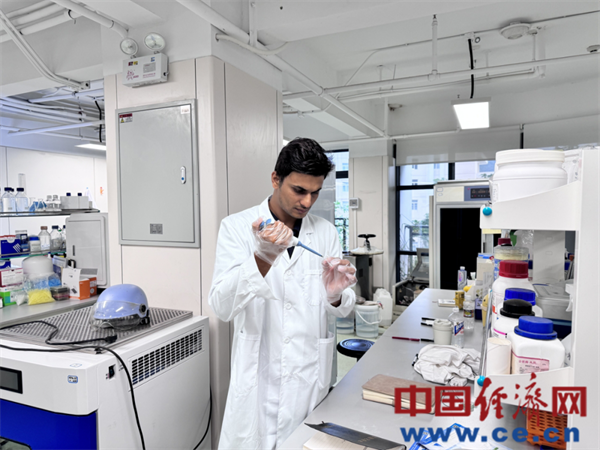
Pakistani students trained at NWAFU, including Dr Ammar, now serve as core technical personnel. Harvested sesame undergoes initial processing at CMEC plants, with testing in a joint lab. Qualified products are exported to China for use in food, pharmaceuticals, and industry.

The project has set up 12 standardised farms covering 500 acres, working with over 120 farmers under a contract farming model. Last year's first contracted crop exported about 3,500 tonnes to China. By 2025, exports are expected to reach 5,000 tonnes, creating over 500 long-term local jobs.

The farm aims to expand to 50,000 acres, producing around 23,000 tonnes, over 5% of Pakistan's sesame area. Pakistan currently grows sesame on about 1 million acres, producing 350,000450,000 tonnes annually, though weather causes fluctuations. Torrential rains last year cut output to 310,000 tonnes. Zhang noted that wider adoption of advanced technology could push yields in good years above 500,000 tonnes.

Local sesame varieties mostly come from the TS and TH series. Of 10 experimental varieties tested, four exceeded yields of 130 kg per mu (0.165 acres), with the highest at 230 kg. These results, from internal trials, require larger-scale testing. Rainfall, sunlight, and fertilisation all strongly affect yields, making seasonal adaptation and weather-based measures vital.

Future plans include online seminars, farm visits, and training programmes, covering flood-resistant varieties, special fertilisers, biopesticides, drone spraying, mechanised harvesting, and smart farm management.

"The bio-health industry chain model linking enterprises, universities, and farms will help bio-health agriculture continues to prosper and develop in Pakistan," Zhang said.
 

Crop data to be augmented using satellite technology


Amjad Mahmood
August 25, 2025

LAHORE: In an effort to settle disputes over crop data, especially in Punjab, a new programme aims to use satellite technology to obtain accurate crop cultivation figures.

Unreliable figures on total acreage and production of a specific crop have remained a persistent issue for the country.

The lack of accurate information makes it difficult for stakeholders, including government departments, to frame import and export strategies to meet national needs.

The new satellite-based system, set to be launched next year, is expected to resolve this long-standing problem.

Initiative may help streamline discrepancies between data released by crop reporting body and cotton ginners

This initiative, a brainchild of the Special Investment Facilitation Council (SIFC), will involve a collaboration between China and the country’s Land Information and Management System (LIMS), launched in 2023 to optimise agricultural production through innovative technologies, and sustainable agricultural practices.

This move is likely to help settle a major controversy, surrounding the methodology used by the Punjab Crop Reporting Service (CRS) to determine provincial cotton output, which has been dogged by allegations of inflated and misleading statistics.

CRS authorities, however, accuse cotton ginners of under-invoicing and calculating only the raw cotton arriving at the factory gate, instead of estimating harvests directly from fields.

According to its detractors, the service is allegedly estimating total cotton production using hypothetical calculations — extrapolating yields based on the number of bolls per plant across an acre or, in some districts, from small sample plots as small as eight feet by six feet.

This has exposed a long-standing discrepancy between the figures reported by CRS Punjab and those of the Pakistan Cotton Ginners Association (PCGA), with the former consistently reporting significantly higher production.

This variance has long complicated decision-making for stakeholders in the cotton industry. While some attribute the CRS’ inflated figures to unrecorded lint sales by certain ginners, the presence of two conflicting national datasets has damaged Pakistan’s credibility in international cotton forums.

In FY25, the CRS said that seed cotton production in Punjab had reached 609,000 bales based on harvesting data recorded up to July 31. In contrast, PCGA reported only 301,000 bales, less than half the official figure.

The CRS defended its data saying the figures are derived using internationally recognised, scientifically proven methods – including randomised sampling and ground truthing techniques widely adopted for yield estimation in various countries.

CRS DG Dr Abdul Qayyum explained that the service employs GPS-enabled tools and FAO-endorsed methodologies, supported by a real-time digital dashboard that ensures transparency and facilitates evidence-based policy decisions.

He argued that the PCGA figures reflect only the cotton arriving at operational ginning factories in Punjab, regardless of its origin.

The PCGA figures also do not account for the seed cotton still held at the farm level, transferred to other provinces, or stored by stockists, he insists. “The persistent under-invoicing in recent years has also significantly undermined the accuracy of cotton reporting at ginning factories,” he added.

“We emphasise that the official record of national cotton production is based on crop reporting estimates compiled from all provinces. Therefore, comparing these figures with PCGA’s fortnightly ginning data is unjustified,” he stressed.

To avoid any confusion, the CRS official asked the Federal Board of Revenue (FBR) to implement a foolproof mechanism at all operational ginning factories to ensure accurate and real-time reporting of the cotton received and processed.

“This step is essential for enhancing transparency, strengthening data integrity, and supporting coordinated efforts across institutions involved in cotton monitoring and policy formulation.”
 
A Sino-sweet partnership

In May, the All Pakistan Fruit & Vegetable Exporters, Importers & Merchants Association (PFVA) launched its 2025 mango export season, setting a target of 125,000 tonnes worth an estimated $100 million.

China, the world's largest fruit consumer, has emerged as one of Pakistan's fastest-growing markets. In 2023, Pakistan's mango exports to China exceeded 115,000 tonnes with a trade value of $80 million. Pakistan's Ambassador to China Khalil Hashmi told China Economic Net that the country aims to double exports to China within five years.

The results of bilateral cooperation are already visible. Cold chain logistics have cut transit times by 50% and reduced spoilage rates. Chinese technologies in preservation and processing are helping raise value-added returns. On e-commerce platforms such as JD.com and Pinduoduo, daily peak sales exceeded 50 tonnes, with satisfaction rates above 98%, according to Zhang Qingfeng, Vice President of the China Fruit Marketing Association.

Iqbal sees further potential in Chinese equipment. "We need compact units with storage capacity, boilers, and vacuum-sealed systems to maintain hygiene and shelf life. Harvesting machinery, whether imported or locally produced, could also raise efficiency. Pakistan still lacks packaging facilities of international standard."
 

Chinese cauliflower varieties upgrade agriculture in Pakistan and beyond​


BEIJING, Sept. 6 (APP): “Chinese cauliflower seeds are affordable, yet their quality and yield are high. Each planting seasons revenue has increased by 50% compared to previous years,” in Punjab, Pakistan, about 4,000 kilometers from Tianjin, local farmer Mohammad pointed to the newly harvested cauliflower in his field, with a satisfied smile on his face. “Our local seed salesperson brought us this Chinese cauliflower seed, promising high quality and yield. I bought a batch to try. It was a surprise, indeed.”

“Pakistan imports more than 90 percent of the cauliflower seeds. Hybrid varieties are what we are badly in need of. Now, the major market share belongs to China. They can provide comparatively cheaper seeds,” noted Muhammad Muzaffar Raza, a science officer of Vegetable Research Institute at Ayub Agriculture Research Institute (AARI). His viewpoint was echoed by leading grower Farman Khan, “since we planted Chinese varieties, our income has greatly increased.”

As a main vegetable on the table of Pakistanis, local cauliflower varieties in Pakistan have a long growth cycle and low yields, while high-end hybrid varieties are mostly monopolized by Western developed countries. However, cauliflower seeds of high quality from Tianjin have spanned a long distance to took root in Pakistan.

As climatic changes had made farming more difficult, more and more Pakistani farmers decided to experiment with Chinese vegetable seed varieties, which they had heard were more resilient, higher-yielding, and better suited to withstand extreme weather conditions.

In 2019, the Tianjin Academy of Agricultural Sciences completed the world’s first genome sequencing of cauliflower, with China ranking top in global cauliflower’s research. According to Sun Deling, chief scientist of China’s national cauliflower breeding and researcher at the Vegetable Research Institute of Tianjin Academy of Agricultural Sciences, his team began exploring international markets after meeting domestic demand. Since 2010, they have traveled repeatedly to Pakistan, India, Vietnam and other countries, tailoring new varieties to local climatic conditions.

“In addition to the high temperature, Pakistan has a complex terrain, thus there are many microclimates. The planting environment in two places dozens of kilometers apart is very different, so it is necessary to strengthen the targeted breeding.” Sun pointed out that after close cooperation with Pakistani technicians, the Chinese team finally selected and bred high-quality varieties with a short planting cycle, large single plant weight, good stress resistance, and suitable for the climatic conditions of South Asia.

“Up to now, we have established demonstration bases in more than 10 countries, including Pakistan, Vietnam, and France, testing over 800 varieties,” Sun told China Economic Net.

By the first half of 2025, annual cauliflower seed exports, which were cultivated by Sun’s team, had reached 11 tonnes, marking a shift from past reliance on imports to becoming a major exporter. Cauliflower has since grown into one of China’s largest vegetable seed export crops.

In Pakistan, the results have been transformative. Tianjin’s cauliflower seed exports to Pakistan have accounted for over 70 percent of Pakistan’s annual planting. Chinese seeds now cover large areas of farmland, improving yields and raising incomes. More than that, cauliflower varieties in this city have been promoted on more than 1 million mu (about 67,000 hectares) across Shanghai Cooperation Organization (SCO) countries, including but not limited to Pakistan.

“Farmers here expect local production of hybrid seeds so that costs decrease and seeds become more affordable,” said Muhammad Abrar, a research and development officer in the agricultural sector. “Expanding SCO joint research laboratories to member countries like Pakistan would further adapt seeds to local climates and bring benefits to small farmers.”

Sun admitted that China had also suffered greatly from the high prices of foreign seeds. Now, high-quality Chinese seeds are sold at affordable prices in Pakistan, which not only enables Pakistani vegetable farmers to increase their income, but also makes it easier for this delicious and nutritious dish to be served on the tables of thousands of Pakistani households.
 

Pakistan secures $4b agri MoUs in Beijing​


ISLAMABAD, Sep 06 (APP):Federal Minister for National Food Security and Research Rana Tanveer Hussain attended the Pak-China B2B Investment Conference in Beijing, where Memorandums of Understanding (MoUs) worth over $4 billion were signed in the agriculture sector.

The one-day conference, held alongside the Prime Minister’s visit to China, featured an opening and closing ceremony as well as multiple business-to-business sessions.

The minister participated in meetings with leading Chinese and Pakistani agri-industry players. These included GDSP Dayu, GDSP Jessica EV, GDSP PIESAT, GDSP LOVOL, Sanyang Company Xinjiang and, Jinghua Seed Industry Company Limited. The federal minster also met with the representatives of Guard Agricultural Research and Services (Pvt) Limited, and China State Engineering Construction Corporation GDSP, among others, said a press release issued by the Food Security Ministry on Saturday.

During the meetings, the minister invited Chinese companies to invest in Pakistan’s agriculture sector with a focus on mechanization, seed development, smart farming, and precision agriculture for data-driven productivity gains.

He underlined that these areas are crucial for strengthening Pakistan’s food security while opening new avenues for bilateral cooperation.

Highlighting China’s $215 billion annual agricultural import market, Rana Tanveer Hussain said Pakistan can play a significant role in supplying tropical and temperate fruits, vegetables, and cereal crops.

He stressed that Pakistan, as China’s closest neighbour and a “brotherly country,” offers geographical proximity and competitive pricing advantages compared to imports from Brazil and other Western countries.

The minister praised the initiatives of both Pakistani and Chinese agricultural companies under the leadership of Prime Minister Shehbaz Sharif, reaffirming Islamabad’s commitment to fostering long-term agri-sector partnerships with Beijing.
 
@hydrabadi_arab

Hydra bro,

where Memorandums of Understanding (MoUs) worth over $4 billion were signed in the agriculture sector.

Good work by GOP.

Regards
 

China-Pakistan agricultural cooperation delivers breakthroughs in sugarcane research​


By Wang Xiaotong | China Economic Net
Aug 28, 2025

HAIKOU, Aug 28 (China Economic Net) - Recently, Dr. Talha Javed and Dr. Faisal Mehdi, two Pakistani experts at the Institute of Tropical Bioscience and Biotechnology, Chinese Academy of Tropical Agricultural Sciences (CATAS), have achieved breakthroughs in sugarcane molecular breeding and disease resistance research respectively, injecting new impetus into the collaborative innovation between the two countries in the tropical agricultural sector.

In the realm of sugarcane molecular breeding, Dr. Talha Javed and his team verified the function of the PR1 gene (SsnpPR1.04) and cultivated two transgenic ROC22 seedlings carrying this gene through an Agrobacterium-mediated transformation system, laying a crucial foundation for the development of disease-resistant sugarcane varieties. Additionally, via transcriptome sequencing, the team further uncovered the activation mechanism of defense responses mediated by PR1 expression.

China-Pakistan agricultural cooperation delivers breakthroughs in sugarcane research


Dr. Talha Javed leads research in sugarcane molecular breeding at the Institute of Tropical Bioscience and Biotechnology, Chinese Academy of Tropical Agricultural Sciences. [Photo provided by CATAS]
 

Cotton cultivation in Punjab reaches 2.116m acres​

By Staff Reporter | The Nation

ISLAMABAD - Cotton cultivation in Punjab has reached 2.116 million acres during the current Kharif season (2025-26), up from 1.806 million acres during the same period last year, according to the Ministry of National Food Security and Research. The province has set a target to cultivate cotton over 3.5 million acres this season, compared to a target of 3.221 million acres in the previous year. A ministry official told a news wire on Monday that approximately 60 percent of this year’s sowing target has already been achieved.
 

Over 400 calves born in China from buffalo embryos exported from Pakistan​

By Khalid Aziz | Gwadar Pro
Sep 3, 2025

ISLAMABAD - The birth of over 400 healthy calves and another over 500 pregnancies in China from the buffalo embryos exported from Pakistan have marked a milestone success in Sino-Pak cooperation in advanced livestock biotechnology.

Dr. Qaisar Shahzad, Technical Director at Royal Cell Biotechnology (Pakistan), disclosed this while talking to Gwadar Pro on Wednesday.

The Royal Cell Biotechnology (Pakistan) had exported 10,000 embryos of Nili Ravi buffalo, Pakistan’s premium dairy breed renowned for high milk yields, to its international partner, the Royal Cell Biotechnology Guangxi, China, in 2024. This was the first time in Pakistan’s history that buffalo embryos were exported commercially, Dr. Qaiser said.

The results in China were impressive. The first embryo calf was born in April 2025, marking a historic milestone in global buffalo reproduction. Since then, more than 3,000 embryo transfers have been carried out, resulting in delivery of over 400 calves, with another over 500 confirmed pregnancies continuing, Dr. Qaiser, who recently returned to Pakistan from the Royal Cell’s facility in Guangxi, added.

The embryos were transferred into Chinese swamp buffalo recipients. The results have proved compatibility between Pakistan’s riverine buffalo genetics and China’s native stock, he said.
 

Flood devastation prompts food inflation fears


Amjad Mahmood
September 9, 2025

LAHORE: Floods in Punjab, which have submerged more than 1.3 million acres of farmland along the eastern rivers, have caused significant damage to the Kharif crops, particularly cotton, prompting fears of food inflation.

Floods have displaced two million people, submerged 2,000 villages, and led to the relocation of 760,000 residents and 516,000 heads of cattle from the affected areas.

The satellite imagery of 24 Punjab districts in the command areas of the Sutlej, Ravi, and Chenab rivers shows that around 3,661 square kilometres, or 4.7 per cent of the total area, remained under floodwaters.

The floods have devastated key crops, including rice, sugarcane, corn, vegetables, and cotton. According to the Pakistan Business Forum, approximately 35pc of the cotton crop in central and southern Punjab has been destroyed, with losses reaching as high as 40-50pc in Bahawalnagar, the province’s largest cotton-producing district.
 

Users who are viewing this thread

Pakistan Defence Latest

Country Watch Latest

Back
Top