Pakistan Agriculture News / Discussions

Agri cooperation afoot to meet 10000 MT sesame export target to China in 2025​


By Yasir Habib Khan | Gwadar Pro
Sep 30, 2025

GWADAR–In order to meet 10000 metric tonnes (MT) sesame export target to China by the end of 2025, Pakistan-China agriculture cooperation and China-led “contract forming” initiative are in full swing under CPEC-driven agri advancements.

Introduced by Chinese companies especially by China Machinery Engineering Corporation (CMEC) Pakistan, sesame contract farming spreading over 5000 acres is becoming instrumental to increase export volume, growers training on modern liens, transfer of agriculture-based technology, high-income generation to farmers, and revamp of input and output of Agri-infrastructure.

CMEC official Mr Liu told Gwadar Pro that Pakistan’s sesame export target to China stands at 10000 metric tonnes. “Despite the fact that flood devastation may inflict dents to set target but It is attainable as contract farming has taken effect in the light of CPEC agriculture cooperation under the Belt and Road Initiative’s agriculture collaborations,” he said.

CMEC Pakistan, part of CMEC group (a flagship company of SINOMACH Group, one of the largest manufacturing & trading groups in China), debuted contract farming with around 500 acres in Pakistan in 2020. “It is expected that sesame exports to China will exceed $1 billion in the coming years.

Pakistan’s exports of sesame seeds to China exceeded $226 million in 2024, marking a significant development in bilateral trade relations. This export growth reflects the increasing demand for Pakistani agricultural products in the Chinese market and highlights potential areas for further economic cooperation.

The rise in sesame seed exports in recent years can be attributed to several factors, including enhanced agricultural practices, improved quality control measures, and the establishment of direct trade links between Pakistani farmers and Chinese importers. Chinese importers have also expressed satisfaction with the quality of the seeds, which are widely used in cooking oil, snacks, and health foods.

CMEC another official Xi Alan said that the Biohealth Sesame Order Demonstration Farm, part of the China-Pakistan Biohealth Agriculture Overseas Technology Demonstration Park has introduced 17 sesame verities so far. “The project — jointly developed by China Machinery Engineering Corporation (CMEC), NWAFU, and Pakistan’s Ayub Agricultural Research Institute — has also unveiled production technologies. “Through trials, we identified varieties best suited to Pakistan and established technical standards for bio-healthy sesame production,” he explained.

In the past, Pakistan’s agriculture exports were in a sorry state of affairs. An annual report titled “The State of Economy 2017-18” launched by the State Bank of Pakistan (SBP) revealed that “in the agriculture sector, out of China’s global food imports of around $99.6 billion in 2018, Pakistan’s share was only around 0.37 percent. Under such a dismal situation, CPEC, BRI’s flagship project, came into action on agriculture cooperation. With Pak-China burgeoning agriculture cooperation, Pakistan exported different agriculture products worth $610 million to China in the first half of 2022.

Pakistan’s total various Agri exports to China touched the figure of around $1 billion in 2023. If joint cooperation continues, Pakistan’ total agriculture export potential to China to reach more than $20 billion in the coming years.
 

Pak-China scientists deliver twin rice research breakthroughs​


By Tahir Ali | Gwadar Pro
Sep 28, 2025

ISLAMABAD: Pakistani and Chinese scientists have recently published two high-impact research papers that promise to cut post-harvest losses, strengthen rice quality and deepen agricultural cooperation between the two countries.

The Rice Research Institute Kala Shah Kaku (RRI-KSK) called them “a data-driven success” and “the result of a powerful international collaboration between Northeast Agricultural University, China, Rice Research Institute Kala Shah Kaku, Pakistan, and partners from Germany.” “Together, we tackled pressing issues in rice quality improvement and processing efficiency, core priorities for the rice industry in Pakistan and across Asia,” the institute said.
 
First study: Optimizing rice drying

The first paper, published in the Journal of Agriculture and Food Research, focused on improving drying and tempering practices for extra-long rice varieties.

According to the study led by Dr. Faraz Ahmad Khan, Scientific Officer at RRI-KSK, a process set at 53°C for 60 minutes with an initial moisture content of 17.5% produced the best results for milling and cooking quality. This preserved grain integrity, minimized cracks, and maintained cooking properties, ensuring higher head rice yields and better quality for export markets.

Rice is Pakistan’s second-largest export earner, with an annual production of about 9.7 million tons that generates billions of dollars in revenue. Yet, poor post-harvest practices cause major losses, particularly for Basmati and extra-long grain varieties.

The study co-authored by Chinese researcher Naveed Mahmood of Northeast Agricultural University noted that “extra-long rice is exported to more than 66 countries, and head rice yield is critical for the economics of the milling sector.” By adopting the optimized drying process, he emphasized, Pakistan could reduce waste and enhance its competitiveness in international markets.

The team also applied artificial intelligence (AI) to modernize agriculture. Machine learning models, especially the k-nearest neighbors (k-NN) algorithm, were used to predict rice quality under different drying scenarios. “Digital tools like k-NN can accurately guide farmers and millers toward practices that ensure both efficiency and quality,” the study observed, underscoring the growing role of smart technologies in farming.
 
Second study: Ultrasound pre-treatment of soy protein isolate

The second paper, published in Food Chemistry, examined the effects of ultrasound pre-treatment on soy protein isolate (SPI) before different drying methods like freeze-drying, spray drying and oven drying.

The study found that ultrasound exposure influenced the nutritional and functional properties of SPI. Lysine, for instance, was the most heat-sensitive amino acid, with levels dropping by up to 13.65% in pretreated dried samples.

Spray drying improved foaming stability and reduced browning, while freeze-drying better preserved emulsification activity and oil-holding capacity. Microscopic analysis showed porous structures in freeze-dried samples and compact, wrinkled structures in spray- and oven-dried ones.

According to the RRI-KSK statement, “the Chinese counterparts led the lab-based analysis with cutting-edge instrumentation, ensuring highly precise evaluations of grain quality and processing responses. Their contribution added world-class scientific depth to the study, producing robust experimental results. On the other end, our team … led the data analysis, modeling, and statistical interpretation using advanced tools like RStudio and Python.” The institute added, “by optimizing conditions and identifying genotype responses through data science, we offer evidence-backed strategies to rice breeders, processors, and exporters.”

RRI-KSK is actively collaborating with Chinese institutions on high-yield and quality rice cultivation. Last month, three of its scientists were selected for a six-month training program in China under the Prime Minister’s Initiative for Capacity Building of 1,000 Agricultural Graduates.

Upon their return, the hands-on, research-oriented experience is expected to translate into practical innovations that can directly benefit Pakistan’s agricultural sector.
 

Chinese company obtains 46 embryos from single Pakistani buffalo​


By Khalid Aziz | Gwadar Pro
Sep 28, 2025

Islamabad : The Royal Cell Biotechnology (RCB), Pakistan has achieved landmark results in its embryo production trials by obtaining 46 embryos from a single Pakistani Nili Ravi buffalo.

RCB is a Chinese company pioneering in buffalo In-Vitro Fertilization (IVF) technology in Pakistan. The company has set up Pakistan’s first buffalo IVF lab in Lahore.

The embryos were obtained from the 132 oocytes aspired from a single Pakistani buffalo in a groundbreaking achievement earlier this month.

This is a remarkable 34.5% embryo production rate, according to Amna Hafeez, Senior Embryologist at RCB Pakistan.

Amna explained that normally 6-7 oocytes can be obtained from a single buffalo, with 20-25% ratio of embryo production.

This impressive achievement is a testament to the elite genetics of Pakistani Nelli Ravi buffalo; optimization of our lab protocols and the exceptional skills, technique, and expertise of our team, Amna noted.

Achieving such a high embryo production rate in buffalo is challenging, making this accomplishment even more noteworthy, she added.

This breakthrough has the potential to play a vital role in genetics preservation and enhancement of our indigenous breeds, supporting Pakistan’s agricultural development and contributing to well-being of the rural communities, she added.
 

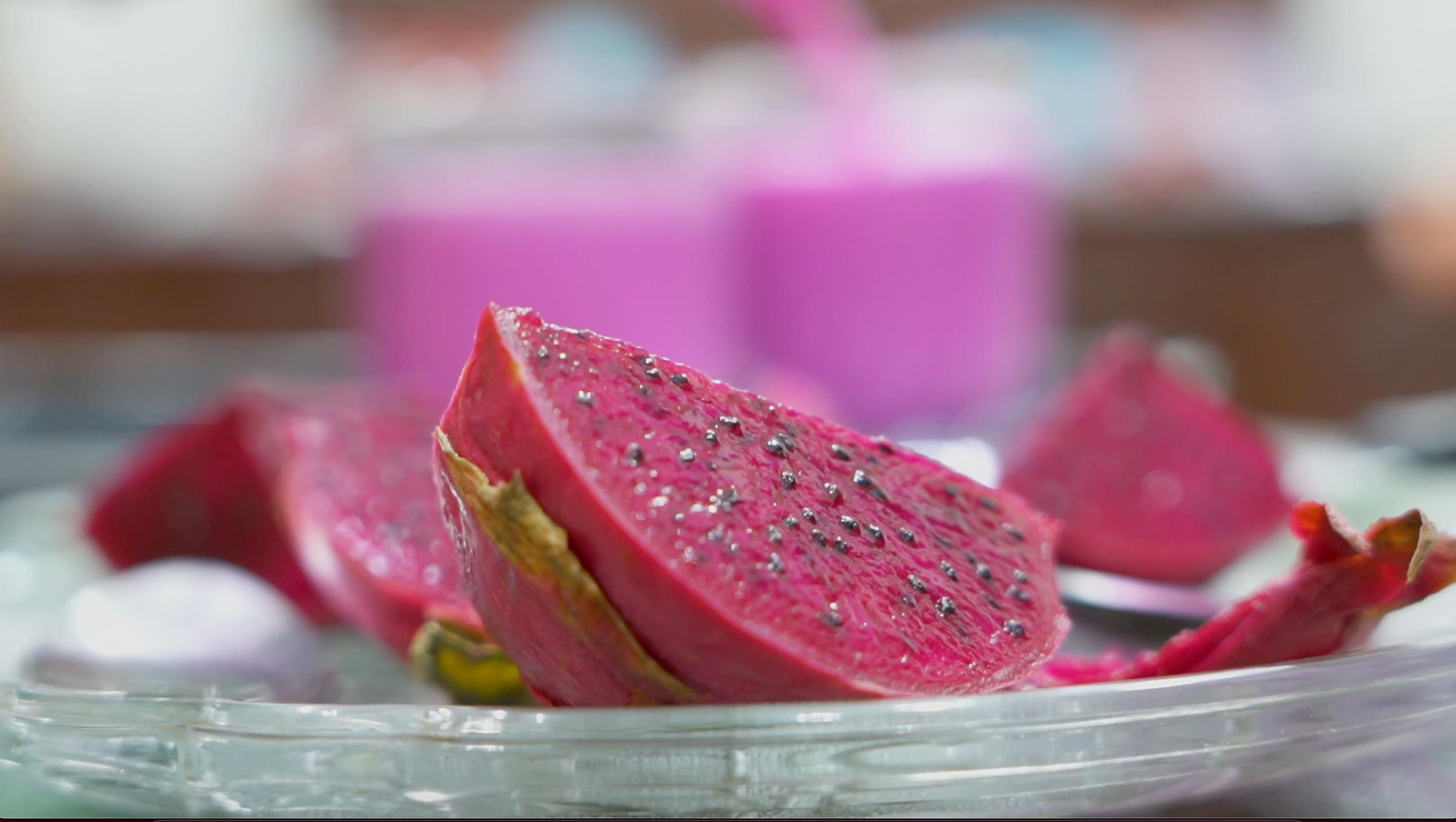
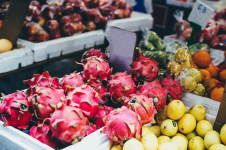
Could dragon fruits be Pakistan’s next big export opportunity?


Dragon fruits, known for their bright colour and health benefits, should be pomoted locally as well as exported, farmers say

Gohar Ali Khan
September 30, 2025

1759262165935.png


KARACHI: Progressive farmers say dragon fruit - known as an exotic ‘superfruit’ for its health benefits and popular in many countries - should not only be marketed better locally but exported.

There are around 10 farms cultivating dragon fruit at a commercial level, although they are still in developing stages.

Farmers say the fruit can be promoted in Pakistan through good marketing and making people aware of not only its health benefits but also its by products, incuding fruit powder which can be used to make drinks, jam and ice cream.


Progressive farmer and owner of Delicious Dragon Fruits Farms Karachi, Captain Rizwan Rehman, is growing and cultivating dragon fruits at his farm in Gadap Town Karachi.

He told Business Recorder dragon fruit cultivation can be promoted with government support, such as giving small farmers subsidies on infrastructure materials like concrete pillars, steel wire, ropes, solar plates and drip irrigation system materials.

He added that “dragon fruit is not popular in Pakistan due to mostly only being available in big supermarkets - and they often sell imported ones instead of local - and its price is also high due to limited supply. It’s become a rich man’s fruit, out of reach for common people. Prices will come down once supply of fruit will be increased and it is available in open markets.“

Export potential

⁠There is a huge demand for dragon fruits in the world. Its main exporters are Vietnam and Thailand, but they mostly have the white flesh variety, which has a longer shelf life. However, Pakistan has the red flesh variety, which is considered sweeter and more flavorful. In addition is it said to be richer in antioxidants and vitamin C, Rehman said.

There are many varieties of dragon fruit available worldwide, but the export standard is 300 gm per fruit.

Rehman said in Pakistan “mostly-grown varieties are Chinese Red, I have the most commercial varieties including Siam Red, Royal Red, Moroccan Red, Red Ruby, Dark Star, Taiwan Jumbo Red, Vietnam Red, Chinese Red, Vietnam White, Aussie Gold, Israeli Yellow, Desert King, Siam Red C and many more.”

Pakistan can also take advantage of its location, being closer to the Gulf countries, he said.

Sohail Mohammad Khan, a progressive farmer from Sargodha believes if farmers start producing the fruit on a large scale it can earn billions of dollars in exports.

“It shouldn’t always be the government that has to support farmers to make things happen but when it comes to exports, the government must guide farmers about international markets such as the US where dragon fruit is very popular,” he said.

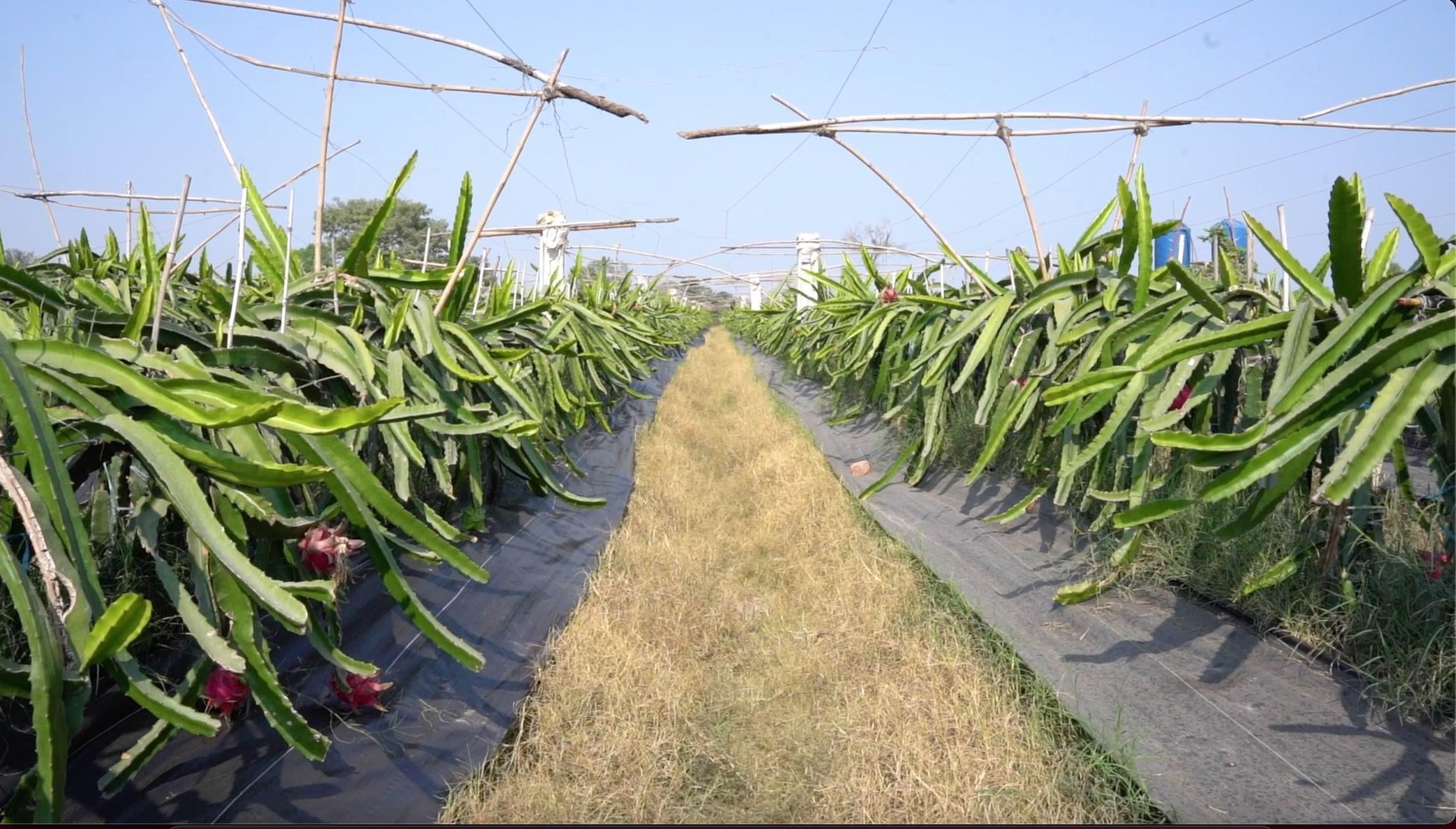
Meanwhile Rehman explained that dragon farming is relatively simple, requiring well-drained land. With initial growth of a few hundred plants, farmers can multiply their yield to thousands within a year or two.

There are two systems which help the dragon fruit grow: the ring poll and the high-density Trellis systems.

While the ring poll system can cost up to around Rs2 million per acre, he said, the high-density Trellis system may incur at least Rs3 million. The fruit can be sold at Rs1,000 per kilogramme, and one acre has the potential to yield five to ten tonnes.
 

Chinese technology bolsters Pakistan’s dragon fruit growth​


By Mariam Raheem | Gwadar Pro

LAHORE, - “Pakistan has the natural advantage of growing dragon fruit. By promoting dragon fruit cultivation to Pakistani farmers, providing Chinese high-quality dragon fruit seedlings and its scientific management and planting technology, it is expected to turn dragon fruit into a new foreign exchange fruit with high commercial potential in Pakistan,” highlighted Shan Ailin, owner of Tiantian Farm in a recent interview with Gwadar Pro.

Dragon fruit tastes delicious and has high nutritional value. It is a green and eco-friendly fruit with certain curative effects. According to the research and observation of Dr. Asif Javed, an expert who has been promoting the growth of dragon fruit in Pakistan for the last five years, dragon fruit is a tropical fruit that is well suited to Pakistan’s tropical and subtropical climate.

Prior to its local production, the dragon fruit which was available in Pakistan was imported from Vietnam, Thailand and other countries. Half-ripe fruits are cut to extend their shelf life, greatly affecting the flavor and nutritional value. High transportation costs have made this “super fruit” difficult to reach for Pakistanis. Dr. Asif Javed believes dragon fruit is a cash crop and the increasing operations in Pakistan could make it more profitable. “We supply these plants to farmers and amateur growers throughout Pakistan and also cover the transportation costs,” claimed him.

Chinese technology bolsters Pakistan’s dragon fruit growth


Dragon fruit cultivated in Pakistan

Dragon fruit cultivation in Pakistan is a long-cycle, high-investment facility agriculture. Commenting on the difficulties of growing dragon fruit in Pakistan, Mr. Shan said that there were no new good varieties in the market, and it was relatively difficult to improve them. “Lack of sophisticated planting techniques can cause great losses.

In addition, some disease prevention drugs and fertilizers for dragon fruit are not available in Pakistan and have to be imported from China. It is also necessary to equip Pakistan management staff to localize the project,” added him.

This year is also the fifth year that Shan has grown the Chinese mainstream varieties of dragon fruit in Pakistan. Since 2018, with the support of dragon fruit professional teams from Hainan, Guangxi and Guangdong provinces where dragon fruit is grown extensively in China, the farm has cultivated new varieties of dragon fruit suitable for Pakistan’s climatic conditions, and summarized the management methods and technical standards suitable for Pakistan’s local conditions.

Currently, there are 1-2 Chinese dragon fruit cultivation technicians who are responsible for the daily management at the farm.

Together with Chinese experts, China’s mature experience in dragon fruit cultivation has come to Pakistan. Wang, a Chinese technician at the farm, explained that in terms of fertilizer and water management, they have fully learned from Chinese management methods, using drip irrigation and spraying, paying attention to soil improvement and giving full play to the beneficial role of microorganisms. Fruit trees are pruned regularly to form a system.

Chinese technology bolsters Pakistan’s dragon fruit growth


Dragon fruit garden in Pakistan

The annual production of Shan’s dragon fruit garden this year is about 100 tons, with a planting area of 25 acres. “100 acres are planned to be added between the second half of 2022 and the end of 2023, with a total production capacity of about 350 tons. At present, we can provide local farmers 500,000 seedlings per month, and after May 2023, we can provide more than 5 million seedlings per month.” Shan said optimistically.

Currently, Shan’s main sales channels include supermarkets, online sales, chain fruit stores and high-end hotels. He is planning to set up distribution warehouses and stores in major cities next year. “The Pakistani government has been promoting dragon fruit cultivation among local farmers for several years.,” he concluded.
 

Solar-powered farming is digging Pakistan into a water catastrophe

Reuters

1759406211963.png

A worker installs a folding solar panel unit, to run a tube well, the motorised pump that taps groundwater, in a rice field in Muridke, Sheikhupura District in Punjab province. Photo: Reuters

MURIDKE: Karamat Ali’s cows and buffalos once provided his multi-generational family with milk. But earlier this year, the 61-year-old sold about a dozen bovine - and spent the proceeds on a set of solar panels.

The rice farmer in Pakistan’s Punjab province now uses his panels to power a tube well, which is composed of a water well and a motorised groundwater pump.

The device allows Ali to irrigate his crops with greater ease and frees him from depending on the erratic electricity grid and pricey diesel to power the pump.

“Water supply to my paddy feed is smoother than before,” he said. As Pakistan undergoes a solar revolution, farmers like Ali are increasingly ditching diesel and grid power for sun-powered tube wells, according to interviews with 10 growers, as well as government officials and analysts.
 
To view this content we will need your consent to set third party cookies.
For more detailed information, see our cookies page.
 

Cotton output rebounds 49pc

Amjad Mahmood
October 4, 2025

1759580650162.png

LAHORE: The country is witnessing an unexpected and remarkable surge in cotton production, prompting the government to announce the creation of the Pakistan Cotton Board (PCB), which will lead a comprehensive strategy for the sector’s revival.

According to data released by the Pakistan Cotton Ginners Association (PCGA) on Friday, cotton arrivals at ginning factories across the country have surged significantly, as of Sept 30.

Cotton production has increased by a record 49 percent compared to the same period last year, with a total of 3.044 million bales of seed cotton (phutti) arriving at the factories. Sindh led the charge with 1.907m bales, marking a 45pc rise, while Punjab recorded 1.136m bales, reflecting a 56pc increase.

Sajid Mahmood, Head of the Technology Transfer Department at the Central Cotton Research Institute in Multan, noted that the latest figures have alleviated earlier concerns about lower production in the season.

During this period, textile mills purchased 2.410m bales, and exporters bought 95,000 bales. As of now, 540,000 unsold bales remain in ginning factories. Ginning activity has also seen a significant uptick, with a record 265 factories now operating in Punjab (up from 171), and 236 in Sindh (up from 221).

Govt forms board to steer crop revival plan

Despite challenges such as floods, water shortages, and heavy rains in both Sindh and Punjab, the overall situation remains positive. Mahmood commented, “While heatwaves, unusual rains, and floods have inflicted considerable damage in several districts of South Punjab, the overall production outlook remains strong. In Punjab alone, 162,000 acres were affected, while in Sindh, 57,552 acres of cotton were damaged.”

However, discrepancies persist between the cotton data released by the PCGA and the Punjab Crop Reporting Service (CRS), which reported a cotton production figure of 2.650m bales for Punjab by Sept 30.
 

Urea sales rise 17pc


The Newspaper's Staff Reporter
October 5, 2025

KARACHI: Urea sales in September clocked in at 428,000 tonnes, up by 17 per cent year on year (YoY) amid low base effect while it was down by 48pc month on month (MoM) due to pre-buying trend observed in August.

Pre-buying in August was led by continued higher discounts by select manufacturers during the month.

Asad Ali of Topline Securities said that Engro Fertiliser maintained an average discount of Rs260 per bag in both August and September, part of which was rolled back in the first half of September. Meanwhile, Fauji Fertiliser continued to offer discounts in the range of Rs40-70 per bag.

This will take 9M2025 urea offtake to 4.2m tonnes, down 8pc year-on-year compared to 4.57m tonnes in 9M2024, mainly due to weak farm economics.

The closing inventory of urea was around 1.17m tonnes in September, up from 1.03m tonnes in August.

Asad said that total DAP sales during September was anticipated at 71,000 tonnes, down 47pc year-on-year and 48pc month-on-month possibly due to delay in sowing sessions led by flood. In 9M2025, total DAP offtake was 769,000 tonnes, down by 17pc year-on-year.
 

Pakistan gearing up to assemble 57-80hp Belarus tractors

Tahir Amin Published September 26, 2025

ISLAMABAD: Pakistan is gearing up to locally assemble 57–80 horsepower Belarus tractors, in what officials described as a breakthrough for the country’s agricultural and industrial sectors.

Special Assistant to the Prime Minister (SAPM) on Industries and Production, Haroon Akhtar Khan, while chairing a high-level meeting with representatives from private tractor investors, Margalla Heavy Industries Ltd, Heavy Industries Taxila, and Green Corporate Initiatives on Thursday, said the government will facilitate the establishment of a CKD (Completely Knocked Down) plant for high-horsepower tractors in partnership with Belarus.

“An agreement with Belarus on tractors will significantly boost agriculture and increase farmers’ productivity,” Khan said. He added that the initiative would not only modernize Pakistan’s farming practices but also strengthen the country’s industrial base.


Industry sources estimate a market potential of 2,800 tractor units over the next five years, underscoring strong demand for high-power machinery to support crop yields and mechanization.

Khan revealed that several investors have already expressed deep interest in the Belarus tractors project and urged more private players to seize the opportunity.

“This B2B partnership between Pakistan and Belarus has the potential to be a real game-changer,” he emphasized.

The project is seen as a critical step in reducing import dependence, enhancing local manufacturing capacity, and empowering farmers with modern tools to drive productivity and growth.

Copyright Business Recorder, 2025

Why is this "good" news? Why can't Pakistani companies design a Pakistani product by now? Given how long Pakistan has been "assembling", surely the distance to a Pakistani product can't be that high? Not exactly rocket science.
 

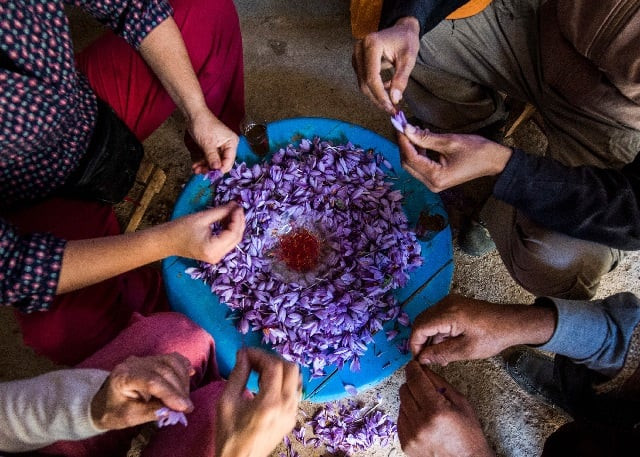
Rs 500m saffron cultivation project launched​


October 08, 2025


tribune


The Khyber-Pakhtunkhwa government has launched a three-year project worth Rs500 million to promote saffron cultivation aimed at economically empowering poor and small farmers of the province.

Under the initiative, starting from the fiscal year 2024-25, saffron cultivation is being introduced in 21 districts of the province, including Upper Chitral, Lower Chitral, Upper Dir, Lower Dir, Bajaur, Malakand, Upper Swat, Lower Swat, Shangla, Buner, Abbottabad, Mansehra, Battagram, Torghar, Haripur, Swabi, Hangu, and North and South Waziristan, among others.
 
To view this content we will need your consent to set third party cookies.
For more detailed information, see our cookies page.
 
To view this content we will need your consent to set third party cookies.
For more detailed information, see our cookies page.


Agriculture budget should be Rs300bn IMO. Build some less roads in cities and give money to farmers so they can enter 21st century farming.
 

Users who are viewing this thread

Pakistan Defence Latest

Back
Top