Pakistan Air Force | News & Discussions

There's a reason many private satellite imagery firms didn't want to release images from 11th May of Adampur AB. Indians claim that the incoming CM-400s were shot down, but they have still not showed any pictures of the destroyed missiles. S-400 was not moved from Adampur, because Modi went to take selfies with it the next day. So, something did happen there. Maybe with time, we'd see some clarity.
it was already released by Americans and others.they had validated the claim, but they didn't find anything—even media outlet in USA reported with the pic with no damage.
 
Last edited:

The S-400 quandary​

  1. Aviation Features
  2. The S-400 quandary


15th September 2025
Feature


Mike Mihajlovic considers the claims by both Pakistan and India related to the Indian Air Force’s S-400 ground-based air defence systems
img_38-1.jpg

The S-400 Triumf (NATO name SA-21 Growler) formerly the S-300PMU-3, is a mobile long-range surface to air missile system. It’s one of the most capable in the world and feared by most air forces that have to confront it
Images via author, unless stated
India began inducting the S-400 Triumf system in late 2021, marking a significant enhancement of its long-range AD capabilities. Within a year, several regiments were deployed along the western front, with the first unit widely reported to be positioned in Punjab to monitor and secure airspace along the western border. By 2022–2023, additional units were operational, extending coverage to other strategically important sectors. The deployment was a clear signal of India’s intent to strengthen its aerial deterrence posture, particularly against high-performance aircraft and long-range strike assets in neighbouring states.

The JF-17 officially entered service with the Pakistan Air Force in 2010. Initial production runs were completed in China, but as the program matured, manufacturing increasingly shifted to the Pakistan Aeronautical Complex (PAC) at Kamra, enabling domestic upgrades and greater autonomy over the fleet’s configuration. Among the most notable additions to the JF-17’s arsenal was the CM-400AKG, a Chinese-made high-speed air-to-surface missile. Open-source evidence indicates that Pakistan likely acquired the CM-400AKG in the early 2010s, with integration and trials on the JF-17 beginning around 2012–2013. Since then, the CM-400AKG has been a central component of Pakistan’s long-range strike capability. Its inclusion in the JF-17’s armament portfolio expanded the PAF’s ability to threaten heavily defended targets, both maritime and land-based, from standoff distances.

S-400

India’s acquisition of the S-400 system represents a profound enhancement to its AD architecture, one that blends advanced radar capabilities, frequency agility, and networked resilience. At the heart of the system lies a suite of radar sensors: the 91N6E Big Bird for early warning and broad surveillance (over 300-600km), the 92N6E Grave Stone fire-control radar for engagement, the 96L6E Cheese Board low-altitude tracker, and optionally stealth-target detectors such as Nebo-M. These radars collectively create a layered detection envelope, enabling India to detect and begin tracking Pakistani aircraft from long ranges, irrespective of flight altitude or intent to evade.

The S-400 exists in two principal forms: the domestic configuration used by the Russian Aerospace Forces and the export configuration, which is designated by the addition of the suffix ‘E’ to component nomenclature, as in 91N6E for the acquisition radar or 92N6E for the engagement radar. While the export system retains the overall architecture, general capabilities, and versatility of the original design, it incorporates a series of deliberate modifications intended to protect sensitive Russian technology, maintain a strategic advantage over foreign operators, and comply with both national and international arms control regimes.

img_39-1.jpg

The four mobile systems that make up the complete S-400 system. From left to right, the 55K6E Command post vehicle, 92N6E target acquisition radar, 91N6E surveillance radar and 5P85SE2/sP85TE2 missile launchers. The 91N6E Big Bang radar is usually parked about 1km from the command and control vehicle, while the 92N6E target acquisition radars can be found between 30-100km away
One of the most significant distinctions lies in radar performance. The domestic 91N6 acquisition radar has been credited, in ideal conditions, with the ability to detect large high-altitude targets at ranges approaching 600km. The export variant, the 91N6E, is slightly reduced in maximum detection range, often cited at approximately 570km, with a marginally lower effectiveness against targets with small radar cross-sections. The reduction in capability arises not only from moderated transmitter power output but also from the deliberate simplification of signal processing algorithms. A similar pattern is seen in the engagement radar. The Russian 92N6 radar can track over a hundred targets simultaneously and engage approximately forty of them at once, employing highly advanced target discrimination routines. The 92N6E generally retains most of this capacity, but in export form, its simultaneous tracking and engagement channels are slightly fewer, and certain adaptive discrimination functions are less sophisticated, limiting its peak efficiency in extremely dense or deceptive air combat environments.

img_39-2.jpg

This mock-up of the big CM-400AKG was seen at the Royal International Air Tattoo in July, the weapon’s first public viewing
Chris Lofting
The Russian domestic radars utilise a fully classified suite of counter-jamming features, including high-speed frequency hopping, wideband waveform agility, adaptive beamforming, and dynamic noise rejection algorithms. These allow the system to maintain target tracks even under concentrated hostile electronic attack. In the export versions, these features are retained in a functional but less complex form. Frequency agility remains a prominent characteristic, but the hopping patterns are simplified, and some of the adaptive ECCM (electronic counter-countermeasures) logic is reduced to make the system more predictable for authorised operators while safeguarding Russia’s most advanced techniques from potential reverse engineering.

img_39-3.jpg

The CM-400AKG information board displayed next to a mock-up at Zhuhai Airshow in 2019
Alan Warnes
The differences extend beyond the radar subsystems to the missile inventory. The Russian S-400 employs a family of missiles including the 40N6, with a reported range of up to 400km; the 48N6DM, with a range of 250km; and the 9M96E/E2, which are shorter-range but highly agile interceptors. While export clients may receive the 40N6E missile with a nominally similar maximum range, its seeker sensitivity, ECCM robustness, and in some cases actual operational range are thought to be marginally reduced compared to the domestic missile.

A remarkable facet of the S-400’s design is its use of frequency-hopping and beam-steering technologies. These features allow the radar to rapidly switch frequencies in a pseudo-random manner and direct energy precisely toward targets – techniques that severely degrade the effectiveness of enemy jamming attempts. In practice, such agility forces an adversary’s jammer to spread its power across multiple frequencies or attempt to predict the hopping sequence, often unsuccessfully, thus substantially weakening any jamming effort.

India’s deployment of the S-400 goes beyond standalone operation; it is deeply interwoven into the nation’s broader defense sensor network. Systems such as the indigenous Akash AD and Rajendra radar are integrated via the IACCS command-and-control system, helping to correlate radar data from various layers and maintain tracking even amidst jamming or signal interference. The Rajendra, a passive phased-array radar, can track multiple targets and issue missile guidance commands, even under intense electronic warfare conditions.

img_40-1.jpg

A JF-17C Block 3 Thunder launched the CM-400AKG missile at the IAF’s deadly S-400 air defence system. Two members of 14 Squadron ‘Tail Choppers’ were awarded the third highest military honour, Sitara-i-Jurat (Star of Courage) for their part in the mission
Alan Warnes
India’s border air-defence is structured as a layered, sensor-to-shooter network. Long-range systems like the S-400, medium-range systems such as Akash, and short-range or point-defence assets like SPYDER and guns work in tandem with AWACS and multiple radars. Through integrated command-and-control, these elements share tracks and tasking to ensure the most suitable weapon engages each target at the right moment.

India is presently working on two different important projects:

Integrated Air Defence Weapon System (IADWS): What it is: A multi-layered, integrated air-defence system combining various sensors and interceptors. (Protection for cities)

Components:
QRSAM (Quick Reaction Surface-to-Air Missile)
VSHORAD (Very Short-Range Air-Defence)
A Directed Energy Weapon (like a high-power laser or electromagnetic weapon).

Project Kusha: it is An indigenous long-range Surface-to-Air Missile (SAM) system under development by DRDO and its partners.

Purpose: Aims to provide capabilities comparable to Russia’s S-400, but domestically designed and produced. It’s being billed as India’s “home-grown” alternative to high-end long-range SAMs. Planned to have multiple interceptors (M1, M2, M3) with ranges of around 150 km, 250 km, and 350–400 km
 
All new air doctrine is created and tested at the PAF’s ACE facility, based at Mushaf, that has a huge tactical training range -one of the best in the world according to the Turkish Air Force (see last month’s Anatolian Eagle exercise report)
This means every cockpit receives a Recognised Air Picture through encrypted datalinks, ensuring PAF aircrew possess the tactical clarity needed to dominate the skies. This fusion of space, cyber, electronic warfare (EW) and kinetic power has turned the PAF into a truly multi-domain combat force, capable of deterring, responding and prevailing in future wars, which seems highly likely. This capability has been built up since the author’s last visit in 2020 and was clearly revolutionising the way PAF the trains and goes to war.

Several military veterans the author spoke to were keen to stress that the PAF is just part of the fighting machine run by the Chief of Army Staff, Field Marshal Asim Munir who made a high-profile visit to the USA in mid-August. He harnesses the combined strengths of Army, Navy and Air Force, but this feature focusses on the PAF.

EW at work

On April 29, a week after the Pahalgam attack, four IAF Rafales departed Ambala Air Force Station. Their mission, to bomb terrorist targets in the north, but according to the PAF, a mobile PAF electronic warfare (EW) unit deployed along the front line saw them approaching and jammed their radars and communications, while cyber-attacks on electric grids in the north, rendered the Rafales helpless. They abandoned their mission and instead diverted to Srinagar Air Force Station.

img_45-12.jpg

The PAF operates 20 J-10C Vigorous Dragons in both camouflaged and grey markings. None currently wear squadron markings but that could change soon. This aircraft, with its light blue underbelly, taxies to the end of the Minhas runway for a mission
img_46-1.jpg

A grey J-10C with six hard-points under the wings, two equipped with twin missile racks. During the author’s time at Minhas, a grey example always flew with a camouflaged jet
The Dassault 20ECMs of 24 ‘Blinders’ Squadron which had performed so well in Op Swift Retort in February 2019 (see panel) were not used in Operation Bunyan-un-Marsoos because of their lack in wattage power. Trying to overpower a target receiver is heavily influenced by the power output, and a lack of this power will make the jammer less effective at disrupting intended signals. This would have been the case with the S-400 air defence system or Rafale’s Thales RBE2 radar, which MBDA designed to be robust against jamming, and integrated with the passive Thales Spectra EW system.

img_46-3.jpg

Three J-10C flying line abreast armed with 18 air-to-air missiles between them. The Chinese People’s Liberation Army Air Force is now keen to understand how the PAF worked their jets so well operationally
The EW mobile units designed by the new NASTP (National Aerospace Science & Technology Park) in recent years, instigated by the PAF’s Commander, ACM Sidhu, were being fielded at various locations to jam targets. Between April 29, when the IAF tried their failed attack, and May 6, the PAF had watched the IAF deploy up to 20 Rafales from Hashimara (home of 101 Sqn in the Eastern Command) to Gwalior and several other bases (Ambala, home of 17 Sqn Rafales in Western Command, Srinagar and Bikaner/Nal in Rajasthan). Several S-400 SA-21 Growler surface-to-air missile batteries were moved to Adampur, Bhuj and Bikaner.

The IAF mobilised around 400 aircraft in late April and early May, with the transport fleet flying over 500 sorties, obviously to move around weapons, logistics and personnel for an attack. The PAF was prepared.

“We could not let the attack go unpunished. No one infringes Pakistani sovereign territory, and we are entrusted to protect it.”

img_47-2.jpg

ACM Sidhu has boosted the PAF’s capabilities considerably with his operational and industry visions. He is seen here walking to a F-16 alongside members of his staff and base personnel
PAF
At 1230hrs on May 7, that attack came when the IAF bombed nine sites in Pakistan with long-range Spice 2000 precision-guided bombs. The CAS immediately changed the rules of engagement, with airborne PAF fighters instructed to move from defensive to offensive mode. He spoke directly to all the PAF pilots in the air via radio, commanding them to shoot them down, and according to several sources he told the airborne fighter pilots: “Kill them, kill them, don’t let them enter even an inch into Pakistan.”

The PAF could not let the attack go unpunished, and as the spokesman told me: “No one infringes Pakistani sovereign territory - we are entrusted to protect it.

“When the IAF released those bombs, there were already 72 IAF aircraft in the air, as their numbers had steadily increased. We started the attack on the different strike packages of Rafales, Su-30MKIs and Mirage 2000s.”

Most of the IAF’s 36 Rafales were flying in offensive mode on the Indian side of the border at some point and according to the PAF, they were equipped with MBDA’s highly capable Meteor BVRAAM, backed up by Su-30MKI Flankers armed with Israeli Derby BVR missiles and Spice 2000 precision-guided munitions (PGMs).

According to the ISPR (Inter Services Public Relations) press briefing on May 7, the IAF had eight formations lined up along the eastern border, each strike package comprised eight aircraft: four Su-30MKIs, two Rafales and two Mirage 2000s.

img_47-3.jpg

With its front wheel lifting off the runway, this J-10C is set for another mission
Locking on the target

A senior PAF pilot explained how they prepare for war with India, always a real possibility. “It’s in the training,” he said. “Going to theatre, the fighter’s radar cannot see all the targets as they are too far away, but the Saab 2000 Erieye does.”

As a high value asset and undoubtedly a target for India, the Saab 2000 Erieye will keep out of harm’s way flying close to the western border, over 400km (250 miles) from India. He continued: “The operator sitting in front of his screen in the Erieye will label the enemy aircraft into the different groups and assign them to the PAF packages. This will be done in groups of three or four aircraft according to azimuth and altitude, then the operator assesses and relays [the positions] to all the aircraft, but he will still control them.

“The war picture is built through Link 17/ Skyguard, which we see on the displays in our cockpit, and the aircraft we are assigned to shoot – which we term ‘the contract’. The Air Boss and his team [in the Multi Domain Ops Room] will also be looking over the scene on a massive screen in AHQ.

“The fighter pilots have two radios in the cockpit, one to discuss the complete aerial picture and another to talk to members in your formation.

“If I am targeting their no 1 and 2, I would see them on my scope, put my cursor on them and lock my missiles onto them.

“My radar is then locked onto the target and is linking info to the missile until a certain range, when the missile switches on to its own AESA [Active Electronically Scanned Array] seeker within the PL-15’s minimum abort range [MAR].”

The MAR is the closest an engaging aircraft can get to the target and fire the missile before getting out of a fight, before the missile threat is able to run you down.

“Once your missile’s active range (in this case the PL-15) is met, you can turn back (to ensure you don’t fly inside the MAR of a Meteor -let’s say 35 miles). The missile with its AESA seeker will then lock on to target and shoot it down.”

The author was told the Rafale pilots would not have known what hit them until the PL-15Es were about three seconds out.

“Remember, if you miss your designated aircraft, it could get you. We train continuously for this. A mission of 15 minutes can regularly take up to eight hours to debrief!

“In a war theatre you can put as many aircraft as possible up. The IAF sent 72 into the AOR [Area of Responsibility] but it’s a lot for the GCIs [Ground Control Interceptors] to control!”

One of the lessons the IAF must have learnt from that night was the sheer number of aircraft they deployed in the air was too much to handle. Each IAF GCI would have to manage several aircraft in an extremely dynamic situation, particularly as aircraft were being shot down. The PAF Commander said: “We designated an IAF aircraft for every J-10 or JF-17 Block 3 with the battle space being managed much better because of the multi domain ops.”

img_48-2.jpg

The Tactics Developments School is where the anti-Rafale ops are rolled out to PAF personnel. The PAF has always worked harder to define tactics against its Indian foe and no stone is left unturned to ensure that they are successful
Going for the kill
Thanks so much for sharing, been so looking forward to this.
Details everything that many Indians have been in denial, invasive about and undoubtedly the most important part of the conflict.
I assume same article is also appearing in the printed version due out on Thursday?
 
NOTE: India has done "pai lagon pitta g" to Xi/China. So now the entire Indian military has one focus: Pakistan.
Which should never be not mentioned 😂🙃


India had no intention to dehyphenate, they are clinging on to pakistan as an enemy, imagine being that much bigger but still needing the smaller enemy


Who the fug in strategic circles needs Pakistan India war? It will just become a platform for Chinese weapons to increase in reputation
 
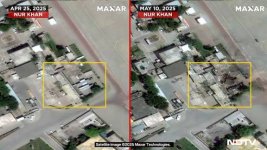
This is interesting. I thought Nur Khan's base attack was with a scalp.
This is not true. It was Scalp I can say with certainty. He's also wrong about Rafiqui being hit.

Overall I am a bit disappointed about the article, it's also not structured in a cohesive manner.
 
Sources told the author: “We have video recordings of the downed aircraft and battle damage assessment imagery which we intend to release at the time of our own choosing and when we deem it appropriate which will cause further embarrassment to the IAF.”

This is interesting. 😁
 
Overall minor inaccuracies - little mirch masala obviously. However, what im interested in is the BDA of IAF bases on 10th which PAF claims will be released at the desired time.

PAF has always been very confident about its strikes on 10th. As many people as i have talked to.

This was reported by CNN quoting their source. Let's see if any proofs are brought up.

Screenshot_20250916_145542_Chrome.jpg
 
any more mistakes in the article? especially about bunyan um marsoos targetting s400 and rafale?

S400 was ofcourse targeted on 10th. No aerial engagement on 10th. Can't say about any hit on ground.

I have only given it a surface read. Will get back to it later on in the evening.
 
This is not true. It was Scalp I can say with certainty. He's also wrong about Rafiqui being hit.

Overall I am a bit disappointed about the article, it's also not structured in a cohesive manner.

He's also wrong about IAF targeting all 7 locations in Pakistan. IAF only targeted two, rest were all targeted by Indian Army.
 
Overall minor inaccuracies - little mirch masala obviously. However, what im interested in is the BDA of IAF bases on 10th which PAF claims will be released at the the desired time.

PAF has always been very confident about its strikes on 10th. As many people as i have talked to.

Prominent YouTube military channels are now accepting the Pakistani air force presentation, especially when compared to the Indian air force presentation, or whatever that was
 

Users who are viewing this thread

Pakistan Defence Latest

Country Watch Latest

Back
Top