Pakistan Army | News and Discussions

why was my post deleted? What forum rule did it break? I provided sources for the news also, it was from mainstream media. Or is it that no comment on shahenshah asim muneer will be tolerated? Where is that in forum rules??

@Fatman17 @Waz
Post some Facebook memes to get on their good graces they love those.
 

CDF Munir warns Pakistan's response to any future ‘misadventure’ will be ‘extremely widespread, painful’


News Desk
May 10, 2026

1778409958517.png

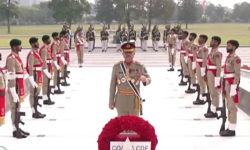
Chief of the Air Staff Air Chief Marshal Zaheer Ahmed Babar Sidhu lays a floral wreath at GHQ, Rawalpindi on Sunday. — screengrab via DawnNewsTV

1778409925331.png

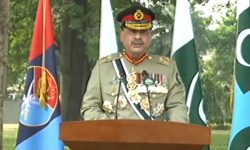
Chief of Defence Staff and Chief of the Army Staff Field Marshal Asim Munir addresses a ceremony at GHQ, Rawalpindi on Sunday. — screengrab via X/ RadioPakistan


Chief of Defence Forces (CDF) and Chief of the Army Staff Field Marshal Asim Munir warned on Sunday that any future “misadventure” against Pakistan will result in “extremely far-reaching and painful” consequences for the enemy.

He made the remarks at a ceremony held at General Headquarters (GHQ) in Rawalpindi to mark one year since Pakistan’s victory in last year’s conflict with India.

The conflict with India — starting from the April 22 Pahalgam attack to the end of Operation Bunyanum Marsoos with a ceasefire between the two countries on May 10 — has been called “Marka-i-Haq” (Battle of Truth) by the state.

CDF Munir, as the chief guest, addressed the event. Chief of the Air Staff Air Chief Marshal (ACM) Zaheer Ahmed Babar Sidhu and Chief of the Naval Staff Admiral Naveed Ashraf were also in attendance.
 

After the Raj, the most powerful weapon in Pakistan's arsenal is a name


How are military operations named and who gets to decide them?

Muzhira Amin
May 12, 2026

“In the Pakistan Army, Islam is not just a part of our personal beliefs, but also our training,” Lieutenant-General Ahmed Sharif Chaudhry replied. “It is part of our faith. Iman, taqwa, jihad fi sabilillah, that is what drives us. That is our motto. And, Alhamdulillah, we have a Chief of Army Staff who has a strong belief.

The belief and commitment of the leadership also translates into the operations in various ways. What does this name tell us? It tells us that momins [believers], who fight for the sake of Allah, are a ‘steel wall’. And, praise to Allah, the Pakistan Army acted like a steel wall.”

And so, for its most significant operation in decades, Pakistan picked a name from a holy text, one that left zero margin for error. I wondered about the mechanics behind these linguistic choices as I listened to editors in the newsroom make frantic phone calls to sources to ensure Dawn got the spelling right.

How did an army settle on a title for a military operation? A year later, in the newsroom, as we prepared stories for the anniversary of Marka-i-Haq, I saw plans for reams of text on tactical doctrine and strategic calculus. But the question still stuck. I decided to go digging, and what better place to start than the army itself. I spoke to mostly retired officers who graciously shed light on the philosophy that goes into this aspect of perspective management.
 

How military operations are named

Military operations, exercises, and even administrative actions that require deep planning are routinely assigned names before they are launched, explained Lt General (retired) Naeem Khalid Lodhi. He is a three-star General who served as GOC Bahawalpur, General Headquarters Rawalpindi and Corps Commander Bahawalpur, and as Minister for Defence Production after retiring. According to him, these titles are pre-decided, kept inside classified files hidden in secret places, along with contingency plans and preemptive military exercises. They can’t just be decided while a country is at war, Gen Lodhi told Dawn.

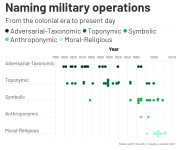
Naming is most usually associated with three broad concerns: the nature of the mission, the terrain where it will unfold, and the psychological effect the name may have on the troops.

1778586893888.png


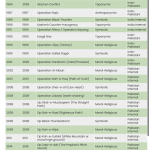
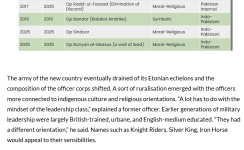
The name should be such that it gives the jawaans a boost of morale, which is why Operation Bunyanum Marsoos and several others are drawn from Arabic, the Holy Quran and Hadith, or kept in Urdu, to incite passion among the soldiers and motivate the under-command to do something “big”.
 
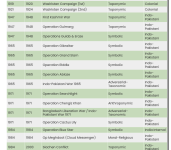
Muslim military history, previous campaigns and overall goals offer obvious inspiration. Operation Rah-i-Rast in Swat was chosen because the military wanted to frame the campaign as bringing people “back on to the right path”.

“The idea was that the military will go into Swat and since these are your own people, they have been misguided and are off track, therefore it was needed to bring them back,” said a former military official, who wished not to be named.

In other cases, names can be more functional and geographical. Engineers constructing bridges, for example, may simply label them “Ravi-I” or “Ravi-II”. Relevance, instant recognition and clarity are key.

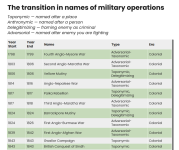
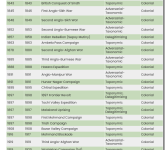
There are no binding international conventions for naming operations but globally, wars are usually remembered in ways that researchers and historians can identify easily—by the year, the number of days, the countries involved. This is why perhaps we have the First Mohmand Campaign and Third Anglo-Burmese War.
 
It is telling how imperial forces choose to project their operations. America, for example, pivoted from toponymic names (Vietnam War, Iraq War, Afghan War) and post-9/11 to moral declarative appellatives such as Operation Enduring Freedom. It is not without irony that the British and American style differs; the British would include themselves as agents of action (Anglo-Afghan war), but the Americans prefer to pretend and give the impression that the war is entirely of the enemy’s making.

That depends on the scale of the mission. Smaller or localised operations may be named by divisional, brigade or corps-level commanders. “But in main forces’ operations, we have a Military Operations branch in GHQ; they plan and then also decide the name,” Gen. Lodhi said.

Operations involving intelligence agencies may be named by the Military Intelligence or the Inter-Services Intelligence instead. Approvals are required unless a free hand is given, but when an operation is conceived at GHQ, the final approval rests with the Chief of General Staff.

Civilian involvement appears limited, even though operations themselves constitutionally require government approval. Public announcements are made jointly. “When the operation is announced, the military spokesperson and government representatives sit together,” a former military officer said. “The Inter-Services Public Relations announces the operation, the goals and the progress to the public.”
 

Names as strategic communication

The real measure of an operation is whether it achieves its objectives, while names serve a perception management purpose.

Air Vice Marshal (retired) Faaiz Amir explained that naming an operation, especially one as important as an India-Pakistan war, is not just a formality; it is a record that will go down in history, and how your people and the world will remember and make sense of the victors and the defeated.

Perception management has grown in urgency given how the channels for public messaging have evolved dramatically. Earlier wars relied heavily on state television and newspapers. Today, the battles are fought in real-time across television screens, on X, YouTube and WhatsApp. “Now the pulse comes through social media,” Gen Amir said. “The military itself regulates perception all over the world.”

He recalled Operation Swift Retort in 2019 as an example of a name carefully aligned with the nature of the mission. “The word ‘retort’ is a response to something and ‘swift’ is urgency,” he said. “This was probably named after we responded immediately to the Indian attack in Balakot.”

Of course, no amount of public messaging is watertight and there is always the risk that the name of an operation might be interpreted differently across generations or linguistic barriers. “Probably Bunyanum Marsoos came for religious purposes, but it was difficult to pronounce,” said Gen Amir, pointing out that such names were mostly for public consumption. The later use of Marka-i-Haq may have partly reflected concerns over international comprehension and media usage.
 

Fighting an ideological war

The rise in the use of Islamic ideology to name operations is directly linked to the war against militancy. “This began when Swat was taken over, and Nato had landed in Afghanistan,” said the former military officer. “And so the soldier was hesitant … he was fighting his own kith and kin.”

The military leadership feared alienating the tribes and ordinary soldiers if operations appeared to be framed as a war against Islam. He or she had to understand that this was fighting a person who had taken up arms against the legitimate authority of the State.

This is how names with religious overtones became strategically significant as well. The military leadership thought it would better motivate the soldiers. Operation Black Thunder would not land as well as Rah-e-Nijat, which at least fell into the mainstream lexicon.
 

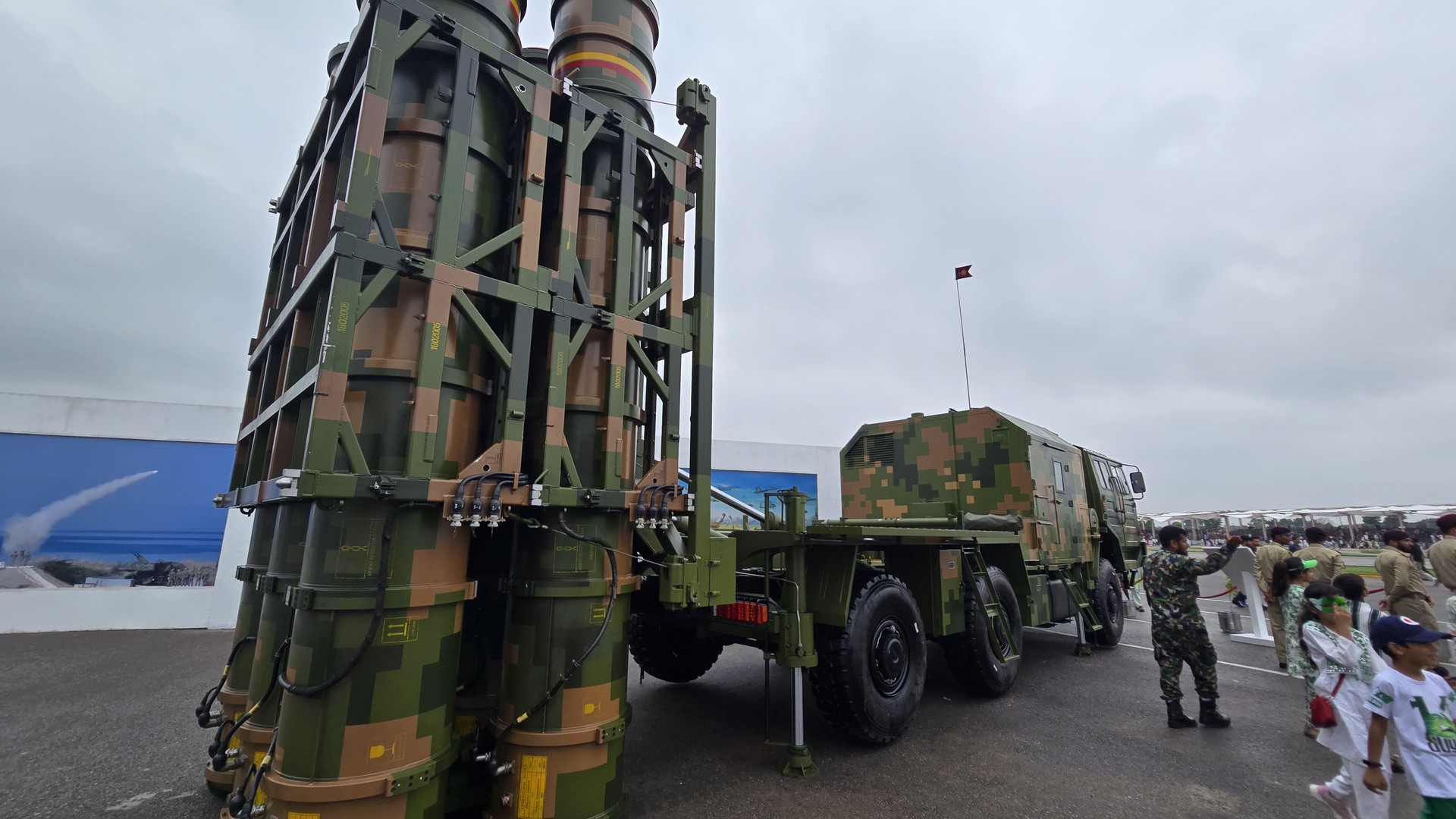
Pakistan Army Air Defence Systems
 
To view this content we will need your consent to set third party cookies.
For more detailed information, see our cookies page.
 

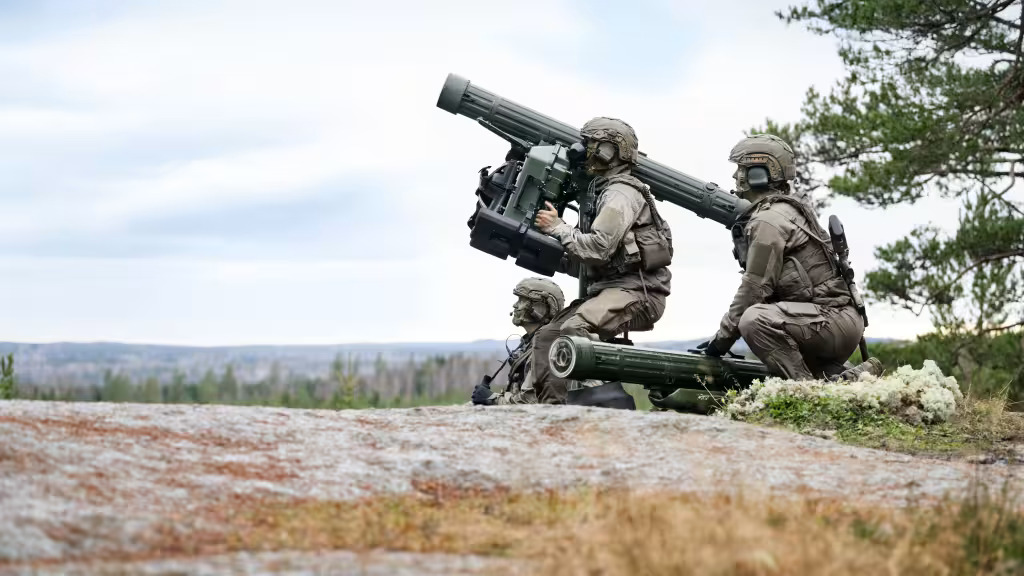
RBS-70
 

Users who are viewing this thread

Back
Top