Pakistan Automobile News and Discussions

Stability in the auto sector

Aamir Shafaat Khan
May 25, 2026

Consumers have remained upbeat about new vehicles despite the ongoing war between Israel, Iran, and the USA since February 28, 2026, as outstanding auto loans surged for the 17th consecutive month to Rs359.5 billion by the end of April 2026, up from Rs345.34bn in March.

However, this recovery still does not match the peak financing we saw during June 2022 of Rs368bn, when the annual sales volumes were around 240,000 units.

Low interest rates continue to play a pivotal role in luring buyers towards low financing, followed by various packages by assemblers and private banks on affordable car financing. The rest of the demand is propelled by rising petrol prices, forcing people towards various categories of electrified vehicles in larger numbers.

Sales of cars, vans, pickups and sports utility vehicles clocked in at 22,015 units in April 2026, up by 107pc year-on-year (YoY) and 42pc month-on-month, taking 10MFY26 cumulative sales to 166,044 units, up 49pc YoY.

‘Pakistan still has the lowest financing limit and time period in all of Asia, keeping in view the market size and foreign exchange availability’
 
If a global automotive manufacturer introduces a particular car model but the local subsidiary / Importer refuses to introduce the new model in the Pakistan market, within 2 years of its global release, then, a carbon tax of 25% should be levied on that particular model of car, forcing the local subsidiary / importer to introduce the lastest model in pakistan.

The older models give out more carbon emissions and hence, the 25% carbon tax.

Either you introduce the latest model in the market or you loose the market.

Toyota Corolla [ Decade old model ], Honda City [Older generation] and Suzuki Alto [ Older generation] are the targets of such 25 % Carbon tax.

Introduction into the local market means local assembly, not direct import.
 
Last edited:
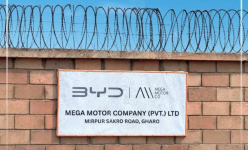
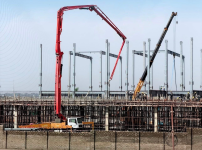
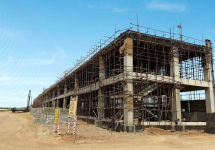
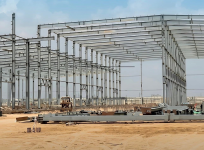
Some glimpses of under construction state of the art BYD plant in Gharo Sindh Pakistan .

1780581200515.png


1780581253245.png


1780581283790.png


1780581340881.png
 

Pakistan's car sales surge 39% in FY26

  • Motorbikes, rickshaws sales up by 30% to 1,972,077 units
July 13, 2026
Gohar Ali Khan
B Recorder

Car sales in Pakistan rose 39% during FY2025-26, driven by stronger consumer purchasing power, improved auto financing by banks, and a wider range of variants introduced by car assemblers.

Car sales surged by 39% to 155,631 units, sales of jeeps and pickups increased by 41% to 50,814 units, sales of trucks and buses rose by 67% to 7,439 units and sales of rickshaws rose by 25% to 985 units, respectively, according to the Pakistan Automotive Manufacturers Association (PAMA) data released on Monday.

Motorbikes and rickshaws went up by 30% to 1,972,077 units.

Meanwhile, sales of farm tractors slid by 1% to 28,791 units as growers are not willing to invest in the agriculture sector because of poor returns for a couple of years.

Speaking to Business Recorder, auto and bike analyst and expert Muhammad Sabir Shaikh said multiple reasons led to an increase in car sales in FY26, including increasing purchasing power of car lovers-cum-users, useful car financing schemes of banks suiting car buyers and more car assemblers coming with a vast variety of car variants and car types including fuel-driven, electric and hybrid.
 

Record $2bn CKD imports expose low localisation

Aamir Shafaat Khan
July 19, 2026

KARACHI: Pakistan recorded an all-time high import of semi- and completely knocked-down (SKD/CKD) kits by local auto assemblers of over $2 billion in FY26, signalling either low localisation in new and old models amid robust auto sales.

As the local industry awaits the new auto policy after the current policy expires on June 30, followed by changes in taxes and duties in the budget 2026-27 and other policy initiatives, auto sales may remain upbeat in the coming months, in view of a 92pc increase in the import of CKD/SKD kits to $2.118bn in FY26, from $1.101bn in FY25.

Sales of cars in FY26 stood at 155,631 units, while SUV, pickup, van, and jeep sales totalled 50,814 units.

The previous all-time high import of parts and accessories by the assemblers was $1.7bn, recorded in FY22, when car sales stood at 234,180 units, followed by SUV, jeep, and van sales at 45,087 units. Total import bill of SKD/CKD has crossed over $6bn dollars from FY22 to FY26.
 
Part makers demand tariff review; auto loans surge amid robust sales

Old assemblers claim localisation levels between 50-70pc, but many vendors argue that local parts in new models they are introducing are less than 50pc. Some new players, especially Korean assemblers, claim localisation of 35-40pc, while Chinese players are not ready to share their localisation.

State Bank of Pakistan’s foreign exchange reserves remain under pressure below $18 billion as of July 10.

In the current situation, it is critical that we utilise foreign reserves wisely. An open import policy is not in the national interest and will further strain the economy, said Mashood Ali Khan, auto parts maker and exporter.

To protect local industry and conserve foreign exchange, the National Tariff Policy must be reviewed immediately, he said, adding that a balanced tariff structure is essential to support domestic manufacturing, reduce unnecessary imports, and ensure long-term economic stability.

Pakistan’s local auto parts manufacturers are facing severe challenges due to the increasing import of SKD/CKD kits.
 

Record $2bn CKD imports expose low localisation

Aamir Shafaat Khan
July 19, 2026

KARACHI: Pakistan recorded an all-time high import of semi- and completely knocked-down (SKD/CKD) kits by local auto assemblers of over $2 billion in FY26, signalling either low localisation in new and old models amid robust auto sales.

As the local industry awaits the new auto policy after the current policy expires on June 30, followed by changes in taxes and duties in the budget 2026-27 and other policy initiatives, auto sales may remain upbeat in the coming months, in view of a 92pc increase in the import of CKD/SKD kits to $2.118bn in FY26, from $1.101bn in FY25.

Sales of cars in FY26 stood at 155,631 units, while SUV, pickup, van, and jeep sales totalled 50,814 units.

The previous all-time high import of parts and accessories by the assemblers was $1.7bn, recorded in FY22, when car sales stood at 234,180 units, followed by SUV, jeep, and van sales at 45,087 units. Total import bill of SKD/CKD has crossed over $6bn dollars from FY22 to FY26.


In FY22 $1.7bn for 280k cars/suv vs $2.1bn for 205K in FY26. Thats 40-50% more per kit but amount of dollars Pakistan have without going in to debt is same as it was in FY26 because of zero growth in exports of goods.

Localization is non existent and have only worsened over the years. Changan Alsvin cost $8000 in China while $15000 in Pakistan despite local assembly. Now compare per capita income. Pakistan can easily cross 500k/annual sales with more localization and lower taxes if import bill stayed same in $.
 

Users who are viewing this thread

Pakistan Defence Latest

Latest Posts

Back
Top