Fatman17
Moderator
Everything Pakistan Has Promised the IMF Until 2027
Pakistan and the International Monetary Fund have agreed on a new set of economic targets extending through December 2026 and June 2027 under the
Follow along with the video below to see how to install our site as a web app on your home screen.
Note: This feature may not be available in some browsers.
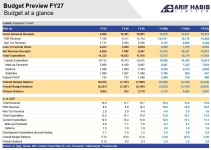
| Fiscal Indicator [1, 2, 3, 4] | Target Under IMF Plan |
|---|---|
| FBR Annual Tax Target | Rs15.267 Trillion |
| Net Additional Taxation Measures | Rs430 Billion – Rs500 Billion |
| Petroleum Levy Revenue Target | Rs1.727 Trillion |
| Underlying Primary Balance | 2% of GDP |
This is purely for the benefit of the IMF and to the direct detriment and robbery of the Pakistani population, we are a rentier state for the IMF.Pakistan is introducing aggressive new tax measures aiming to raise between Rs430 billion and Rs500 billion in additional revenue to meet the strict structural benchmarks set by the International Monetary Fund (IMF). As part of the ongoing review of its $7 billion Extended Fund Facility (EFF), the IMF has pushed the Federal Board of Revenue (FBR) to target an unprecedented annual revenue collection of Rs15.267 trillion for the upcoming fiscal year budget. [1, 2, 3, 4, 5]
Key IMF-Mandated Tax Reforms
The fiscal plan forces the Pakistani government to target historically untaxed or under-taxed sectors to significantly widen its narrow revenue base. [1]
Digital Enforcement and Structural Benchmarks
- Agricultural & Provincial Income Tax: The IMF has demanded a standardized framework where provincial governments eliminate livestock and agricultural income exemptions, aligning rates with the federal non-salaried business tax rate of up to 45%.
- Retail and Small Traders: A new, simplified turnover tax scheme is being finalized for retailers and shopkeepers with annual revenues between Rs200 million and Rs250 million, using utility bills to determine baseline tax liabilities.
- Elimination of Exemptions: Essential daily commodities—including infant milk formula, dairy products, and cooking oils—are slated for inclusion under the Third Schedule of the Sales Tax Act, removing existing zero-rated or concessionary tax structures to generate Rs100 billion.
- Petroleum Levy Hikes: Consumers face heavily inflated costs at the pump as the IMF has mandated a massive Rs1.727 trillion petroleum levy target, which may see cumulative fuel levies climb significantly.
- Tighter Banking & Savings Taxes: To offset revenue shortfalls, the FBR is evaluating a 2% increase on interest income from bank deposits, pushing tax rates to 17% for registered filers and 37% for non-filers. [1, 2, 3, 4, 5]
A massive component of the new fiscal roadmap relies on rigid digital enforcement rather than just policy shifts. [1, 2]
Quick Summary of Fiscal Targets
- Digital Invoicing: Starting July 1, 2026, only digitally issued invoices will be considered legally valid for tax compliance to combat systemic tax evasion.
- Production Line Monitoring: AI-driven audits and digital production monitoring are expanding across major industrial sectors including textiles, sugar, cement, beverages, and tobacco.
- Distinction of Non-Filers: Regulatory protocols are tightening around non-filers, using automated tracking of digital banking and asset records to track down unregistered wealth. [1, 2]
If you want to look closer at how these changes affect your financial situation, please let me know:
Fiscal Indicator [1, 2, 3, 4] Target Under IMF Plan FBR Annual Tax Target Rs15.267 Trillion Net Additional Taxation Measures Rs430 Billion – Rs500 Billion Petroleum Levy Revenue Target Rs1.727 Trillion Underlying Primary Balance 2% of GDP
AI can make mistakes, so double-check responses
- Are you looking for information on specific salaried vs non-salaried tax slabs?
- Do you need details on how the new retail and trader turnover schemes work?
- Are you interested in the corporate tax and super tax phased withdrawal timelines? [1, 2, 3, 4]
And this article shows that my estimation was just about correctI understand your opinion sir but I am still interested in numbers.
Pakistan's GDP as per the last budget was around $411 billion dollars with the exchange rate of 279.
As far as I know, the USD did not depreciate since last year so the exchange rate is still around 279-80. The finance minister says that Pakistan's GDP grew by about 4% this year and basic check on the newspaper suggests the inflation rate was around 7.5%. It means the final figure will likely be around $458 to $460 billion USD in dollar terms.
But instead of doing the calculation myself, I thought maybe someone will have the more accurate figure from the newspaper.
![]()
Budget FY27: out of the box solutions
The impact of any potential revenue-reducing tax simplification policies introduced in the FY27 budget ahead of the...share.google
More taxation likely
This is for their supporters - traders community of PunjabThis Has To Be The Hundredth "Simplified Scheme" I Have Read About In My Career As An Accountant
Yep everyone is assured that something migh happen, sometime in the future, we assure something will happen, not right now though.Budget FY2026-27: Traders assured of simplified tax scheme
May 24, 2026
- Traders say simplified taxation framework will help broaden tax net and improve trust between business community and tax authorities
BR
ISLAMABAD: The government has assured traders of considering their demands of introducing simplified tax scheme in the upcoming budget 2026-27.
Minister of State for Finance Bilal Azhar Kayani on Saturday met a delegation of the Markazi Tanzeem Tajran, Pakistan, led by its President Kashif Chaudhry to discuss the problems faced by traders.
During the meeting, the traders’ delegation presented a comprehensive set of proposals aimed at introducing business-friendly regulatory measures for the retail and wholesale sectors.
The delegation also highlighted key bottlenecks in the existing taxation system and called for simplification of administrative procedures to encourage voluntary compliance with tax laws.
The traders stressed the need for an “Asan Tax Scheme” in the budget for fiscal year 2026-27, arguing that a simplified taxation framework would help broaden the tax net and improve trust between the business community and tax authorities.
According to officials the government’s ongoing consultations with stakeholders before the budget are aimed at ensuring a collaborative and inclusive approach to economic policymaking.
The delegation appreciated Prime Minister Shehbaz Sharif for initiating consultations with traders and acknowledged Bilal Azhar Kayani’s efforts in addressing issues faced by the business community.
Speaking on the occasion, Bilal Azhar Kayani reiterated the prime minister’s commitment to resolving traders’ problems and creating a business-friendly environment in the country.
He acknowledged the commercial sector’s vital role in promoting economic activity and generating employment opportunities.
We use essential cookies to make this site work, and optional cookies to enhance your experience.