Pakistan Budget for FY 2026-27

Construction sector: Govt to reduce duties on specialised vehicles and machinery

  • NTC should play its active role in the facilitation of investors and industrialists, says PM
June 4, 2026
BR

The government has decided to reduce customs duties on specialised vehicles and machinery to promote the construction sector.

Moreover, to provide facilities for the pharmaceutical sector, customs duty will be eliminated on raw materials, especially those used in cancer medicines.

The development came during a review meeting chaired by Prime Minister Shehbaz Sharif on the overall development of the national economy and implementation of the National Tariff Policy on Wednesday.

Addressing the meeting, the prime minister said that achieving export-based development goals is our top priority. The active and transparent performance of the National Tariff Commission (NTC) is essential for promoting the country’s industry, trade, and investment.

He said that the NTC should play its active role in the facilitation of investors and industrialists.

The PM further said that innovation should be brought to the NTC by adopting the best global practices and modern technology prevailing in the world, including information technology and artificial intelligence.
 

Pakistan's tightrope walk: balancing IMF demands against economic survival​

  • Economists, market experts expect fiscally conservative package aimed at meeting ambitious IMF targets
June 4, 2026

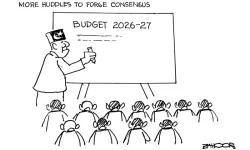
With Pakistan set to announce the federal budget for FY2026-27 next week, economists and market experts expect a fiscally conservative package aimed at meeting ambitious International Monetary Fund (IMF) targets while offering limited support for growth and inflation-weary households.


The budget comes as the country remains in a $7 billion the International Monetary Fund (IMF) bailout programme, which has helped the economy stabilise and recover.

On Tuesday, Senior Pakistan Muslim League-Nawaz (PML-N) leader and Member of the National Assembly (MNA), Tahira Aurangzeb, confirmed to Business Recorder that the federal budget, which was earlier scheduled to be announced on June 5 (Friday), would now be presented on June 10 (Wednesday).
 

Talks with business tycoons on budget: PM outlines plans to spur industry, create jobs​

June 4, 2026
B Recorder

ISLAMABAD: Prime Minister Shehbaz Sharif on Wednesday reaffirmed the government’s commitment to an export-led growth strategy, tax reforms and enhanced collaboration with the private sector, describing these measures as central to the country’s economic recovery and investor confidence.

Addressing business and policy priorities for the upcoming fiscal year 2026-27, Sharif outlined initiatives aimed at expanding industry, creating jobs, and modernising both physical infrastructure and digital systems.

The remarks were made during a high-level meeting with leading business tycoons, convened ahead of the federal budget for 2026-27 next week to discuss ongoing economic reforms and budgetary priorities.
 
ISLAMABAD: The government is likely to introduce fiscal and policy incentives in the Federal Budget (2026-27) to strengthen waste collection, recycling infrastructure and circular economy initiatives from next fiscal year.

Sources told Business Recorder that the proposals are under consideration of the government for the upcoming Finance Bill 2026.

In this regard, Pakistan’s first multi-stakeholder packaging alliance, CoRe (Collect and Recycle), has urged the budget makers to finalise the proposals.
 

Beyond budget arithmetic

Ehsan Malik
June 5, 2026

EVERY June, Pakistan’s budget season follows a familiar pattern: business groups repeat their proposals for relief, the government defends its targets, and taxpayers prepare for additional burdens. Yet a more fundamental question is rarely asked — what is the budget ultimately meant to achieve, and does it reflect a clear long-term national purpose?

In principle, the budget is the state’s main instrument for promoting growth, improving public services, reducing poverty and raising living standards. In Pakistan, however, it has increasingly come to resemble an accounting exercise: mobilise sufficient revenue to finance a growing state and meet fiscal benchmarks agreed with the IMF.


The result is a lopsided process that remains focused on extracting more from those already within the tax net, while paying insufficient attention to the quality of public spending, the need to broaden the base, or the incentives required for investment, employment and productivity. The Tax Policy Office was expected to introduce a longer-term perspective to this debate, but that wider vision is still not evident.

The burden continues to fall, predictably, on the formal economy. Corporations, salaried employees, entrepreneurs, exporters, documented businesses and investors remain the most visible and therefore the most easily taxed.

What receives much less scrutiny is whether public spending is yielding meaningful improvements in citizens’ lives, particularly in a country where a large share of the population remains below the poverty line.

Pakistan has absorbed much of the fiscal cost of devolution without fully realising its potential efficiency gains.
 
This distortion has become more pronounced since the 18th Constitutional Amendment altered Pakistan’s fiscal structure. Health, education, labour welfare and other social services were devolved to the provinces, which now receive a substantial share of national revenues through the National Finance Commission Award.

The logic was straightforward: provinces, being closer to citizens, would deliver services more effectively, while the federal government would gradually withdraw from devolved functions and reduce its own size and cost.

That second part of the arrangement, however, remains largely unfulfilled. More than a decade later, successive governments have shown limited willingness to undertake the constitutional, administrative and institutional reforms required to right-size the federation.

Pakistan has, therefore, absorbed much of the fiscal cost of devolution without fully realising its potential efficiency gains.

The results are plain: weak learning, poor healthcare access, child malnutrition, low productivity, millions of children out of school, under-equipped hospitals, inadequate skills training and persistently low female labour-force participation.
 

BUDGET 2026-27: Situationer: Building resilience or just ticking climate boxes?

Zaki Abbas
June 5, 2026

• From penalising green technology to sidelining adaptation, the government’s spending choices seem to contradict its own climate commitments
• Without new budget pillars, proper risk screening, end to ‘green taxes’, country’s fiscal plans will only deepen climate vulnerability


FOR a country whose economic survival is tied to shoring up its climate-resilience, the government’s budgetary allocations have failed to reflect this pressing concern.

Besides measures that discourage the adoption of solar energy and electric vehicles, the government continues to invest in mega-hydro projects despite adverse ecological impacts; proposes ‘false solutions’ such as carbon capture instead of reducing reliance on fossil fuels; and leaves the adaptation agenda by the wayside despite recurring floods.

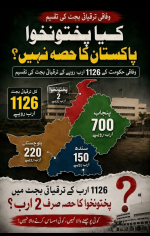
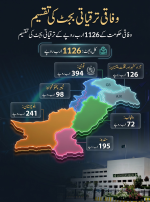
The upcoming budget, according to officials from the climate change ministry, features at least eight proposed projects focused on climate resilience, afforestation, green growth, biodiversity conservation, and environmental monitoring under the Public Sector Development Programme — with a total allocation of Rs2.78 billion.
 
Complete nonsense ....There is NO development budget....ALLocation and use are two different things...check the figures how much was allocated and how much was used.....Development budget is another name for corruption. MPs use it to make Raiwind road, golf courses and develop DHA.

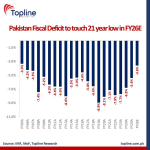
Every thing is screwed up and Pakistan is heading for a disaster...... our budget deficit is projected to be the highest in our history and we have ZERO ideas how to raise more taxes ....increasing oil and electricity prices is the only thing these metric fail patwaris can think of.
 
Complete nonsense ....There is NO development budget....ALLocation and use are two different things...check the figures how much was allocated and how much was used.....Development budget is another name for corruption. MPs use it to make Raiwind road, golf courses and develop DHA.

Every thing is screwed up and Pakistan is heading for a disaster...... our budget deficit is projected to be the highest in our history and we have ZERO ideas how to raise more taxes ....increasing oil and electricity prices is the only thing these metric fail patwaris can think of.

calm your tits

1780677716447.png
 

Users who are viewing this thread

Pakistan Defence Latest

Country Watch Latest

Latest Posts

Back
Top