Pakistan Budget for FY 2026-27

KP govt agrees to reduce IDC rate to 0.75pc from 2pc

June 20, 2026

1781980488464.png

PESHAWAR: The provincial government of Khyber Pakhtunkhwa has accepted the long-standing demand of the business community and announced to reduce the rate of the provincial Infrastructure Development Cess (IDC) from 2 percent to 0.75 percent.

This important announcement was made by the Advisor to Chief Minister of Khyber Pakhtunkhwa on Finance, Muzammil Aslam, in a high-level consultative meeting regarding the provincial budget 2026-27, which was attended by the presidents of chambers of commerce from across Khyber Pakhtunkhwa, business leaders and government officials.
 

Approx 3.5 millions shopkeepers to be brought into tax net​

June 20, 2026
By Naveed Butt
B Recorder

ISLAMABAD: Minister of State for Finance and Revenue Bilal Azhar Kayani announced on Friday that approximately 3.5 million shopkeepers will be brought into the tax net during the fiscal year 2026-27 as part of the government’s efforts to broaden the tax base and enhance revenue collection.

The Minister expressed these views in the National Assembly debate on the federal budget 2026-27. He said the government’s economic policies are focused on strengthening the economy and promoting inclusive growth.

He said a new scheme had been introduced to bring small traders into the formal tax system.
 
As long as exports are going down we are not going anywhere, i dont why some people are celebrating and on what
 
For 2026-27.

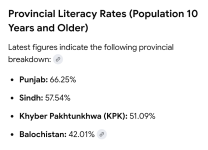
KPK allocated 37% of it's budget for health and education.

Punjab allocated 21% of it's budget for health and education.

Because CM Maryum Nawaz famously said that shaghoor se kisi ka pait nahe Palta.
 

Climate action takes a backseat in federal budget FY27

Zaki Abbas
June 21, 2026
1782040315104.png

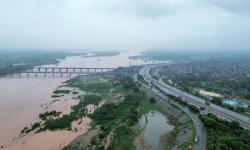
A general view of river Ravi — Murtaza Ali/White Star

• Allocations in all climate heads face cuts, except for disaster management
• Experts call for transparency in climate spending, structural reforms


ISLAMABAD: Climate allocations in the next fiscal year’s federal budget again fall short of putting Pakistan on a path towards a climate-smart future and inclusive growth despite the immediate risks it poses to the country.

Except for disaster management finance, allocations in almost all climate categories have decreased compared to the outgoing financial year.

The mitigation funds have been reduced from Rs603 billion to Rs124 billion, while adaptation money has been slashed from Rs85bn to Rs70bn.

The “green component” of subsidies also experienced budget cuts, with the energy sector’s allocation declining to Rs423 billion from Rs529 billion. Similarly, the food, industry, transport, and agriculture sectors also faced cuts in the proposed budget presented by the government on June 12.

Giovanni Maurice Pradipta, who is a policy adviser at global NGO Germanwatch, questioned this approach.

“Given the country’s exposure to floods and heat waves, adaptation and resilience should receive at least as much attention as mitigation,” he said, adding it was equally important to prepare developing countries’ budgets and fiscal space for climate action, as it was to push for multilateral (global) solutions.
 
Overall, the climate budget for the next year has shrunk except for the disaster spending. In addition to the newly introduced disaster tagging, the government earmarked Rs19bn under the head of reconstruction, while recovery and rehabilitation funds have risen from Rs1.1bn to Rs21 billion.

Former climate change minister Malik Amin Aslam said the budget reflected a “suicidal story” as he questioned a decrease in climate allocations.

“The funding or project stream for addressing climate adaptation issues, in particular heat stress, is totally missing. Two international reports [WB, University of Chicago] have rung the red warning bell for Pakistan, stating that one-third of global deaths due to heat stress could be in Pakistan, with nine districts becoming unlivable for humans by 2030,” said Mr Aslam.

It may be noted that scientists have warned that floods and extreme heat will become routine events in future. One in three additional deaths due to heat will occur in Pakistan by 2050, according to a recent study.

Experts believe that these concerning reports should have been reflected in the fiscal allocations, but there seems to be a general disregard for this looming disaster. The one good thing that came out of this budget is no new taxes on renewables, but energy expert Dr Khalid Waleed told Dawn that pre-budget speculations that the government would tax solar and batteries bumped the prices up nonetheless.
 

The budget for the upcoming fiscal year reflects a broader shift in economic policy

Tax incentives can improve profitability and encourage investment, but they cannot fully offset structural impediments such as high energy costs, infrastructure gaps and limited development spending.

Budget contradictions

Mohiuddin Aazim
June 22, 2026

Pakistan entered the FY27 budget cycle against the backdrop of a widening external trade imbalance. During the first eleven months of FY26 (July 2025-May 2026), merchandise exports declined to $27.9 billion while imports rose to around $62.7bn. As a result, the goods trade deficit expanded to nearly $34.8bn.

These figures help explain the strategic direction of the FY27 federal budget. Faced with a widening trade gap, pressure on foreign exchange reserves, and ongoing International Monetary Fund-backed reforms, the government has prioritised export-led growth, tax documentation, investment promotion, and digitalisation of revenue administration.

In many respects, the budget reflects a broader shift in economic policy. Rather than attempting to stimulate growth across all sectors simultaneously, policymakers have chosen to concentrate incentives on industries capable of generating foreign exchange earnings.

The underlying assumption is that stronger exports will help stabilise the balance of payments, reduce external vulnerabilities and create a foundation for more sustainable economic expansion.
 

Balochistan approves Rs1.189tr budget​

Assembly passes all 118 demands for grants

Sardar Hameed Khan
June 22, 2026

Balochistan approves Rs1.189tr budget


QUETTA: The Balochistan Assembly on Sunday approved the provincial budget for the financial year 202627, amounting to Rs1,189 billion, after passing all 118 demands for grants and recording no cut motions from the opposition.

The budget was passed during the closing sitting of the assembly, which met 40 minutes behind schedule under the chairmanship of Speaker Captain (retd) Abdul Khaliq Achakzai. Finance Minister Mir Shoaib Ahmed Nosherwani presented the demands for grants, which were subsequently approved by the House.

Of the total outlay, Rs797.808 billion was approved for non-development expenditure through 53 demands for grants, while Rs291 billion was allocated under 45 demands for development expenditure. With no opposition cut motions moved, all demands were passed smoothly by the house.

Under non-development expenditure, the assembly approved Rs88.6 million for state trading, Rs12.4 billion for capital investment, Rs6.53 billion for the Services and General Administration, Rs3.31 billion for the Excise, Taxation and Anti-Narcotics Department, and Rs100 billion for employees' retirement benefits.
 

New tax hits rented properties in Punjab​

Property dealers, citizens reject new levy, term it additional burden on taxpayers

Qaiser Shirazi
June 21, 2026

RAWALPINDI: A 16 per cent General Sales Tax (GST) has been imposed on all rented properties across Rawalpindi district and the rest of Punjab, drawing strong reactions from citizens and property stakeholders.

Under the new measures, all rented non-residential buildings and immovable properties across the province will be subject to a 16pc GST from July 1.

For taxpayers registered before January 1, 2025, a 20pc cap on capital value assessment will apply under the property tax system.

A 5pc discount will also be available on property tax payments made under the self-assessment scheme.
 

Users who are viewing this thread

Pakistan Defence Latest

Back
Top