Navigation
Install the app
How to install the app on iOS
Follow along with the video below to see how to install our site as a web app on your home screen.
Note: This feature may not be available in some browsers.
More options
Style variation
You are using an out of date browser. It may not display this or other websites correctly.
You should upgrade or use an alternative browser.
You should upgrade or use an alternative browser.
Pakistan China News : Relationships
- Thread starter ghazi52
- Start date
More options
Who Replied?


ghazi52
THINK TANK: CONSULTANT
- Thread starter
- #77
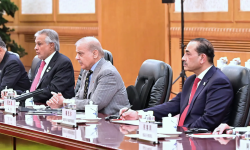
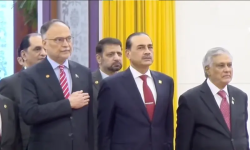
Pakistan TV reported that PM Shehbaz and premier Li also witnessed the signing and exchange of multiple memoranda of understanding, protocols, and cooperation agreements covering trade, investment, agriculture, science and technology, climate change, education, media and people-to-people exchanges.
ghazi52
THINK TANK: CONSULTANT
- Thread starter
- #79
PM meets Chinese counterpart
Earlier in the day, PM Shehbaz called for Islamabad and Beijing to “really be together” in ongoing efforts to restore peace in the Middle East amid the war.He made the remarks during bilateral talks with his Chinese counterpart Li Qiang at the Great Hall of the People. Addressing the delegation-level talks with Li, PM Shehbaz mentioned the Middle East conflict, saying that the “world is passing through a very critical moment”.
“I think we have to really be together, so that the world at large is at peace and business as usual starts again, because this crisis has hit not only the economy in the region […] but the global community,” he said.
“There is a crisis in the Gulf and Pakistan has played a very sincere role to mediate between the United States and Iran,” PM Shehbaz said, noting that CDF Munir had just returned from Tehran.
“And he didn’t want to miss this great visit, and he assured me that he will be joining me in this meeting, and he has been travelling throughout the night,” Shehbaz added.
The premier highlighted that the army chief “played a very important role back and forth with the Iranian leadership and the American leadership”, also mentioning Deputy Prime Minister Ishaq Dar’s communications with his regional counterparts.
“We hope and pray to Allah Almighty that peace will be restored forever, and lots of ground has already been covered. Things are moving in the right direction,” PM Shehbaz said.
He thanked President Xi Jinping and the Chinese leadership for their “great support to Pakistan to promote peace and achieve a ceasefire”, adding that Islamabad fully endorsed Xi’s four-point peace agenda.
At the outset of his remarks, the prime minister thanked the Chinese side for its “very warm invitation” to visit China.
“It is always a great pleasure to visit your great country, and each time we come, we find new changes and major developments taking place all over this wonderful country,” he said.
The premier extended his condolences over the tragic gas explosion at a coal mine in Shanxi, where at least 82 people were killed.

东风夜放花千树
Registered Member

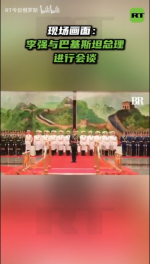
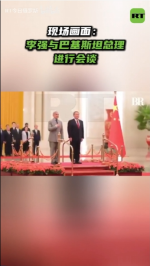
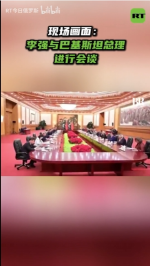
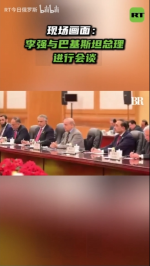
According to Russian media reports, on May 25, Pakistani Prime Minister Shehbaz formally visited China. After attending a grand welcome ceremony held at the Great Hall of the People in Beijing, Shehbaz held talks with Chinese Premier Li Qiang.

Michael
VIP Member
Two official press releases:
Xi Jinping meets with Pakistani Prime Minister Shahbaz
 www.fmprc.gov.cn
Wang Yi met with Pakistan's Chief of Defence Forces and Chief of Army Staff Munir
www.fmprc.gov.cn
This is the official Chinese version of the document; the English version has not yet been released. Those interested can click to access it and translate it themselves.
The following are my personal analyses of these two news items, for reference only:
1. China has effectively shelved the strategic corridor function of CPEC, retaining only its standard commercial cooperation portion, the so-called CPEC 2.0. Since the new plan no longer assumes the strategic corridor function, China will no longer undertake new large-scale infrastructure projects, shifting its focus to small and medium-sized livelihood projects.
2. The US-Iran mediation was likely initiated by Pakistan, with limited support from China prior to the intervention. This time, Sharif and Munir came to report on progress. China's assessment of this stage is: 合格 (According to the Western "ABCDE" rating system, this is equivalent to "C"). Pakistan hopes for more support from China, but China has not commented (at the substantive level).
3. China has formally tacitly acknowledged Munir's "shadow" role.
4. Security and military cooperation continues, but with limited escalation. To be precise, Pakistan's military and political leadership has not yet gained China's recognition of its domestic counter-terrorism achievements and has not yet earned higher-level trust.
Xi Jinping meets with Pakistani Prime Minister Shahbaz
重要新闻_中华人民共和国外交部
www.fmprc.gov.cn
Wang Yi met with Pakistan's Chief of Defence Forces and Chief of Army Staff Munir
外交部长活动_中华人民共和国外交部
www.fmprc.gov.cn
This is the official Chinese version of the document; the English version has not yet been released. Those interested can click to access it and translate it themselves.
The following are my personal analyses of these two news items, for reference only:
1. China has effectively shelved the strategic corridor function of CPEC, retaining only its standard commercial cooperation portion, the so-called CPEC 2.0. Since the new plan no longer assumes the strategic corridor function, China will no longer undertake new large-scale infrastructure projects, shifting its focus to small and medium-sized livelihood projects.
2. The US-Iran mediation was likely initiated by Pakistan, with limited support from China prior to the intervention. This time, Sharif and Munir came to report on progress. China's assessment of this stage is: 合格 (According to the Western "ABCDE" rating system, this is equivalent to "C"). Pakistan hopes for more support from China, but China has not commented (at the substantive level).
3. China has formally tacitly acknowledged Munir's "shadow" role.
4. Security and military cooperation continues, but with limited escalation. To be precise, Pakistan's military and political leadership has not yet gained China's recognition of its domestic counter-terrorism achievements and has not yet earned higher-level trust.
东风夜放花千树
Registered Member
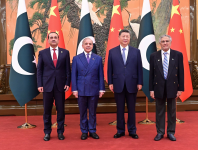
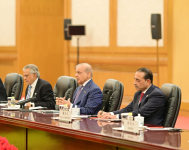
On May 25, Chinese Premier Li Qiang held a welcome ceremony in the North Hall of the Great Hall of the People in Beijing to greet visiting Pakistani Prime Minister Shehbaz. The video shows Li Qiang and Shehbaz walking into the hall embracing each other, and each of them introduced their respective officials to the other.
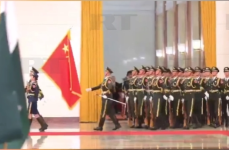
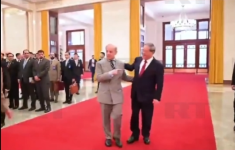
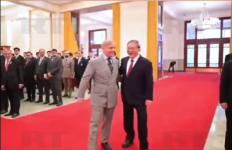
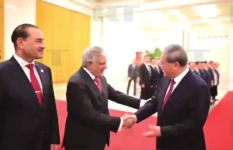
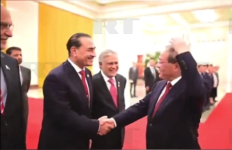
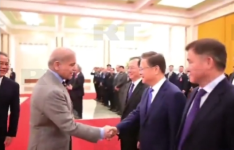
From the video, it can be seen that Pakistan's visit to China was very relaxed, and the diplomatic visit between the two countries was more like a greeting between brothers.
From the video, it can be seen that Pakistan's visit to China was very relaxed, and the diplomatic visit between the two countries was more like a greeting between brothers.
东风夜放花千树
Registered Member
Joint Statement of the People's Republic of China and the Islamic Republic of Pakistan
1. At the invitation of Li Qiang, Premier of the State Council of the People's Republic of China, Shehbaz Sharif, Prime Minister of the Islamic Republic of Pakistan, paid an official visit to China from May 23 to 26, 2026.
During the visit, Xi Jinping, President of the People's Republic of China, met with Prime Minister Shehbaz, and Premier Li Qiang held talks with Prime Minister Shehbaz. In a cordial and friendly atmosphere, both sides reached a new broad consensus on deepening the China-Pakistan all-weather strategic partnership and on international and regional issues of common concern. Prime Minister Shehbaz attended the celebration of the 75th anniversary of China-Pakistan diplomatic relations and successfully visited Hangzhou, Zhejiang Province.
2. Both sides agree that the traditional friendship between China and Pakistan was personally forged by the previous generation of leaders of the two countries and is a valuable asset and strategic resource for the two countries and their peoples. In the 75 years since the establishment of diplomatic relations, regardless of changes in international and regional situations, China-Pakistan friendship has remained as solid as a rock. Both countries have consistently upheld mutual trust, respect, and support, sharing weal and woe and standing together through hardships. Amid rapid changes in the global landscape, the China-Pakistan all-weather strategic partnership has even greater strategic and contemporary value. China and Pakistan will accelerate the building of a closer China-Pakistan community of shared future in the new era, setting an example for constructing a community of shared future in the surrounding region.
3. Both sides are determined to steadfastly maintain and develop China-Pakistan relations, sustain high-level exchanges, effectively implement the "Action Plan for Building a Closer China-Pakistan Community of Shared Future in the New Era (2025–2029)" between the governments of the People's Republic of China and the Islamic Republic of Pakistan, deepen mutual trust, pragmatic cooperation, defense and security collaboration, and maintain close coordination on international and regional issues, so that China-Pakistan relations benefit the peoples of both countries and contribute to regional and global peace, stability, and prosperity.
Pakistan highly values and supports the concept of building a community with a shared future for mankind proposed by President Xi Jinping, as well as the Global Development Initiative, Global Security Initiative, Global Civilization Initiative, and Global Governance Initiative.
4. Both sides highly commend the successful visit to Hunan and Hainan provinces by Pakistani President Asif Ali Zardari at the end of April and beginning of May 2026, and the successful visit to China by Speaker of the National Assembly of Pakistan, Sardar Ayaz Sadiq, in January 2026. Both sides welcome the successful holding of the 7th China-Pakistan Foreign Ministers Strategic Dialogue in January 2026 and the China-Pakistan Party Forum and China-Pakistan Economic Corridor Party Consultative Mechanism meeting in May. Pakistan appreciates the visit to Pakistan by Cai Dafeng, Vice Chairman of the Standing Committee of the National People's Congress of China, in May 2026, and his participation in Pakistan’s celebration of the 75th anniversary of China-Pakistan diplomatic relations. Both sides agree to strengthen strategic communication and exchanges at various levels, enhance political mutual trust, and jointly safeguard the development direction of China-Pakistan relations.
5. Both sides reaffirm their firm support for safeguarding each other's core interests. Both sides emphasized that the authority of UN General Assembly Resolution 2758 cannot be questioned or challenged. Pakistan reiterates its firm adherence to the One-China principle, believes Taiwan is an inseparable part of the territory of the People's Republic of China, that the Taiwan issue is the core of China's core interests, firmly supports all efforts made by China to achieve national reunification, and firmly opposes any form of "Taiwan independence." Pakistan supports China's just stance on issues involving Xinjiang, Tibet, Hong Kong, and the South China Sea. China reiterates its firm support for Pakistan in defending its national sovereignty, independence, and territorial integrity, and firmly supports Pakistan's efforts to maintain national security, stability, development, and prosperity.
6. Pakistan congratulates China on successfully achieving the strategic goals of the 14th Five-Year Plan and achieving a smooth start to the 15th Five-Year Plan. China congratulated Pakistan's leaders on leading the country to achieve macroeconomic stability, centering on the National Economic Transformation Plan (2024-2029). Both sides agreed to jointly build the Belt and Road Initiative with high quality, held a meeting of the China-Pakistan Economic Corridor Joint Committee, and promoted the high-quality development of the "2.0 upgraded version" of the corridor. Both parties agreed to advance the second phase of the Karakoram Highway (from Takot to Lekhte section) rerouting project in an orderly and phased manner. Unlocking the potential of Gwadar Port to build a regional connectivity hub. Make good use of the Khunjerab border crossing to strengthen land connectivity between China and Pakistan. Both sides welcome third parties to participate in the construction of the China-Pakistan Economic Corridor according to the model agreed upon by China and Pakistan.
7. Both sides agree to promote industrial park construction according to local conditions, and to create demonstration projects for industrial cooperation in fields such as textiles and home appliances. Both sides positively evaluated the successful holding of the China-Pakistan Mining Full Value Chain Cooperation Forum in January 2026, agreeing to orderly promote cooperation in mining and oil and gas exploration and development between the two countries.
8. Both sides congratulated Pakistan on the successful completion of the training program for 1,000 young agricultural technicians in China, and the Pakistani side thanked Shaanxi, Hubei, Sichuan, and Hainan provinces for their strong support. China agreed to help Pakistan improve agricultural production through various means, encourage Chinese enterprises to carry out agricultural investment cooperation in Pakistan, and promote access for more high-quality Pakistani agricultural products to China.
9. Both sides agree to tap into cooperation potential in fields such as economy and trade, energy, digital economy, finance, technological innovation, artificial intelligence, information and communications, water resources, and marine affairs, strengthen talent cultivation, negotiate and promote trade liberalization, and jointly maintain the stability and security of industrial and supply chains. The Pakistani side appreciates China's "fishing, fishing, and teaching" cooperation philosophy, and both sides are willing to implement more "small but beautiful" livelihood projects in infrastructure, agriculture, education, healthcare, and other fields. China will continue to implement the plan to provide 3,000 training spots to Pakistan from 2025 to 2029. Both sides will implement the educational and cultural cooperation and exchange implementation plan, expanding cooperation among friendly provinces and cities. China welcomed two Pakistani astronauts to China for training and looks forward to Pakistani astronauts becoming the first foreign astronauts to enter China's space station soon. Both sides will continue to deepen spatial cooperation in peaceful and mutually beneficial ways.
10. China is willing to work with Pakistan to deeply implement the Global Security Initiative, establish a China-Pakistan security partnership, continue bilateral and multilateral counter-terrorism cooperation, strengthen military cooperation, and further play a positive role in promoting regional peace and stability. Pakistan will strengthen targeted security measures and security cooperation to ensure the safety of Chinese personnel, projects, and institutions in Pakistan. China supports Pakistan in continuing steadfast counter-terrorism efforts. Both sides call on the international community to strengthen counter-terrorism cooperation, reaffirm their firm opposition to double standards on counter-terrorism, and oppose the politicization and instrumentalization of counter-terrorism issues.
11. Both sides firmly safeguard the UN-centered international system, the international order based on international law, and the basic norms of international relations founded on the purposes and principles of the UN Charter, and are committed to promoting a world that is multipolar in an equal and orderly way, as well as inclusive and shared economic globalization.
12. Both sides unanimously agree that it is necessary to firmly safeguard the achievements of the victory in World War II, oppose any attempts at the resurgence of fascism and militarism, support the post-war international order established by relevant international legal documents and principles, such as the Cairo Declaration and the Potsdam Proclamation, maintain world peace and security, and uphold historical truth and international justice.
13. Pakistan supports China's initiative to establish a World Artificial Intelligence Cooperation Organization, considering it a practical action to promote the ethical and inclusive development of AI, and will work together with China to advance global governance and international cooperation in AI.
14. Both sides reaffirm the importance of maintaining peace and stability in South Asia, resolving all pending disputes through dialogue and diplomatic means, and oppose any unilateral actions. Pakistan briefed China on the latest situation in the Jammu and Kashmir region. China reiterated that the Kashmir issue is a historical legacy dispute, which should be properly resolved peacefully in accordance with the UN Charter, relevant UN Security Council resolutions, and relevant bilateral agreements.
Both sides are willing to carry out cross-border water resource cooperation on the principle of equality and mutual benefit, reaffirming the importance of maintaining international and regional security and stability.
China reiterates its support for Pakistan serving as the next rotating chair of the Shanghai Cooperation Organization and as a non-permanent member of the UN Security Council for 2025–2026, further deepening coordination and cooperation between the two countries in multilateral forums. China appreciates Pakistan's proposal of resolutions on multilateralism, peaceful dispute resolution, and promotion of regional cooperation during its Security Council presidency in July 2025.
15. Pakistan supports President Xi Jinping's four-point proposal on maintaining and promoting peace and stability in the Middle East. China appreciates Pakistan's efforts in facilitating the temporary US-Iran ceasefire and hosting the Islamabad talks. Both sides reaffirm the five-point proposal for restoring peace and stability in the Gulf and the Middle East, and are willing to continue making positive contributions to the early restoration of peace and stability in the Middle East.
16. Pakistan has positively evaluated the April 2026 unofficial China-Afghanistan-Pakistan meeting in Urumqi and welcomed China's provision of a dialogue platform for communication between Pakistan and Afghanistan. Both sides agreed to maintain close communication and cooperation on the Afghanistan issue. Both sides emphasized that no individual, group, or party, including 'Balochistan separatists' and 'East Turkestan Islamic Movement,' is allowed to use relevant territories to harm and threaten regional security and interests or engage in terrorist acts and activities.
17. During the visit, the two sides signed cooperation documents in multiple fields.
18. On the occasion of the 75th anniversary of the establishment of diplomatic relations between China and Pakistan, Prime Minister Shehbaz expressed gratitude to the government and people of the People's Republic of China for the enthusiastic and friendly reception extended to him and the Pakistani delegation.
ghazi52
THINK TANK: CONSULTANT
- Thread starter
- #86
China, Pakistan reach 'new broad consensus' on boosting ties
News Desk
May 26, 2026
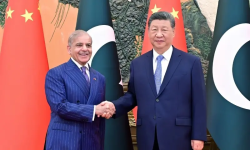
Chinese President Xi Jinping and Prime Minister Shehbaz Sharif shake hands at the Great Hall of the People in Beijing, China May 25, 2026. — Photo courtesy PMO
China and Pakistan have reached a new broad consensus on deepening their strategic partnership, according to a joint statement issued by the countries at the end of Prime Minister Shehbaz Sharif’s visit to Beijing.
The statement, shared by the Foreign Office (FO) on X, said, “The two sides engaged cordially and reached a new broad consensus on further deepening the China-Pakistan all-weather strategic cooperative partnership and on international and regional issues of mutual interest.”
The statement was issued as PM Shehbaz concluded his four-day visit to China. He was seen off by Chinese Vice Foreign Minister Hua Chunying at the Beijing airport.
ghazi52
THINK TANK: CONSULTANT
- Thread starter
- #87
The joint statement said that the two sides shared the view that the ties between the two countries were an “important wealth and a strategic asset”.
“Throughout the 75 years of diplomatic relations, this friendship has remained rock solid no matter how the international and regional situations evolved, and the two countries have always trusted, respected and supported each other and stood by each other in times of difficulties and challenges,” it said.
It added that at a time when the world was undergoing profound changes, the partnership had taken on “even more strategic importance and relevance”.
“China and Pakistan will move faster to build an even closer China-Pakistan Community with a shared future in the new era, which will set an example for the endeavour to build a community with a shared future that connects China and its neighbouring countries,” it said.
It said that both countries were determined to safeguard and develop their bilateral relations, maintain high-level exchanges, make significant progress under the action plan to foster an even closer China-Pakistan community, deepen mutual trust, practical cooperation, defence and security cooperation, and keep close coordination on international and regional issues, “so as to better harness this relationship to the benefit of the two peoples and contribute to peace, stability and prosperity in the region and the world”.
“Throughout the 75 years of diplomatic relations, this friendship has remained rock solid no matter how the international and regional situations evolved, and the two countries have always trusted, respected and supported each other and stood by each other in times of difficulties and challenges,” it said.
It added that at a time when the world was undergoing profound changes, the partnership had taken on “even more strategic importance and relevance”.
“China and Pakistan will move faster to build an even closer China-Pakistan Community with a shared future in the new era, which will set an example for the endeavour to build a community with a shared future that connects China and its neighbouring countries,” it said.
It said that both countries were determined to safeguard and develop their bilateral relations, maintain high-level exchanges, make significant progress under the action plan to foster an even closer China-Pakistan community, deepen mutual trust, practical cooperation, defence and security cooperation, and keep close coordination on international and regional issues, “so as to better harness this relationship to the benefit of the two peoples and contribute to peace, stability and prosperity in the region and the world”.
ghazi52
THINK TANK: CONSULTANT
- Thread starter
- #88
The joint statement stressed that Pakistan attached “great importance to and supports the vision of building a community with a shared future for humanity and the Global Development Initiative (GDI), the Global Security Initiative (GSI), the Global Civilisation Initiative (GCI), and the Global Governance Initiative (GGI) put forth by President Xi Jinping.
“The Chinese side stands ready to work with the Pakistani side to fully implement the GSI, establish the China-Pakistan Security Partnership, conduct continued bilateral and multilateral counter-terrorism cooperation, and strengthen military-to-military cooperation, so as to further play a positive role in promoting regional peace and stability,” the statement affirmed.
“The Chinese side stands ready to work with the Pakistani side to fully implement the GSI, establish the China-Pakistan Security Partnership, conduct continued bilateral and multilateral counter-terrorism cooperation, and strengthen military-to-military cooperation, so as to further play a positive role in promoting regional peace and stability,” the statement affirmed.
ghazi52
THINK TANK: CONSULTANT
- Thread starter
- #89
Development roadmap
Pakistan congratulated China on the successful completion of the strategic goals of the 14th Five-Year Plan and the strong start in implementing the 15th Five-Year Plan.Similarly, China congratulated “Pakistani leaders on leading the country to achieve macroeconomic stability centred on Pakistan’s national economic transformation plan (2024-2029) (URAAN Pakistan)”.
Both sides agreed to advance high-quality Belt and Road cooperation, hold the meeting of the CPEC Joint Cooperation Committee (JCC) and promote the high-quality development of the upgraded version of CPEC 2.0, the joint statement noted.
Both sides agreed to advance the Karakoram Highway (Thakot-Raikot route) realignment project in a “phased and orderly manner”. The two sides agreed to “leverage the potential of the Gwadar Port and build it into a regional connectivity hub”.
Islamabad and Beijing also pledged to “make good use of the Khunjerab Pass to strengthen land connectivity between China and Pakistan”. The two sides welcomed “third parties to participate in the development of CPEC under the model agreed upon by China and Pakistan”.
Furthermore, both sides also agreed to “advance the development of industrial parks in ways adapted to local conditions and create demonstration projects of industrial cooperation in areas including textiles and home appliances”.
ghazi52
THINK TANK: CONSULTANT
- Thread starter
- #90
The two countries welcomed the success of the seventh round of China-Pakistan Foreign Ministers’ Strategic Dialogue in January 2026 and the China-Pakistan Political Parties Forum and Meeting of China-Pakistan Economic Corridor (CPEC) Political Parties Joint Consultation Mechanism in May 2026.
“Both sides agreed to further strengthen strategic dialogue and enhance exchanges at various levels to continue deepening political mutual trust and jointly keep China-Pakistan relations in the right direction,” the statement read.
“China agreed to assist Pakistan to promote its agricultural production capacity through multiple means, encourage Chinese enterprises to conduct agricultural investment and cooperation in Pakistan, and facilitate the market access of more high-quality Pakistani agricultural products to China,” the statement read.
It hailed the completion of 1,000 Pakistani agricultural technicians’ training programme in China, with Islamabad particularly appreciating the “strong support” by China’s Shaanxi, Hubei, Sichuan and Hainan provinces.
Pakistan commended “China’s cooperation philosophy of giving people both fish and fishing skills”. The two sides stand ready to launch more “small and beautiful” livelihood projects in infrastructure, agriculture, education, health and other fields.
“Both sides agreed to further strengthen strategic dialogue and enhance exchanges at various levels to continue deepening political mutual trust and jointly keep China-Pakistan relations in the right direction,” the statement read.
“China agreed to assist Pakistan to promote its agricultural production capacity through multiple means, encourage Chinese enterprises to conduct agricultural investment and cooperation in Pakistan, and facilitate the market access of more high-quality Pakistani agricultural products to China,” the statement read.
It hailed the completion of 1,000 Pakistani agricultural technicians’ training programme in China, with Islamabad particularly appreciating the “strong support” by China’s Shaanxi, Hubei, Sichuan and Hainan provinces.
Pakistan commended “China’s cooperation philosophy of giving people both fish and fishing skills”. The two sides stand ready to launch more “small and beautiful” livelihood projects in infrastructure, agriculture, education, health and other fields.
Users who are viewing this thread
Total: 1 (members: 0, guests: 1)
Pakistan Defence Latest


Country Watch Latest


Latest Posts
-
-

-

-
 Makkah Defence Alliance: Turkey, Saudi Arabia, and Pakistan, news & updates (17 Viewers)
- Latest: Watandar
-