Pakistan Constitutional Amendments:

The TTM, like the JUI-F leaders before, has pointed out that as per Article 175 of the Constitution if the bill stays with the President for more than 10 days, as in the present case, it is deemed to have been assented. Hence, it its insistence that it has become a law, and accordingly a gazette notification should be issued immediately for the Societies Registration (Amendment) Act.

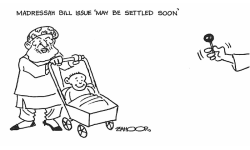
When it moved the bill in parliament the government should have thought through all the issues and concerns now being raised. In any event, the matter of madressah reforms, as important and sensitive as it is, cannot be left by the wayside. Like all other educational institutions madressahs must be subject to effective oversight.

The government needs to stop foot dragging and get back on track. Instead of trying to wriggle out of its commitment it would be wise to sit with Mufti Usmani, Maulana Fazl and others in the TTM to resolve the matter in an amicable fashion. There should be no further twists and turns.

Copyright Business Recorder, 2024
 
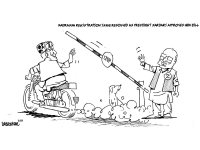
The controversy surrounding the Societies Registration (Amendment) Act 2024 came to an end on Sunday when President Asif Ali Zardari signed it into law.

Controversy persisted in the country related to the new law passed by parliament related to the regulatory affairs of madressahs. The law pertained to the registration of seminaries by the relevant deputy commissioner’s office, as it was before 2019.

On December 20, Jamiat Ulema-i-Islam-Fazl chief Maulana Fazlur Rehman — after decrying that the government was deliberately delaying the passage of the bill — claimed that Prime Minister Shehbaz Sharif had ordered the law ministry to take immediate practical measures as per the law and the Constitution regarding the Act.

Two days before that, the government and the JUI-F both seemed to favour talks in a National Assembly session to sort out the controversy surrounding the proposed legislation.

Earlier in the month, Zardari had cautioned parliamentarians to consider international obligations before altering the existing procedures for registering religious seminaries.

The proposed legislation, commonly known as the madrassah registration bill, was sent back to Zardari with objections, even though it was passed by parliament at the time of the passage of the 26th Amendment.

A notification signed by President Zardari today, a copy of which is available with Dawn.com, said: “The Prime Minister’s advice at para 6 of the summary is approved. The Societies Registration (Amendment) Ordinance, 2024, is signed and promulgated.”

A gazette shared by National Assembly Secretariat Tahir Hussain, a copy of which is also available with Dawn.com, said that madressahs founded before the act which have not been registered must do so within six months of the act’s commencement.

Any madrassah established after the commencement of the Act must register itself within one year.

According to the gazette, madressahs must submit an annual report of their educational activities to the Registrar, as well as submit an audit report of its accounts carried out by an auditor.

“No [madressah] shall teach or publish any literature which teaches or promotes militancy or spreads sectarianism or religious hatred,” the gazette said.

Every madrassah shall, subject to their resources, include basic contemporary subjects in their curriculum according to a phased programme, it went on to say.

“No [madressah] shall be required to register itself under any other law for the time being in force,” the gazette added.

Separately, JUI-F spokesperson Aslam Ghauri, while congratulating the country, said that the struggle had “paid off”, adding that his party would always play a role in protecting religious seminaries.

The party spokesperson said that the seminaries were “the fortress of Islam” and the guardians of the “ideological geography” of the country.

He said that the unity of the religious scholars was important for the protection of religious institutions, adding that the party would thwart “every conspiracies” against the seminaries.

“We will not compromise on the autonomy of the seminaries,” Ghauri said.
 

SC urged to let full court hear challenges to 26th amendment

Nasir Iqbal
January 8, 2025

ISLAMABAD: The Supreme Court on Tuesday received two requests seeking early hearing for the challenges to the 26th Amendment by the full court comprising all its judges.

The first application was filed by Afrasiab Khattak through his counsel Khwaja Ahmad Hosain, which urges the court to order its registrar to fix the petition for hearing before the full court as has been previously decided in accordance with law or, as an alternative, refer the petition to the full court to determine an appropriate forum for exercising jurisdiction regarding the matters raised in the petition.

The other plea was filed by Advocate Taufiq Asif requesting that the petitions challenging the 26th Amendment should be fixed as early as possible in the interest of justice.

Mr Khattak pleads that 26th Amendment did not bar the full court from hearing the cases under Article 184(3). There is a clear distinction in the Constitution between the full court and the benches of the court, he said, adding that Constitution clearly distinguishes between ‘benches’ and the entire court.

Applications seek early hearing of appeals
To hold that full court did not have jurisdiction would be tantamount to eroding the distinction between the full court and the bench. This would be erroneous, the application said.

The petitioner pleaded that the 26th Amendment had created the constitutional bench, adding that if the challenge to the amendment succeeded then the constitutional bench will cease to exist.

The application contended that the constitutional bench cannot decide the vires of the very instrument that has created it, adding that it would also constitute a conflict of interest as the success of the titled petition would mean that this bench would no longer exist.

The constitutionality and legality of this constitutional bench has been challenged, and effectively a disputed forum would be determining its own legality, which would neither be lawful nor would it be just, it application said.

It is a fundamental principle of justice that it must not only be done but manifestly be seen to be done. The perception that would be created is that the constitutional bench would be sitting in judgement over itself.

The federation has supported the 26th Amendment and it was tabled and supported by the government. It is in the public domain that this constitutional bench has been nominated by votes of government members on the Judicial Commission of Pakistan (JCP), the applicant pointed out.

The government is an interested party. The executive would lose its dominance on the new JCP if the 26th Amendment is struck down, the applicant said, adding that the executive would also lose its ability to select the chief justice if this amendment is struck down.

The control given to the executive with respect to judicial matters and internal judicial functioning has been expressly challenged. Therefore, this would further create the perception that a government-sanctioned and government-nominated bench is determining a case in which the government has taken a strong position in favour of the 26th Amendment, the application said.

To ensure the credibility and legitimacy of the Supreme Court and its decisions, the petitions must be listed before the full court. The application said the present case has profound implications for judicial independence, fundamental rights, and ultimately the future course of the nation’s constitutional dispensation.

Published in Dawn, January 8th, 2025
 

26th Amendment attempts to create an arena of unaccountability for the governing elite

A tweak for the ages


Basil Nabi Malik
January 18, 2025

DURING the lawyers movement, Pakistan’s judges came together to preserve their integrity and that of the judicial set-up they were serving. It was a struggle for an independent judiciary based on the rule of law, which is built on the conception that everyone, including those ruling the country directly or indirectly, are subject to the same set of rules.

The idea is that everyone is equal, and the consequences of every illegality is the same for all, irrespective of the status or privilege of the perpetrator. The struggle, as it was framed then, was that the rules-based system made no exceptions typically, and an independent judiciary was its only guarantor.

Upon the movement’s success, however, the judiciary began to act, react, and at times, overreact in its newfound role as the guarantor of the rule of law. Some had brushed off this approach as overzealousness or exuberance; others had referred to the judiciary as an institution drunk with power; whilst others yet had simply highlighted it as evidence of sheer incompetence within the institution itself.

Eventually, though, this led to scathing criticism of the judiciary itself. It ultimately culminated in the enactment of the controversial 26th Amendment. As may be recalled, this had been touted as a much-needed tweak that would restore the balance of power and reinforce a system of checks and balances amongst the institutions.

However, in enacting the same, parliament and the executive conducted, in effect, a liver transplant to remove a brain tumour. This is so as the actual imbalance in institutional harmony appears to emanate not from the alleged lopsided allocation of powers by the Constitution, but rather the aggrandisement and accumulation of power by entities that have no such role as per the Constitution.

Hence, in a nutshell, the cause of Pakistan’s imbalance in the sphere of politics and governance is in large part due to the conflict between what the Constitution demands of us and what the ground realities dictate — that is, it all boils down to de jure and de facto power.

And, it must be said, unless and until the problem of the suited and booted elephant in the room is addressed, we are destined to go around in circles in search of a miracle cure that does not exist.

Parliament and the executive have managed to create a greater imbalance than was ever present before.

However, the political class and establishment refuse to acknowledge this fundamental abnormality in our constitutional order, which has turned the trichotomy of powers into a sort of dichotomy of powers. The Constitution only recognises three institutions as pillars of the state — the judiciary, the executive, and parliament — whereas in reality, as is known by all and sundry, the actual fountainhead of power rests in an entity that is not among the three mentioned.

The 26th Amendment, it is argued, simply gave that invisible power, through the executive and parliament, a decisive role in making judicial appointments and selecting benches.

It is important to note that the terms ‘amendments’ and ‘restoring balance’ were consistently thrown around in the discourse that sought to legitimise the passage of the 26th Amendment. However, an amendment by its very nature seeks only to modify certain aspects of the parent document, without altering its basic character.
 
The 26th Amendment, though, fundamentally changes the very basis on which the Constitution rests — it knocks out an established pillar of the state and attempts to create an arena of unaccountability for the governing elite; in other words, it makes exceptions to the applicability of the law.

Looked at in another way, previously, the judiciary was considered to be the watchman that safeguarded the citizens from the encroachments and overreach of the executive and parliament. Now, this very watchman is being appointed by the same trespassers whose encroachments he is supposed to stop; not just that, the watchman is also being told by the trespassers where he has to stand and what he should not watch.

Secondly, although the term ‘restoring balance’ signifies remedying the distortions in the practices that violate the original intent and spirit of the Constitution, the amendment in and of itself does exactly the opposite.
 
The Constitution is very clear about the need to restrain executive overreach, establishing a rules-based order that applies to all, as well as the endeavour to cater to the fundamental rights of its citizens as opposed to the citizens being made to cater to oversized and lethargic state machinery.

By subordinating the judicial appointments process to the choices, aspirations, sentiments, and political mandates of the political parties, amongst others, and by allowing parliament and the executive to decide which benches hear what matters, the 26th Amendment has created a state of perpetual imbalance, with parliament and the executive being the two remaining pillars, and a pliant judiciary being made their cheerleader of sorts.

In essence, in claiming to restore balance, parliament and the executive have managed to create a greater imbalance than was ever present before.

As such, the 26th Amendment is not merely a tweak in the Constitution. It is a fundamental change that has, in fact, rendered the constitutional system lopsided and its institutions unaccountable.

It has, in effect, created exceptions to the rule of law, and in doing so, has allowed the ruling elite to rule by law the general masses, whilst simultaneously exempting themselves from its applicability. It is an attempt to blatantly sidestep accountability and surreptitiously revert a system based on the rule of law into one based on a rule by law. It is an inequity that will continue to threaten stability, not reinforce it.

The writer is a lawyer based in Karachi.

[email protected]


X: @basilnabi

Published in Dawn, January 18th, 2025
 
IMG-20250122-WA0010.jpg
EDITORIAL: The ECP has once again earned a detailed reprimand from the Supreme Court, this time over its decision to de-seat an independent lawmaker whom the ruling PML-N had ‘claimed’ as one of their own.

Finding that the ECP does not have jurisdiction to conclusively determine whether an affidavit stating that the lawmaker in question had joined the PML-N was genuine or not, the SC had set aside the commission’s decision to de-seat the lawmaker in question for not voting in line with the PML-N’s directives on the 26th Amendment.

Furthermore, the court also made note of substantial evidence suggesting that the lawmaker had declared his allegiance to the Sunni Ittehad Council both in the form of a written and signed declaration to the ECP and publicly.

Read full editorial: https://www.dawn.com/news/1886879
 
IMG-20250123-WA0022.jpg
EDITORIAL: It appears that some Supreme Court justices will not go gently into the night. Though the institution’s authority and esteem now seem to wane with every passing day, their fight to resist total capture, as ordained by the 26th Amendment, continues undeterred.

They may be up against formidable odds and gravely disadvantaged by their institution’s inability to maintain a united front, but their continued refusal to surrender is what gives the public hope that at least a part of the institution still clings to life.

As the concepts of lawfulness, fairness and justice become ever more remote, power must be reminded where the lines are drawn. It may be that the lines will still be crossed — such is the conceit of those who feel they are themselves the law — but as long as there are those who will insist on calling a spade a spade, hope will not be lost.

Read more: https://www.dawn.com/news/1887122/
 

PTI files plea against 26th Amendment


Nasir Iqbal
January 26, 2025

ISLAMABAD: As an eight-judge constitutional bench, headed by Justice Aminuddin Khan, is set to commence hearing of challenges to the 26th Amendment from Monday, the PTI also instituted a petition seeking court declaration that the amendment violates salient features of the Constitution and affects the judiciary’s independence.

Several petitioners, including high court bar associations, requested the Supreme Court to constitute a full court to hear the matter instead of the constitutional bench established under the 26th Amendment.

In it petition filed through Advocate Sameer Khosa, the PTI has pleaded that the process by which the amendment was enacted contravenes Articles 63A, 238 and 239 particularly due to the absence of a fully constituted parliament, illegal inclusion of votes of defecting members of parliament and procedural irregularities that undermined the legitimacy of its passage.

The court was requested to declare specifically Sections 7, 9 10, 12, 14, 17, 21 and 27 of the 26th Amendment unconstitutional and in direct conflict with salient features of the Constitution and therefore void ab initio.
 
Justice Shah objects to larger bench for hearing appeal by additional registrar

Besides, the apex court was asked to declare both SC (Practice and Procedure) Act 2024 and SC (Number of Judges) (Amendment) Act 2024 unconstitutional, void ab initio and of no legal effect, as they originate from the unconstitutional tweak to achieve unconstitutional designs.

Likewise, the court was also asked to restrain the Judicial Commission of Pakistan (JCP) as reconstituted under the purportedly amended Article 175-A through the 26th Amendment from convening, undertaking any actions making appointments or exercising any authority conferred by the amendment.

Objections to larger bench

Separately, senior puisine judge Justice Syed Mansoor Ali Shah has written a two-page letter to express his objection to the formation of a six-judge larger bench for an intra-court appeal of Additional Registrar (Judicial) Nazar Abbas who sought to quash contempt proceedings against him by a two-judge bench comprising Justice Shah and Justice Aqeel Ahmed Abbasi.

The six-judge bench, headed by Justice Jamal Khan Mandokhail and also comprising justices Muhammad Ali Mazhar, Athar Minallah, Syed Hasan Azhar Rizvi, Shahid Waheed and Musarrat Hilali, will take up the application.

Justice Shah objected to the hurriedly constituted larger bench saying that judges having conflict of interest in the matter cannot sit on the bench. Justice Mandokhail and Mazhar are members of the committee constituted under clause (4) of Article 191A.

The committee fixed the matter before the constitutional bench on Monday, hence, they cannot be the bench members as the decisions of both the committees were in question in the contempt proceedings, Justice Shah said.

“I did not get a chance to record my opinion on the file as the actual file was never sent to my office and the majority itself decided the matter and issued the roster,” Justice Shah said in his letter.

He explained that on receiving the court roster for Monday, he communicated his objection through WhatsApp for onward transmission to the officials concerned.

Justice Shah he was recording his objections for record along with the background regarding the constitution of the larger bench.

After the Jan 23 meeting of JCP, Chief Justice of Pakistan (CJP) Yahya Afridi called an informal meeting of the regular committee in his chambers. It was agreed that a larger bench be constituted to hear ICA in the contempt matter.

The letter recalled that Justice Shah during the committee meeting recommended for the constitution of a larger bench comprising five judges in order of seniority, excluding those who cannot hear the intra-court appeal due to conflict of interest.

But the CJP said he would like a four-member bench in the matter and the meeting ended there. Later at 9:33pm, he received a WhatsApp message from his secretary seeking his approval as as a committee member for the proposed six-member bench.

The secretary was informed that Justice Shah would attend to it the next day, as he had some objections. However, at 10:28pm, the secretary informed him that the bench stood constituted and the roster had been issued by the majority decision of the committee.

Published in Dawn, January 26th, 2025
 

26th Constitutional Amendment based on ‘one letter’: IHC judge Kayani


Dawn.com
January 29, 2025

Islamabad High Court’sJustice Mohsin Akhtar Kayani speaks at an event on Tuesday. — DawnNewsTV


Islamabad High Court’sJustice Mohsin Akhtar Kayani speaks at an event on Tuesday. —

Islamabad High Court (IHC) senior puisne judge Justice Mohsin Akhtar Kayani on Tuesday said that the 26th Constitutional Amendment — which brought numerous changes pertaining to the judiciary — was based on “one letter”.

Addressing the IHC Bar Association today, the judge lauded the efforts of Islamabad’s bar and lawyer bodies for preserving their rights and those of the nation.

“Only with the law’s correct interpretation and implementation can you see Pakistan on the destination of progress. For that, legal changes, even if it is the 26th Constitutional Amendment, cannot dissuade you from your purposes.

“Such stages have kept coming in Pakistan’s history but ponder this, that one letter has changed the entire system in Pakistan. I don’t need to mention it but you’re all witness that the 26th Constitutional Amendment is based on one letter.

“To what extent this is sustained? I hope that at the end the full bench of the Supreme Court hears and this issue will be resolved for the people of Pakistan and the sake of this country,” he said to applause from the audience.

The judge said the audience was part of the same system which faced a myriad of issues such as that of missing persons and attacks on personal freedoms that were visible to everyone.

Despite that, he said it was important to address the above and hoped that the legal community would play its role for which upright lawyers, judges and media personnel were needed.

Talking about complexes related to the Islamabad bars, he quipped: “The federal government and law ministry need to pay attention that where they bring about changes in the law so quickly, they should take part as promptly in the construction of this building. And the hope is that no one needs to write a letter for that.”

The judge did not elaborate on what letter he was referring to. However, he was one of the six IHC judges who wrote a startling letter in March last year to members of the Supreme Judicial Council (SJC) regarding attempts to pressure judges through abduction and torture of their relatives as well as secret surveillance inside their homes.
 

Users who are viewing this thread

Pakistan Defence Latest

Latest Posts

Back
Top