Navigation
Install the app
How to install the app on iOS
Follow along with the video below to see how to install our site as a web app on your home screen.
Note: This feature may not be available in some browsers.
More options
Style variation
You are using an out of date browser. It may not display this or other websites correctly.
You should upgrade or use an alternative browser.
You should upgrade or use an alternative browser.
Pakistan Digitalization / Automation
- Thread starter ghazi52
- Start date
More options
Who Replied?


Meengla
Elite Member

I am surprised to hear that as I didn't know other countries other than Israel were also disallowed. Pakistani government has always been incompetent. For example is this even a news that Pakistani passport design is changed? UK's passport design was changed at least 3 times in the last 10 years and yet no one talks about it.
You are right that Pakistanis ask too many unnecessary questions in any application form you come across. Pakistan should follow Turkey model and reduce the number of questions to bare minimum. Ideally name, date of birth, citizenship and passport number should be enough for visa application unless the nationality is Indian, then you can ask a few more questions if need be
Yes, into the 90s--and my own Pakistani passport had it--there were several countries from the Soviet block on the list of countries Pakistanis were not allowed to travel to. IIRC, all were in Europe but maybe Cuba too, but I don't remember.
The questionnaires for even an American citizen to file for a 'Family Visa' for Pakistan were stupid, as I said above. Asking about her parents?!!
Having said this, I do see some significant improvements in Pakistan's online processes. They are slow but some still a step forward. They are better than stagnation.


hasssanali8998
Elite Member
i mean things can get lost rightI just had my new passport made with 10 years validity :0


ghazi52
THINK TANK: CONSULTANT
- Thread starter
- #35
KP govt approves Digital Payments Act 2025
Recorder ReportPESHAWAR: Chief Minister Khyber Pakhtunkhwa Muhammad Sohail Afridi has approved the “Khyber Pakhtunkhwa Digital Payments Act 2025,” marking a major step toward establishing a modern and transparent economic structure in the province.
The bill will be presented before the provincial cabinet for formal approval. With this initiative, Khyber Pakhtunkhwa has become the first province in Pakistan to introduce a comprehensive legal framework aimed at advancing the digital economy.
The Chief Minister stated that under the new law, payment systems across government departments, businesses, and the service sector will be made through a mandatory QR code based digital payments. He said the adoption of digital transactions will significantly enhance transparency, financial security, and public convenience.
Moreover, for a period of two (2) years from the commencement of the Act, digital payments received by a previously undocumented business entity through a QR Code, registered under this Act, shall not constitute a basis for the imposition of any new direct sales tax liability, so as to encourage formalization, whereas refusal to accept digital payments or imposing additional charges on such transactions will be treated as a violation of the law. The legislation seeks to promote financial inclusion, reduce reliance on cash, and modernize the provincial economy.
The Chief Minister clarified that robust protections for both consumer and business data have been ensured, while the entire digital transaction ecosystem will conform to international standards. In order to facilitate the public, he said that the provincial government will introduce public Wi-Fi and other digital services in markets and commercial zones.
Additionally, the government will integrate financial and digital literacy into the academic curriculum, while strengthening district-level mechanisms to ensure effective implementation of the law, comprehensive training, and the seamless on boarding of the business community.
The Chief Minister emphasized that Khyber Pakhtunkhwa is poised to become Pakistan’s first cashless model economy, offering a blueprint for the federal government and other provinces to follow.
He said that a modern digital payments system is an essential requirement of the contemporary era, and its implementation will not only create ease for citizens and businesses but will also serve as a milestone in improving overall governance.
He emphasized that the promotion of digital payments will reduce opportunities for corruption, stabilize revenue collection, support data-driven policymaking, enhance institutional performance, and most importantly, strengthen public trust in government institutions.
ghazi52
THINK TANK: CONSULTANT
- Thread starter
- #36
Pakistan’s fintech bet pays off in a new era for South Asian finance
From India's shadow to emerging regional leader, country's funding rebounds, crypto frameworks develop
Web Desk
December 02, 2025

Reuters
"Pakistan is undoubtedly a rising star in digital assets, even if this is still a “honeymoon phase” for the South Asian country in a notoriously volatile fintech segment. How Pakistan responds to its first major crypto shock will ultimately reveal the depth of its commitment."
This is what Forbes has reported on Pakistan’s current fintech landscape. Fintech’s centre of gravity in South Asia may finally be shifting, and Pakistan is emerging as the region’s unexpected powerhouse. For years, India’s dominance kept neighbouring fintech ecosystems in its shadow. Pakistan, Bangladesh and Nepal lagged behind, adopting digital finance slowly and attracting limited investor interest.
Over the past three years, that map has begun to change. Pakistan is accelerating the fastest, supported by regulatory backing, a recovering investment pipeline and early moves in digital assets, a space where regional peers remain cautious.
Funding climbed from US$10.4 million in 2019 to US$150m in 2022 before global macroeconomic pressures derailed investor confidence. In 2023, rising interest rates and a global retreat from high-growth tech pushed investment down to US$12.5m.
The rebound has been strong. Funding doubled to US$26.3m in 2024 and reached US$52.5m in the first half of 2025. By late November, Pakistan’s fintech ecosystem had secured US$391m in total venture capital and included close to 450 companies.
The standout deal of 2025 was Haball’s US$52m pre-Series A round. Meezan Bank, the country’s largest Islamic lender, provided US$47m, a sign that traditional banks are no longer resisting digital entrants and are instead choosing to collaborate with them.
ghazi52
THINK TANK: CONSULTANT
- Thread starter
- #37
Regulation has evolved alongside investment. The Pakistan Startup Fund is offering equity-free grants to attract venture capital, while the State Bank has introduced a full digital bank licensing framework. Five digital banks, including Easypaisa and Mashreq Bank, began pilot operations in early 2025. These measures aim to lift adult financial inclusion from 64% in 2023 to 75% by 2028.
As SBP Governor Jameel Ahmad said in March 2024, “When more people have access to financial services, it creates a broad base of consumers, savers and entrepreneurs… especially in countries like Pakistan where the informal economy remains widespread.” Pakistan is positioning financial inclusion not simply as social welfare but as a way to formalise the economy and support long-term growth.
Pakistan is also moving ahead of its neighbours in digital assets. Bangladesh and Nepal have declared cryptocurrencies illegal, while Pakistan has avoided a complete ban. In earlier years this created a regulatory grey zone, but the situation is now shifting. Work on a formal virtual asset framework has begun, signalling a move from passive tolerance to structured oversight.
Pakistan is emerging as the most assertive fintech player in South Asia. Unlike Bangladesh and Nepal, both of which have outlawed cryptocurrencies, Pakistan avoided a blanket ban and is now moving toward a formal virtual asset framework. The shift from a regulatory grey zone to structured oversight marks a major strategic turn.
Bangladesh and Nepal offer a sharp contrast. In Bangladesh, between 40% and 50% of the population remains unbanked and the government aims for 75% digital transactions by 2027, yet crypto remains banned. Nepal’s fintech market is smaller, with mobile banking penetration at 73% and digital wallets at 64%, and it also maintains a strict prohibition on crypto activity.
As SBP Governor Jameel Ahmad said in March 2024, “When more people have access to financial services, it creates a broad base of consumers, savers and entrepreneurs… especially in countries like Pakistan where the informal economy remains widespread.” Pakistan is positioning financial inclusion not simply as social welfare but as a way to formalise the economy and support long-term growth.
Pakistan is also moving ahead of its neighbours in digital assets. Bangladesh and Nepal have declared cryptocurrencies illegal, while Pakistan has avoided a complete ban. In earlier years this created a regulatory grey zone, but the situation is now shifting. Work on a formal virtual asset framework has begun, signalling a move from passive tolerance to structured oversight.
Pakistan is emerging as the most assertive fintech player in South Asia. Unlike Bangladesh and Nepal, both of which have outlawed cryptocurrencies, Pakistan avoided a blanket ban and is now moving toward a formal virtual asset framework. The shift from a regulatory grey zone to structured oversight marks a major strategic turn.
Bangladesh and Nepal offer a sharp contrast. In Bangladesh, between 40% and 50% of the population remains unbanked and the government aims for 75% digital transactions by 2027, yet crypto remains banned. Nepal’s fintech market is smaller, with mobile banking penetration at 73% and digital wallets at 64%, and it also maintains a strict prohibition on crypto activity.
ghazi52
THINK TANK: CONSULTANT
- Thread starter
- #38
Pakistan, meanwhile, is gaining influence in global crypto governance. Bilal Bin Saqib, Chief Advisor to the Finance Minister for the Pakistan Crypto Council, has joined the World Economic Forum’s Steering Committee on Digital Asset Regulations. Global investors are responding. Andreessen Horowitz recently led a US$12.9m round for ZAR, a Pakistani startup developing a dollar-backed stablecoin designed for mass use through retail agents and kiosks.
Pakistan is the only market in the region pairing a funding revival with regulatory agility and openness to digital assets. This combination gives it a head start in shaping the next phase of South Asia’s fintech growth.
South Asia’s fintech landscape is no longer defined by India alone. Pakistan has become the most assertive player, combining a funding rebound, strong bank–fintech partnerships, a digital bank rollout and a growing role in global digital asset governance.
Pakistan is the only market in the region pairing a funding revival with regulatory agility and openness to digital assets. This combination gives it a head start in shaping the next phase of South Asia’s fintech growth.
South Asia’s fintech landscape is no longer defined by India alone. Pakistan has become the most assertive player, combining a funding rebound, strong bank–fintech partnerships, a digital bank rollout and a growing role in global digital asset governance.
ghazi52
THINK TANK: CONSULTANT
- Thread starter
- #39
Rules amended to legally recognise facial, iris scans as biometric identities
Iftikhar A. Khan
December 31, 2025
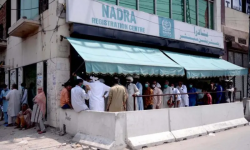
A large number of people stand outside a National Database and Registration Authority (Nadra) in Lahore. — APP/File
https://whatsapp.com/channel/0029VaMc238IiRov8okfYy3n
The federal government has amended the National Identity Card (NIC) Rules, widening the definition of biometrics to legally recognise facial and iris scans as valid biometric identifiers, besides fingerprints, the National Database and Registration Authority (Nadra) said on Wednesday.
The amendment, made on the authority’s recommendation, provides a robust legal foundation for the implementation of a multi-biometric verification system in Pakistan.
Based on this legal framework, Nadra has introduced technical innovations enabling contactless fingerprint and facial recognition-based biometric verification.
In a statement, Nadra said this system is currently available both at the authority‘s registration centres and on the Pak ID mobile application for services falling within the authority’s jurisdiction. It is already being utilised for biometric verification in transferring Islamabad-registered vehicles and online passport applications.
In the near future, proof-of-life certificates for federal government pensioners will also be issued under this system, while the scope of these digital services is being expanded in phases.
Effective from Jan 20, 2026, Nadra will start issuing facial recognition-based biometric verification certificates at all its registration centres for those citizens for whom fingerprint-based verification is not possible. Wherever any institution requires such verification, citizens may obtain this certificate from any Nadra registration centre after paying a nominal fee of Rs20.
Under this procedure, if fingerprint-based biometric verification fails at the service provider’s end, the citizen will visit the nearest Nadra registration centre to have a fresh photograph taken.
This photograph will be matched with the image already available in Nadra’s records. Upon successful verification, Nadra will issue a certificate containing the purpose of verification, the citizen’s recent photograph alongside the photograph on record, their computerised national identity card (CNIC) number, name, father’s name, a unique tracking ID and a QR code.
The certificate will be valid for seven days. The citizen will submit it to the relevant institution where biometric verification is required and the concerned institution will incorporate the certificate into its records and verify it online through Nadra.
In the future, facial image-based biometric verification certificates will also be available through Nadra’s e-Sahulat franchises. Following the formal launch of the Digital ID, this facility will be made available for all services through the Pak-ID application.
In a statement, Nadra said it was fully prepared to implement this system. However, for its effective execution, it requested all regulators, relevant public institutions and private sector organisations to progressively upgrade their hardware and software in accordance with approved standards to enable the use of this biometric verification service.
ghazi52
THINK TANK: CONSULTANT
- Thread starter
- #40
In the first phase, technical upgrades to institutional software applications will be required to allow the integration of facial recognition-based biometric verification certificates issued by Nadra. In the second phase, it will be necessary for institutions to install cameras at service counters or integrate cameras into existing know your customer (KYC) biometric machines, as without these upgrades, the authority cannot provide this facility directly at such locations.
If citizens encounter any issues regarding the availability of this service after Jan 20, 2026, they may lodge complaints with the relevant institution or department, as the service will be available from Nadra’s end.
To ensure the earliest possible operationalisation of this facility, Nadra has also requested the interior ministry to issue appropriate instructions to all institutions concerned. It is envisaged that, following the rollout of this system, the difficulties faced by citizens due to faded fingerprints will be effectively resolved.
Upon full implementation, citizens will be able to avail this facility directly at the relevant institution without the need to visit a Nadra Registration Centre. Following the formal launch of the Digital ID, citizens will also be able to access this facility independently through the Pak-ID application.
If citizens encounter any issues regarding the availability of this service after Jan 20, 2026, they may lodge complaints with the relevant institution or department, as the service will be available from Nadra’s end.
To ensure the earliest possible operationalisation of this facility, Nadra has also requested the interior ministry to issue appropriate instructions to all institutions concerned. It is envisaged that, following the rollout of this system, the difficulties faced by citizens due to faded fingerprints will be effectively resolved.
Upon full implementation, citizens will be able to avail this facility directly at the relevant institution without the need to visit a Nadra Registration Centre. Following the formal launch of the Digital ID, citizens will also be able to access this facility independently through the Pak-ID application.
ghazi52
THINK TANK: CONSULTANT
- Thread starter
- #41
On the occasion of the new year, Nadra reaffirmed its commitment to further enhance its services through technological innovation while strengthening safeguards against identity fraud and misuse.
Due to age or certain medical conditions, the fingerprints of many citizens gradually fade over time. When such citizens approach banks, SIM card franchises, housing societies or seek services related to property transfer and other transactions where biometric verification through fingerprints is mandatory, they often face significant difficulties.
Moreover, at many service points, biometric verification is also not possible due to the use of substandard or low-quality fingerprint readers. Although the State Bank of Pakistan and the Pakistan Telecommunication Authority have prescribed mechanisms to facilitate such citizens, in practice individuals continue to face considerable challenges in availing these services.
To ensure an immediate and effective resolution of this issue, Prime Minister Shehbaz Sharif and Federal Interior Minister Mohsin Naqvi had issued directives to Nadra and key measures have been taken in compliance.
Due to age or certain medical conditions, the fingerprints of many citizens gradually fade over time. When such citizens approach banks, SIM card franchises, housing societies or seek services related to property transfer and other transactions where biometric verification through fingerprints is mandatory, they often face significant difficulties.
Moreover, at many service points, biometric verification is also not possible due to the use of substandard or low-quality fingerprint readers. Although the State Bank of Pakistan and the Pakistan Telecommunication Authority have prescribed mechanisms to facilitate such citizens, in practice individuals continue to face considerable challenges in availing these services.
To ensure an immediate and effective resolution of this issue, Prime Minister Shehbaz Sharif and Federal Interior Minister Mohsin Naqvi had issued directives to Nadra and key measures have been taken in compliance.
ghazi52
THINK TANK: CONSULTANT
- Thread starter
- #42
Digital stamping to boost transparency
Citizens can now generate and verify stamp papers online instantly
APP
February 14, 2026
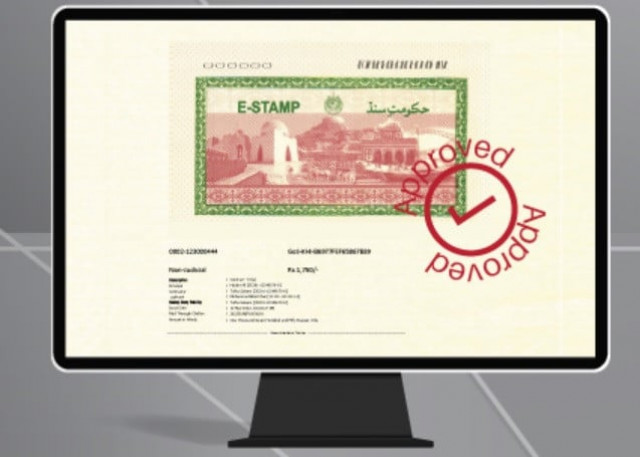
E-stamp. PHOTO: estamp.gos.pk
ISLAMABAD: The federal capital has introduced e-stamping across Islamabad, shifting the issuance of stamp papers to a digital portal in a move aimed at preventing misuse and ensuring greater transparency.
A spokesman for the Islamabad Capital Territory (ICT) administration said the initiative was designed to close loopholes associated with manual stamp papers and to provide a clear, verifiable process for buyers, sellers and officials.
Islamabad Deputy Commissioner Irfan Nawaz Memon recently visited stamp shops at the F-8 Katchery to review the transition. During the visit, he examined the use of the system by vendors and observed how citizens were being guided through the new process.
Revenue officials briefed him on daily operations, user flow and verification mechanisms integrated into the portal. They explained that e-stamp papers can be generated online and downloaded instantly, with each transaction recorded under a unique reference number and stored in a central database for future verification.
ghazi52
THINK TANK: CONSULTANT
- Thread starter
- #43
After a prolonged gap, Pakistan is moving toward a long-overdue spectrum auction. This moment deserves to be viewed not as a sectoral event, but as a strategic economic decision. In a digital economy, spectrum is foundational infrastructure—comparable to roads, power, and ports. Its allocation shapes productivity, competitiveness, and inclusion for years to come.
The Information Memorandum signals a more forward-looking intent, particularly in its focus on spectrum mix, affordability, and market sustainability. If implemented well, the auction can unlock multi-sector growth, support exports, strengthen public services, and expand opportunities for millions of citizens.
The Information Memorandum signals a more forward-looking intent, particularly in its focus on spectrum mix, affordability, and market sustainability. If implemented well, the auction can unlock multi-sector growth, support exports, strengthen public services, and expand opportunities for millions of citizens.
ghazi52
THINK TANK: CONSULTANT
- Thread starter
- #44
The upcoming spectrum auction is therefore not merely a regulatory exercise. It is a structural reform that will shape Pakistan’s digital economy for the next decade.
If designed with a long-term, economy-first perspective, it can become a cornerstone of national development. If not, it risks perpetuating capacity constraints that limit growth in an increasingly digital world.
If designed with a long-term, economy-first perspective, it can become a cornerstone of national development. If not, it risks perpetuating capacity constraints that limit growth in an increasingly digital world.
Users who are viewing this thread
Total: 1 (members: 0, guests: 1)
Pakistan Defence Latest
-
-
-

-
-
Bangladesh PM’s adviser returns from Delhi airport; says he was ‘humiliated’ by immigration (1 Viewer)
- Latest: maxpane
Country Watch Latest
-

-
 TF-X / KAAN / Hürjet Turkish Fighter & Trainer Aircrafts News & Discussions (9 Viewers)
- Latest: BonPlan
-
-

-
Latest Posts
-
-
TF-X / KAAN / Hürjet Turkish Fighter & Trainer Aircrafts News & Discussions (9 Viewers)
- Latest: BonPlan
-

-
-
