Pakistan Exports / Imports - Updates

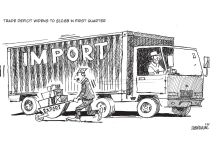
Pakistan's trade deficit widens over 25% YoY to $3.95bn in July 2026

  • Trade deficit narrows 15% MoM
August 5, 2026
By Salman Siddiqui
B Recorder

Pakistan’s trade deficit jumped over 25% to $3.95 billion in July 2026 compared to July 2025, with import payments surging almost 18% on year-on-year (YoY) basis and export earnings improving nearly 10%, as per official data released on Wednesday.

The deficit had stood at $3.15 billion in July 2025, the Pakistan Bureau of Statistics (PBS) reported.

“Data suggests the underlying import appetite has not genuinely cooled,” Ismail Iqbal Securities’ Head of Research Saad Hanif said in a commentary. “The reopening of the economy also kept imports elevated.”

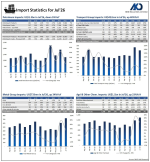
Import payments rose 18% to $6.89 billion in July compared to $5.84 billion in the same month of the last year, PBS data showed.

Hanif said import payments had remained higher mainly due to a rise in energy prices in the wake of Middle Eastern geopolitical crisis.

“The prices of petroleum oil products and RLNG surged in the range of 40-50% in the month of July 2026 compared to the same month of the last year.”

Pakistan remains a net energy importer. Historically, the share of energy in total imports remains in the range of 20-25% of total import bill.

“Besides, import of cars and machinery for industries and agriculture sectors also kept imports on higher side,” Hanif said.
 
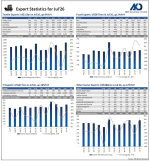
The exports surged 9.54% to $2.94 billion in July 2026 compared to $2.68 billion in July 2025, according to the PBS.

Hanif said the export earnings had increased apparently due to revival in food exports – primarily rice exports in July.

“Textiles remain major export of the country, having 55-60% share in total export earnings.”

Textile exports have remained stable in the previous fiscal year ended June 30, 2026. The publication of detailed import and export numbers later this month will reveal what items contributed towards increasing export earnings in July 2026, according to Hanif.
 
Trade deficit narrows 15% MoM

The trade deficit narrowed over 15% in July 2026 compared to $4.66 billion in June 2026 in the wake of strong revival in export earnings by a staggering 31% increase month-on-month (MoM), according to the PBS and the Ministry of Finance.

The export earnings increased to $2.94 billion in July 2026 compared to $2.24 billion in the prior month of June 2026, according to the PBS.

“Exports surged 31% MoM in July – one of the strongest monthly increases in recent years,” the Ministry of Finance said.

The import payments remained stable at $6.89 billion in July 2026, ticking down 0.17% compared to June 2026.

“Exports growth is encouraging early sign of FY27 Budget’s focus on exports, competitiveness, lower cost of doing business and private sector-led growth,” the Ministry of Finance commented.

“The July data points to strengthening external sector momentum and provides an encouraging start to FY27, reinforcing Pakistan’s transition towards a more competitive, export-led and sustainable growth model.”
 

Maritime minister forms committee to finalise fish export incentive scheme

August 7, 2026
BR Web Desk

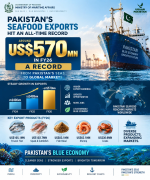
Federal Minister for Maritime Affairs Muhammad Junaid Anwar Chaudhry constituted on Friday a four-member committee to finalise a performance-based fish export incentive scheme aimed at increasing seafood exports without altering the existing tax regime.

“The proposed scheme will reward incremental export growth while retaining the current tax structure, improving the competitiveness of seafood industry and attracting investment,” he said while chairing a meeting.

“This is the right time to attract businesses towards Pakistan’s fisheries sector,” he said.

He added that better incentives and closer engagement with exporters would help increase seafood exports and the sector’s contribution to the national economy.

Meanwhile, Marine Fisheries Department Director General Dr Mansoor Wasan briefing the meeting said that targeted incentives and stronger coordination with exporters could enhance the competitiveness of Pakistan’s seafood industry in international markets.
 

Afghanistan border closure pushes Pakistan’s poultry industry into deepening crisis​

Afghanistan once absorbed around 20% of Pakistan’s poultry output, but the prolonged border closure has left producers struggling with surplus supply and weak domestic demand.

Monitoring Report
Monitoring Report

August 31, 2026
2 min read
Afghanistan border closure pushes Pakistan’s poultry industry into deepening crisis

AAAAAAAA
Sans SerifSerifClassicModern

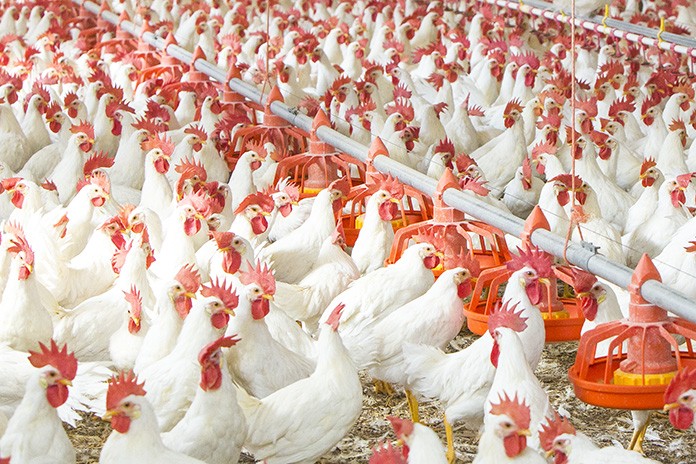
Pakistan’s poultry sector is facing a prolonged supply glut and mounting financial losses as exports to Afghanistan have remained suspended since October last year following the closure of the border.

Around 20% of Pakistan’s poultry production was previously exported to Afghanistan. With that market remaining closed, producers have been left with surplus supply that domestic demand has been unable to absorb.

Industry representatives said the border closure was a major factor behind the decline in poultry prices, while high diesel prices and rising transportation costs had added to the pressure on farmers and producers.


Supplies to Kashmir and Balochistan have also been disrupted, further complicating the distribution of poultry products, while domestic demand remains insufficient to absorb the additional production.

The production cost of chicken is currently around Rs290 per kilogram, while producers are selling it for approximately Rs250 per kilogram, resulting in a loss of around Rs40 per kilogram.

The situation is even more difficult in the chick market. A chick costing around Rs70 is being sold for as little as Rs5, causing a loss of approximately Rs65 per chick. Producers are also paying around Rs10 per chick in Federal Excise Duty (FED), despite operating at a loss.

Industry representatives said the sector currently has around 20% surplus supply and called for the resumption of poultry exports to Afghanistan to help absorb excess production and provide relief to farmers.


They described the ongoing situation as the most severe poultry crisis in the country’s history, saying its impact was worse than the bird flu crisis nearly two decades ago.

Meanwhile, the Sindh-Balochistan Broiler Farmers Alliance held a consultative meeting to discuss the crisis and its impact on poultry farmers.

Participants reviewed chicken prices, the existing rate mechanism, chick supply, prevailing market conditions and the financial losses being suffered by farmers.

The participants agreed that poultry prices should be determined through a transparent mechanism based on production costs, available data and actual market conditions.


The alliance decided to develop a data-based alternative rate mechanism aimed at better reflecting farmers’ production costs and protecting their economic interests.
 

Users who are viewing this thread

Latest Posts

Back
Top