Navigation
Install the app
How to install the app on iOS
Follow along with the video below to see how to install our site as a web app on your home screen.
Note: This feature may not be available in some browsers.
More options
Style variation
You are using an out of date browser. It may not display this or other websites correctly.
You should upgrade or use an alternative browser.
You should upgrade or use an alternative browser.
Pakistan-India Conflict 2025: News Updates and Discussion
- Thread starter Ali_Baba
- Start date
More options
Who Replied?

Trailer23
Elite Member


Yasser76
Elite Member

Bakhts need to look away now....
 Photograph: Getty Images
Jul 16th 2025|Akalia Kalan|6 min read
They were used to hearing fighter jets from a nearby airbase. But this noise was louder and less familiar: a roar punctuated by repeated explosions. Residents of Akalia Kalan, a village in northern India, leapt from their beds as it grew closer in the early hours of May 7th. Outside, they saw a ball of flames pass overhead and crash into a nearby field. The wreckage was clearly identifiable as a fighter. Two bystanders died, according to villagers. The two Indian pilots had ejected earlier and were found, injured, in fields nearby.
India has yet to confirm it officially but this was one of a number of its fighter jets that were lost in a four-day conflict with Pakistan in May. The Indian government disputes Pakistan’s claim to have shot down six warplanes, including three of its new French Rafale jets. But foreign military officials believe that five Indian aircraft were destroyed, including at least one Rafale. And Indian military officers, while refusing to confirm numbers, do now admit to losing some aircraft. What is more, they are starting to indicate that the losses may have stemmed from Indian errors rather than technological deficiencies.
The admissions are significant because China is Pakistan’s top arms supplier. This was the first conflict in which advanced Chinese fighters and missiles were used against Western and Russian equivalents. America and its allies are especially interested, as China could use much of the same weaponry in a potential war over Taiwan. Early reports suggested that the decisive factor was the superiority of Pakistan’s Chinese-made J-10 fighters and its PL-15 air-to-air missiles. India does appear to have underestimated those. And China may have also tipped the balance by providing Pakistan with early warning and real-time targeting data.
But given India’s success later on in the fight, the bigger problem might have been how India used its own fighters on that first night. One of the latest and most controversial twists in the saga came in June when Indian news outlets aired a recording of Captain Shiv Kumar, India’s defence attaché in Jakarta, addressing a seminar earlier in the month. He said that India lost some aircraft only because its political leadership had ordered its air force not to hit Pakistan’s air defences. Instead, they targeted only militant sites on the first day. “After the loss, we changed our tactics and we went for their military installations,” Captain Kumar said.
That followed an acknowledgment from General Anil Chauhan, India’s chief of defence staff, in a television interview at the end of May that India lost some planes on the first night of the conflict because of “tactical mistakes”. He went on to say that India had rectified its errors after two days, allowing all its fighters to fly again and to strike targets in Pakistan from long range. India did have more success later in the conflict when its missiles overcame Pakistan’s air defences and hit several of its military bases.
One theory among foreign officials is that on the first day, India did not mount its Rafales with Meteor long-range air-to-air missiles (presumably thinking that they were beyond the reach of Pakistan’s fighters or that Pakistan’s initial response would be less escalatory). Another is that India’s fighters did not have the right electronic jamming equipment, up-to-date software or relevant data to protect them from Pakistan’s new weaponry. A third, and broader, explanation is that India lacked the necessary “mission data” to understand how Pakistan could identify Indian plans, pass data to its own jets and guide missiles to their targets.
There are implications, too, for India’s biggest defence deal in years. It is expected to launch a long overdue tender for 114 fighters this year. And Dassault, the French manufacturer of Rafales, is a leading contender alongside Sweden’s Saab and America’s Boeing and Lockheed Martin. But some Indian military figures have suggested that the Rafales under-performed in the recent conflict. Others complain that Dassault is reluctant to share the source code for the Rafale’s software, preventing India from adapting the aircraft to suit its own needs. Since the conflict, Chinese diplomats are also said to have been badmouthing Rafales to other prospective buyers and urging them to buy Chinese fighters, instead.
Dassault executives are anxious to reassure countries that have bought Rafales, including Egypt, Indonesia, Qatar and the UAE, as well as potential future customers. But the company is constrained in what it can say publicly, for fear of angering India. It is also unclear to what extent Dassault has been permitted to take part in India’s investigation into the episode. Eric Trappier, Dassault’s aviation chairman, has dismissed as “simply untrue” Pakistan’s claims to have downed three Rafales. “When the complete details are known, the reality may surprise many,” he told a French magazine in an interview published on June 11th. He also said that the Rafale was “far better than anything China currently offers”.
The French government is also under pressure to explain what would be the first confirmed loss of a Rafale in combat. Marc Chavent, a member of France’s parliament, submitted a written question to the government in late May voicing concern that the SPECTRA electronic-warfare system on India’s Rafales failed to detect or jam Pakistan’s Chinese-made PL-15 air-to-air missiles. He asked if newer Rafales would have an upgraded version of SPECTRA and whether France was considering developing a fighter designed specifically for electronic warfare. SPECTRA’s performance is also of interest to countries that use or have ordered Rafales.
Back in Akalia Kalan and nearby villages, relatives of the dead and injured have more immediate concerns. Raj Kumar Singh, who died of head injuries from one of the blasts, left behind a wife, two children and a 70-year-old mother with little means to support themselves. They have not yet been offered compensation or been visited by local officials or politicians. Instead, says one villager, the authorities “want to bury news of this crash”. ■

 www.economist.com
How did Pakistan shoot down India’s fighter jets?
New clues suggest Indian errors and Chinese arms may both be to blame
Share
Jul 16th 2025|Akalia Kalan|6 min read
They were used to hearing fighter jets from a nearby airbase. But this noise was louder and less familiar: a roar punctuated by repeated explosions. Residents of Akalia Kalan, a village in northern India, leapt from their beds as it grew closer in the early hours of May 7th. Outside, they saw a ball of flames pass overhead and crash into a nearby field. The wreckage was clearly identifiable as a fighter. Two bystanders died, according to villagers. The two Indian pilots had ejected earlier and were found, injured, in fields nearby.
India has yet to confirm it officially but this was one of a number of its fighter jets that were lost in a four-day conflict with Pakistan in May. The Indian government disputes Pakistan’s claim to have shot down six warplanes, including three of its new French Rafale jets. But foreign military officials believe that five Indian aircraft were destroyed, including at least one Rafale. And Indian military officers, while refusing to confirm numbers, do now admit to losing some aircraft. What is more, they are starting to indicate that the losses may have stemmed from Indian errors rather than technological deficiencies.
The admissions are significant because China is Pakistan’s top arms supplier. This was the first conflict in which advanced Chinese fighters and missiles were used against Western and Russian equivalents. America and its allies are especially interested, as China could use much of the same weaponry in a potential war over Taiwan. Early reports suggested that the decisive factor was the superiority of Pakistan’s Chinese-made J-10 fighters and its PL-15 air-to-air missiles. India does appear to have underestimated those. And China may have also tipped the balance by providing Pakistan with early warning and real-time targeting data.
But given India’s success later on in the fight, the bigger problem might have been how India used its own fighters on that first night. One of the latest and most controversial twists in the saga came in June when Indian news outlets aired a recording of Captain Shiv Kumar, India’s defence attaché in Jakarta, addressing a seminar earlier in the month. He said that India lost some aircraft only because its political leadership had ordered its air force not to hit Pakistan’s air defences. Instead, they targeted only militant sites on the first day. “After the loss, we changed our tactics and we went for their military installations,” Captain Kumar said.
That followed an acknowledgment from General Anil Chauhan, India’s chief of defence staff, in a television interview at the end of May that India lost some planes on the first night of the conflict because of “tactical mistakes”. He went on to say that India had rectified its errors after two days, allowing all its fighters to fly again and to strike targets in Pakistan from long range. India did have more success later in the conflict when its missiles overcame Pakistan’s air defences and hit several of its military bases.
One theory among foreign officials is that on the first day, India did not mount its Rafales with Meteor long-range air-to-air missiles (presumably thinking that they were beyond the reach of Pakistan’s fighters or that Pakistan’s initial response would be less escalatory). Another is that India’s fighters did not have the right electronic jamming equipment, up-to-date software or relevant data to protect them from Pakistan’s new weaponry. A third, and broader, explanation is that India lacked the necessary “mission data” to understand how Pakistan could identify Indian plans, pass data to its own jets and guide missiles to their targets.
Fight club
But if the fighters were made vulnerable because of orders from political leaders to only hit militant targets, as Captain Kumar suggests, then responsibility would lie more with the government of Narendra Modi. While consistent with India’s approach to other recent clashes with Pakistan, in which India has sought to avoid escalation, such orders would not have taken into account recent improvements in Pakistan’s capabilities. That suggestion is now fuelling opposition allegations of a cover-up. “Why is the PM refusing to preside over an all-party meeting and take the opposition into confidence? Why has the demand for a special session of parliament been rejected?” asks Jairam Ramesh, a spokesman for the opposition Congress party.There are implications, too, for India’s biggest defence deal in years. It is expected to launch a long overdue tender for 114 fighters this year. And Dassault, the French manufacturer of Rafales, is a leading contender alongside Sweden’s Saab and America’s Boeing and Lockheed Martin. But some Indian military figures have suggested that the Rafales under-performed in the recent conflict. Others complain that Dassault is reluctant to share the source code for the Rafale’s software, preventing India from adapting the aircraft to suit its own needs. Since the conflict, Chinese diplomats are also said to have been badmouthing Rafales to other prospective buyers and urging them to buy Chinese fighters, instead.
Dassault executives are anxious to reassure countries that have bought Rafales, including Egypt, Indonesia, Qatar and the UAE, as well as potential future customers. But the company is constrained in what it can say publicly, for fear of angering India. It is also unclear to what extent Dassault has been permitted to take part in India’s investigation into the episode. Eric Trappier, Dassault’s aviation chairman, has dismissed as “simply untrue” Pakistan’s claims to have downed three Rafales. “When the complete details are known, the reality may surprise many,” he told a French magazine in an interview published on June 11th. He also said that the Rafale was “far better than anything China currently offers”.
The French government is also under pressure to explain what would be the first confirmed loss of a Rafale in combat. Marc Chavent, a member of France’s parliament, submitted a written question to the government in late May voicing concern that the SPECTRA electronic-warfare system on India’s Rafales failed to detect or jam Pakistan’s Chinese-made PL-15 air-to-air missiles. He asked if newer Rafales would have an upgraded version of SPECTRA and whether France was considering developing a fighter designed specifically for electronic warfare. SPECTRA’s performance is also of interest to countries that use or have ordered Rafales.
Back in Akalia Kalan and nearby villages, relatives of the dead and injured have more immediate concerns. Raj Kumar Singh, who died of head injuries from one of the blasts, left behind a wife, two children and a 70-year-old mother with little means to support themselves. They have not yet been offered compensation or been visited by local officials or politicians. Instead, says one villager, the authorities “want to bury news of this crash”. ■
How did Pakistan shoot down India’s fighter jets?
New clues suggest Indian errors and Chinese arms may both be to blame
samsite84
SpeedLimited


What's new (or news) here? Regurgitation of same evidence, theory and so-what. Don't think any one is debating that IAF lost jets (3-6). And there is no debating that IAF/IA hit deep inside Pakistan - penetrated deeper than even 1971Bakhts need to look away now....
How did Pakistan shoot down India’s fighter jets?
New clues suggest Indian errors and Chinese arms may both be to blame
Share
Photograph: Getty Images
Jul 16th 2025|Akalia Kalan|6 min read
They were used to hearing fighter jets from a nearby airbase. But this noise was louder and less familiar: a roar punctuated by repeated explosions. Residents of Akalia Kalan, a village in northern India, leapt from their beds as it grew closer in the early hours of May 7th. Outside, they saw a ball of flames pass overhead and crash into a nearby field. The wreckage was clearly identifiable as a fighter. Two bystanders died, according to villagers. The two Indian pilots had ejected earlier and were found, injured, in fields nearby.
India has yet to confirm it officially but this was one of a number of its fighter jets that were lost in a four-day conflict with Pakistan in May. The Indian government disputes Pakistan’s claim to have shot down six warplanes, including three of its new French Rafale jets. But foreign military officials believe that five Indian aircraft were destroyed, including at least one Rafale. And Indian military officers, while refusing to confirm numbers, do now admit to losing some aircraft. What is more, they are starting to indicate that the losses may have stemmed from Indian errors rather than technological deficiencies.
The admissions are significant because China is Pakistan’s top arms supplier. This was the first conflict in which advanced Chinese fighters and missiles were used against Western and Russian equivalents. America and its allies are especially interested, as China could use much of the same weaponry in a potential war over Taiwan. Early reports suggested that the decisive factor was the superiority of Pakistan’s Chinese-made J-10 fighters and its PL-15 air-to-air missiles. India does appear to have underestimated those. And China may have also tipped the balance by providing Pakistan with early warning and real-time targeting data.
But given India’s success later on in the fight, the bigger problem might have been how India used its own fighters on that first night. One of the latest and most controversial twists in the saga came in June when Indian news outlets aired a recording of Captain Shiv Kumar, India’s defence attaché in Jakarta, addressing a seminar earlier in the month. He said that India lost some aircraft only because its political leadership had ordered its air force not to hit Pakistan’s air defences. Instead, they targeted only militant sites on the first day. “After the loss, we changed our tactics and we went for their military installations,” Captain Kumar said.
That followed an acknowledgment from General Anil Chauhan, India’s chief of defence staff, in a television interview at the end of May that India lost some planes on the first night of the conflict because of “tactical mistakes”. He went on to say that India had rectified its errors after two days, allowing all its fighters to fly again and to strike targets in Pakistan from long range. India did have more success later in the conflict when its missiles overcame Pakistan’s air defences and hit several of its military bases.
One theory among foreign officials is that on the first day, India did not mount its Rafales with Meteor long-range air-to-air missiles (presumably thinking that they were beyond the reach of Pakistan’s fighters or that Pakistan’s initial response would be less escalatory). Another is that India’s fighters did not have the right electronic jamming equipment, up-to-date software or relevant data to protect them from Pakistan’s new weaponry. A third, and broader, explanation is that India lacked the necessary “mission data” to understand how Pakistan could identify Indian plans, pass data to its own jets and guide missiles to their targets.
Fight club
But if the fighters were made vulnerable because of orders from political leaders to only hit militant targets, as Captain Kumar suggests, then responsibility would lie more with the government of Narendra Modi. While consistent with India’s approach to other recent clashes with Pakistan, in which India has sought to avoid escalation, such orders would not have taken into account recent improvements in Pakistan’s capabilities. That suggestion is now fuelling opposition allegations of a cover-up. “Why is the PM refusing to preside over an all-party meeting and take the opposition into confidence? Why has the demand for a special session of parliament been rejected?” asks Jairam Ramesh, a spokesman for the opposition Congress party.
There are implications, too, for India’s biggest defence deal in years. It is expected to launch a long overdue tender for 114 fighters this year. And Dassault, the French manufacturer of Rafales, is a leading contender alongside Sweden’s Saab and America’s Boeing and Lockheed Martin. But some Indian military figures have suggested that the Rafales under-performed in the recent conflict. Others complain that Dassault is reluctant to share the source code for the Rafale’s software, preventing India from adapting the aircraft to suit its own needs. Since the conflict, Chinese diplomats are also said to have been badmouthing Rafales to other prospective buyers and urging them to buy Chinese fighters, instead.
Dassault executives are anxious to reassure countries that have bought Rafales, including Egypt, Indonesia, Qatar and the UAE, as well as potential future customers. But the company is constrained in what it can say publicly, for fear of angering India. It is also unclear to what extent Dassault has been permitted to take part in India’s investigation into the episode. Eric Trappier, Dassault’s aviation chairman, has dismissed as “simply untrue” Pakistan’s claims to have downed three Rafales. “When the complete details are known, the reality may surprise many,” he told a French magazine in an interview published on June 11th. He also said that the Rafale was “far better than anything China currently offers”.
The French government is also under pressure to explain what would be the first confirmed loss of a Rafale in combat. Marc Chavent, a member of France’s parliament, submitted a written question to the government in late May voicing concern that the SPECTRA electronic-warfare system on India’s Rafales failed to detect or jam Pakistan’s Chinese-made PL-15 air-to-air missiles. He asked if newer Rafales would have an upgraded version of SPECTRA and whether France was considering developing a fighter designed specifically for electronic warfare. SPECTRA’s performance is also of interest to countries that use or have ordered Rafales.
Back in Akalia Kalan and nearby villages, relatives of the dead and injured have more immediate concerns. Raj Kumar Singh, who died of head injuries from one of the blasts, left behind a wife, two children and a 70-year-old mother with little means to support themselves. They have not yet been offered compensation or been visited by local officials or politicians. Instead, says one villager, the authorities “want to bury news of this crash”. ■
How did Pakistan shoot down India’s fighter jets?
New clues suggest Indian errors and Chinese arms may both be to blame
Both sides got their "victories" and will do "victory laps" in coming few months/years. The condition of man/woman on the street is same - didn't get better or worse. The whole episode now looks like a India vs Pakistan 2 match series where both countries won 1 match and population of both countries rejoiced before returning to the usual...
Yasser76
Elite Member
Hahahaha hahahaWhat's new (or news) here? Regurgitation of same evidence, theory and so-what. Don't think any one is debating that IAF lost jets (3-6). And there is no debating that IAF/IA hit deep inside Pakistan - penetrated deeper than even 1971
C.O.P.E

TAC
Registered Member
Thanks for sharingBakhts need to look away now....
How did Pakistan shoot down India’s fighter jets?
New clues suggest Indian errors and Chinese arms may both be to blame
Share
Photograph: Getty Images
Jul 16th 2025|Akalia Kalan|6 min read
They were used to hearing fighter jets from a nearby airbase. But this noise was louder and less familiar: a roar punctuated by repeated explosions. Residents of Akalia Kalan, a village in northern India, leapt from their beds as it grew closer in the early hours of May 7th. Outside, they saw a ball of flames pass overhead and crash into a nearby field. The wreckage was clearly identifiable as a fighter. Two bystanders died, according to villagers. The two Indian pilots had ejected earlier and were found, injured, in fields nearby.
India has yet to confirm it officially but this was one of a number of its fighter jets that were lost in a four-day conflict with Pakistan in May. The Indian government disputes Pakistan’s claim to have shot down six warplanes, including three of its new French Rafale jets. But foreign military officials believe that five Indian aircraft were destroyed, including at least one Rafale. And Indian military officers, while refusing to confirm numbers, do now admit to losing some aircraft. What is more, they are starting to indicate that the losses may have stemmed from Indian errors rather than technological deficiencies.
The admissions are significant because China is Pakistan’s top arms supplier. This was the first conflict in which advanced Chinese fighters and missiles were used against Western and Russian equivalents. America and its allies are especially interested, as China could use much of the same weaponry in a potential war over Taiwan. Early reports suggested that the decisive factor was the superiority of Pakistan’s Chinese-made J-10 fighters and its PL-15 air-to-air missiles. India does appear to have underestimated those. And China may have also tipped the balance by providing Pakistan with early warning and real-time targeting data.
But given India’s success later on in the fight, the bigger problem might have been how India used its own fighters on that first night. One of the latest and most controversial twists in the saga came in June when Indian news outlets aired a recording of Captain Shiv Kumar, India’s defence attaché in Jakarta, addressing a seminar earlier in the month. He said that India lost some aircraft only because its political leadership had ordered its air force not to hit Pakistan’s air defences. Instead, they targeted only militant sites on the first day. “After the loss, we changed our tactics and we went for their military installations,” Captain Kumar said.
That followed an acknowledgment from General Anil Chauhan, India’s chief of defence staff, in a television interview at the end of May that India lost some planes on the first night of the conflict because of “tactical mistakes”. He went on to say that India had rectified its errors after two days, allowing all its fighters to fly again and to strike targets in Pakistan from long range. India did have more success later in the conflict when its missiles overcame Pakistan’s air defences and hit several of its military bases.
One theory among foreign officials is that on the first day, India did not mount its Rafales with Meteor long-range air-to-air missiles (presumably thinking that they were beyond the reach of Pakistan’s fighters or that Pakistan’s initial response would be less escalatory). Another is that India’s fighters did not have the right electronic jamming equipment, up-to-date software or relevant data to protect them from Pakistan’s new weaponry. A third, and broader, explanation is that India lacked the necessary “mission data” to understand how Pakistan could identify Indian plans, pass data to its own jets and guide missiles to their targets.
Fight club
But if the fighters were made vulnerable because of orders from political leaders to only hit militant targets, as Captain Kumar suggests, then responsibility would lie more with the government of Narendra Modi. While consistent with India’s approach to other recent clashes with Pakistan, in which India has sought to avoid escalation, such orders would not have taken into account recent improvements in Pakistan’s capabilities. That suggestion is now fuelling opposition allegations of a cover-up. “Why is the PM refusing to preside over an all-party meeting and take the opposition into confidence? Why has the demand for a special session of parliament been rejected?” asks Jairam Ramesh, a spokesman for the opposition Congress party.
There are implications, too, for India’s biggest defence deal in years. It is expected to launch a long overdue tender for 114 fighters this year. And Dassault, the French manufacturer of Rafales, is a leading contender alongside Sweden’s Saab and America’s Boeing and Lockheed Martin. But some Indian military figures have suggested that the Rafales under-performed in the recent conflict. Others complain that Dassault is reluctant to share the source code for the Rafale’s software, preventing India from adapting the aircraft to suit its own needs. Since the conflict, Chinese diplomats are also said to have been badmouthing Rafales to other prospective buyers and urging them to buy Chinese fighters, instead.
Dassault executives are anxious to reassure countries that have bought Rafales, including Egypt, Indonesia, Qatar and the UAE, as well as potential future customers. But the company is constrained in what it can say publicly, for fear of angering India. It is also unclear to what extent Dassault has been permitted to take part in India’s investigation into the episode. Eric Trappier, Dassault’s aviation chairman, has dismissed as “simply untrue” Pakistan’s claims to have downed three Rafales. “When the complete details are known, the reality may surprise many,” he told a French magazine in an interview published on June 11th. He also said that the Rafale was “far better than anything China currently offers”.
The French government is also under pressure to explain what would be the first confirmed loss of a Rafale in combat. Marc Chavent, a member of France’s parliament, submitted a written question to the government in late May voicing concern that the SPECTRA electronic-warfare system on India’s Rafales failed to detect or jam Pakistan’s Chinese-made PL-15 air-to-air missiles. He asked if newer Rafales would have an upgraded version of SPECTRA and whether France was considering developing a fighter designed specifically for electronic warfare. SPECTRA’s performance is also of interest to countries that use or have ordered Rafales.
Back in Akalia Kalan and nearby villages, relatives of the dead and injured have more immediate concerns. Raj Kumar Singh, who died of head injuries from one of the blasts, left behind a wife, two children and a 70-year-old mother with little means to support themselves. They have not yet been offered compensation or been visited by local officials or politicians. Instead, says one villager, the authorities “want to bury news of this crash”. ■
How did Pakistan shoot down India’s fighter jets?
New clues suggest Indian errors and Chinese arms may both be to blame
 . Shows how the world isn’t buying all the cope BS and outright fabrications we’ve seen repeated over the last few months. Epic defeat and humiliation of India & IAF in particular.
 If they ‘Want to bury news of this crash’ even when civilians got killed you know what they will be doing with any crashes that happened in uninhabited areas. No wonder they admit ‘losses’ but refuse to admit how many.
Yasser76
Elite Member
Thanks for sharing
If they ‘Want to bury news of this crash’ even when civilians got killed you know what they will be doing with any crashes that happened in uninhabited areas. No wonder they admit ‘losses’ but refuse to admit how many.
Indian Narrative truely buried. Even I thought 3 kills was the most plausible, but seems now the debate is between 5 (by foreign military) and 6 (claimed by PAF)
If it is 5, then it really seems like 3 Rafales downed is a reality.
At some point Indians will need to come clean. Economist is known world wide for getting their facts right. If they are quoting foreign military officials (with access to intel) my guess is some of India's allies are delibertely keeping their mouths shut.
French in particular must be quitely fuming, as they cannot come out ans just say what PAF said, that Rafale is a decent plane but Indian tactics were poor
samsite84
SpeedLimited
Okay. Let's say India lost 6, all Rafales (or whatever combination you want), didn't come clean etc etc etc.Indian Narrative truely buried. Even I thought 3 kills was the most plausible, but seems now the debate is between 5 (by foreign military) and 6 (claimed by PAF)
If it is 5, then it really seems like 3 Rafales downed is a reality.
At some point Indians will need to come clean. Economist is known world wide for getting their facts right. If they are quoting foreign military officials (with access to intel) my guess is some of India's allies are delibertely keeping their mouths shut.
French in particular must be quitely fuming, as they cannot come out ans just say what PAF said, that Rafale is a decent plane but Indian tactics were poor
Did it change anything on ground - does Pakistan/India have more control? Did the IWT restart?
Pakistani members will parrot 6-0 all day long and Indians will be we hit your bases deep inside your territory and violated your sovereignty at will. Don't see this going anywhere...
Yasser76
Elite Member
Okay. Let's say India lost 6, all Rafales (or whatever combination you want), didn't come clean etc etc etc.
Did it change anything on ground - does Pakistan/India have more control? Did the IWT restart?
Pakistani members will parrot 6-0 all day long and Indians will be we hit your bases deep inside your territory and violated your sovereignty at will. Don't see this going anywhere...
'OK, so all of IAF was destroyed, but did that change the fact we put IWT on hold? No, so INDIAN VICTORY SAAAAAAAARRRRR!!!!!"
samsite84
SpeedLimited
No No PAKISTAN BICKTORIOUS SAAARRRRR - India is doomed - Ghazwa e Hind ho gaya...'OK, so all of IAF was destroyed, but did that change the fact we put IWT on hold? No, so INDIAN VICTORY SAAAAAAAARRRRR!!!!!"
Kya bachpana hai yaar - debate toh theek se karo... All I said is nothing changed on ground and you're like COPE/SAAARRR
Yasser76
Elite Member
No No PAKISTAN BICKTORIOUS SAAARRRRR - India is doomed - Ghazwa e Hind ho gaya...
Kya bachpana hai yaar - debate toh theek se karo... All I said is nothing changed on ground and you're like COPE/SAAARRR
keep coping, maybe burnol?

Farhan23
Registered Member
We are living in a very dangerous times in my honest opinion because this world order has collapsed and in the next 20-25 years the world will enter the great war and we are living in the prelude stage before that great war, extremely dangerous times.
The International law has been violated, disrespected to the point where there is none now. Example Israel doesn´t play by it any International law which suggests the collapse of this world order. Russia doesn´t as well.
This collapse has been felt by others who are waking upto it. We exist in dangerous times ladies and gents. I think we are on the verge of something massive and disasterous events and this period is the prelude to these events.
Any nation states who can´t see the writting on the wall will only have to blame themselves if they are caught unprepared.
I also reckon there is certain arms race going on behind the scenes since Oct 7 and Russia-Ukraine war.
I have never been more confident then this time. This period mirrors so much right before WW1 and WW2 there is alot of uncertainities.
Example the candidates who are preparing.
- China is preparing (The scale they are preparing at is crazy)
- India has been preparing for conflict with Pakistan for the last 4-5 years and will continue to do so for the next 15 years
- NATO has also started to increase their defense budget with 5% meaning they are preparing for war.
- Russia has been preparing for a hypersonic nuke warfare
- Iranian nuclear attack was not a coincidence at this crucial time, they wanna take them off the chess board before the events.
- Israel has destroyed International law and doesn´t obey it nor play by it and they are officially a rogue nation that is very dangerous.
- Turkey has gotten closer to NATO and realizes something is on the horizon.
- Australia has been stressed and got closer to the US and seeks US protection for the time and want to come under US nuclear umbrella
- Indonesia has been expanding it´s navy and been unusual very protective of Natuna Islands
- Japan and South korea has both been spending more on defense lately and more anti-China in their tone
Conclusion:
Pakistan is already at war with India meaning in behind the scenes as Pakistan needs to prepare for an eventual escalation or should I say Indian war declaration. They will declare war meaning all out war around 2040-2045 max. Why do you think India wants a stealth bomber?
Time is running and 20 years is nothing really considering how fast time is going.
We have no time left other then to prepare..
We need to construct tunnels, bunkers like shelters and we need to construct tunnels in the mountains. We don´t have much time left
The International law has been violated, disrespected to the point where there is none now. Example Israel doesn´t play by it any International law which suggests the collapse of this world order. Russia doesn´t as well.
This collapse has been felt by others who are waking upto it. We exist in dangerous times ladies and gents. I think we are on the verge of something massive and disasterous events and this period is the prelude to these events.
Any nation states who can´t see the writting on the wall will only have to blame themselves if they are caught unprepared.
I also reckon there is certain arms race going on behind the scenes since Oct 7 and Russia-Ukraine war.
I have never been more confident then this time. This period mirrors so much right before WW1 and WW2 there is alot of uncertainities.
Example the candidates who are preparing.
- China is preparing (The scale they are preparing at is crazy)
- India has been preparing for conflict with Pakistan for the last 4-5 years and will continue to do so for the next 15 years
- NATO has also started to increase their defense budget with 5% meaning they are preparing for war.
- Russia has been preparing for a hypersonic nuke warfare
- Iranian nuclear attack was not a coincidence at this crucial time, they wanna take them off the chess board before the events.
- Israel has destroyed International law and doesn´t obey it nor play by it and they are officially a rogue nation that is very dangerous.
- Turkey has gotten closer to NATO and realizes something is on the horizon.
- Australia has been stressed and got closer to the US and seeks US protection for the time and want to come under US nuclear umbrella
- Indonesia has been expanding it´s navy and been unusual very protective of Natuna Islands
- Japan and South korea has both been spending more on defense lately and more anti-China in their tone
Conclusion:
Pakistan is already at war with India meaning in behind the scenes as Pakistan needs to prepare for an eventual escalation or should I say Indian war declaration. They will declare war meaning all out war around 2040-2045 max. Why do you think India wants a stealth bomber?
Time is running and 20 years is nothing really considering how fast time is going.
We have no time left other then to prepare..
We need to construct tunnels, bunkers like shelters and we need to construct tunnels in the mountains. We don´t have much time left
Last edited:

Falcon26
Trusted Member
Bakhts need to look away now....
How did Pakistan shoot down India’s fighter jets?
New clues suggest Indian errors and Chinese arms may both be to blame
Share
Photograph: Getty Images
Jul 16th 2025|Akalia Kalan|6 min read
They were used to hearing fighter jets from a nearby airbase. But this noise was louder and less familiar: a roar punctuated by repeated explosions. Residents of Akalia Kalan, a village in northern India, leapt from their beds as it grew closer in the early hours of May 7th. Outside, they saw a ball of flames pass overhead and crash into a nearby field. The wreckage was clearly identifiable as a fighter. Two bystanders died, according to villagers. The two Indian pilots had ejected earlier and were found, injured, in fields nearby.
India has yet to confirm it officially but this was one of a number of its fighter jets that were lost in a four-day conflict with Pakistan in May. The Indian government disputes Pakistan’s claim to have shot down six warplanes, including three of its new French Rafale jets. But foreign military officials believe that five Indian aircraft were destroyed, including at least one Rafale. And Indian military officers, while refusing to confirm numbers, do now admit to losing some aircraft. What is more, they are starting to indicate that the losses may have stemmed from Indian errors rather than technological deficiencies.
The admissions are significant because China is Pakistan’s top arms supplier. This was the first conflict in which advanced Chinese fighters and missiles were used against Western and Russian equivalents. America and its allies are especially interested, as China could use much of the same weaponry in a potential war over Taiwan. Early reports suggested that the decisive factor was the superiority of Pakistan’s Chinese-made J-10 fighters and its PL-15 air-to-air missiles. India does appear to have underestimated those. And China may have also tipped the balance by providing Pakistan with early warning and real-time targeting data.
But given India’s success later on in the fight, the bigger problem might have been how India used its own fighters on that first night. One of the latest and most controversial twists in the saga came in June when Indian news outlets aired a recording of Captain Shiv Kumar, India’s defence attaché in Jakarta, addressing a seminar earlier in the month. He said that India lost some aircraft only because its political leadership had ordered its air force not to hit Pakistan’s air defences. Instead, they targeted only militant sites on the first day. “After the loss, we changed our tactics and we went for their military installations,” Captain Kumar said.
That followed an acknowledgment from General Anil Chauhan, India’s chief of defence staff, in a television interview at the end of May that India lost some planes on the first night of the conflict because of “tactical mistakes”. He went on to say that India had rectified its errors after two days, allowing all its fighters to fly again and to strike targets in Pakistan from long range. India did have more success later in the conflict when its missiles overcame Pakistan’s air defences and hit several of its military bases.
One theory among foreign officials is that on the first day, India did not mount its Rafales with Meteor long-range air-to-air missiles (presumably thinking that they were beyond the reach of Pakistan’s fighters or that Pakistan’s initial response would be less escalatory). Another is that India’s fighters did not have the right electronic jamming equipment, up-to-date software or relevant data to protect them from Pakistan’s new weaponry. A third, and broader, explanation is that India lacked the necessary “mission data” to understand how Pakistan could identify Indian plans, pass data to its own jets and guide missiles to their targets.
Fight club
But if the fighters were made vulnerable because of orders from political leaders to only hit militant targets, as Captain Kumar suggests, then responsibility would lie more with the government of Narendra Modi. While consistent with India’s approach to other recent clashes with Pakistan, in which India has sought to avoid escalation, such orders would not have taken into account recent improvements in Pakistan’s capabilities. That suggestion is now fuelling opposition allegations of a cover-up. “Why is the PM refusing to preside over an all-party meeting and take the opposition into confidence? Why has the demand for a special session of parliament been rejected?” asks Jairam Ramesh, a spokesman for the opposition Congress party.
There are implications, too, for India’s biggest defence deal in years. It is expected to launch a long overdue tender for 114 fighters this year. And Dassault, the French manufacturer of Rafales, is a leading contender alongside Sweden’s Saab and America’s Boeing and Lockheed Martin. But some Indian military figures have suggested that the Rafales under-performed in the recent conflict. Others complain that Dassault is reluctant to share the source code for the Rafale’s software, preventing India from adapting the aircraft to suit its own needs. Since the conflict, Chinese diplomats are also said to have been badmouthing Rafales to other prospective buyers and urging them to buy Chinese fighters, instead.
Dassault executives are anxious to reassure countries that have bought Rafales, including Egypt, Indonesia, Qatar and the UAE, as well as potential future customers. But the company is constrained in what it can say publicly, for fear of angering India. It is also unclear to what extent Dassault has been permitted to take part in India’s investigation into the episode. Eric Trappier, Dassault’s aviation chairman, has dismissed as “simply untrue” Pakistan’s claims to have downed three Rafales. “When the complete details are known, the reality may surprise many,” he told a French magazine in an interview published on June 11th. He also said that the Rafale was “far better than anything China currently offers”.
The French government is also under pressure to explain what would be the first confirmed loss of a Rafale in combat. Marc Chavent, a member of France’s parliament, submitted a written question to the government in late May voicing concern that the SPECTRA electronic-warfare system on India’s Rafales failed to detect or jam Pakistan’s Chinese-made PL-15 air-to-air missiles. He asked if newer Rafales would have an upgraded version of SPECTRA and whether France was considering developing a fighter designed specifically for electronic warfare. SPECTRA’s performance is also of interest to countries that use or have ordered Rafales.
Back in Akalia Kalan and nearby villages, relatives of the dead and injured have more immediate concerns. Raj Kumar Singh, who died of head injuries from one of the blasts, left behind a wife, two children and a 70-year-old mother with little means to support themselves. They have not yet been offered compensation or been visited by local officials or politicians. Instead, says one villager, the authorities “want to bury news of this crash”. ■
How did Pakistan shoot down India’s fighter jets?
New clues suggest Indian errors and Chinese arms may both be to blame
The article is written by The Economist’s defense editor who happens to be an Indian, hence the focus on India striking Pakistani bases as an equalizer for the Indian air force’s loss in the air & 2 day grounding, which is simply unprecedented in aviation history.
So far we have seen the wreckages of 4 Indian Air Force planes ( 1 Rafale, 1 SU-30MKI, 1 Mirage-2000 & 1 MiG-29) the 5th could be a drone.
The PAF has exhibited one of the most flawless and devastating air victories in aviation history. Unfortunate, Mr Asim Munir’s “restrain and maturity” and obsession of meeting Trump meant that India was allowed to strike Pakistan with its missiles while PAF had its hands tied behind its back.
ety
Trusted Member

Lol, it's not called badmouth, but, it's a fact that Rafales performed really shitty in the recent Indo-Pak mini war. What the French expect Chinese to say that the Rafales are the best fighters as French and Indians say and urge others to buy them instead ? Never know the French are that low too and blame their own failures on Chinese.Bakhts need to look away now....
How did Pakistan shoot down India’s fighter jets?
New clues suggest Indian errors and Chinese arms may both be to blame
Since the conflict, Chinese diplomats are also said to have been badmouthing Rafales to other prospective buyers and urging them to buy Chinese fighters, instead.

Path-Finder
Elite Member
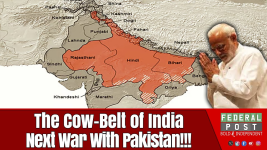
The fight is against cow thugs.
Users who are viewing this thread
Total: 56 (members: 0, guests: 56)
Pakistan Defence Latest


Country Watch Latest
-

-
-
-

-
 India Has Lost Air Superiority to Pakistan, No Jets Left to Fight (5 Viewers)
- Latest: NGAD IS THE BEST
Latest Posts
-
-
 Pakistan vows to defend Saudi Arabia against Iran-backed Houthis by ‘whatever means’ (11 Viewers)
- Latest: Feroze
-

-
-
 US suspends Microsoft, major IT firms from key green card programme (18 Viewers)
- Latest: Sainthood 2.0