Pakistan-India Conflict 2025: News Updates and Discussion

Pakistan relies on its airforce as its primary offensive force in any war and s400 is very scary if deployed correctly. It must be taken very seriously. However I don’t get this fearmongering over silly indian plans like rafale or s400 procurement attempts when reality is these systems could easily take upto a decade to arrive.
In fact, missiles like the S400 look very intimidating, but its real name should be S300 PMU 3
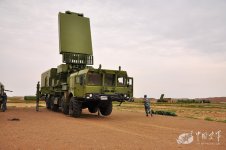
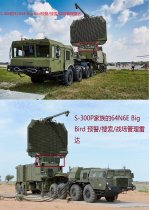
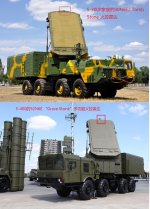
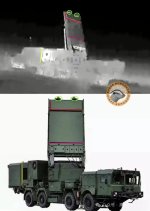
Just by comparing their radars, it is clear that the S400 radar is basically identical to the S300PMU2
IMG_1911.jpg
IMG_1928.jpg
IIMG_1929.jpg
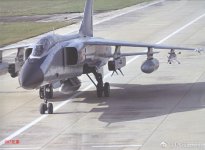
These radars are basically space-fed PESA radars,This kind of radar.Is this radar Power loss is very large,The noise in the receiving system is also large.In short, their ability to resist interference is very poor.Reports from the 2010s indicate that the JH-7A aircraft can reduce the attack efficiency of the S300PMU2 by 60% to 70% using two jamming pods.
IMG_1973.jpg
 
I hope you weild all this power with great responsibility


funny you should have lectured your RSS hindu state first....


but on with India's military capabilities

To view this content we will need your consent to set third party cookies.
For more detailed information, see our cookies page.
 
In fact, missiles like the S400 look very intimidating, but its real name should be S300 PMU 3
Just by comparing their radars, it is clear that the S400 radar is basically identical to the S300PMU2
View attachment 193112
View attachment 193113
IView attachment 193115
These radars are basically space-fed PESA radars,This kind of radar.Is this radar Power loss is very large,The noise in the receiving system is also large.In short, their ability to resist interference is very poor.Reports from the 2010s indicate that the JH-7A aircraft can reduce the attack efficiency of the S300PMU2 by 60% to 70% using two jamming pods.
View attachment 193116
That is not accurate.
Saying the S‑400 is “basically an S‑300PMU” ignores generational upgrades. The S‑400 can engage many more targets simultaneously 80 vs 36, and uses a much broader mix of missiles which give it a far larger and more flexible engagement envelope than the late‑S‑300PMU variants. It also integrates more advanced multi‑band radars and fire‑control nodes, with better anti‑stealth and limited ABM capability than the S‑300PMU series.

The S‑400 is designed so that jamming one node does not collapse the whole system; it can fall back on other radars, external data links, or passive modes, which limits how much a single platform like a JH‑7 can suppress it in practice.
 
That is not accurate.
Saying the S‑400 is “basically an S‑300PMU” ignores generational upgrades. The S‑400 can engage many more targets simultaneously 80 vs 36, and uses a much broader mix of missiles which give it a far larger and more flexible engagement envelope than the late‑S‑300PMU variants. It also integrates more advanced multi‑band radars and fire‑control nodes, with better anti‑stealth and limited ABM capability than the S‑300PMU series.

The S‑400 is designed so that jamming one node does not collapse the whole system; it can fall back on other radars, external data links, or passive modes, which limits how much a single platform like a JH‑7 can suppress it in practice.
That is not accurate.
Saying the S‑400 is “basically an S‑300PMU” ignores generational upgrades. The S‑400 can engage many more targets simultaneously 80 vs 36, and uses a much broader mix of missiles which give it a far larger and more flexible engagement envelope than the late‑S‑300PMU variants. It also integrates more advanced multi‑band radars and fire‑control nodes, with better anti‑stealth and limited ABM capability than the S‑300PMU series.

The S‑400 is designed so that jamming one node does not collapse the whole system; it can fall back on other radars, external data links, or passive modes, which limits how much a single platform like a JH‑7 can suppress it in practice.
Indeed, the design of the S400 allows for the integration of multiple radars operating on different bands within the system. However, among these radars, the core one capable of observing ballistic missiles is the 91N6. The 92N6 radar is the only one capable of providing fire control for the 48N6 and 40N6 missiles. As I mentioned, both of these radars are PESA radars with space-fed antennas.
Space-fed antennas are usuallyThe side lobe level (SLL) is usually high. High side lobes mean that it is easier to receive interference signals from the side.
This is an inherent issue with this radar structure. Other countries, such as the United States with its MPQ-53/63 radars, use Forced feeding PESA, while China's HQ-9B uses AESA. Russia, until recently, only began equipping its S-500 with the 98L6 radar, an AESA.
IMG_1976.jpg
 
Rafale liya tu 3-4 Pakistan ne shoot ker diya, F-15 mai fly kia tu Kuwait ne friendly fire mai 3 gira diya... Manhoosiyat PRO MAXX

For years and decades F15 was flying fine

Then this guy was about to fly F15 and 3 F15 got shot down due to friendly fire and 1 due to hostile fire

Coincidence?
 

Users who are viewing this thread

Back
Top