Pakistan-India Conflict 2025: News Updates and Discussion

This btw is PURELY the narrative from PDF - posts from April 28th to 10th May.

I think I should pin this narrative too:

Narrative of the 2025 India–Pakistan Conflict​

Opening Moves​

In early May 2025, the long-festering confrontation between India and Pakistan erupted into open, sustained military action centered on air and missile exchanges, cross-border shelling, and strikes on critical infrastructure. The conflict’s timeline is reconstructed here from contemporaneous discussion records and embedded reports that tracked events almost hour by hour, treating those records as the primary lens through which the war is seen.

The trigger lay in a deadly attack in Indian-administered Kashmir that killed dozens of civilians and was immediately blamed on Pakistan by Indian authorities. Within days, Indian leaders signaled their intent to respond with force, and Indian commentators spoke openly about striking “terror camps” and punishing Pakistan beyond the disputed Line of Control. Against this backdrop of accusation and threat, both militaries raised alert levels and moved air and ground assets toward forward positions.

Night of Strikes: 6–7 May 2025​

In the small hours of 7 May 2025, Indian air and missile forces initiated coordinated strikes against multiple locations in Pakistan, including areas in Punjab and Azad Jammu and Kashmir (AJK). Accounts from the period describe explosions and impacts in or near Bahawalpur, Muridke, Sialkot, Shakargarh, and around Muzaffarabad, as well as reports of munitions landing close to civilian neighborhoods. These attacks were framed by India as precision actions against militant infrastructure, but eyewitness descriptions emphasize that mosques, madrasas, and residential areas were among the structures hit.

Simultaneously, heavy shelling fell on Poonch and nearby towns in Indian-administered Kashmir, with munitions landing at a rate of roughly one per minute over about an hour, striking buildings and causing casualties. From the Pakistani perspective, this indicated that India was opening a multi-sector front: hitting Pakistani territory across the international border while intensifying fire along the Line of Control to complicate any immediate response.

By dawn, preliminary death tolls circulating in Pakistan spoke of around 26 civilians killed, including children and women, with dozens more wounded in the strikes on Pakistani soil. The emotional reaction among Pakistanis was intense; many framed the attacks not as limited counter-terror operations but as acts of terror themselves, directed against worshippers and non-combatants.

Targeting the Neelum–Jhelum Hydropower Project​

One of the most consequential actions that night was the attack on the Neelum–Jhelum Hydropower Project (NJHP), a major hydroelectric dam complex on the Neelum River in AJK. Shells and missiles struck elements of the facility’s intake and de-sander structures, damaging a hydraulic power unit and reinforced concrete sections, and hitting a residential camp and medical facility associated with the project. Officials later emphasized that while core automated systems remained intact, the damage had been close enough that failure could have triggered uncontrolled releases of water downstream.

This episode was widely described within Pakistan as an unprecedented escalation, since water infrastructure of this scale had historically been treated as off-limits even in full-scale wars. The attack was interpreted as a deliberate attempt to establish a new “normal” in which dams and energy facilities could be targeted under the justification of attacking alleged militant positions, and many voices argued that Pakistan would now be justified in developing options to hit Indian dams in return if forced.

Pakistani Air Defence and the “First Night” Air Battle​

As Indian munitions and aircraft moved toward Pakistani territory on 7 May, Pakistani air defence and fighter units went into action. Records from the period consistently describe the Pakistani Air Force (PAF) deploying its Chinese-origin J‑10C fighters, locally-built JF‑17 Block 3s, and ground-based systems such as HQ‑9 long-range surface-to-air missiles to protect key areas. The resulting engagements would become central to how Pakistanis understood the conflict.

Early in the night, one Indian fighter was reportedly engaged and destroyed by the HQ‑9, establishing that ground-based long-range systems were active and effective. As the battle unfolded, however, attention shifted to beyond-visual-range air-to-air combat. PAF J‑10Cs, guided by airborne early warning and control (AEWC) platforms, were said to have launched PL‑15E missiles at Indian aircraft from standoff distances, using tactics that kept their own radars off and relied on AEWC guidance until the missiles approached the targets.

Analyses circulating after the battle explained that Indian pilots, accustomed to older engagement dynamics, likely believed they had roughly two minutes to react when they sensed radar locks, whereas PL‑15E’s terminal speed reduced that window to seconds. By the time the missile’s own active seeker came online and the warning cues appeared, escape or ejection was improbable. Based on these accounts, Pakistanis concluded that several Indian pilots probably had no realistic chance to survive once engagements began.

Claimed Losses: Indian Fighters and Drones​

By the morning after the first major exchange, a consistent narrative had formed within Pakistan about Indian losses. PAF sources and defence commentators spoke of five Indian combat aircraft destroyed: three Rafale multirole fighters, one Su‑30 series aircraft, and one MiG‑29, along with at least one combat drone. The reported crash sites included areas near Bathinda in Indian Punjab, locations around Jammu and Akhnoor in Jammu and Kashmir, and zones near Awantipora in the Kashmir valley.

Visual material—still images and videos—showed wreckage that observers associated with Rafale engine sections, missile launch rails, and airframe fragments lying in fields and near built-up areas. Pakistani commentators highlighted markings and physical features that matched known Rafale components, treating this as corroboration that at least one of the downed aircraft was indeed a Rafale. Further, discussions referenced foreign defence analyses acknowledging a Rafale loss in combat for the first time, reinforcing the sense that the event had international resonance beyond the immediate battlefield

At the same time, Indian outlets and spokespeople insisted publicly that their forces had destroyed Pakistani aircraft and denied any significant own losses, framing images of wreckage as debris from Pakistani jets or misfired Pakistani munitions. Within Pakistan, this was seen as a familiar information tactic: deny own casualties, claim enemy losses, and rely on domestic censorship to control public perception.

Electronic Warfare and the Battle for the Spectrum​

Beyond the visible exchanges of missiles and aircraft, the records emphasize a complex electronic warfare (EW) layer that shaped the air battle. Pakistani analyses describe a coordinated EW effort in which AEWC platforms such as ZDK‑03 Karakoram Eagle and Saab Erieye aircraft worked together to detect Indian fighters and AWACS, track their emissions, and disrupt their communications and radar networks.

A widely discussed technical narrative explains that Indian AWACS and fighter links were subjected to passive monitoring and active interference, effectively isolating Indian fighters from their command centers at critical moments. Once AWACS tracks were compromised, PAF fighters could engage Indian aircraft from standoff ranges without immediately revealing their own positions, allowing PL‑15E missiles to be guided toward targets using off-board data.

Pakistani commentators framed this as proof that in modern air combat, control of the electromagnetic spectrum can be as decisive as traditional measures of platform quality. The phrase “whoever controls the electromagnetic spectrum controls the sky” appears repeatedly, reflecting the belief that Pakistan’s integration of Chinese EW systems and doctrine provided a crucial edge in this engagement.

Second Night Activity: Drones, Missiles, and Gujranwala​

In the nights following the initial strikes, tension remained high as both sides maneuvered and probed each other’s defences. Pakistani observers reported unusual flight patterns in national airspace, including commercial flights to Lahore and Islamabad being diverted or delayed, and notices to airmen (NOTAMs) temporarily closing airspace corridors. These movements were interpreted as signs that further missile or drone activity was expected.

Shortly thereafter, accounts describe Pakistani air defence units intercepting incoming threats over Gujranwala and other areas, with video showing missiles launching and streaks of light crossing the sky. These were widely characterized as interceptions of Indian kamikaze drones or stand-off munitions, aimed at testing Pakistan’s defensive responses or inflicting additional damage on infrastructure and possibly air defence sites.

Pakistanis also noted reports of Israeli-origin drones, such as Harop loitering munitions, being employed by India, reinforcing a perception that India was drawing directly on Israeli tactics and hardware used in other theatres. This connection, combined with existing anger over events in Gaza, intensified regional criticism of India’s choices and strengthened calls within Pakistan to develop deeper EW and counter-drone capabilities.

Pakistani Counter-Fire and Strikes into Indian-Administered Kashmir​

While much of Pakistan’s early action was defensive—shooting down aircraft and intercepting drones—the records also document Pakistani counter-fire and stand-off attacks into Indian-administered Kashmir and nearby areas. Shelling in and around Poonch, Rajouri, and other locations is described as “heavy,” with munitions landing in close succession and striking bunkers, posts, and supply routes.

Specific narratives reference strikes on brigade headquarters and training centers believed to be associated with militant or paramilitary units aligned with Indian interests. These actions were framed by Pakistani commentators as targeting combatants and enemy infrastructure, not civilian populations, and as part of a broader effort to raise the cost of Indian operations in the region while avoiding a wider war.

At the same time, some observers expressed concern that shelling and stand-off attacks in densely populated areas inevitably risked civilian harm, and stressed the need for careful target selection to maintain moral and legal credibility, especially given Pakistan’s criticism of India’s strikes on mosques and dams.

Domestic Atmosphere in Pakistan​

Throughout the conflict, the records reveal a deeply charged domestic atmosphere in Pakistan. Many voices demanded immediate and disproportionate retaliation for the deaths of civilians and the attack on NJHP, calling for missile salvos against Indian dams, major cities, and bases. They argued that failure to respond in kind would embolden India and transform cross-border strikes on Pakistani cities into a “new normal.”

Others urged caution, pointing to Pakistan’s economic vulnerabilities and the risks of full-scale war against a much larger neighbor with strong external ties. These commentators argued that Pakistan had already achieved a significant effect by downing advanced fighters, exposing weaknesses in Indian air power, and demonstrating credible defence against drones and missiles, and that it should now consolidate its strengths and avoid actions that might invite overwhelming retaliation.

Political fault lines also surfaced in debate over the civilian leadership’s messaging and posture. Some criticized ministers and media figures for suggesting that the downing of Indian jets constituted sufficient response, interpreting such statements as attempts to prepare the public for de-escalation. Others insisted that operational decisions lay with the military and that strategic choices, including timing and scale of further strikes, should be trusted to professionals rather than shaped by public pressure alone.

International Context and Strategic Reverberations​

The conflict unfolded against a broader international context in which major powers were engaged elsewhere and regional alliances were shifting. While detailed descriptions of foreign diplomatic interventions and media coverage appear in the records, this narrative focuses on how those external dynamics were perceived inside Pakistan rather than listing individual statements.

Pakistani commentators repeatedly noted that India’s reliance on Western and Israeli weapons did not guarantee success, and that Chinese-origin platforms and missiles, when integrated with Pakistani doctrine and EW, had performed strongly. They argued that this would influence future arms procurement across Asia and beyond, with potential boosts to Chinese defence exports and more scrutiny of Western systems that had been treated as prestige assets.

At the same time, analysts within Pakistan pointed out that the United States and other powers were unlikely to welcome a scenario in which India’s conventional and nuclear deterrence appeared compromised by Pakistani and Chinese capabilities. They suggested that one reason for rapid external pressure toward a ceasefire was a desire to prevent a prolonged conflict that would expose structural weaknesses in Indian command and control and raise questions about regional stability

Strategic Lessons as Seen from Pakistan​

By the time immediate hostilities tapered and public attention turned from nightly alerts to longer-term implications, several strategic lessons had crystallized in Pakistani discussion. First, the attack on NJHP and other infrastructure confirmed that water and energy assets had become explicit targets in India–Pakistan competition, requiring Pakistan to treat their defence as central to national security rather than peripheral.

Second, the air battles demonstrated that smaller states can contest larger adversaries if they invest in integrated kill chains—combining AEWC, EW, modern fighters, and long-range missiles—rather than relying solely on platform prestige or numerical parity. The way J‑10Cs and PL‑15Es were used, together with HQ‑9 and other systems, became a point of pride and a case study in asymmetric air warfare.

Third, the records underscore the importance of narrative and information management. Pakistan’s ability to move quickly with its own claims about downed jets, to share some imagery of wreckage, and to highlight Indian targeting of mosques and dams gave it more traction in the information sphere than in some past crises. Many argued that future conflicts would require even more disciplined and proactive communication, including the timely release of satellite imagery and forensic data to counter enemy messaging.

Finally, the conflict reinforced the sense that India and Pakistan are locked in a long-term competition that cannot be reduced to single episodes. For Pakistanis, the events of May 2025 showed both the dangers of escalation—civilian deaths, infrastructure at risk—and the potential value of preparedness: modern air defences, credible strike options held in reserve, and alliances that provide depth in EW and intelligence.

Closing Perspective​

Taken together, these forum-sourced records recount a war that began with Indian strikes on Pakistani cities and a dam, met with Pakistani air defence that downed multiple Indian fighters and intercepted drones and missiles, and unfolded under the shadow of electronic warfare and nuclear-armed rivalry. The story they tell is not of a decisive victory or defeat, but of a dangerous episode in a continuing struggle, in which technology, doctrine, perception, and politics all interacted to shape outcomes in the skies over South Asia.
 
A more military centric write up but still all using FORUM members input and data from the timeframe:

The 2025 India–Pakistan conflict was, from an air‑power perspective, a textbook demonstration of how a smaller but more integrated force can dismantle a numerically superior adversary through BVR doctrine, multi‑domain coordination, and selective escalation.

Strategic trigger and Indian concept of operations​

The immediate trigger for the campaign was the Pahalgam attack in India‑administered Kashmir on 22 April, in which armed militants killed mostly Hindu civilians during a holiday period. New Delhi framed this as an assault on “the soul of India” and chose to respond with a named air campaign, Operation Sindoor, deliberately linked to Hindu symbolism around marriage and widowhood to build domestic support and cast the operation as the restoration of violated honour.

Operationally, Sindoor combined long‑range precision strikes with an attempt to demonstrate air dominance along the frontier. India assembled strike packages built around Rafale, Su‑30MKI and Mirage 2000 aircraft, backed by ground‑launched BrahMos and other cruise missiles, and targeted multiple locations inside Pakistan proper and Pakistan‑administered Kashmir on the night of 6–7 May. These included urban areas, mosques, and the Neelum–Jhelum hydropower project, crossing from a counter‑terrorism narrative into overt coercive punishment of civilian infrastructure.

From New Delhi’s perspective, Sindoor was intended to do three things simultaneously: punish Pakistan for alleged sponsorship of terrorism, test the credibility of Pakistan’s nuclear threshold by striking deep, and showcase the Rafale/Meteor/S‑400 combination as a deterrent to future Pakistani air activity.

Pakistani pre‑war posture and concept​

Pakistan’s leadership treated the initial Indian strikes as acts of war and framed its response under the language of self‑defence in Article 51 of the UN Charter. Politically, there was intense debate about timing and magnitude of retaliation, with external actors—including Saudi Arabia—pressing for restraint, while domestic sentiment demanded a visible response that went beyond purely defensive actions.

Militarily, Pakistan had spent the preceding years building what its commanders describe as “full spectrum air operations”: a network‑centric force centred on J‑10C Vigorous Dragon and JF‑17 Block 3 fighters armed with PL‑15 BVR missiles, supported by Erieye/ZDK‑03 AEW&C, HQ‑9/HQ‑9B long‑range SAMs, CM‑400AKG anti‑ship/anti‑SAM missiles, and a growing inventory of loitering munitions and indigenous “killer drones”. This architecture is tied together by Link‑17 datalinks and a National ISR and Integrated Air Ops Centre (NIIAOC) that fuses radar, EW, satellite, and HUMINT feeds into a Recognised Air Picture for distributed shooters.

The guiding concept was to fight a defensive‐offensive air war: deny India meaningful airspace intrusion, then attrite strike packages at range using BVR fires and multi‑domain disruption, while holding the option of precision retaliation against high‑value military targets and symbolic infrastructure.

The May 7 BVR air battle​

The decisive episode of the campaign was the night/early morning of 7 May, when Indian and Pakistani air forces contested a huge beyond‑visual‑range (BVR) engagement along the international border and Line of Control. Indian formations—built around Rafale, Su‑30MKI and MiG‑29—entered their own side of the border in multi‑ship strike and escort packages, expecting to fight from a position of advantage using Meteor‑equipped Rafales and an S‑400 umbrella.

Opposing them were Pakistani J‑10C and JF‑17 Block 3 fighters under Operation Bunyan‑un‑Marsoos, controlled by AEW&C and NIIAOC and armed primarily with PL‑15. Pakistan deliberately kept its fighters on its own side of the border, using AEW‑directed targeting and long‑reach missiles to fight what amounted to a giant “counter‑air ambush” against Indian packages as they approached weapons release lines.

In that battle, Pakistani aircrews exploited three main advantages:

  • Sensor geometry and datalinks. The J‑10C’s AESA radar, combined with AEW inputs over Link‑17, allowed Pakistani fighters to hold Indian formations at ranges beyond what Rafale’s RBE2‑AA and older Indian AEW&C architectures could cleanly manage, especially once Pakistani EW began to degrade Indian communications and navigation.
  • Missile kinematics. PL‑15’s effective engagement envelope, as described in Pakistani sources, exceeded Meteor’s by enough margin that Pakistani shots could be taken earlier along the inbound trajectory, pushing Indian fighters into a compressed timeline between “missile warning” and “no‑escape” zones.
  • Integrated EW and cyber. Pakistan deployed mobile EW units and cyber operations to jam Indian Link‑16‑style datalinks, radar frequencies, and GPS‑dependent navigation, turning parts of the Indian kill chain into single‑sensor, single‑ship problems rather than a coherent networked attack.
The outcome, as reconstructed from multiple fragments of the record, was the downing of at least five Indian fighters—three Rafales, one Su‑30MKI and one MiG‑29—over Indian territory without Pakistani fighters crossing the border. In several documented instances, PL‑15 impacts caused mid‑air break‑ups of targeted aircraft, with debris fields visible on the ground and Indian local responders recording wreckage marked with French and Russian component codes.

Indian pilots, trained to rely on SPECTRA and Meteor as near‑guarantees of survivability in BVR combat, found themselves “sitting ducks” once PL‑15s had been cued from outside their own radar picture and EW had degraded their situational awareness. At least one Rafale package appears to have been targeted purely from AEW/NIIAOC data, with the shooter aircraft maintaining emission control until terminal guidance, illustrating Pakistan’s progression toward third‑party targeting doctrine.

Collapse of the S‑400 deterrent and SEAD operations​

Parallel to the air‑to‑air fight, Pakistan moved to neutralise India’s most advanced long‑range SAM system, the S‑400, which New Delhi had positioned as its principal shield against Pakistani strikes. Pakistani sources describe a JF‑17 “Block 2” flying a SEAD profile armed with CM‑400AKG hypersonic anti‑ship/anti‑SAM missiles, targeting S‑400 fire control and target acquisition radars in India’s western sector.

The attack exploited several factors:

  • Range and profile. CM‑400AKG, launched from high altitude, approached its target at hypersonic speed along a depressed trajectory, stressing S‑400 engagement timelines and complicating missile selection for intercept.
  • Radiation‑seeking guidance. The missile’s terminal seeker homed on active radar emissions, forcing S‑400 crews into a dilemma: radiate to defend against Pakistani air threats and become a target, or shut down and accept a gap in air defence coverage.
  • EW deception. Pakistani EW assets and possible Chinese advisory support appear to have contributed to mis‑cueing Indian air defence, drawing S‑400 attention toward decoy emissions while the real attack approached from a different vector.
The reported result was the destruction or disabling of at least one S‑400 fire‑control radar and a corresponding target acquisition radar, significantly degrading two batteries and creating holes in India’s high‑altitude air defence architecture for weeks or months given known delays in replacement deliveries. Pakistan’s internal commentary treats the S‑400 kill as operationally more significant than individual Rafale kills, because it removed India’s principal psychological and practical deterrent against deep Pakistani air and missile operations.

India’s response to Pakistani SEAD was to fire large numbers of interceptor missiles—9M96E, 40N6E, Barak‑8 and older S‑125s—against real and perceived threats, leaving “fields of air‑defence wreckage” that Pakistani observers later catalogued from open sources. This not only consumed expensive stocks but exposed engagement doctrine and radar signatures to Pakistani and Chinese analysis.

Drone and cruise‑missile warfare​

Following the May 7 air battle, the conflict evolved into a duel of long‑range stand‑off weapons and drones. India attempted to maintain pressure on Pakistan through waves of loitering munitions and kamikaze UAVs—many of Israeli origin, such as Harop—as well as indigenous platforms, launched against Lahore, Karachi, Gujranwala, Gujrat, Chakwal, and other targets.

Pakistan responded with a layered air‑defence approach:

  • Kinetic intercepts. Army air‑defence units used missiles and guns against some drones, accepting the cost of expending expensive interceptors on cheap targets when necessary.
  • Electronic warfare. Where possible, Pakistani operators jammed control links and GPS signals, forcing drones into uncontrolled descent. Several videos show UAVs tumbling into Pakistani urban areas without detonating, consistent with EW‑induced loss of command.
  • Selective tolerance for reconnaissance. Pakistani analysts noted that some drone sorties were essentially probing flights to map the locations and behaviour of Pakistani SAMs and radars. In certain cases, they advocated not “lighting up the sky” unnecessarily, to avoid revealing full air‑defence dispositions while still protecting key points.
Despite neutralising the majority of incoming drones—official briefings cited a dozen UAVs downed in one night—Pakistan suffered limited but politically salient damage, including injuries to soldiers and at least one civilian killed when a drone impacted near Karachi. Indian salvos also targeted Pakistani airbases such as Bholari and Shahbaz with BrahMos‑class missiles, seeking to impose attrition on runways and infrastructure rather than direct air losses.

Pakistan, for its part, fielded its own long‑range drones and loitering munitions, including Turkish‑linked YIHA‑III platforms and indigenous killer drones built with NASTP participation, used to overfly Indian bases at Adampur, Agra, Bhatinda and other sites, often carrying 20 kg explosive payloads. These systems exploited gaps in India’s low‑altitude radar coverage and provided targeting and psychological pressure without the political cost of manned intrusions.

By 10 May, Pakistani sources describe hitting 34 targets on different Indian bases in a single night, mostly with drones, while Indian air defences struggled to distinguish genuine threats from decoys. This sustained unmanned pressure tested India’s ability to maintain airbase operations under constant harassment, highlighting the vulnerability of static infrastructure even when aircraft losses had temporarily stabilised.

Cyber, information and space‑enabled operations​

A distinctive feature of this conflict was the integration of cyber and information warfare as core elements of the air campaign rather than adjuncts. Pakistan’s “Cyber Ops” wing moved from a defensive posture—countering Indian narratives—to offensive operations, attacking Indian social networks, critical nodes and GPS‑dependent services. These activities reportedly caused disruptions to CCTV networks, electricity grids and websites in some regions, amplifying the psychological effect of physical strikes.

Space and satellite connectivity played enabling roles. Pakistan’s Space Command, using indigenous satellites and GNSS, provided real‑time data to aircraft and ground units, bypassing line‑of‑sight constraints and enabling beyond‑border ISR coverage. This connectivity was also leveraged for electronic attack, as mobile EW units positioned along the eastern front jammed Rafale Spectra emissions and Indian satellite communication links feeding target data.

Information operations on both sides were intense. India initially pushed narratives of “hundreds of terrorists killed” and “no aircraft lost,” while circulating mis‑identified drone wreckage as supposed Pakistani Mirage debris. Pakistan countered with detailed imagery of Indian wreckage, social‑media campaigns highlighting Rafale and S‑400 failures, and amplification of foreign commentary questioning India’s competence as a major military power. The net effect was erosion of India’s credibility in external eyes and rising doubt within its own population, especially as blackout drills and civil‑defence exercises exposed the war’s domestic costs.

Escalation management and ground dimension​

Throughout the campaign, both sides walked a tightrope between demonstrating resolve and avoiding a slide into general war. India’s decision to strike civilian targets and hydropower infrastructure risked crossing Pakistani red lines, but Pakistan calibrated its response to remain focused on air and air‑defence targets, avoiding large‑scale ground incursions even as some Pakistani voices argued for attacks on dams, RSS headquarters and other symbolic sites.

Pakistan’s National Security Committee explicitly authorised “corresponding actions” at a time and place of its choosing, signalling that retaliation would be deliberate rather than immediate, and sought to keep external stakeholders informed to manage diplomatic fallout. At the same time, Pakistani discourse recognised that once India had normalised missile and drone strikes on Pakistani territory after any major incident, future crises would start from a higher baseline of violence, complicating deterrence.

Ground combat remained limited, but there were reports of significant attrition against Indian infantry units in contested areas like Poonch, largely through artillery and limited cross‑border action rather than major manoeuvre warfare. The absence of large ground offensives reflects both nuclear shadow and the focus of this particular confrontation on airpower as the primary instrument.

Operational and doctrinal lessons​

From a military‑academic perspective, several lessons emerge from the 2025 air war:

BVR dominance is a system, not a platform​

The decisive factor was not any single aircraft type but the coherence of Pakistan’s BVR system: AEW‑driven targeting, encrypted datalinks, PL‑15 kinematics, and EW/cyber integration, all controlled from a central ISR and Ops centre. Rafale and Meteor, in Indian service, were reduced to expensive single nodes in a poorly integrated network, undermining their advertised superiority.

Static high‑end SAMs are vulnerable without doctrinal depth​

The S‑400’s failure to deter and then its partial destruction by CM‑400AKG demonstrated that even very advanced SAMs are susceptible when tied to visible, high‑value radar nodes, operated under rigid doctrine, and confronted by hypersonic, radiation‑seeking threats. Survivability demands mobility, redundancy, emission control discipline and integration with EW and decoys—elements that were either lacking or mis‑employed.

Unmanned saturation and probing redefine airbase defence​

Indian and Pakistani experiences with drone salvos show that defending airbases now requires continuous, layered coverage against cheap, numerous unmanned threats that double as reconnaissance of air‑defence dispositions. Firing high‑end interceptors at every UAV is unsustainable; more cost‑effective C‑UAS measures and smarter engagement policies are essential.

Multi‑domain integration magnifies the value of mid‑tier platforms​

JF‑17 Block 3, HQ‑9, and indigenous drones are not individually “silver bullets,” but when integrated with Chinese‑origin sensors, EW and satellites, they collectively enabled Pakistan to punch far above its economic weight. For mid‑income states, the lesson is that investing in integration and doctrine can offset hardware asymmetry against larger rivals.

Information and perception are operational objectives​

India sought to use Operation Sindoor to project strength and national honour; Pakistan converted Indian miscalculations into strategic messaging wins that influenced foreign analysts and domestic opinion in both countries. In future conflicts, managing how kills, losses and strikes are narrated will remain a core part of operational art, not just public affairs.

Taken together, the 2025 India–Pakistan air war will likely be studied as one of the first large‑scale BVR‑centric, multi‑domain regional conflicts where Western‑origin platforms were systematically out‑performed by a Chinese‑armed, network‑centric force—and as a case where escalation was kept below full‑scale war despite heavy use of airpower, cyber operations and stand‑off weapons on both sides.
 
PAF does not have a significant air-to-ground standoff strike capability: no mature ABMS, no 250 km-range guided bombs, and only recently the Taimoor cruise missile for a conventional strike role. Hence, the military has developed its own ARFC and satellite constellation, reducing its dependence on the PAF for long-range strike and targeting capabilities.

I’m not sure what the PAF is actually doing to build out its air-to-ground capability, but compared with the other services and especially the IAF, this appears to be its weakest area. Its standoff-strike arsenal is still relatively limited, and the broader ISR, battle-management and networked strike architecture needed to fully exploit these weapons appears less mature.

Still, hindsight is 20/20. Those handful of CM400s seemed to be more impactful than Fatah.

Unless we could not spare a few dozen of them for what was in reality, a PR-first war.
 
Differrent angle - looking at it event by event as everyone here put in their word - maybe @Panzerkiel @side-winder and others can sprinkle a bit more on the individual events recorded.. just a teeny bit more.:

Under a spring sky that had not yet learned to fear contrails, the war of 2025 between India and Pakistan began quietly—first as intelligence warnings, then as background noise of jets and diverted airliners, and finally as the hard impact of steel and explosive on mosques, markets, and airbases.
What follows is the conflict as a continuous operations log: scene by scene, engagement by engagement, drawn from contemporaneous accounts and official statements, and narrated as if you were watching each phase unfold.


Before the shooting: rivers, rhetoric, and rehearsals​

In the weeks leading up to May 2025, the calm along the border was already brittle.
India’s leadership had increasingly framed the Indus Waters Treaty—long a stabilizing mechanism in South Asia—as an obstacle to its strategic freedom, tying the suspension of water-sharing commitments to security rhetoric after the Pahalgam massacre of tourists in Indian‑administered Kashmir.
On Pakistani television and in print, analysts relayed reports that India was preparing to test “new norms” under which militant incidents in Kashmir could trigger deep conventional strikes into Pakistan proper, including the possibility of dam attacks.

Inside Pakistan, the political leadership was fragmented and unpopular, preoccupied with internal crises and accused by many of indecision in the face of gathering danger.
Yet the military assessments were stark: intelligence indicated that India’s eastern commands were conducting large-scale air exercises near Cholistan and other sectors, rehearsing strike packages along the border under what Pakistani officers described as “training NOTAMs” that could mask real operations.
International airlines quietly began avoiding Pakistani airspace days before the eventual strike, following Western and American advisories about a likely contested sky; for those watching closely, this was an early sign that something sharper than routine tension was coming.

Religious and nationalist language hardened on both sides.
In India, Hindutva rhetoric portrayed Pakistan as an enemy to be punished, invoking imagery of temple and civilization under siege; in Pakistan, calls were made to “burn the whole of India” and to hit symbolic sites in Gujarat and Delhi if war came.
This climate meant that when the first missiles flew, they would not be understood as discrete retaliatory acts, but as opening shots in a struggle loaded with history and ideology.


Night of May 6–7: Operation Sindoor begins​

21:45–23:30 – The sky changes​

On the evening of May 6, civil aviation radar plots over Pakistan began to look wrong
Passengers and observers noticed that flights inbound to Lahore, Islamabad, and Karachi were diverting or entering holding patterns far from their usual approaches, with some aircraft loitering off the coast near Karachi and others rerouted over Iran.
By late night, Pakistani authorities had started closing portions of national airspace, a measure later confirmed on television with the statement that “Pakistani airspace [is] closed for 48 hours,” effectively clearing the sky for military operations.

On the ground, people heard the difference.
In Sialkot, Kotli, and other towns along the Line of Control, residents reported the sound of air defence guns being brought to readiness and the sight of search radars rotating—signatures of systems that until then had mostly been drills.
Farooq, a witness in Rawalpindi, described seeing air defence activity over the city, noting that he had “seen it himself”, with interceptors rising into the night and flashes in the sky.

Pakistani analysts watching open sources saw something else: Indian air traffic control ordering diversions and holds, and three separate flights near Karachi, Lahore, and Islamabad suddenly changing course.
One observer commented that “ATC coordinates with AD” and that the pattern suggested coordination between civilian controllers and air defence planning—a prelude to something more than exercise.

23:30–01:00 – Indian missiles cross the border​

Around midnight, India executed the opening salvo of what it called Operation Sindoor.
Official Indian statements would later say that nine sites were targeted, all “terrorist infrastructure” in Pakistan and Pakistan‑administered Kashmir, and that the strikes were “measured and non‑escalatory” and carefully designed to avoid Pakistani military facilities.
On the ground in Pakistan, that description did not match reality.

From launch points in Indian Punjab and Jammu, at least three missiles were fired westward: standoff weapons with trajectories described by witnesses as more vertical than typical cruise missiles, suggesting ballistic or quasi‑ballistic profiles.
One missile struck near Bahawalpur, close to a vegetable market, bus station, and a madrassa for orphaned children; the blast tore through surrounding structures, collapsing masonry and shattering windows over a wide area.
Another impact was recorded near Muridke, where reports spoke of damage to religious facilities and densely packed civilian housing.

Television images from Bahawalpur showed smouldering rubble and emergency crews moving injured civilians, including children, out of wrecked buildings, while local voices described “Bhartis launch missile strike close to BWP sabzi mandi… They bomb madrassa for orphan kids.”
By dawn, at least one child was confirmed killed in Bahawalpur, and casualties in Kotli and other struck areas were counted in the dozens; Pakistan’s military spokesperson emphasized on state TV that “mosques and civilians [were] targeted” and called the attacks acts of war.

In Khuiratta and Kotli sectors of Azad Kashmir, villagers reported “lots and lots of Indian missiles hitting right now,” describing intense fire on border villages and the working boundary, with shells and rockets landing among homes and fields.
One account spoke simply: “Border villages in our area along the Working Boundary are under attack, with Indian strikes at no less than 3 separate villages,” capturing the sense that the opening night’s violence was spread across a wide frontage rather than focused on isolated camps.

India’s own first statement insisted that “no Pakistani military facilities have been targeted” and that the operation was a calibrated response to terrorism.
But these missiles had fallen on mosques, madrassas, and civilian neighbourhoods, and had killed children—a reality that would frame Pakistan’s subsequent choices.


Pakistan’s immediate posture: closure and calm resolve​

Within minutes of the first impacts, Pakistan’s Inter‑Services Public Relations director appeared on national television.
He confirmed that three locations had been hit by Indian missiles, including Bahawalpur and Kotli, acknowledged civilian deaths, and stated that Pakistan would respond “at a time and place of its choosing.”
Crucially, he noted that Indian aircraft had not yet entered Pakistani airspace, implying that any air‑to‑air engagements at this stage were limited to Pakistani interceptors operating along the frontier

Pakistani airspace closures were formalized.
One line in the records notes: “Pakistani airspace closed for 48 hours,” a drastic measure intended both to reduce risk to civilian traffic and to grant Pakistan’s air defenders freedom to treat unidentified tracks as potentially hostile
In parallel, air defence units moved to full readiness around major cities: Islamabad, Lahore, Karachi, Peshawar, Sargodha, and others reported radar and missile batteries active, scanning for follow‑on attacks.

Emotions rose quickly among the population, but the official tone remained measured.
Accounts recorded calls to “calmly respond with a barrage of missiles” and demands that “Indian cities MUST be burning by morning,” but the military line stressed assessment before retaliation: damage had to be catalogued, enemy intentions understood, and engagement plans aligned with political strategy
Behind that restraint, though, Pakistan’s pilots and air defence crews were already airborne and on station, waiting for the next phase.c


The air battle over Kashmir: PL‑15 and falling jets​

01:30–03:00 – Indian strike packages and Pakistani interceptors​

With the initial missile strikes complete, India’s air arm pushed forward.
Indian Air Force formations lifted off from bases such as Adampur, Pathankot, Ambala, Bathinda, and others, assembling strike and escort packages that would operate close to—but initially inside—the Indian side of the LoC.
These flights included Su‑30MKI, MiG‑29, Mirage‑2000, and Rafale fighters, some carrying standoff missiles and others configured for air combat.

Pakistani early warning and command systems tracked the build‑up.
Airborne and ground‑based radars stitched together a picture of Indian activity, and controllers assigned JF‑17 Block 3 and J‑10C fighters, equipped with PL‑10 and PL‑15 missiles, to intercept.
The fighters were instructed to rely heavily on offboard targeting data and to minimize their own emissions, turning the engagement into a contest of networks rather than raw radar power.

Around 03:00 – First Indian aircraft down​

Near three in the morning, the first Indian aircraft fell.
One image circulated widely showing a burning wreck with a distinctive tail—the shape identified by multiple observers as that of a MiG‑29, with comments noting “That looks like a Mig‑29” and “judging from tail fin.”
The crash site lay in Indian‑held territory near Pampore in Indian‑administered Kashmir, suggesting that the engagement had occurred east of the LoC.

Unofficial reports credited the kill to a JF‑17 Block 3 or J‑10C firing a PL‑15 at long range, with one line stating: “Just heard on Geo news. JF‑17 blk3 shot down Mig‑29 which flew from Adampur,” and another repeating “GEO News reporting JF‑17 Block 3 shot down a Mig‑29.”
While formal Pakistani communiqués remained cautious about naming specific platforms, they did confirm that “Pakistan downs 2 Indian jets as retaliation for late‑night strikes at 5 sites,” framing the downings as part of a deliberate defensive operation.

Another crash involved a French‑origin missile: images showed an MBDA MICA lying on the ground amid wreckage and fire, with witnesses calling it “Rafale Kill MICA visible” and “French Mica missile lying on the ground—with wreckage nearby.”
This pointed to the loss of at least one Rafale or Mirage‑2000 carrying MICA, a blow to India’s most prized air assets.

Confusion and fog of war were visible even in the records.
Some voices prematurely shared old crash videos, later identified as an earlier tanker overturning, and others posted images that turned out to be Mirage or MiG‑29 wreckage mislabelled as Rafale; yet amid the noise, consistent themes emerged: multiple Indian fighters down, PL‑15 missiles involved, and India’s most advanced aircraft bleeding over its own territory.

03:00–05:00 – Range, radar, and airspace​

As night deepened, the duel over Kashmir intensified.
Pakistani fighters, operating under what one assessment described as a “kill chain” of radars and electronic warfare, fired PL‑15s from ranges on the order of a hundred kilometres or more, engaging Indian aircraft that believed themselves safe by staying east of the LoC.
The missiles’ long reach and high speed meant that Indian attempts to bring Meteor or MICA into optimal engagement envelopes were repeatedly disrupted: closing the distance exposed them to shots they could not easily counter.

At one point, Pakistani voices noted that India had to keep fighters “around 200 miles from Pakistan border” to avoid PL‑15 coverage, effectively ceding the near‑front airspace to Pakistan.
In Indian media, some anchors spoke of “no damage” and “no losses,” but the silence from the IAF’s operational community, combined with leaks to international outlets, told a different story: at least five aircraft lost, billions of dollars in hardware consumed, and no Pakistani jets confirmed down.

By dawn, Pakistan had established a form of local air superiority.
Indian jets were present, but held back; Pakistani J‑10Cs and JF‑17Cs flew with confidence, and India increasingly turned to drones and long‑range missiles to avoid further air‑to‑air humiliation.


Days of drones: harassment and pressure on nine cities​

Continuous drone waves​

After the shock of fighter losses, India leaned heavily on drones.
Over subsequent days, swarms of unmanned systems—loitering munitions, suicide drones, and reconnaissance platforms—appeared across Pakistani skies, flying routes from Sialkot and Gujranwala down toward Karachi, Bahawalpur, and Balochistan.
One commentary captured the scale: “For the past 72 hours waves of drones have been unleashed on your country… your capital is breached,” reflecting how persistent the unmanned raids felt from the ground.

Air defence units responded with guns, short‑range missiles, and electronic warfare.
In Lahore, Karachi, and Rawalpindi, people reported hearing anti‑aircraft guns in action, seeing tracer fire and explosions in the sky, and later finding drone wreckage in fields and urban areas—including one crash in DHA Phase 6 in Lahore that was specifically noted as a “drone shot down.”
Pakistan claimed to have downed “24 out of 25 drones,” and accounts of “77 Indian drones” being neutralized circulated, though exact numbers remained contested; what was clear was that drones had become the main tool for India’s harassment of Pakistani cities.

Drones were used to test air defences and to strike sensitive points.
In Karachi, reports spoke of suicide drones heading toward port infrastructure, while in Rawalpindi, near Nur Khan and “old airport” areas, residents heard something “like a jet engine” or “drone‑like noise” overhead before blasts rocked windows
In Sialkot and Bahawalnagar, witnesses described “heavy fighting” and sounds consistent with either drone or missile strikes, adding to the sense that the air war now included persistent low‑cost threats alongside high‑end engagements.

Technical observers noted differences between sounds and signatures.
One analysis, listening to video from Nur Khan, declared: “From the videos and the sound: It sounded like an air‑breathing turbine engine. Not the ramjet of BrahMos… definitely a Western cruise missile.” Another insisted that the noise before the Rawalpindi blast was “too loud to be a drone,” likely indicating a larger missile.
These distinctions mattered for air defence doctrine: drones could be countered with cheaper systems, but cruise missiles demanded more sophisticated interception.

Psychological and political effects​

The drone waves were not just tactical tools, but psychological weapons
In Rawalpindi, one witness near Nur Khan reported “sirens everywhere” and loudspeakers ordering residents to “turn off the lights… complete darkness,” as authorities enforced blackout procedures to reduce vulnerability
In Lahore, despite initial quiet, rumours of blasts near the airport spread quickly, with family members calling each other to confirm safety and speculation about targets and hits.

Pakistan’s public mood swung between outrage and anxious restraint.
Many demanded “full war,” nuclear strikes, and attacks on Indian cities such as Delhi, Mumbai, and Gujarat, arguing that anything less would be seen as weakness; others urged patience and reminded that even powerful air defences could not stop every missile or drone, pointing to Iran’s experience against Israel.
A recurring theme was frustration with perceived delays in Pakistan’s retaliation: people asked why “planning a response” had taken so long and whether the leadership’s doctrine of restraint had invited deeper Indian aggression.

At the same time, there was recognition that Pakistan had scored genuine successes.
The downing of Indian fighters, the apparent degradation of Indian offensive air operations near the border, and the ability to intercept most drones reinforced a sense of tactical competence, even as strategic decisions were debated.
The stage was set for a new phase: Indian missiles into Pakistani airbases, and Pakistani standoff retaliation against Indian bases and missile sites.


Night of May 9: missiles into Nur Khan, Rafiqui, and Shorkot​

03:30 – Ballistic and cruise missile attacks​

On May 9, India escalated by directing missiles at major Pakistani airbases.
Around 3:30 a.m., blasts were reported near Nur Khan Airbase (often referred to as “old airport” in Rawalpindi), Rafiqui Air Base in Shorkot, and other facilities, as described in state media: “India targeted Nur Khan Airbase, Murid base, Shorkot base but all PAF assets safe,” according to Dawn’s live updates citing DG ISPR.

Witnesses near Nur Khan conveyed the immediacy of the attack.
One civilian living “less than 1 km from my house” wrote of a “very tall smoke trail going up the sky,” a “runway hit,” and “two blasts so loud it shook my house,” with everyone in the neighbourhood awake and sirens sounding.
He insisted that official claims of interception were wrong for at least one missile—“They are saying they intercepted the missile. No they didn’t. It hit the target”—capturing the tension between public messaging and local experience.

Another account confirmed multiple projectiles: “3 inbound, 1 interception, 2 hits,” reflecting reports that air defence had successfully engaged some but not all incoming missiles.
Sound analyses from video at Nur Khan described “something flew over” and a noise consistent with a cruise missile or BrahMos‑like weapon, though later technical commentary argued that the signature matched a Western‑type turbojet cruise missile rather than BrahMos’ ramjet.

At Shorkot, Rafiqui Air Base also came under attack.
Neutral observers noted an “intercepted missile over Sargodha,” while others cited “missile intercepted over Shorkot” and blasts near base perimeters, suggesting that not all projectiles hit their intended marks.c
However, damage still occurred: reports mentioned an engineering hangar at Bholari Base (near Karachi) being hit by a hypersonic or high‑speed missile, killing ground crew and an engineering officer and demonstrating that India could reach deep bases when conditions aligned.

The C‑130 Hercules loss​

One of the clearest micro‑events in this phase was the destruction of a C‑130 Hercules.
A line in the records states bluntly: “One C‑130 Herc has been destroyed. ISPR needs to face the music. Shrapnel likely punctured a fuel tank or whatever,” referring to an aircraft at or near Nur Khan that suffered catastrophic damage.
Another comment ties this to the sequence of blasts: “That’s what that second explosion was??” implying that the initial missile impact was followed by a secondary explosion when the damaged Hercules’ fuel ignited.

Images from the area showed a parked transport aircraft silhouette and fire near maintenance zones, supporting the account that a C‑130 on the ground had been struck indirectly.
Pakistani official briefings initially downplayed or omitted this loss, emphasizing that “all PAF assets [were] safe,” but local witnesses and later commentary acknowledged the Hercules’ destruction as a significant, if non‑fatal, blow.

Missiles on Afghanistan and Indian Punjab​

DG ISPR later revealed that India had also fired six ballistic missiles from Adampur, with one targeting Adampur itself and five aimed at the general area of Amritsar in Indian Punjab.c
He described this as “India has started firing ballistic missiles at its own population,” noting that Sikh‑heavy regions were being hit by their own state and suggesting a sinister attempt to manipulate Sikh sentiment by blaming Pakistan.

Additionally, he stated that India had “launched missiles against Afghanistan and conducted a drone operation inside Afghanistan,” expanding the conflict beyond the immediate bilateral theatre and raising the stakes for regional stability.
Pakistani observers speculated that these moves were designed to create chaos, trigger Afghan hostility toward Pakistan, or serve as diversions prior to or alongside strikes on Pakistani bases.


Pakistani standoff retaliation: Fateh and Bunyan‑um‑Marsoos​

Launches from Pakistan​

In response to the airbase attacks and ongoing drone harassment, Pakistan initiated its own standoff strikes.
State media later referred to this operation as “Bunyan‑um‑Marsoos,” describing it as a fortified response using precision missiles and artillery against Indian military infrastructure.
Video footage and accounts documented the launch of Fateh series short‑range ballistic missiles from Pakistani territory, rising from silos and mobile launchers with bright plumes and arcing toward targets in Indian Punjab and Jammu

Targets included Udhampur Air Base, forward bases in Jammu and Kashmir, BrahMos‑related sites such as Nagrota and Beas, and artillery positions and ammunition depots in areas like Drass, Kargil, and Akhnoor.
One summary listed “Kupwara, Baramulla, Bandipora, Poonch, Rajouri, Kargil, Leh, Drass, Akhnoor” as locations where Pakistani missiles struck military installations, reflecting a broad arc of impact across the northern front.

At Udhampur and Pathankot, witnesses reported explosions and secondary blasts—likely ammunition cooking off—as Fateh missiles hit runways, hangars, and support structures.
Kirana Hills near Sargodha were mentioned as a site where an Indian missile had missed and hit Pakistani terrain instead, but Pakistani systems captured electronic signatures of all such launches, according to DG ISPR, allowing calibrated counter‑strikes.

Pakistan also employed rockets and artillery, noted as “Artillery strikes MLRS begin by army,” particularly against Indian positions near Jammu and Rajouri.
These barrages, while shorter‑ranged than Fateh, contributed to the pressure on Indian ground forces and supply lines into Kashmir.

Effects and Indian responses​

India publicly denied that its military infrastructure had suffered significant damage.
Wing Commander Vyomika Singh and Foreign Secretary Vikram Misri stated that Pakistani claims of destroying S‑400 at Adampur, hitting airfields at Surat and Sirsa, damaging BrahMos sites, and wrecking ammunition depots were “malicious misinformation” and insisted that “no damage” had occurred.
However, independent reporting and satellite analysis cited by Pakistani sources—and at least one international outlet—suggested that Indian assets had indeed been hit, including S‑400 components and airbase infrastructure.

One particularly sensitive claim was that Pakistan had destroyed or degraded part of an Indian S‑400 air defence system, undermining India’s most boasted shield.
Pakistan also cited the downing of Rafales and other fighters as evidence that Indian confidence in its high‑end Western hardware had been mistaken, noting that “S‑400 and Rafales are not invincible as Indians had been bragging for so long. Their expectations shattered.”

Indian political figures rooted their narrative in domestic reassurance.
A BJP spokesperson was quoted as saying “Evidence doesn’t matter,” describing strikes on Pakistan as justified regardless of proof and embodying a mindset more focused on signalling than on verifiable military outcomes.
Indian commentators attempted to frame the conflict as a “score draw,” arguing that India had achieved objectives despite aircraft losses, but Pakistan’s view—and that of some external observers—was that India had been tactically and psychologically checked.


Markets, media, and morale​

Financial tremors​

As missiles fell and jets crashed, India’s financial markets wobbled.
Reports noted declines in indices such as NIFTY 500 and nervousness among investors in defence and infrastructure stocks, especially once news of Rafale and Su‑30MKI losses began to seep into global coverage.
Some saw this as a preview of what a wider war could do to India’s growth story, with Pakistani voices warning that if India initiated full conflict, it could “say goodbye to economic growth for at least 20–30 years.”

Pakistan’s economy, already fragile, faced its own strains, but the conflict underscored how even a poorer state could impose costs on a larger neighbour through asymmetric and well‑targeted military means.
This realization informed subsequent discussions about hypersonic missiles, expanded drone fleets, and deeper investments in air defence and electronic warfare.

Information warfare​

The information battlefield was chaotic.
Indian media initially claimed major Pakistani losses—ports destroyed, airbases in flames, dozens of Pakistani aircraft downed—only to retract or quietly drop these stories when evidence failed to materialize
One Pakistani commentator remarked that Indian reporters were caught on hot mics saying “give me an update or else I will have to run fake news,” symbolizing the pressure to feed a narrative.

Pakistani channels also mis‑stepped: some presented old accident footage as current missile impacts, and others framed drone shoot‑downs as equal to offensive strikes, potentially muddling external perception of who was aggressor and who was defender.
Yet over time, Pakistani outlets focused more on verifiable images: downed Indian jets, missile launch footage, and DG ISPR’s detailed pressers, which included lists of Indian missile launches, interception data, and strike coordinates.

Global media slowly adjusted.
BBC reported on India’s strikes and Pakistan’s retaliatory bunyan‑style operation, noting DG ISPR’s claim that India had fired ballistic missiles at its own population in Punjab.
CNN and others conveyed that a ceasefire had been reached under international pressure and hinted at serious “intelligence” discovered by U.S. officials that had prompted urgent de‑escalation efforts—a suggestion that further Indian escalation against Pakistani bases might have been in the offing.

Social media served as both sensor net and distortion field.
Videos from Kashmiris showing damage in Indian‑held territory, clips of missile launches and interceptions, and leaked images of MICA wreckage near crash sites helped confirm events; at the same time, manipulated or misattributed footage generated confusion and required constant filtering by analysts.


Ceasefire and its tensions​

Negotiation and announcement​

As missiles traded and airbases burned, external actors moved to prevent further escalation.
President Donald Trump and Senator JD Vance were reported as having directly engaged both Indian and Pakistani leadership, warning of “millions” of potential casualties if the conflict continued and pushing for a “full and immediate” ceasefire.
Pakistan’s foreign ministry stated that the ceasefire was reached on Pakistani conditions and that India had requested it through U.S. channels, while India publicly framed it as a responsible step taken after “delivering a message” to Pakistan.

Pakistani commentators emphasized that India’s acceptance of a ceasefire had been forced by unexpected losses: multiple jets down, bases hit, S‑400 components damaged, and the failure of initial strikes to cow Pakistan.
India’s supporters argued that the war had achieved its aims and that the ceasefire allowed India to regroup and plan longer‑term strategies; sceptics inside India pointed to the humiliation of Rafale losses and questioned official narratives.

Trump publicly announced the ceasefire on his platform, mentioning Kashmir and suggesting renewed focus on resolving its status, which Pakistanis read as a diplomatic win: Kashmir was back in global conversation, and India’s attempt to treat it as a settled issue had been disrupted.

Violations and fragile calm​

Even after the ceasefire announcement, explosions were recorded over Srinagar and Jammu.
BBC noted post‑ceasefire detonations and claimed India accused Pakistan of “repeated violations,” while Pakistan insisted that it remained committed to the overall agreement and that minor incidents were being contained.

On the ground, both militaries remained on high alert
Pakistani forces along the western front stayed mobilized, aware that India had set a precedent of striking Pakistani cities and bases under the cover of open rhetoric and might do so again.
Indian troops and pilots, chastened by losses, adjusted tactics and redeployed assets, knowing now that Pakistani air defence and missile systems could reach deep into their territory.

Within Pakistan, debates continued over whether the response had been sufficient
Some argued that “one last solid slap” should have preceded the ceasefire, especially after Bholari and Nur Khan were hit; others noted that Pakistan’s economic constraints and the risk of nuclear escalation meant that a strong defensive victory was preferable to prolonged war.
DG ISPR insisted that Pakistan had fought “reasonably well” and that India’s rush to ceasefire proved whose will had been broken first.
 
Probably. We didn't launch any interceptor over amritsar. I don't know if they intercepted their own missiles or did a self-destruct - i believe it was self destruction.
Uss raat....unnki bebasi ka jo haal tha, you never know they intercepted their S-400 missiles with their own AD..........
 
Just to be clear, the real reason of why this Saab was at Bholari is something else. The reason is very simple as well, not complex.....but again, now is not the time to disclose it...it will be done in a short while.
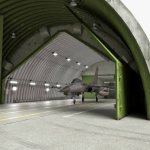
Colonel sir more important is need to learn the right lessons from these attacks on our high value assets. Those soft skin hangars need to be hardened immediately , there needs to be active spoofers and passive reflectors installed around the edges of our airbase to deflect incoming radar homing missiles away from core structures in the middle ...

The hangars can be hardened something like depicted, building a concrete structure over it....images (7).jpeg
 
Still, hindsight is 20/20. Those handful of CM400s seemed to be more impactful than Fatah.

Unless we could not spare a few dozen of them for what was in reality, a PR-first war.

Show me a single debri of Fatah 2 or even 1. They exposed Indian AD.
 

Users who are viewing this thread

Pakistan Defence Latest

Latest Posts

Back
Top