Pakistan-India Conflict 2025: News Updates and Discussion

To view this content we will need your consent to set third party cookies.
For more detailed information, see our cookies page.

Pakistan has proven that we can teach India a good lesson in conventional warfare. My hypothesis is India and USA want to achieve many goals with this propaganda . 1) Give some kind of face saving to Modi. 2) Prove that Pakistan don't have capability to fight a long conventional war. 3) Portrait that Pakistan nuclear isn't in safe hands and can be used very easily. 4) So, USA can continue sanction our missile program with a justification.
 

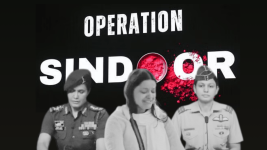
The weaponisation of feminism in Operation Sindoor

From its name to the imagery of two women leading the charge, India positioned its offensive against Pakistan as a triumph for its women.

Iqra Shagufta Cheema
12 May, 2025

1747050921816.png


After the deadly Pahalgam attack in the Baisaran valley in India-administered Kashmir on April 22, the image of Himanshi Narwal sitting stoically by her husband’s body went viral. This image of a young woman, newly married to a naval officer, and widowed on their honeymoon in India-held Kashmir, became the symbol of the Pahalgam attack in India. More critically, it was extended into the signifier of what the Pahalgam attack means and must mean for India and its people.

In his speech after Pahalgam, Indian Prime Minister Narendra Modi declared it an assault on the soul of India and vowed unimaginable punishment for the attackers, while his audience chanted his name. On May 6, India launched “Operation Sindoor”.

Sindoor is the vermilion red powder that, traditionally, married Hindu women wear in the middle parting of their hair as a marker of their married status, as a religious symbol to wish for their husbands’ prolonged lives, and to show a wife’s commitment to protect her husband. Upon becoming widows, women stop wearing the sindoor. After the Pahalgam attack, many reported that the attackers exclusively targeted Hindu men, thus effectively erasing women’s sindoor.

With these significations, Operation Sindoor, dubbed “a tribute to the women who lost their husbands in the terror attack,” became the mission to symbolically restore women’s sindoor, to showcase that the state is capable of protecting them and their families. Many applauded the operation’s name for its commitment to women and their honour.

But in a patriarchal context, this name has broader connotations. Operation Sindoor draws an equivalence between the honour of the nation-state and its women nationals. It assigns a woman’s marriage a higher value than a woman’s full life, which may extend well beyond her marriage. It conflates a gendered religious marker with militaristic aspirations and in doing so, it attempts to expand the meaning of what sindoor means in Indian imagination. It tries to create an affiliation, one based on emotion, between Hindu women’s lives and the Indian military’s operation. It capitalises on women’s emotional attachments and familial investments to use them to promote war, which, as history shows us, hurts both women’s emotional well-being and family stability.

Wars take place in gendered histories and between gendered nations. In her book, Twelve Feminist Lessons of War, American political theorist Cynthia Enloe points out a wartime narrative centring “a story or a photograph intended to make a complex, violent conflict” where “the women featured are usually crying. They are crying over the dead body of a husband or son.” But rarely “are they interviewed and asked for their ideas about the war.”

Narwal, in an interview after the attack, made an appeal for peace, saying she did not want any hate towards Muslims or Kashmiris. She faced a barrage of vitriol, trolling, slut-shaming, and rape threats for expressing her desire for peace and justice, and for implicitly challenging brewing pro-war national sentiments.

In another interview after India launched Operation Sindoor, Narwal thanked the government for the operation and hoped that it was only the “start of the end of terrorism.” Given the criticism and harassment she faced for her anti-violence and pro-peace position, it is unclear whether her tilt towards supporting Operation Sindoor and giving up her pro-peace position was a strategic response shaped by personal loss, online harassment, and demands to prove her allegiance both to her late husband’s memory and to the state.

These pre-war (and post-war) patriarchal conditions lead Enloe to observe that “women’s wars are not men’s wars” because women’s wars are shaped by “gender politics during patriarchal peacetime.” Sexual violence, gender-based violence, underemployment, unpaid and underpaid work, and limited reproductive rights are women’s wars.

Criticising the name of this operation, Vaishna Roy, editor of Frontline, an English language magazine published by The Hindu Group, noted in a since-deleted tweet that it “reeks of patriarchy, ownership of women, ‘honour’ killings, chastity, sacralising the institution of marriage, and similar Hindutva obsessions.” Roy was also trolled and harassed for her critique, which again proved that “women’s wars are not men’s wars.”

Given the challenges of gender-based and sexual violence, responses to Narwal, Roy, and other women’s anti-violence positions and critiques of the patriarchy make it even clearer that South Asian, particularly Indian, women’s wars are different than South Asian men’s wars. However, Operation Sindoor conjoins men’s and women’s wars.

Examining Operation Sindoor is, therefore, important because men’s wars are often played around the spectacle of women’s bodies — like the photo where a shocked Narwal is sitting by her husband’s body.

In another viral image, Colonel Sofia Qureshi and Wing Commander Vyomika Singh sat alongside Indian Foreign Secretary Vikram Misri to lead the Operation Sindoor media briefing, lending a feminist face to the lingering India-Pakistan conflict. Indian media reported this as a historical milestone for Indian women’s representation. However, this curated image of communal and religious unity has been criticised as being mere “secular tokenism” that hides Indian Muslims’ and Kashmiris’ lived reality of discrimination and violence. The name also misrepresented women like Qureshi and Singh.

The name centres on women’s role as wives in traditional marriages. The professional work of women like Colonel Qureshi and Wing Commander Singh only becomes visible when they step in to protect the sindoor. This valorisation of militarism as feminism also overlooks the fact that Indian women are significantly underrepresented in the Indian military. In 2023, Indian women made up only one per cent of the army, one pc of the air force, and six pc of the navy.

The image also created women heroes of the war to ramp up support for the war. One headline read: “The terrorists ‘spared’ women, but India’s women will not spare them.” Unsurprisingly then, many Indian celebrities with feminist reputations shared the image of Qureshi and Singh’s media briefing to express their support and celebration. One viral image on X portrayed Qureshi and Singh’s portraits in military uniform alongside a topi-burqa-clad woman to compare feminist India against regressive Pakistan, to show that Indian women are ‘better’ than Pakistani women.
 
In a way Ukraine was/is incompetent. Ukraine did not have a real military worth talking from 1990 to 2020. Ukraine has a serious inferiority in numbers. They are still learning how to fight. Even now Ukraine's air force is a joke.

Does it matter if you shot 5 Indian combat aircraft and Modi gets away with breaking Indus water treaty ?
To view this content we will need your consent to set third party cookies.
For more detailed information, see our cookies page.


One front reenforced war ..an evolution of two front war...or a regression if you want
 
To view this content we will need your consent to set third party cookies.
For more detailed information, see our cookies page.


Details? Not needed. Here are some touched up sat images so you can gloat on SM.

Indians: Saar we completely destroyed 15 PAF airbases.
 
To view this content we will need your consent to set third party cookies.
For more detailed information, see our cookies page.
 
To view this content we will need your consent to set third party cookies.
For more detailed information, see our cookies page.


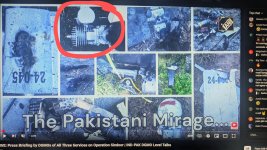
This could be the Aft section of the RD-33 motor. This could be a mig-29
If it were a mirage 3/5, Indian Military would be bragging about it from the moment it had crashed.
View attachment 119870

They did just claim it, but only in a montage video and not showing this wreckage but initially wreckage of a drone and then something crashing.

However in the actual presser they didn't mention it at all
 
so what are the reports? are they gonna settle or they are planning something again?
 

The weaponisation of feminism in Operation Sindoor

From its name to the imagery of two women leading the charge, India positioned its offensive against Pakistan as a triumph for its women.

Iqra Shagufta Cheema
12 May, 2025

View attachment 119946


After the deadly Pahalgam attack in the Baisaran valley in India-administered Kashmir on April 22, the image of Himanshi Narwal sitting stoically by her husband’s body went viral. This image of a young woman, newly married to a naval officer, and widowed on their honeymoon in India-held Kashmir, became the symbol of the Pahalgam attack in India. More critically, it was extended into the signifier of what the Pahalgam attack means and must mean for India and its people.

In his speech after Pahalgam, Indian Prime Minister Narendra Modi declared it an assault on the soul of India and vowed unimaginable punishment for the attackers, while his audience chanted his name. On May 6, India launched “Operation Sindoor”.

Sindoor is the vermilion red powder that, traditionally, married Hindu women wear in the middle parting of their hair as a marker of their married status, as a religious symbol to wish for their husbands’ prolonged lives, and to show a wife’s commitment to protect her husband. Upon becoming widows, women stop wearing the sindoor. After the Pahalgam attack, many reported that the attackers exclusively targeted Hindu men, thus effectively erasing women’s sindoor.

With these significations, Operation Sindoor, dubbed “a tribute to the women who lost their husbands in the terror attack,” became the mission to symbolically restore women’s sindoor, to showcase that the state is capable of protecting them and their families. Many applauded the operation’s name for its commitment to women and their honour.

But in a patriarchal context, this name has broader connotations. Operation Sindoor draws an equivalence between the honour of the nation-state and its women nationals. It assigns a woman’s marriage a higher value than a woman’s full life, which may extend well beyond her marriage. It conflates a gendered religious marker with militaristic aspirations and in doing so, it attempts to expand the meaning of what sindoor means in Indian imagination. It tries to create an affiliation, one based on emotion, between Hindu women’s lives and the Indian military’s operation. It capitalises on women’s emotional attachments and familial investments to use them to promote war, which, as history shows us, hurts both women’s emotional well-being and family stability.

Wars take place in gendered histories and between gendered nations. In her book, Twelve Feminist Lessons of War, American political theorist Cynthia Enloe points out a wartime narrative centring “a story or a photograph intended to make a complex, violent conflict” where “the women featured are usually crying. They are crying over the dead body of a husband or son.” But rarely “are they interviewed and asked for their ideas about the war.”

Narwal, in an interview after the attack, made an appeal for peace, saying she did not want any hate towards Muslims or Kashmiris. She faced a barrage of vitriol, trolling, slut-shaming, and rape threats for expressing her desire for peace and justice, and for implicitly challenging brewing pro-war national sentiments.

In another interview after India launched Operation Sindoor, Narwal thanked the government for the operation and hoped that it was only the “start of the end of terrorism.” Given the criticism and harassment she faced for her anti-violence and pro-peace position, it is unclear whether her tilt towards supporting Operation Sindoor and giving up her pro-peace position was a strategic response shaped by personal loss, online harassment, and demands to prove her allegiance both to her late husband’s memory and to the state.

These pre-war (and post-war) patriarchal conditions lead Enloe to observe that “women’s wars are not men’s wars” because women’s wars are shaped by “gender politics during patriarchal peacetime.” Sexual violence, gender-based violence, underemployment, unpaid and underpaid work, and limited reproductive rights are women’s wars.

Criticising the name of this operation, Vaishna Roy, editor of Frontline, an English language magazine published by The Hindu Group, noted in a since-deleted tweet that it “reeks of patriarchy, ownership of women, ‘honour’ killings, chastity, sacralising the institution of marriage, and similar Hindutva obsessions.” Roy was also trolled and harassed for her critique, which again proved that “women’s wars are not men’s wars.”

Given the challenges of gender-based and sexual violence, responses to Narwal, Roy, and other women’s anti-violence positions and critiques of the patriarchy make it even clearer that South Asian, particularly Indian, women’s wars are different than South Asian men’s wars. However, Operation Sindoor conjoins men’s and women’s wars.

Examining Operation Sindoor is, therefore, important because men’s wars are often played around the spectacle of women’s bodies — like the photo where a shocked Narwal is sitting by her husband’s body.

In another viral image, Colonel Sofia Qureshi and Wing Commander Vyomika Singh sat alongside Indian Foreign Secretary Vikram Misri to lead the Operation Sindoor media briefing, lending a feminist face to the lingering India-Pakistan conflict. Indian media reported this as a historical milestone for Indian women’s representation. However, this curated image of communal and religious unity has been criticised as being mere “secular tokenism” that hides Indian Muslims’ and Kashmiris’ lived reality of discrimination and violence. The name also misrepresented women like Qureshi and Singh.

The name centres on women’s role as wives in traditional marriages. The professional work of women like Colonel Qureshi and Wing Commander Singh only becomes visible when they step in to protect the sindoor. This valorisation of militarism as feminism also overlooks the fact that Indian women are significantly underrepresented in the Indian military. In 2023, Indian women made up only one per cent of the army, one pc of the air force, and six pc of the navy.

The image also created women heroes of the war to ramp up support for the war. One headline read: “The terrorists ‘spared’ women, but India’s women will not spare them.” Unsurprisingly then, many Indian celebrities with feminist reputations shared the image of Qureshi and Singh’s media briefing to express their support and celebration. One viral image on X portrayed Qureshi and Singh’s portraits in military uniform alongside a topi-burqa-clad woman to compare feminist India against regressive Pakistan, to show that Indian women are ‘better’ than Pakistani women.
"The image also created women heroes of the war to ramp up support for the war. One headline read: “The terrorists ‘spared’ women, but India’s women will not spare them.”"

"However, this curated image of communal and religious unity has been criticised as being mere “secular tokenism” that hides Indian Muslims’ and Kashmiris’ lived reality of discrimination and violence. The name also misrepresented women like Qureshi and Singh."


And there you have it. Topi drama from top to bottom.
 
S-400 was hit.

To view this content we will need your consent to set third party cookies.
For more detailed information, see our cookies page.


Ideally need to see before pic as well as after to confirm this, but seems to back up PAF
 

Users who are viewing this thread

Back
Top