Navigation
Install the app
How to install the app on iOS
Follow along with the video below to see how to install our site as a web app on your home screen.
Note: This feature may not be available in some browsers.
More options
Style variation
You are using an out of date browser. It may not display this or other websites correctly.
You should upgrade or use an alternative browser.
You should upgrade or use an alternative browser.
Pakistan-India Conflict 2025: News Updates and Discussion
- Thread starter Ali_Baba
- Start date
More options
Who Replied?


Oracle
Registered Member

Pakistan will shoot just like it did for French Rafael.
It's just to deter India
Vapnope
Trusted Member
Confirming what American side said and Ishaq Dar said, that pakistan was going to attack next when US Jumped in and told India, this is where India agreed to the ceasefire. I am not sure why people thought this clown was a good diplomat.

 www.indiatoday.in
US warned about big Pak attack, we said we’ll hit harder: Jaishankar to MPs panel
Chairing a meeting of MP, External Affairs Minister (EAM) S Jaishankar clarified that the ceasefire was initiated by Pakistan through military channels, dismissing US claims of brokering the de-escalation.

SecularNationalist
Elite Member
The guy is looking forward to break into bollywood with his good dialogue delivery.All I have to say about this video is, Modi's makeup artist forgot to make him look fair / white. Off with their roti.
Or may be it was on purpose, a threatening brown guy looks more cool, manly etc may be?


El Sidd
Elite Member

Retired Indian military personnel and TV host of reputed Indian channel were quoted targeting Pakistani children and threatening that they would be orphaned by tomorrow.
PM of India threatening Pakistani youth with death.
Top news on Pakistani media:
1)Bangladesh court order release of death row political leader.
2) Some darn cricket news about possible corruption
3) 90 year old marries as sons make his wish come true

Yasser76
Elite Member
Bedi is one of the more sane Indian Defence commentators, if you can ignore the politcal bits, this is a n interesting article

Rahul Bedi
5 hours ago
5 min read

In the aftermath of Operation Sindoor, the Pakistan Air Force has emerged with newfound operational credibility, eclipsing the Pakistan Army’s traditional dominance for the first time in decades. With cutting-edge electronic warfare, AI-enabled capabilities, and Chinese support, the PAF’s performance has reignited internal debates on civil-military balance, strategic control, and institutional relevance – marking a subtle but significant shift in the country’s military power structure.
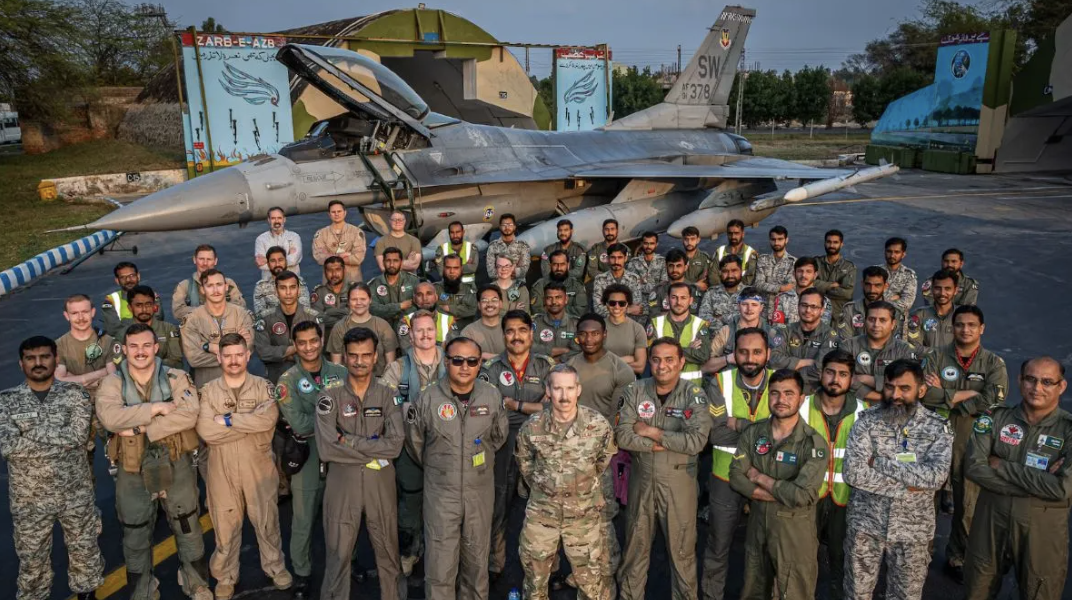
Representative image of Pakistan Air Force personnel with those of the US Air Force at a bilateral training event in 2022. Photo: Ninth Air Force (Air Forces Central) Public Affairs.
PlayNext
Mute
Current Time 0:31
/
Duration 2:04
Loaded: 73.99%
Fullscreen
Backward Skip 10sPlay VideoForward Skip 10s
Chandigarh: A subtle, but perceptible shift appears to be underway within Pakistan’s omnipresent military establishment, with the Pakistan Air Force (PAF) seemingly gaining operational ascendency over the traditionally dominant Army in the post-Operation Sindoor scenario.
Open-source intelligence and online tracking data have revealed that over four days of hostilities, the PAF effectively dominated airspace management and electronic warfare (EW) dynamics, in countering Indian Air Force (IAF) strikes on nine terrorist camps across Pakistan, early on May 7.
In contrast, the Army’s ground-based air defences (GDAD) were reportedly sluggish, reactive and heavily reliant on the PAF for early warning and threat engagement, reducing its operational role to that of a ‘tactical adjunct’.
And, for the first time in a major and direct confrontation with India, the Army was publicly overshadowed by the PAF’s performance that earned it plaudits from foreign observers, Pakistan’s civil-military elite and segments of its informed public, at home and abroad.
Also read: Asim Munir’s Elevation to Field Marshal Likely to Disturb Military Norms, Succession Dynamics
Even Pakistan’s political leadership, media and service veterans feted and spotlighted Air Chief Marshal Zaheer Ahmed Baber Sidhu for the PAFs performance in Operation Bunyan-um-Marsoos (wall of lead), shifting focus away from the Army’s ubiquitous General Headquarters or GHQ in Rawalpindi, to Air HQ in nearby Islamabad. In turn, this collectively acknowledged the PAF’s reputation as a ‘technologically forward-leaning service’, appreciably punching way above its institutional weight.
Such repositioning has further spurred speculation in some security quarters that Pakistan’s civilian administration was shrewdly pitting the PAF against the Army, mirroring tactics long employed by the latter to manipulate and control the country’s polity. And, in recognition of the PAFs capable and professional working, Prime Minister Shehbaz Sharif approved a service extension for ACM Sidhu on May 20, making him the second Pakistani air chief to receive such a tenure after ACM Anwar Shamin in 1981. Curiously, however, the length of Sindhu’s new term has not been publicly disclosed, prompting speculation that this ambiguity could reflect a ‘calculated’ move, possibly at Munir’s behest, to reassert the Army’s overarching primacy.
The PAFs edge, insiders said, stemmed primarily from its AI-enabled EW and real-time sensor fusion capabilities developed presciently since 2018 with quiet Chinese assistance via the Cyber and Emerging Technologies Cell at Air HQ.
This advantage was further amplified and operationalised by its advanced fleet of AI-supported Chinese-origin fighters like JF-10C/CE Vigorous Dragons and JF-17 Thunders, both armed with PL-15/E beyond visual range missiles and upgraded F-16s, all backed by Saab 2000 ‘Erieye’ AEW&C platforms. Military sources said the PAF had further executed jugaad or innovation on these fighters to further enhance their EW and radar lethality and precision weapon deliverability.
Pakistan claimed to have shot down five IAF fighters during this engagement, but India has neither confirmed nor denied any platform downing, only acknowledging that combat aircraft losses were incumbent in such missions. Independent estimates, however, suggest India may have lost between two and four fighters in standoff engagements with the PAF, but specific details were unavailable for now.
The Army, on the other hand, he said – declining to be named – continued to enjoy pre-eminence over Pakistan’s security architecture, including control of its nuclear arsenal and influence over political, economic, diplomatic, and ideological trajectories. However, despite its clout, it had still come in for quiet criticism in recent days over delays in deployment during India’s Op Sindoor and was also being quietly faulted for politicising its strategic messaging and clinging to outdated ‘myths’ around strategic depth. Many considered these as ‘feeble’ explanations for its apparent operational inefficiencies.
Meanwhile, the PAF and Pakistan Navy (PN) – though integral to Pakistan’s nuclear triad responsible for delivering nuclear weapons by land, air, and sea – have historically remained subordinate to the Army, despite fulfilling critical conventional roles.
This structural imbalance dates back to Partition, when the Army received a disproportionate share of personnel and resources, institutionalising its dominance and reinforcing the oft-quoted maxim: most countries have an army, but Pakistan’s army has a country.
At independence, the PN inherited around 3,000 personnel and a modest fleet of four sloops, patrol craft, and auxiliary vessels from the Royal Indian Navy. The PAF began with approximately 2,000–2,500 personnel and a single operational fighter squadron of 16 outdated Hawker Tempest IIs – its share from the Royal Indian Air Force.
For years afterward, all three services were commanded by British officers and lacked indigenous leadership, infrastructure, or strategic depth. But this absence was more acutely felt in the PAF and PN, which emerged as auxiliary arms to the Army – an institution that swiftly established itself as Pakistan’s paramount authority.
Nearly eight decades later, this organisational imbalance persists. The Army’s 560,000-strong force dwarfs the PAF’s 70,000 and the PN’s 30,000 personnel. The Army’s dominance was further entrenched through coups, by ruling Pakistan directly for 34 years, and wielding indirect control for much of the remaining 44.
Thus, the Army wrote Pakistan’s strategic playbook, cast itself as the lead actor, and relegated the PAF and PN to supporting roles – becoming executive producer, director, and star of the national security theatre.
Domestically, too it monopolised internal security and counter-insurgency operations in the Frontier Agency regions, bordering Afghanistan and in Baluchistan. It also armed and trained Mujahideen to fight the Soviet Union’s occupation of Afghanistan and later patronised the Taliban.
One of its lieutenant generals has always headed the all-powerful, tri-service ISID as Director General (DG). Notably, though, in the early 1950s – soon after its founding on New Year’s Day in 1948 by Major General Walter Cawthorn, then Pakistan Army Deputy Chief, soon after the Kashmir campaign – a naval officer briefly served as ISID chief. Since then, however, the post has remained the exclusive preserve of the Army.
Also read: High-Stakes Nuclear Poker: How Pakistan’s Deterrent Still Checks India—Even After Operation Sindoor
Even Pakistan’s highest-ranking four-star military officer – the Chairman Joint Chiefs of Staff Committee (CJCSC), tasked with tri-service coordination – has almost always been from the Army. Since the post was created in 1976, there have been only two exceptions: a three-star PN officer in 1988 and a similarly ranked PAF officer in 1994, each serving for three-year stints. From 1997, however, the CJCSC’s role has remained firmly within the Army’s domain.
Similarly, the Strategic Plans Division (SPD) – responsible for the command, control, and oversight of Pakistan’s nuclear arsenal and strategic forces – has, since its inception in 2000, always been headed by a three-star Army officer. Although structured as a tri-service body, the SPD reflects the Army’s belief that nuclear weapons are an extension of its conventional deterrence posture vis-à-vis India. Consequently, the PAF’s and PN’s strategic assets report to the Army-run SPD, further reinforcing its overarching authority.
The Army’s influence extends well beyond the battlefield.
It controls sprawling business conglomerates such as the Fauji Foundation, Army Welfare Trust, Frontier Works Organisation, and National Logistics Cell. These entities operate extensive commercial ventures across sectors including real estate, housing, highway construction, mining, and food production including sugar and cereals – dominating large segments of Pakistan’s economy and retail markets.
In contrast, the PAF and PN run relatively modest, welfare-oriented ventures. The PAF’s Shaheen (Falcon) Foundation engages in limited real estate and healthcare services, while the PN’s Bahria Foundation operates schools, and colleges, and provides restricted port and ship management services.
Operationally, the PN has an even lower domestic profile than the PAF. Despite its growing relevance under the China-Pakistan Economic Corridor (CPEC), it has historically remained on the margins of national defense priorities, receiving limited funding for modernisation. Its posture remains largely defensive – focused on protecting Pakistan’s 1,000-odd km coastline and ensuring regional deterrence rather than projecting power. Efforts to build a credible sea-based second-strike nuclear capability have also progressed slowly due to financial constraints and political inertia.
Unlike the Army, the PAF and the PN have never cultivated political or media patronage networks, further marginalising their individual or dual influence over national security policy. Their role in shaping debates on national development, crisis management, and foreign policy is negligible.
For, without a standing presence in urban centres, no history of counter-insurgency dominance, and no tanks or infantry brigades near the capital, both services were structurally incapable of executing a coup or enforcing martial law. Politics in Pakistan demands boots on the ground – something the PAF and PN can never provide.
The two services have traditionally prided themselves on their technocratic ethos, shaped by selective recruitment and an emphasis on specialised proficiency and operational capability, and – in the PAF’s case – aerospace innovation, rather than political engineering.
This was further reinforced by their broad-based and inclusive recruitment across Pakistan’s four provinces, unlike the Army, which has historically drawn disproportionately from Punjab and parts of Khyber Pakhtunkhwa.
In conclusion, the fallout from Op Sindoor has exposed fractures within the upper echelons of Pakistan’s military due to the PAFs display of accuracy and innovation – and its (as yet unconfirmed) claim of five Indian kills. And while there is no visible conflict, the PAF’s operational significance and the Army’s apparent lapses, are fostering a silent struggle for influence in Pakistan’s military, especially over the national security narrative and execution of hi-tech warfare.
But matters could change if the PAF continues to outperform the Army in high profile operations, advances its technological partnerships with China, and cultivates influence among civilians or within policymaking circles, it could well secure a stronger institutional voice.
 thewire.in
Unexpected Fallout of Op Sindoor Has Been Tilt in Pakistan’s Military Balance Toward Its Air Force
Rahul Bedi
5 hours ago
5 min read
In the aftermath of Operation Sindoor, the Pakistan Air Force has emerged with newfound operational credibility, eclipsing the Pakistan Army’s traditional dominance for the first time in decades. With cutting-edge electronic warfare, AI-enabled capabilities, and Chinese support, the PAF’s performance has reignited internal debates on civil-military balance, strategic control, and institutional relevance – marking a subtle but significant shift in the country’s military power structure.
Representative image of Pakistan Air Force personnel with those of the US Air Force at a bilateral training event in 2022. Photo: Ninth Air Force (Air Forces Central) Public Affairs.
PlayNext
Mute
Current Time 0:31
/
Duration 2:04
Loaded: 73.99%
Fullscreen
Backward Skip 10sPlay VideoForward Skip 10s
Chandigarh: A subtle, but perceptible shift appears to be underway within Pakistan’s omnipresent military establishment, with the Pakistan Air Force (PAF) seemingly gaining operational ascendency over the traditionally dominant Army in the post-Operation Sindoor scenario.
Open-source intelligence and online tracking data have revealed that over four days of hostilities, the PAF effectively dominated airspace management and electronic warfare (EW) dynamics, in countering Indian Air Force (IAF) strikes on nine terrorist camps across Pakistan, early on May 7.
In contrast, the Army’s ground-based air defences (GDAD) were reportedly sluggish, reactive and heavily reliant on the PAF for early warning and threat engagement, reducing its operational role to that of a ‘tactical adjunct’.
And, for the first time in a major and direct confrontation with India, the Army was publicly overshadowed by the PAF’s performance that earned it plaudits from foreign observers, Pakistan’s civil-military elite and segments of its informed public, at home and abroad.
‘Still in charge’
A cross-section of defence analysts and Pakistan watchers believe this operational ‘imbalance’ may have prompted last week’s elevation of Army Chief General Asim Munir to the five-star rank of Field Marshal, which has also been interpreted as an attempt to reassert the Army’s primacy. As one Pakistani commentator drolly noted to The Wire, the extra star on Munir’s upgraded epaulettes has come as a reminder to Pakistanis of who was still in charge.Also read: Asim Munir’s Elevation to Field Marshal Likely to Disturb Military Norms, Succession Dynamics
Even Pakistan’s political leadership, media and service veterans feted and spotlighted Air Chief Marshal Zaheer Ahmed Baber Sidhu for the PAFs performance in Operation Bunyan-um-Marsoos (wall of lead), shifting focus away from the Army’s ubiquitous General Headquarters or GHQ in Rawalpindi, to Air HQ in nearby Islamabad. In turn, this collectively acknowledged the PAF’s reputation as a ‘technologically forward-leaning service’, appreciably punching way above its institutional weight.
Such repositioning has further spurred speculation in some security quarters that Pakistan’s civilian administration was shrewdly pitting the PAF against the Army, mirroring tactics long employed by the latter to manipulate and control the country’s polity. And, in recognition of the PAFs capable and professional working, Prime Minister Shehbaz Sharif approved a service extension for ACM Sidhu on May 20, making him the second Pakistani air chief to receive such a tenure after ACM Anwar Shamin in 1981. Curiously, however, the length of Sindhu’s new term has not been publicly disclosed, prompting speculation that this ambiguity could reflect a ‘calculated’ move, possibly at Munir’s behest, to reassert the Army’s overarching primacy.
The PAFs edge, insiders said, stemmed primarily from its AI-enabled EW and real-time sensor fusion capabilities developed presciently since 2018 with quiet Chinese assistance via the Cyber and Emerging Technologies Cell at Air HQ.
China’s role
Analysts said this partnership with Beijing had transformed the PAF from a ‘reactive force to a battlespace shaper’. Its ability to integrate radar feeds, Chinese BeiDou and Gaofen satellite imagery and drone and Airborne Early Warning and Control (AEW&C)- sourced electronic and signals intelligence (ELINT/SIGINT) in real time, had further enabled it to pre-position assets in ‘kill-zones’ and execute precision strikes and missile evasions for itself on May 7, a point noted by some defence analysts in India.This advantage was further amplified and operationalised by its advanced fleet of AI-supported Chinese-origin fighters like JF-10C/CE Vigorous Dragons and JF-17 Thunders, both armed with PL-15/E beyond visual range missiles and upgraded F-16s, all backed by Saab 2000 ‘Erieye’ AEW&C platforms. Military sources said the PAF had further executed jugaad or innovation on these fighters to further enhance their EW and radar lethality and precision weapon deliverability.
Pakistan claimed to have shot down five IAF fighters during this engagement, but India has neither confirmed nor denied any platform downing, only acknowledging that combat aircraft losses were incumbent in such missions. Independent estimates, however, suggest India may have lost between two and four fighters in standoff engagements with the PAF, but specific details were unavailable for now.
Political backing
A Pakistani analyst observed that after Operation Sindoor, the PAF may have gained ascendancy in perception, credibility, and tactical competence – especially among military professionals – but it lacked the political levers to domestically press its advantage. It also had little or no control over narrative-building, which remained firmly in the hands of the Army-run Inter-Services Intelligence Directorate (ISID), the institution that orchestrates its vice-like grip over the state apparatus.The Army, on the other hand, he said – declining to be named – continued to enjoy pre-eminence over Pakistan’s security architecture, including control of its nuclear arsenal and influence over political, economic, diplomatic, and ideological trajectories. However, despite its clout, it had still come in for quiet criticism in recent days over delays in deployment during India’s Op Sindoor and was also being quietly faulted for politicising its strategic messaging and clinging to outdated ‘myths’ around strategic depth. Many considered these as ‘feeble’ explanations for its apparent operational inefficiencies.
Meanwhile, the PAF and Pakistan Navy (PN) – though integral to Pakistan’s nuclear triad responsible for delivering nuclear weapons by land, air, and sea – have historically remained subordinate to the Army, despite fulfilling critical conventional roles.
This structural imbalance dates back to Partition, when the Army received a disproportionate share of personnel and resources, institutionalising its dominance and reinforcing the oft-quoted maxim: most countries have an army, but Pakistan’s army has a country.
At independence, the PN inherited around 3,000 personnel and a modest fleet of four sloops, patrol craft, and auxiliary vessels from the Royal Indian Navy. The PAF began with approximately 2,000–2,500 personnel and a single operational fighter squadron of 16 outdated Hawker Tempest IIs – its share from the Royal Indian Air Force.
For years afterward, all three services were commanded by British officers and lacked indigenous leadership, infrastructure, or strategic depth. But this absence was more acutely felt in the PAF and PN, which emerged as auxiliary arms to the Army – an institution that swiftly established itself as Pakistan’s paramount authority.
Nearly eight decades later, this organisational imbalance persists. The Army’s 560,000-strong force dwarfs the PAF’s 70,000 and the PN’s 30,000 personnel. The Army’s dominance was further entrenched through coups, by ruling Pakistan directly for 34 years, and wielding indirect control for much of the remaining 44.
Army hegemony through history
History too aided the Army’s hegemony. Cast from inception as the guardian of Pakistan’s Islamic ideology and borders, the Army fought four land-centric wars with India – three over Kashmir – further supplementing its central role as a fighting force. It realised early on that coups were easier when tanks are near the capital, not parked in hangars or afloat at sea.Thus, the Army wrote Pakistan’s strategic playbook, cast itself as the lead actor, and relegated the PAF and PN to supporting roles – becoming executive producer, director, and star of the national security theatre.
Domestically, too it monopolised internal security and counter-insurgency operations in the Frontier Agency regions, bordering Afghanistan and in Baluchistan. It also armed and trained Mujahideen to fight the Soviet Union’s occupation of Afghanistan and later patronised the Taliban.
One of its lieutenant generals has always headed the all-powerful, tri-service ISID as Director General (DG). Notably, though, in the early 1950s – soon after its founding on New Year’s Day in 1948 by Major General Walter Cawthorn, then Pakistan Army Deputy Chief, soon after the Kashmir campaign – a naval officer briefly served as ISID chief. Since then, however, the post has remained the exclusive preserve of the Army.
Also read: High-Stakes Nuclear Poker: How Pakistan’s Deterrent Still Checks India—Even After Operation Sindoor
Even Pakistan’s highest-ranking four-star military officer – the Chairman Joint Chiefs of Staff Committee (CJCSC), tasked with tri-service coordination – has almost always been from the Army. Since the post was created in 1976, there have been only two exceptions: a three-star PN officer in 1988 and a similarly ranked PAF officer in 1994, each serving for three-year stints. From 1997, however, the CJCSC’s role has remained firmly within the Army’s domain.
Similarly, the Strategic Plans Division (SPD) – responsible for the command, control, and oversight of Pakistan’s nuclear arsenal and strategic forces – has, since its inception in 2000, always been headed by a three-star Army officer. Although structured as a tri-service body, the SPD reflects the Army’s belief that nuclear weapons are an extension of its conventional deterrence posture vis-à-vis India. Consequently, the PAF’s and PN’s strategic assets report to the Army-run SPD, further reinforcing its overarching authority.
The Army’s influence extends well beyond the battlefield.
It controls sprawling business conglomerates such as the Fauji Foundation, Army Welfare Trust, Frontier Works Organisation, and National Logistics Cell. These entities operate extensive commercial ventures across sectors including real estate, housing, highway construction, mining, and food production including sugar and cereals – dominating large segments of Pakistan’s economy and retail markets.
Proficiency over boots on the ground
Critics argue that these ventures blur the lines between military and civilian economy, as these conglomerates enjoy tax exemptions and preferential treatment. Retired Army officers often secure lucrative post-retirement jobs in them and though created as soldier welfare schemes, these concerns now play an indispensable role in Pakistan’s economy.In contrast, the PAF and PN run relatively modest, welfare-oriented ventures. The PAF’s Shaheen (Falcon) Foundation engages in limited real estate and healthcare services, while the PN’s Bahria Foundation operates schools, and colleges, and provides restricted port and ship management services.
Operationally, the PN has an even lower domestic profile than the PAF. Despite its growing relevance under the China-Pakistan Economic Corridor (CPEC), it has historically remained on the margins of national defense priorities, receiving limited funding for modernisation. Its posture remains largely defensive – focused on protecting Pakistan’s 1,000-odd km coastline and ensuring regional deterrence rather than projecting power. Efforts to build a credible sea-based second-strike nuclear capability have also progressed slowly due to financial constraints and political inertia.
Unlike the Army, the PAF and the PN have never cultivated political or media patronage networks, further marginalising their individual or dual influence over national security policy. Their role in shaping debates on national development, crisis management, and foreign policy is negligible.
For, without a standing presence in urban centres, no history of counter-insurgency dominance, and no tanks or infantry brigades near the capital, both services were structurally incapable of executing a coup or enforcing martial law. Politics in Pakistan demands boots on the ground – something the PAF and PN can never provide.
The two services have traditionally prided themselves on their technocratic ethos, shaped by selective recruitment and an emphasis on specialised proficiency and operational capability, and – in the PAF’s case – aerospace innovation, rather than political engineering.
This was further reinforced by their broad-based and inclusive recruitment across Pakistan’s four provinces, unlike the Army, which has historically drawn disproportionately from Punjab and parts of Khyber Pakhtunkhwa.
In conclusion, the fallout from Op Sindoor has exposed fractures within the upper echelons of Pakistan’s military due to the PAFs display of accuracy and innovation – and its (as yet unconfirmed) claim of five Indian kills. And while there is no visible conflict, the PAF’s operational significance and the Army’s apparent lapses, are fostering a silent struggle for influence in Pakistan’s military, especially over the national security narrative and execution of hi-tech warfare.
But matters could change if the PAF continues to outperform the Army in high profile operations, advances its technological partnerships with China, and cultivates influence among civilians or within policymaking circles, it could well secure a stronger institutional voice.
Unexpected Fallout of Op Sindoor Has Been Tilt in Pakistan’s Military Balance Toward Its Air Force
In the aftermath of Operation Sindoor, the Pakistan Air Force has emerged with newfound operational credibility, eclipsing the Pakistan Army’s traditional dominance for the first time in decades. With cutting-edge electronic warfare, AI-enabled capabilities, and Chinese support, the PAF’s...
thewire.in

PAKISTANFOREVER
Trusted Member
Retired Indian military personnel and TV host of reputed Indian channel were quoted targeting Pakistani children and threatening that they would be orphaned by tomorrow.
PM of India threatening Pakistani youth with death.
Top news on Pakistani media:
1)Bangladesh court order release of death row political leader.
2) Some darn cricket news about possible corruption
3) 90 year old marries as sons make his wish come true
Which is why Pakistanis need to develop a genocidal racial hatred of indians the same way they do about us. The ONLY good indian is a dead indian.
El Sidd
Elite Member
Which is why Pakistanis need to develop a genocidal racial hatred of indians the same way they do about us. The ONLY good indian is a dead indian.
99.99 percent people of Pakistan are non confrontational and docile.
Meat consumption is down and most radical elements have been exported out of the country.

TAC
Registered Member
You went to count the aircraft in the hanger, same as you counted your 6 downed jets? But the war didn’t continue did it? Because within hours of getting Pakistan’s reply your spokeswoman came on TV to say that Pakistan had done material and personnel damage at various military sites ( that would also be runways and hangers no? Or was she talking about only toilet facilities on these sites?)AND India did not want further escalation provided Pakistan also didn’t. Pathetic bully nation, ready to quit soon as it got a slap back. However, I do appreciate that looking at your precious satellite photos is all u have to cope with India and particularly the IAF’s utter humiliation.How can aircraft inside airbase hangars be safe if the hangars themselves have been bombed?
And Runways are being repaired only because there is a ceasefire. What if the war had continued? Damaging a runway renders the entire airbase useless.
TAC
Registered Member
Go sift through the wreckage’s of your downed Ra-fails to figure out who wonYou can claim victory as much as you like—after all, that’s what the Pakistan Army has always done: Kargil, Balakot, 1965, and 1971.


maverick
Trusted Member
Retired Indian military personnel and TV host of reputed Indian channel were quoted targeting Pakistani children and threatening that they would be orphaned by tomorrow.
PM of India threatening Pakistani youth with death.
Top news on Pakistani media:
1)Bangladesh court order release of death row political leader.
2) Some darn cricket news about possible corruption
3) 90 year old marries as sons make his wish come true
these hinduvta scums are coining term of terrorism to target pakistan, and hiding behind their vile hatred for islam,
whoever coined “baghal may churi moon per ram ram” knew these dogs true nature

Corax
Trusted Member
The Mughals unfortunately didn't finish the job.these hinduvta scums are coining term of terrorism to target pakistan, and hiding behind their vile hatred for islam,
whoever coined “baghal may churi moon per ram ram” knew these dogs true nature
Very accurate assessment, army level of professionalism compared to airforce is as the sky to earth… PAF consummate professionals, keeping abreast of the latest technology, tactics etc. Army dunces and duffers.. so evident especially the AD and missile forces.. idiots fire a missile and then make a video and upload it to WhatsApp and X .. and show the whole world… iPhone location can be found along with location of missile battery… uneducated idiots of the highest order, no awareness or consideration of Opsec…Bedi is one of the more sane Indian Defence commentators, if you can ignore the politcal bits, this is a n interesting article
Unexpected Fallout of Op Sindoor Has Been Tilt in Pakistan’s Military Balance Toward Its Air Force
Rahul Bedi
5 hours ago
5 min read
In the aftermath of Operation Sindoor, the Pakistan Air Force has emerged with newfound operational credibility, eclipsing the Pakistan Army’s traditional dominance for the first time in decades. With cutting-edge electronic warfare, AI-enabled capabilities, and Chinese support, the PAF’s performance has reignited internal debates on civil-military balance, strategic control, and institutional relevance – marking a subtle but significant shift in the country’s military power structure.
Representative image of Pakistan Air Force personnel with those of the US Air Force at a bilateral training event in 2022. Photo: Ninth Air Force (Air Forces Central) Public Affairs.
PlayNext
Mute
Current Time 0:31
/
Duration 2:04
Loaded: 73.99%
Fullscreen
Backward Skip 10sPlay VideoForward Skip 10s
Chandigarh: A subtle, but perceptible shift appears to be underway within Pakistan’s omnipresent military establishment, with the Pakistan Air Force (PAF) seemingly gaining operational ascendency over the traditionally dominant Army in the post-Operation Sindoor scenario.
Open-source intelligence and online tracking data have revealed that over four days of hostilities, the PAF effectively dominated airspace management and electronic warfare (EW) dynamics, in countering Indian Air Force (IAF) strikes on nine terrorist camps across Pakistan, early on May 7.
In contrast, the Army’s ground-based air defences (GDAD) were reportedly sluggish, reactive and heavily reliant on the PAF for early warning and threat engagement, reducing its operational role to that of a ‘tactical adjunct’.
And, for the first time in a major and direct confrontation with India, the Army was publicly overshadowed by the PAF’s performance that earned it plaudits from foreign observers, Pakistan’s civil-military elite and segments of its informed public, at home and abroad.
‘Still in charge’
A cross-section of defence analysts and Pakistan watchers believe this operational ‘imbalance’ may have prompted last week’s elevation of Army Chief General Asim Munir to the five-star rank of Field Marshal, which has also been interpreted as an attempt to reassert the Army’s primacy. As one Pakistani commentator drolly noted to The Wire, the extra star on Munir’s upgraded epaulettes has come as a reminder to Pakistanis of who was still in charge.
Also read: Asim Munir’s Elevation to Field Marshal Likely to Disturb Military Norms, Succession Dynamics
Even Pakistan’s political leadership, media and service veterans feted and spotlighted Air Chief Marshal Zaheer Ahmed Baber Sidhu for the PAFs performance in Operation Bunyan-um-Marsoos (wall of lead), shifting focus away from the Army’s ubiquitous General Headquarters or GHQ in Rawalpindi, to Air HQ in nearby Islamabad. In turn, this collectively acknowledged the PAF’s reputation as a ‘technologically forward-leaning service’, appreciably punching way above its institutional weight.
Such repositioning has further spurred speculation in some security quarters that Pakistan’s civilian administration was shrewdly pitting the PAF against the Army, mirroring tactics long employed by the latter to manipulate and control the country’s polity. And, in recognition of the PAFs capable and professional working, Prime Minister Shehbaz Sharif approved a service extension for ACM Sidhu on May 20, making him the second Pakistani air chief to receive such a tenure after ACM Anwar Shamin in 1981. Curiously, however, the length of Sindhu’s new term has not been publicly disclosed, prompting speculation that this ambiguity could reflect a ‘calculated’ move, possibly at Munir’s behest, to reassert the Army’s overarching primacy.
The PAFs edge, insiders said, stemmed primarily from its AI-enabled EW and real-time sensor fusion capabilities developed presciently since 2018 with quiet Chinese assistance via the Cyber and Emerging Technologies Cell at Air HQ.
China’s role
Analysts said this partnership with Beijing had transformed the PAF from a ‘reactive force to a battlespace shaper’. Its ability to integrate radar feeds, Chinese BeiDou and Gaofen satellite imagery and drone and Airborne Early Warning and Control (AEW&C)- sourced electronic and signals intelligence (ELINT/SIGINT) in real time, had further enabled it to pre-position assets in ‘kill-zones’ and execute precision strikes and missile evasions for itself on May 7, a point noted by some defence analysts in India.
This advantage was further amplified and operationalised by its advanced fleet of AI-supported Chinese-origin fighters like JF-10C/CE Vigorous Dragons and JF-17 Thunders, both armed with PL-15/E beyond visual range missiles and upgraded F-16s, all backed by Saab 2000 ‘Erieye’ AEW&C platforms. Military sources said the PAF had further executed jugaad or innovation on these fighters to further enhance their EW and radar lethality and precision weapon deliverability.
Pakistan claimed to have shot down five IAF fighters during this engagement, but India has neither confirmed nor denied any platform downing, only acknowledging that combat aircraft losses were incumbent in such missions. Independent estimates, however, suggest India may have lost between two and four fighters in standoff engagements with the PAF, but specific details were unavailable for now.
Political backing
A Pakistani analyst observed that after Operation Sindoor, the PAF may have gained ascendancy in perception, credibility, and tactical competence – especially among military professionals – but it lacked the political levers to domestically press its advantage. It also had little or no control over narrative-building, which remained firmly in the hands of the Army-run Inter-Services Intelligence Directorate (ISID), the institution that orchestrates its vice-like grip over the state apparatus.
The Army, on the other hand, he said – declining to be named – continued to enjoy pre-eminence over Pakistan’s security architecture, including control of its nuclear arsenal and influence over political, economic, diplomatic, and ideological trajectories. However, despite its clout, it had still come in for quiet criticism in recent days over delays in deployment during India’s Op Sindoor and was also being quietly faulted for politicising its strategic messaging and clinging to outdated ‘myths’ around strategic depth. Many considered these as ‘feeble’ explanations for its apparent operational inefficiencies.
Meanwhile, the PAF and Pakistan Navy (PN) – though integral to Pakistan’s nuclear triad responsible for delivering nuclear weapons by land, air, and sea – have historically remained subordinate to the Army, despite fulfilling critical conventional roles.
This structural imbalance dates back to Partition, when the Army received a disproportionate share of personnel and resources, institutionalising its dominance and reinforcing the oft-quoted maxim: most countries have an army, but Pakistan’s army has a country.
At independence, the PN inherited around 3,000 personnel and a modest fleet of four sloops, patrol craft, and auxiliary vessels from the Royal Indian Navy. The PAF began with approximately 2,000–2,500 personnel and a single operational fighter squadron of 16 outdated Hawker Tempest IIs – its share from the Royal Indian Air Force.
For years afterward, all three services were commanded by British officers and lacked indigenous leadership, infrastructure, or strategic depth. But this absence was more acutely felt in the PAF and PN, which emerged as auxiliary arms to the Army – an institution that swiftly established itself as Pakistan’s paramount authority.
Nearly eight decades later, this organisational imbalance persists. The Army’s 560,000-strong force dwarfs the PAF’s 70,000 and the PN’s 30,000 personnel. The Army’s dominance was further entrenched through coups, by ruling Pakistan directly for 34 years, and wielding indirect control for much of the remaining 44.
Army hegemony through history
History too aided the Army’s hegemony. Cast from inception as the guardian of Pakistan’s Islamic ideology and borders, the Army fought four land-centric wars with India – three over Kashmir – further supplementing its central role as a fighting force. It realised early on that coups were easier when tanks are near the capital, not parked in hangars or afloat at sea.
Thus, the Army wrote Pakistan’s strategic playbook, cast itself as the lead actor, and relegated the PAF and PN to supporting roles – becoming executive producer, director, and star of the national security theatre.
Domestically, too it monopolised internal security and counter-insurgency operations in the Frontier Agency regions, bordering Afghanistan and in Baluchistan. It also armed and trained Mujahideen to fight the Soviet Union’s occupation of Afghanistan and later patronised the Taliban.
One of its lieutenant generals has always headed the all-powerful, tri-service ISID as Director General (DG). Notably, though, in the early 1950s – soon after its founding on New Year’s Day in 1948 by Major General Walter Cawthorn, then Pakistan Army Deputy Chief, soon after the Kashmir campaign – a naval officer briefly served as ISID chief. Since then, however, the post has remained the exclusive preserve of the Army.
Also read: High-Stakes Nuclear Poker: How Pakistan’s Deterrent Still Checks India—Even After Operation Sindoor
Even Pakistan’s highest-ranking four-star military officer – the Chairman Joint Chiefs of Staff Committee (CJCSC), tasked with tri-service coordination – has almost always been from the Army. Since the post was created in 1976, there have been only two exceptions: a three-star PN officer in 1988 and a similarly ranked PAF officer in 1994, each serving for three-year stints. From 1997, however, the CJCSC’s role has remained firmly within the Army’s domain.
Similarly, the Strategic Plans Division (SPD) – responsible for the command, control, and oversight of Pakistan’s nuclear arsenal and strategic forces – has, since its inception in 2000, always been headed by a three-star Army officer. Although structured as a tri-service body, the SPD reflects the Army’s belief that nuclear weapons are an extension of its conventional deterrence posture vis-à-vis India. Consequently, the PAF’s and PN’s strategic assets report to the Army-run SPD, further reinforcing its overarching authority.
The Army’s influence extends well beyond the battlefield.
It controls sprawling business conglomerates such as the Fauji Foundation, Army Welfare Trust, Frontier Works Organisation, and National Logistics Cell. These entities operate extensive commercial ventures across sectors including real estate, housing, highway construction, mining, and food production including sugar and cereals – dominating large segments of Pakistan’s economy and retail markets.
Proficiency over boots on the ground
Critics argue that these ventures blur the lines between military and civilian economy, as these conglomerates enjoy tax exemptions and preferential treatment. Retired Army officers often secure lucrative post-retirement jobs in them and though created as soldier welfare schemes, these concerns now play an indispensable role in Pakistan’s economy.
In contrast, the PAF and PN run relatively modest, welfare-oriented ventures. The PAF’s Shaheen (Falcon) Foundation engages in limited real estate and healthcare services, while the PN’s Bahria Foundation operates schools, and colleges, and provides restricted port and ship management services.
Operationally, the PN has an even lower domestic profile than the PAF. Despite its growing relevance under the China-Pakistan Economic Corridor (CPEC), it has historically remained on the margins of national defense priorities, receiving limited funding for modernisation. Its posture remains largely defensive – focused on protecting Pakistan’s 1,000-odd km coastline and ensuring regional deterrence rather than projecting power. Efforts to build a credible sea-based second-strike nuclear capability have also progressed slowly due to financial constraints and political inertia.
Unlike the Army, the PAF and the PN have never cultivated political or media patronage networks, further marginalising their individual or dual influence over national security policy. Their role in shaping debates on national development, crisis management, and foreign policy is negligible.
For, without a standing presence in urban centres, no history of counter-insurgency dominance, and no tanks or infantry brigades near the capital, both services were structurally incapable of executing a coup or enforcing martial law. Politics in Pakistan demands boots on the ground – something the PAF and PN can never provide.
The two services have traditionally prided themselves on their technocratic ethos, shaped by selective recruitment and an emphasis on specialised proficiency and operational capability, and – in the PAF’s case – aerospace innovation, rather than political engineering.
This was further reinforced by their broad-based and inclusive recruitment across Pakistan’s four provinces, unlike the Army, which has historically drawn disproportionately from Punjab and parts of Khyber Pakhtunkhwa.
In conclusion, the fallout from Op Sindoor has exposed fractures within the upper echelons of Pakistan’s military due to the PAFs display of accuracy and innovation – and its (as yet unconfirmed) claim of five Indian kills. And while there is no visible conflict, the PAF’s operational significance and the Army’s apparent lapses, are fostering a silent struggle for influence in Pakistan’s military, especially over the national security narrative and execution of hi-tech warfare.
But matters could change if the PAF continues to outperform the Army in high profile operations, advances its technological partnerships with China, and cultivates influence among civilians or within policymaking circles, it could well secure a stronger institutional voice.
Unexpected Fallout of Op Sindoor Has Been Tilt in Pakistan’s Military Balance Toward Its Air Force
In the aftermath of Operation Sindoor, the Pakistan Air Force has emerged with newfound operational credibility, eclipsing the Pakistan Army’s traditional dominance for the first time in decades. With cutting-edge electronic warfare, AI-enabled capabilities, and Chinese support, the PAF’s...
Last edited:
maverick
Trusted Member
The Mughals unfortunately didn't finish the job.
Islam does not allow killings of civilians, women, unarmed, children and old people..
Allah is very strict about it, not verbatim translation but the meaning is “he who killed a human unjuslty, has killed the whole humanity “
El Sidd
Elite Member
these hinduvta scums are coining term of terrorism to target pakistan, and hiding behind their vile hatred for islam,
whoever coined “baghal may churi moon per ram ram” knew these dogs true nature
We live in the times of trials and tribulations. May Allah be our Guide
Pakistan Defence Latest


Country Watch Latest

Latest Posts
-
-
 Five reasons India's stock market is sinking even when its economy is growing (9 Viewers)
- Latest: Michael
-
 Makkah Defence Alliance: Turkey, Saudi Arabia, and Pakistan, news & updates (28 Viewers)
- Latest: Mobius
-
