Pakistan Industries News / Updates

Expanding operations: Air Link to establish production facility in Lahore

https://defencepk.com/forums/javascript:void(0)
Follow us
Air Link Communication Limited (AIRLINK), a Pakistani technology firm, has unveiled a major expansion plan, establishing a state-of-the-art production facility at the Sundar Green Special Economic Zone (SGSEZ) in Lahore.

The production facility, spanning eight acres with 1.4 million sq. ft. of purpose-built infrastructure, would integrate sustainable energy solutions and aims to boost Pakistan’s industrial and export base, the company said.

Of the eight acres, three acres are owned by Air Link and five acres by its wholly owned subsidiary, Select Technologies (Pvt.) Limited.


“The facility will integrate a 1 megawatt (MW) solar power generation system, which will reduce the cost of production, lower the company’s carbon footprint, and support long-term sustainable operations,” read the notice.

The company informed that the facility is expected to commence commercial operations by the end of 2025.

“By operating within the SGSEZ framework, AIRLINK will benefit from ten years of fiscal incentives, enhancing competitiveness and long-term growth.

“In line with its strategic vision, the new facility is designed to support future exports of mobile phones, laptops, LED TVs, electronics, home appliances, and other high-tech products by international brands from Pakistan, reinforcing AIRLINK’s role in strengthening the country’s industrial and export base,” it added.

Furthermore, the company shared that it has launched a Samsung Multi Experience Store at the Dolmen Mall, Lahore.

“The initiative reflects AIRLINK’s commitment to integrated retail expansion and enhanced brand engagement across Pakistan,” it added.

Air Link Communication Limited was incorporated in Pakistan as a private limited company in January 2014 and was converted into a public limited company in April 2019.

The company is engaged in import, export, distribution, identification, wholesale, and retail of communication and IT-related products and services, including smartphones/ cellular phones, tablets, laptop accessories, and related products.
 

Why are multinationals exiting Pakistan? Here’s what analysts have to say


Dawn.com
October 2, 2025

American multinational corporation Procter & Gamble said on Thursday that it would wind down its manufacturing and commercial activities in Pakistan and rely on third-party distributors to continue to serve customers as part of a restructuring programme.

The news comes as various multinational corporations (MNCs) have pulled their operations in Pakistan over the past three years, including Eli Lilly, Shell, Microsoft, Uber and Yamaha.

Does this point to a greater trend suggesting that the economic climate in Pakistan is inhospitable for multinationals or are there other reasons? Here’s what analysts have to say:

Business and economy journalist Khurram Hussain said that companies have “their own reasons” for exiting. “It is not really about Pakistan, but restructuring at their end,” he said.


“Take Shell as an example. They have exited the retail fuel business in Mexico and Indonesia as well as Pakistan, and retail energy more broadly in many other markets,” he said.

“They’re trying to refocus in higher margin areas like liquefied natural gas etc […] their exit from Pakistan was part of this global restructuring,” he said.
 
Speaking to Dawn.com, Pakistan Business Council (PBC) Chief Executive Officer (CEO) Ehsan Malik highlighted several factors leading to the exit of MNCs, stating that it varied from sector to sector.

He said that MNCs in the pharmaceutical sector leave due to delays in price change approvals and poor promotional ethics of some local companies, while companies like Shell and P&G responded to the “global change of focus on categories and geographies”. Others leave due to weak enforcement of intellectual property rights, he added.

He further noted, “Growing competition from local companies, a large informal sector and shrinking margins dilute the group performance, which together with high taxes and a weaker Rupee are factors that also contribute to an exit.”

Companies often cite “security conditions”, he said, adding that with fewer expatriates, local managements have learnt to cope with the conditions.

“It is important to note that an exit does not always result in the withdrawal of products and brands,” he stated.

“A distributor model can maintain their presence and MNCs can rely on third-party market research and advertising agencies to promote their brands.”
 

‘Companies relocating as part of strategic shift’​

Awais Ashraf, director of research at AKD Securities, said, “Many companies are relocating as part of a strategic shift toward operating from regional hubs instead of maintaining manufacturing facilities in every country, enabling them to leverage economies of scale.”

He highlighted “growing efficiencies among local distribution players”, with a more skilled workforce and adoption of advanced technologies, which have facilitated “seamless product distribution” without having a physical presence.
 

P&G says it is winding down operations in Pakistan, will rely on ‘third-party distributors’


Reuters | Dawn.com
October 2, 2025

1759420459697.png

American multinational corporation Procter & Gamble said on Thursday that the company would wind down its manufacturing and commercial activities in Pakistan and rely on third-party distributors to continue to serve customers in the country as part of the consumer product group’s global restructuring programme.

“We will continue to operate the business in the ordinary course until the process is complete, which may take several months,” said a statement by P&G.

“Supporting this company decision, P&G Pakistan and the supporting regional teams will begin transition planning immediately, with a focus first on P&G people,” it added.

According to the statement, employees whose roles are impacted by this decision will be “considered for opportunities in other P&G operations outside Pakistan or will be offered separation packages” in accordance with local laws, company policies, and P&G’s values and principles.

In Pakistan, a number of brands are under the P&G umbrella, including Pampers, Ariel, Always, Safeguard, Head & Shoulders, Pantene, Olay, and Vicks.

Meanwhile, Gillette Pakistan, a subsidiary of P&G, said it would evaluate a potential delisting following a decision by its parent to discontinue its business in Pakistan.

It plans to convene a board meeting shortly to evaluate the actions required for this business discontinuation, including the potential delisting from the Pakistan Stock Exchange, the company said in a filing.

Reacting to the news, former president of the Institute of Chartered Accountants Pakistan (ICAP) Asad Ali Shah termed P&G’s exit as “another red flag for investment climate”.

“Procter & Gamble’s decision to leave Pakistan underscores a deeper truth: doing business here has become increasingly unviable — not just for multinationals, but for investors of all kinds,” he posted on X.

“When global giants pack up, it signals that our policy unpredictability, currency risks, and regulatory chaos have outweighed market potential,” he said, adding that this was not about one company but about the growing perception that “Pakistan punishes investment instead of protecting it”.
 
To view this content we will need your consent to set third party cookies.
For more detailed information, see our cookies page.
 
In a strategic move, Thatta Cement Company Limited (THCCL) announced that its wholly owned subsidiary, Minsk Work Tractor & Assembling (Private) Limited, has signed an exclusive agreement with Belarus-based OJSC Minsk Tractor Works to assemble and locally produce Belarus tractors in Balochistan, Pakistan.

The listed cement-maker said in a development to the Pakistan Stock Exchange (PSX) on Monday.

“Thatta Cement Company Limited is pleased to announce that its wholly owned subsidiary, Minsk Work Tractor & Assembling (Private) Limited, has entered into an exclusive agreement with OJSC Minsk Tractor Works, Republic of Belarus, for the assembly and local production of Belarus tractors in Balochistan,” read the notice.


“Under the terms of the exclusive agreement, OJSC Minsk Tractor Works has granted MWTA the exclusive rights to assemble Belarus tractors in Balochistan,” it said.

Last month, Business Recorder reported that Pakistan is gearing up to locally assemble 57–80 horsepower Belarus tractors, in what officials described as a breakthrough for the country’s agricultural and industrial sectors

A Belarus tractor is a series of four-wheeled tractors produced by the Minsk Tractor Works (MTZ) in Minsk, Belarus, since 1950. They are known for their robust and simple design, making them easy to maintain with basic tools. The tractors are now exported to over 100 countries and have evolved to incorporate more modern features.

Industry sources estimate a market potential of 2,800 tractor units over the next five years, underscoring strong demand for high-power machinery to support crop yields and mechanisation.

THCCL, in its notice, said that the project aims to promote local industrial development, job creation, and technology transfer in Balochistan by establishing a local tractor assembly facility.

“The agreement signifies a major strategic development for the company’s subsidiary and is expected to have a positive impact on the long-term growth and diversification of the Thatta Cement Group’s business portfolio,” it added.

THCCL was incorporated in Pakistan as a public limited company in 1980. The company is engaged in the manufacturing and marketing of cement, besides holding the ownership of Thatta Power (Private) Limited.
 
It will be bombed by the BLA h as "Punjabi saazish"
 
This announcement was made during a meeting with a delegation of experts from the industrial and agricultural sectors, as well as representatives from the business community, as per the Prime Minister’s Office (PMO).

The PM said that under the ‘Roshan Maeeshat Electricity Package’, the cost per unit, currently at Rs34 for the industrial sector and Rs38 for the agricultural sector, will be significantly reduced, and additional units will be provided.

“From November 2025 till October 2028, additional electricity will be provided to both the industrial and agricultural sectors throughout the year at a rate of Rs22.98 per unit,” the PM stated.

He added that the burden of the electricity supplied under the package will not fall on domestic consumers or any other sector.

“The development of industry and agriculture is vital for the growth of the national economy and the creation of employment opportunities,” the premier said.

“We are taking every possible step to enhance the competitiveness of Pakistan’s industries and agricultural sector within the region and to improve the ease of doing business.’’

Highlighting the success of last year’s winter package—under which the industrial and agricultural sectors consumed 410 gigawatt-hours of additional electricity—PM Shehbaz said it helped revive production, increase exports, and generate employment opportunities.

Days ago, the Federation of Pakistan Chambers of Commerce and Industry (FPCCI) urged the government to introduce a long-term, incremental electricity consumption package for industry to address high power tariffs that are eroding competitiveness.

In a letter to the Minister for Power, Sardar Awais Ahmad Khan Leghari, the FPCCI expressed concern that the government’s earlier commitment to reduce industrial electricity tariffs to regional levels—between 6 to 8 US cents per unit—has not been fulfilled.
 

Another Multi-National Company Set to Exit Pakistan​

By Business Desk | Published Oct 22, 2025 | 11:03 am
Akzonobel-Pakistan.jpg

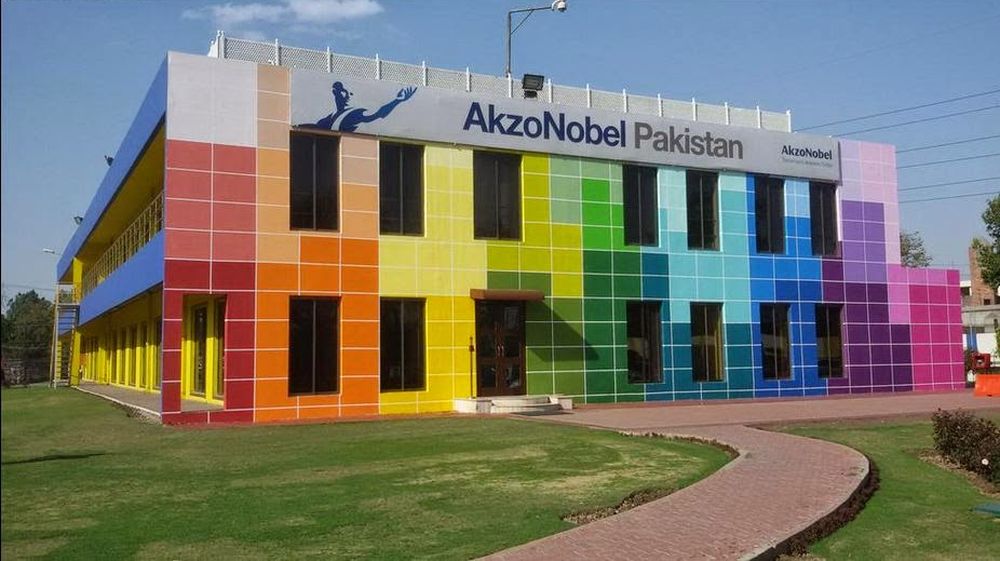
IGI Investments (Private) Limited, a wholly owned subsidiary of IGI Holdings Limited, has received in-principle approval from its board to evaluate the potential acquisition of up to 100% of Akzo Nobel Pakistan Limited, according to a notice filed with the Pakistan Stock Exchange on Wednesday.


Ad powered by advergic.com

The development comes as Akzo Nobel NV has decided to exit the Pakistan market, paving the way for a complete divestment of its local operations.

The board authorized management to conduct due diligence and assess the purchase of up to 98.3% of Akzo Nobel Pakistan’s shares from ICI Omicron B.V., a wholly owned subsidiary of Akzo Nobel NV, and up to 1.7% from minority shareholders.


Ad powered by advergic.com


ALSO READ
Mari Energies Announces Oil and Gas Discovery
“The proposed transaction will be carried out subject to the results of satisfactory due diligence, finalization of the transaction structure, negotiation of purchase price with the substantial shareholder, execution of a definitive agreement, and compliance with applicable laws and regulatory approvals,” IGI Holdings said in the statement.

Akzo Nobel Pakistan, part of the global Akzo Nobel Group, is a leading player in the country’s paints and coatings industry, with its head office in Lahore and operations nationwide.

The company focuses on delivering sustainable and innovative solutions across various sectors.
 
@LC150

I suspect it will be acquired by SABIC or some other Gulf petchem giant. No net loss to Pak economy.

Regards
 

Users who are viewing this thread

Latest Posts

Back
Top