Pakistan's sea rescue goes unmanned
Prepares to introduce UAVs to aid serach, rescue operations across coastal waters
Aftab Khan
February 06, 2026
KARACHI: The unforgiving waters of the Arabian Sea, where fishing launches and merchant vessels routinely brave strong winds and towering waves, are set to receive a new guardian.
As accidents involving fishing launches and cargo vessels continue to challenge maritime responders amid strong winds and towering waves, Pakistan is preparing to introduce unmanned aerial vehicles (UAVs) to transform search and rescue operations across its coastal waters.
The Pakistan Maritime Security Agency (KSA) has decided to induct high-speed drones equipped with advanced cameras and sensors to monitor maritime emergencies, provide real-time situational awareness and assist rescue teams operating within a 200 nautical mile, or roughly 360 kilometre, radius.
Deputy Director General MSA Commodore Syed Nauman Ali said the drones will play a central role during accidents at sea, guiding operational teams, identifying exact locations and transmitting live video feeds from incident sites. The system will also allow responders to drop life jackets and floating bags directly to individuals struggling in the water.
Until now, initial rescue efforts relied on low-capacity Defender aircraft, whose deployment depended on weather conditions, fuel availability and clearance from air traffic control, often delaying operations at critical moments. The new drone fleet, expected to become operational by the end of this year, aims to remove those constraints and enable quicker, more flexible responses.
According to Commodore Nauman Ali, preparations for the project have been completed, and the unmanned systems will soon be integrated into the agency's maritime fleet.
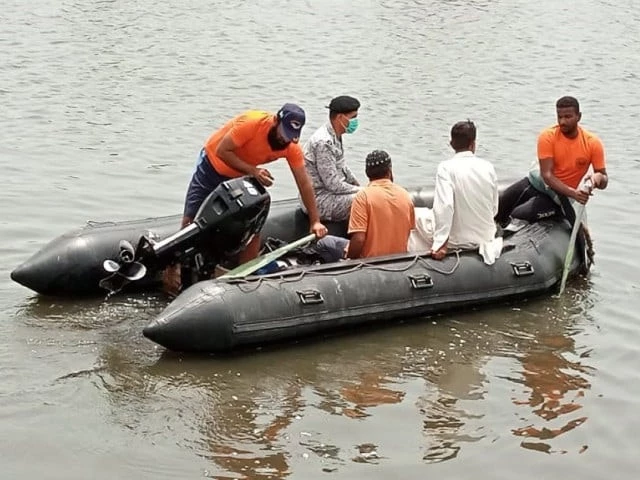
Once deployed, the drones will immediately reach accident zones, relay audio and video updates to command centres and continuously guide fast-response boats and helicopters equipped with winching systems for human extraction.
The drones will also remain airborne over rescue locations to provide sustained operational support, allowing teams on the ground and at sea to coordinate movements with greater precision. Emergency kits, along with flotation devices, can be delivered directly to distressed individuals while larger rescue assets are mobilised.
A UAV, commonly known as a drone, operates without an onboard pilot, relying instead on remote control, computer systems or autopilot technology. These aircraft are guided through satellite links and GPS, with some capable of autonomous route identification.
They are fitted with high-resolution and thermal cameras, enabling detection of heat signatures even at night, while radar sensors allow visibility through rain, darkness and high waves.


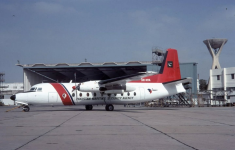
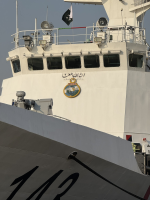
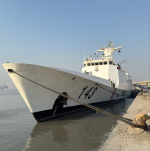
 Maritime Security Agency (PMSA) Kashmir-class Maritime Patrol Vessel, PMSS KASHMIR (143).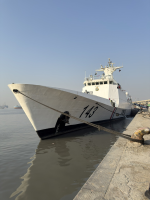


 My mummy's grave third time vandalized by wahabi / deobandi movleez because my mummy name is margarte (3 Viewers)
