Pakistan - Middle East Relationship News

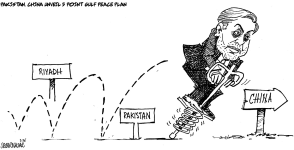
An interesting analysis from Mr Mushahid Hussain, a well-connected guy. The diplomatic activity by Pakistan, Turkey, Saudi Arabia and Egypt may not only be about stopping the current war, but also to lay the foundation for replacing the US as the security provider in the Mideast aka a Muslim NATO of sorts.

To view this content we will need your consent to set third party cookies.
For more detailed information, see our cookies page.


I think Netanyahu recognizes this and came up with this own alternative alliance between Israel and GCC states.
 
To view this content we will need your consent to set third party cookies.
For more detailed information, see our cookies page.
 

Trump halts Iran attacks after talks with PM Shehbaz Sharif, Field Marshal Asim Munir; US, Iran reach ceasefire agreement

News Desk
April 8, 2026

1775644264442.png

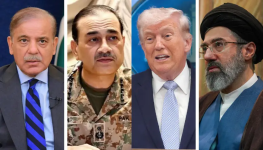
Combination photo (L-R) shows PM Shehbaz Sharif, CDF and COAS Field Marshal Asim Munir, US President Donald Trump, and Iran’s Supreme Leader Ayatollah Mojtaba Khamenei. — DawnNewsTV

Pakistan on Wednesday announced that the Islamic Republic of Iran and the United States of America, along with their allies, had agreed to an immediate ceasefire, including in Lebanon, effective immediately, and invited their delegations to Islamabad on April 10 for talks aimed at reaching a lasting settlement of disputes.

Prime Minister Shehbaz Sharif announced the ceasefire in an early-morning post on X, welcoming the move and extending his “deepest gratitude” to the leadership of both countries.
 
To view this content we will need your consent to set third party cookies.
For more detailed information, see our cookies page.
 
Both sides have displayed “remarkable wisdom and understanding” and remained constructively engaged in furthering the cause of peace and stability, the prime minister said, expressing hope that the ‘Islamabad Talks’ would succeed in achieving sustainable peace and that more positive developments would follow in the coming days.

The prime minister, who helped mediate the ceasefire, also invited delegations from both countries to Islamabad on April 10 to “hold further negotiations towards a conclusive agreement to settle all disputes”.

However, White House Press Secretary Karoline Leavitt said the US has not yet agreed.

“There are discussions about in-person talks, but nothing is final until announced by the President or the White House,” Leavitt said.

Israel has also agreed to the ceasefire deal between the United States and Iran, a White House official confirmed.

According to a statement issued by Israeli Prime Minister Benjamin Netanyahu, Israel supported Trump’s decision, but it maintained that the ceasefire “does not include Lebanon”.
 

Iran confirms participation in peace talks​

Iran President Masoud Pezeshkian on Wednesday confirmed Tehran’s participation in the possible peace talks with the United States in Islamabad for finalising a peaceful settlement to their conflict, the Prime Minister’s Office said.

The confirmation came during a phone call with PM Shehbaz Sharif this afternoon, which lasted for over 45 minutes, according to PMO.

Pezeshkian “confirmed that Iran would be participating in the negotiations in Islamabad”, the statement said.

Terming the conversation “warm and cordial”, the PMO said the premier conveyed his “deep appreciation for the wisdom and sagacity of the Iranian leadership in agreeing to the ceasefire and for accepting the prime minister’s offer to host negotiations between Iran and the US in Islamabad later this week”.
 

Gulf states welcome ceasefire​

Members of the Gulf Cooperation Council (GCC), including Saudi Arabia and Oman, welcomed the ceasefire.

Saudi Arabia’s Foreign Ministry, in a statement, expressed hope that the two-week truce would lead to a “comprehensive and sustainable de-escalation”.

The kingdom also called for an end to attacks on countries in the Gulf and stressed that the Strait of Hormuz should be opened.

Meanwhile, Oman appreciated Pakistan’s role in helping secure the ceasefire.

In a statement, the Gulf state’s foreign ministry affirmed the “importance of intensifying efforts now to find solutions capable of ending the crisis at its roots”.

Meanwhile, Minister of State of Qatar Dr Mohammed bin Abdulaziz Al-Khulaifi appreciated Pakistan’s “constructive role in fostering peace” in a phone call with Deputy Prime Minister and Foreign Minister Ishaq Dar, the Foreign Office said.

According to the FO, “on the latest regional developments, DPM/FM shared Pakistan’s sustained efforts to promote dialogue and diplomacy for peace and stability in the region”.

It added that the Qatari minister of state applauded Pakistan’s efforts in “fostering peace”.
 

Trump agrees to two-week ceasefire​

The breakthrough came after a request by Pakistan, with US President Donald Trump saying early on Wednesday that he would suspend the bombing of Iran for two weeks if Tehran fully reopened the vital Strait of Hormuz.

At the same time, Iran said that if attacks against the country were halted, it would cease its defensive operations and that safe passage through the Strait of Hormuz would be possible for two weeks.

Trump’s statement came less than two hours before his ultimatum (8pm ET on April 8) for Iran to make a deal and reopen the Strait of Hormuz was set to lapse.

On Tuesday, he had renewed his threat to Iran, saying “a whole civilisation will die tonight”, as Tehran showed no sign of accepting his ultimatum.

With hours left for the deadline to end, Prime Minister Shehbaz Sharif took to the social media platform X to say, “Diplomatic efforts for peaceful settlement of the ongoing war in the Middle East are progressing steadily, strongly and powerfully with the potential to lead to substantive results in the near future.

“To allow diplomacy to run its course, I earnestly request President Trump to extend the deadline for two weeks,” he said.

Pakistan has positioned itself as a facilitator in the peace process between Tehran and Washington for an end to ongoing hostilities in the Middle East that began with the US and Israel launching strikes in Iran on February 28.
 

How the countdown to Trump's Iran deadline ticked

Freya Scott-Turner
BBC Live reporter

On Sunday, Donald Trump demanded that Iran reopen the Strait of Hormuz by 20:00 EDT on Tuesday (00:00 GMT / 01:00 BST). He later followed up with a threat to end Iran's "civilisation".

As the deadline approached, here's how the diplomacy and announcements unfolded...

12:06 GMT (13:06 BST): Donald Trump threatens that "a whole civilization will die tonight", unless Iran reopens the Strait of Hormuz.

15:28 GMT: Iran's foreign affairs spokesperson Esmaeil Baqaei says Iran's "logic" will prevail over "brute force".

19:17 GMT: []Pakistan's prime minister -[] who was mediating - asks Trump to extend his deadline "to allow diplomacy to run its course".

22:32 GMT: Trump announces a two-week "double sided ceasefire", if Iran agrees to "the complete, immediate and safe opening" of the Strait of Hormuz. The US president adds that a 10-point proposal he's received from Iran is "workable", and there will be a two week period to finalise the agreement.

23:11 GMT: Tehran confirms a two-week ceasefire and safe passage through the Strait of Hormuz if attacks against Iran stop.

23:50 GMT: Just minutes before Trump's deadline, Pakistan confirms the US and Iran have agreed to a ceasefire "effective immediately". The prime minister says it applies "everywhere including Lebanon".

01:45 GMT: Israel says that it supports the ceasefire, but adds that it "does not include Lebanon".

04:01 GMT: Trump hails a "big day for World Peace", saying the US will be "'hangin' around'" to help with traffic in the Strait of Hormuz.

06:05 GMT: Israel tells people in the southern Lebanese city of Tyre to evacuate "immediately" for their safety - with attacks later reported.
 
To view this content we will need your consent to set third party cookies.
For more detailed information, see our cookies page.
 
To view this content we will need your consent to set third party cookies.
For more detailed information, see our cookies page.
 
To view this content we will need your consent to set third party cookies.
For more detailed information, see our cookies page.
 
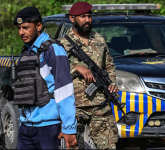
An operative of Pakistan’s Special Services Group (SSG) and an Islamabad Police officer stand alert as security is heightened to maximum level in the capital ahead of the US–Iran talks and the arrival of VVIPs.

1775731147345.png
 
To view this content we will need your consent to set third party cookies.
For more detailed information, see our cookies page.
 

Users who are viewing this thread

Back
Top