Pakistan Minerals and Mining Updates

US EXIM approves $1.25bn financing for Pakistan’s Reko Diq

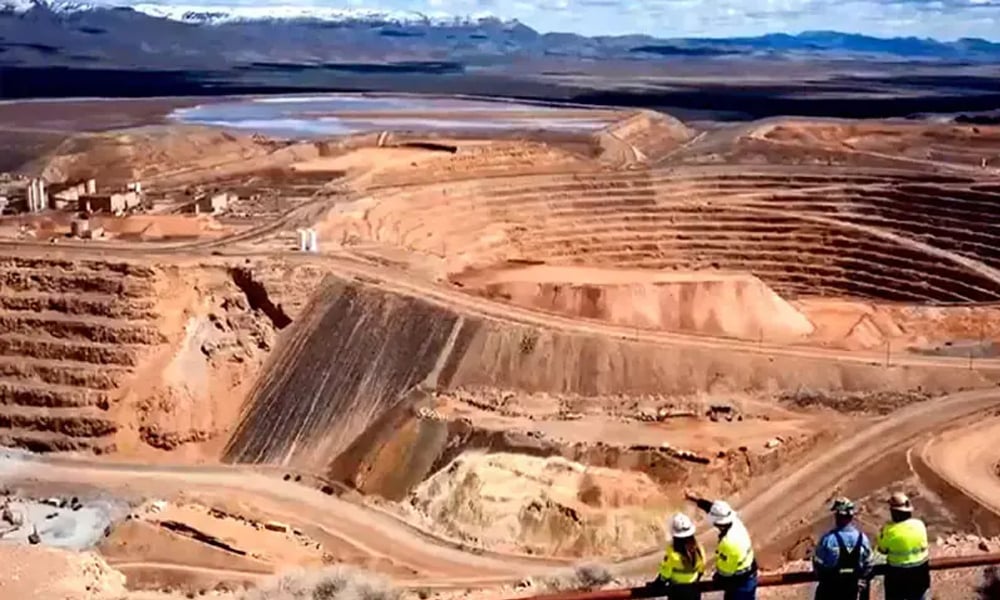
  • Reko Diq is a massive, undeveloped copper and gold deposit located in Balochistan
Ali Ahmed Published December 10, 2025 Updated 22 minutes ago

Facebook


Twitter


Whatsapp


Comments

US EXIM approves $1.25bn financing for Pakistan’s Reko Diq


Follow us
In a significant economic development, the US Export-Import Bank has approved financing of $1.25 billion to support the mining of critical minerals at Reko Diq in Pakistan.

“With a new commitment of $1.25 billion in EXIM Bank financing, the US-Pakistan partnership will drive economic growth in Balochistan,” the US Embassy said in a post on social media platform X on Wednesday.

Reko Diq is a massive, undeveloped copper and gold deposit located in Balochistan, Pakistan, which is believed to be one of the world’s largest. The project is a joint venture between Canada’s Barrick Gold (50%) and Pakistani stakeholders (50%) and aims to start production in 2028.


In a video message, Chargé d’Affaires Natalie Baker said that in the coming years, EXIM’s project financing will bring up to $2 billion “in high-quality US mining equipment and services needed to build and operate the Reko Diq mine”.

Along with creating an estimated 6,000 jobs in the US and 7,500 jobs in Balochistan, Pakistan, Baker said.

“The Reko Diq project serves as the model for mining projects that will benefit US exporters, as well as local Pakistani communities and partners by bringing employment and prosperity between both our nations.”

Baker added that the US President Trump administration has made the forging of these deals central to American diplomacy.

“We look forward to seeing further agreements between US companies and their Pakistani counterparts in the critical minerals and mining sector,” she concluded.

Last month, the US EXIM chair John Jovanovic told the Financial Times that the bank will invest $100 billion to secure US and allied supply chains for critical minerals, nuclear energy and liquefied natural gas.

The first tranche of deals will include projects in Egypt, Pakistan and Europe, Jovanovic told the newspaper.

In recent month, US-Pakistan ties have seen a significant revival, with both sides focusing on expanded economic engagement and security cooperation amid changing global dynamics.

Earlier in September, the US Strategic Metals (USSM) of the United States and Pakistan’s Frontier Works Organisation (FWO) signed a memorandum of understanding (MoU) worth $500 million to strengthen cooperation in the critical minerals sector, marking a step toward deeper economic and strategic engagement between the two countries.

Following the agreement, Pakistan successfully delivered its first batch of rare earth elements and critical minerals to USSM in the United States in October.
 
To view this content we will need your consent to set third party cookies.
For more detailed information, see our cookies page.
 

Balochistan minerals: Five major business groups announce investment plans​

Lake City Holdings, Fatima Group, Deen Group, Hilton Group, and Surti Group - have announced investments worth billions of dollars in Balochistan​

NNI
69473a5d282fb.jpg

QUETTA: Five major business groups of Pakistan - Lake City Holdings, Fatima Group, Deen Group, Hilton Group, and Surti Group - have announced investments worth billions of dollars in Balochistan. The market value of these business groups is USD5 billion.

This comes after Mari Energies Limited disclosed that its wholly owned subsidiary, Mari Minerals (Private) Limited, has entered into a joint venture agreement with Globacore Minerals Limited for mineral exploration activities in the province.

At a recently-held ceremony, former federal minister and business icon Gohar Ejaz said that with the start of mineral development, an era of peace and progress will bring job opportunities in the country.

Reko-Diq: PM welcomes Australian interest in mining sector

Mari is a company owned by Mari Energies, while Globa Core Limited has expertise and experience in exploring gold and copper deposits in Balochistan. Under the agreement, investment will be made in the exploration of precious minerals in Chaghai.

Ijaz said Balochistan is a province rich in mineral resources and local Pakistani companies are investing in Balochistan, which will usher in an era of development and prosperity.
 

Foreign interest in mines, minerals set to transform Balochistan, says chief secretary​

Saleem Shahid25 Dec 2025
QUETTA: International interest in Pakistan’s mining sector is expanding beyond the major Reko Diq project, with companies from the UAE and the US exploring opportunities in mineral-rich districts, the chief secretary of Balochistan said on Wednesday.

Chief Secretary Shakeel Qadir Khan told senior journalists that the investment by Barrick Gold in the Reko Diq copper-gold project has paved the way for foreign firms to enter the Chagai district, an area where Chinese companies are already operating in Saindak.

He noted the Washuk district and southern areas of the province were rich in antimony, a silvery-gray metalloid primarily found in nature as the sulfide mineral stibnite. “American and other companies are interested in investment in this mineral which is more precious than gold and copper,” Mr Khan said.

Talks are currently underway between the government and foreign companies regarding the antimony reserves.

Claims US, UAE firms eyeing rare antimony reserves; province expects Reko Diq to yield $1bn annually by 2032
Regarding the Reko Diq project, Mr Khan said, “Balochistan will receive a 25 per cent share amounting to $1 billion annually without any provincial investment, which is equivalent to the province’s annual budget.” He said the project is expected to start production by 2032.

He said the project would facilitate the improvement of the Taftan-Quetta railway section and boost the regional economy. Additionally, a water pipeline costing Rs94bn ($338 million) is under construction to supply Reko Diq, Chagai, and surrounding areas.

He emphasised international mining agreements would economically transform Balochistan, providing extra financial resources for development in various sectors.

About administrative reforms, Mr Khan said the provincial government ensured merit-based appointments for commissioners and deputy commissioners across all 36 districts.

Similarly, he added, SSPs were posted on merit to strengthen law and order “without any political pressure”.

Mr Khan voiced support for merging the paramilitary Levies Force into the police, stating that irregularities dating back to the British era were identified within the force.

“Improved governance is essential for sustainable peace in Balochistan,” he said, adding that bureaucrats and politicians must work collectively to improve security and resolve provincial issues.

Mr Khan reported significant progress in the education and health sectors. He said 4,100 schools closed 28 months ago have been made functional, with 98.8pc of schools in the province now operational.

In healthcare, he said vaccination coverage increased from 37pc to 50pc, with no polio cases reported this year. He added that 164 previously closed Basic Health Units have been restored.

Mr Khan also highlighted fiscal discipline, noting that the timely release of development funds is now ensured to prevent project delays. He said the government has curtailed the discretionary powers of the Finance and Planning departments and digitised the billing system.

Mr Khan said fuel smuggling had been brought down from 12m litres to 800,000 litres a day, as the crackdown saved the national economy around Rs700bn.

Regarding energy, he said gas reserves in Dera Bugti were suitable for industrial fertiliser production rather than domestic use. He said the reserves would last 46 years, with several companies showing interest.

Mr Khan concluded by emphasising the shared responsibility of governance.

Published in Dawn, December 25th, 2025
 
Fears about China’s control of the rare earth supply chain have bolstered demand for alternative suppliers

1767000610071.jpeg
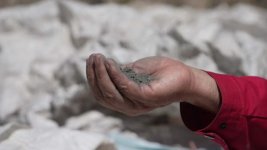
Antimony is crucial for missiles, batteries and flame retardants

For years, the only buyers for the antimony Jabbar Khan sourced from wildcat traders in Afghanistan were secretive Chinese intermediaries, who bargained hard over the price.

Now, Khan, chief operating officer at Himalayan Earth Exploration company, is fielding calls from US buyers interested in stockpiling the silvery-white rock vital to the production of missiles, batteries and flame retardants from Pakistan and central Asia.

The price of antimony trioxide has shot up to around $40,000 per tonne — off its peak of more than $60,000 as some users seek alternatives but still substantially higher than $26,000 in September 2024 — as fears about China’s control of the supply chains for metals including antimony have sparked a global race to secure supplies.

Thanks to US President Donald Trump’s desire to secure critical minerals, “the conversations we had been pushing for seven years, especially around antimony, finally started gaining traction both in Pakistan and the United States”, said Liaqat Ali Sultan, the chief executive of Himalayan.

Pakistan at present produces a small amount of mined antimony — much of it on the mountainous border with Afghanistan where militants this year have killed more than 1,700 people — and holds just one per cent of the world’s reserves, according to the US Geological Survey. China has around a third of global reserves while Russia has almost a fifth.

But so eager is Pakistan to reap the rewards of the global race for critical minerals that advisers to Field Marshal Asim Munir, the country’s army chief and its de facto most powerful official, have suggested building a bespoke terminal to ferry antimony to the US.

Last month, Pakistan-based Himalayan signed a “strategic partnership” with Nova Minerals, a company dual listed in Australia and the US, to “strengthen US-Pakistan economic ties” through exploring for antimony.

Nova, which received a $43mn grant from the US defence department this year to explore for gold and antimony in Alaska, does not at present produce any antimony but said in September that it aimed to produce “military-grade antimony by 2026/27”.

Christopher Gerteisen, Nova’s chief executive, said his company will buy “over 100 tonnes” of Pakistani antimony concentrate for about $2mn early next year for testing and processing in Alaska. It may eventually set up “downstream processing” of the ore in Pakistan, he said. “The Department of War encouraged us to go out in the world and find whatever we can,” he added, using the Trump administration’s preferred name for the defence department.

Missouri-based US Strategic Metals in September agreed with Pakistan’s military and political leaders to collaborate on “critical minerals essential for the defence, aerospace and technology industries”. The company’s planned US processing plant and mine are not yet operational. It received a small sample of Pakistani antimony in October for quality testing.
 
@Dalit bro

Rare earths and trace minerals are once in a lifetime opportunity for Pakistan. Hope they ocnvert it into revenues: and revenues into development.

Regards
 

Pakistan emerges on radar of US firms for critical mineral exports: FT

  • Pakistan holds only 1% of global antimony reserves
BR Web Desk
December 29, 2025

Pakistan is emerging as a potential beneficiary of the global race for critical minerals, with rising US interest in antimony opening a window for the country’s mining sector, reported the Financial Times (FT) on Monday.

According to the report, Pakistan, which was largely viewed as a source of raw ore destined for Chinese buyers, is now drawing attention from American defence-linked companies seeking to diversify supply chains away from China.

“For years, the only buyers for the antimony Jabbar Khan sourced from wildcat traders in Afghanistan were secretive Chinese intermediaries, who bargained hard over the price.


“Now, Khan, chief operating officer at Himalayan Earth Exploration company, is fielding calls from US buyers interested in stockpiling the silvery-white rock vital to the production of missiles, batteries and flame retardants from Pakistan and central Asia,” read the report.

According to FT, the price of antimony trioxide has risen to around $40,000 per tonne as fears about China’s control of the supply chains for metals, including antimony, have sparked a global race to secure supplies.

Thanks to US President Donald Trump’s desire to secure critical minerals, “the conversations we had been pushing for seven years, especially around antimony, finally started gaining traction both in Pakistan and the United States”, Liaqat Ali Sultan, the chief executive of Himalayan Earth Exploration, told FT.

Despite holding just 1% of the world’s antimony reserves and producing only a small quantity, Pakistan has come under the radar of US companies.
 
Earlier in September, Pakistan’s Frontier Works Organisation (FWO) and the United States (US) US Strategic Metals (USSM) signed a memorandum of understanding (MoU) worth $500 million to strengthen cooperation in the critical minerals sector, marking a step toward deeper economic and strategic engagement between the two countries.

USSM’s planned processing plant and mine are not yet operational. However, it received a small sample of Pakistani antimony in October for quality testing, read the report.

FT highlighted that miners complain that Pakistan remains at the lower end of the value chain, with little processing or refining capability.

“Almost all of our raw antimony comes out of artisanal mines from north-west mountain regions and disappears into the hands of Chinese buyers at Karachi’s port, usually far below market rates,” said one veteran of Pakistan’s mining sector.

Still, Nova’s Gerteisen says that he and other US buyers are willing to offer prices well above those of Chinese competitors. “Pakistan is a virgin country for mineral exploration,” he told FT.
 
Rename thread to "Fauj-USA" mineral update. These minerals do not belong to the people of Pakistan.

As you know, Fauj know best and stupid civilians should stay out of this.
 

US-based Nova Minerals confirms exploratory talks with Pakistan on antimony sourcing​


Company says preliminary discussions have been held in relation to sourcing antimony concentrate for testing purposes, principally to assess plant capability and all discussions remain exploratory in nature


Nova Minerals Limited, a US-based, NASDAQ- and ASX-listed exploration-stage company focused on gold and critical minerals, has clarified that it has held preliminary discussions with Pakistan regarding the sourcing of antimony concentrate for testing purposes, primarily to assess plant capability, and that all such discussions remain exploratory in nature.


The clarification followed media reports suggesting that the company was pursuing arrangements to acquire antimony from Pakistan.

In a press release, Nova Minerals Limited said it had become aware of media coverage speculating about its potential acquisition of Pakistani antimony, including a December 29, 2025 article published by the Financial Times. The article cited comments attributed to the company’s chief executive regarding a possible purchase of more than 100 tonnes of antimony from Pakistan.

“The company wishes to clarify that, while preliminary discussions have been held in relation to sourcing antimony concentrate for testing purposes principally to assess plant capability, all discussions remain exploratory in nature,” Nova Minerals stated.

Nova said it would disclose the terms of any arrangement that becomes binding and material in accordance with applicable exchange listing rules, if and when such an agreement is concluded.


The company added that its primary focus in 2026 remains the completion of the feasibility study for its gold assets and the commencement of production of military-grade antimony trisulfide, supported by a recent $43.4 million award from the U.S. Department of Defence.

Last month, Pakistan-based Himalayan signed a “strategic partnership” with Nova Minerals, a company dual listed in Australia and the US, to “strengthen US-Pakistan economic ties” through exploring for antimony, FT reported.

FT quoted Nova’s CEO Christopher Gerteisen as saying that his company will buy “over 100 tonnes” of Pakistani antimony concentrate for about $2 million early next year for testing and processing in Alaska. It may eventually set up “downstream processing” of the ore in Pakistan.


“The Department of War encouraged us to go out in the world and find whatever we can,” he added, using the Trump administration’s preferred name for the defence department.

Earlier, in September 2025, Missouri-based US Strategic Metals agreed with Pakistan’s military and political leaders to collaborate on “critical minerals essential for the defence, aerospace and technology industries”.

The company’s planned US processing plant and mine are not yet operational. It received a small sample of Pakistani antimony in October for quality testing.
 
To view this content we will need your consent to set third party cookies.
For more detailed information, see our cookies page.
 
A few months back , there was a lot of propoganda about the huge investment coming from US Strategic Metals and the company's executives were given a red carpet welcome and personal audience with both Cartoon e Azam and Failed Marshal.

Sometime after that, this company signed a small MoU with a minor Australian company in the Australian embassy and that function was not even attended by the Australian Ambassador. Yet if features prominently in the media section of their website , whereas Pakistan is not mentioned anywhere despite all the stops being pulled out at the highest level. This is the reality in almost every situation, including claims of finding massive oil reserves and huge orders for Pakistani weapons. A new propoganda story is pushed every few months to fool the people ( except that no one except hardcore faujeets and Patwaris gets fooled) and then, once it dies a natural death, it is buried and a new story is pushed.


@Owaiz sb

A new propaganda story is pushed every few months to fool the people

I have a slightly different perspective on this. These kinds of stories are necessary to ensure that people don't get too depressed and lose faith in the nation.

Regards
 
@Owaiz sb

A new propaganda story is pushed every few months to fool the people

I have a slightly different perspective on this. These kinds of stories are necessary to ensure that people don't get too depressed and lose faith in the nation.

Regards
Sir, you think people are stupid that they can't see past these fake stories after decades of seeing them being rehashed ?
 

Users who are viewing this thread

Pakistan Defence Latest

Country Watch Latest

Latest Posts

Back
Top