Pakistan Minerals and Mining Updates

Pakistan signs 13 mining agreements at PMIF 2026 as lenders signal $1.3 billion financing interest​

Partnerships target copper, gold and critical mineral exploration in Balochistan, alongside geological surveys, laboratory development and technical cooperation with international agencies

Pakistan signs 13 mining agreements at PMIF 2026 as lenders signal $1.3 billion financing interest


ISLAMABAD: Pakistan signed 13 agreements and memoranda of understanding (MoU) with international mining companies and geological institutions during the two-day Pakistan Minerals Investment Forum (PMIF) 2026, while foreign lenders, including the US Export-Import Bank, expressed interest in providing $1.3 billion in financing for mining projects.

The agreements cover mineral exploration and development, geological surveys, laboratory infrastructure and technical cooperation, with several partnerships focusing on copper, gold and critical mineral deposits in Balochistan.

Oil and Gas Development Company Limited (OGDCL) Managing Director Ahmed Hayat, speaking to the media, said international participation had increased considerably compared with last year's forum, reflecting growing interest in Pakistan's mineral resources and investment opportunities.

Companies from the United States, China, Canada and the European Union established pavilions at the event, while mining companies and geological agencies from Türkiye, the United Kingdom, Germany, Japan and Australia were involved in agreements covering exploration and technical development.

Hayat attributed the increased investor interest to improvements in Pakistan's regulatory and legal environment, particularly greater stability in licensing policies.

He said major international banks had indicated their willingness to finance mining projects, with the potential financing discussed at the forum reaching $1.3 billion.

The financing interest, however, was separate from the agreements signed during the event, which primarily established frameworks for cooperation, exploration and future project development.

Among the major agreements, Mari Minerals entered into three separate strategic arrangements for mineral exploration in Chagai, Balochistan, involving Turkish mining companies and Ivanhoe Atlantic.

The company signed a strategic framework with Türkiye's Lidya Mining for mineral exploration and development in Chagai. Mustafa Aksoy, chief executive officer of Lidya Mining, exchanged the agreement.

Mari Minerals also entered into a joint venture framework with MTA International Company (MTAIC), another Turkish entity, to explore and develop copper, gold and associated mineral deposits in the district.

Dr Nail Yildirim, general manager of MTAIC, represented the Turkish company during the exchange.

A separate agreement between Mari Minerals and Ivanhoe Atlantic established a framework for mineral exploration and mining projects in Chagai. The documents were exchanged by Mari Minerals Managing Director and Chief Executive Officer Faheem Haider and Bradley Doig, chief executive officer of I-Pulse Technologies.

The Frontier Works Organisation (FWO) also signed a memorandum of understanding with Ivanhoe Mines to collaborate on mineral exploration and mining projects in Chagai.

FWO Chief Executive Officer Engineer Abdul Sami and Ivanhoe Mines founder and co-chairman Robert Friedland exchanged the agreement.

The Pakistan Mineral Development Corporation (PMDC), meanwhile, entered into a partnership with MTAIC to explore antimony, copper, gold, silver, molybdenum and other critical minerals in Pishin, Balochistan.

PMDC Chief Executive Officer Engineer Asad and MTAIC General Manager Dr Nail Yildirim exchanged the agreement.

Another partnership involving PMDC and UK-based International Geosciences Services will focus on assessing gemstone resources in accordance with the Joint Ore Reserves Committee (JORC) reporting standards and developing a model mine that could be replicated elsewhere.

British High Commissioner Jane Marriott, Dr Fergal Murphy and PMDC Chief Executive Officer Engineer Asad participated in the agreement exchange.

Alongside mineral exploration, the forum produced agreements intended to strengthen Pakistan's domestic capacity to test mineral samples and conduct geological investigations.

Mari Minerals and UK-based MSALABS Limited, a subsidiary of Capital Limited, formed a joint venture incorporated as Mari MSA Labs (Private) Limited to establish a commercial mineral assay laboratory in Pakistan.

The proposed facility is intended to provide mineral testing and analytical services, an important component of exploration programmes that require laboratory assessment of samples to determine their mineral content and quality.

Brian Rudd, executive director of Capital Limited, attended the agreement exchange.

Globacore Minerals signed two separate agreements involving advanced geological exploration technologies.

The first, with Shift Geophysics and Southern Geosciences, covers airborne geophysical surveys, which can help identify geological structures and potential mineral-bearing areas by collecting measurements from aircraft.

The agreement was exchanged by Globacore Chief Executive Officer Ali Mukhtar and Development Manager Takashi Sato.

Globacore also partnered with Fleet Space ANT for ambient noise tomography, a technology used to investigate underground geological structures through seismic measurements.

Fleet Space was represented by Executive Sales Leader Patricio James.

The Geological Survey of Pakistan (GSP) secured four international cooperation arrangements aimed at improving geological research, technical capabilities and institutional coordination.

Pakistan and Japan exchanged a statement of intent to strengthen support for the GSP, with Japanese Ambassador Akamatsu Shuichi and Ministry of Energy Secretary Hamed Yaqub Sheikh representing the two sides.

A tripartite memorandum of understanding was also signed between the GSP, Türkiye's General Directorate of Mineral Research and Exploration (MTA), and MTAIC.

The agreement was exchanged by GSP Director General Adnan Alam Awan, MTA Director General Vedat Yanik and MTAIC General Manager Dr Nail Yildirim.


Germany's Federal Institute for Geosciences and Natural Resources (BGR) entered into an agreement with the GSP covering geoscientific cooperation.

GSP Director General Adnan Alam Awan and BGR Vice President Dr Volker Steinbach exchanged the documents.

The GSP also signed an agreement with the British Geological Survey, represented at the exchange by British High Commissioner Jane Marriott and Dr Hamid Ashraf.

During the event, Marriott presented a commemorative shield to GSP Director General Adnan Alam Awan to mark the completion of a capacity-building programme undertaken through the UK-supported Revenue Mobilisation, Investment and Trade (REMIT) initiative.


Speaking about the broader investment outlook, Hayat said the participation of international mining companies and financial institutions indicated that Pakistan's mineral sector was moving towards a greater emphasis on investment and project development.

He also referred to the Reko Diq copper and gold project in Balochistan as an example of Pakistan's ability to attract and retain international investment in large-scale mining operations.

Hayat said Barrick's global chairman and senior management team had attended the forum and remained committed to accelerating progress on the Reko Diq project.

According to him, a project development strategy was being prepared to support the project's timely and cost-effective completion.


The OGDCL managing director also pointed to the agreements between the Geological Survey of Pakistan and foreign geological institutions as an important development for strengthening the country's mineral exploration capabilities.
 

Govt defers ML-3 for third time​

Funding woes stall $1b Reko Diq rail project amid renewed focus on minerals


ISLAMABAD:
The government has deferred the approval of a $1 billion Mainline-3 rehabilitation project of Pakistan Railways, which has been conceived to transport minerals from Reko Diq mines, due to funding constraints and a possible change in minerals' transportation port from Karachi to Gwadar.


The Central Development Working Party (CDWP), for the third time in the past five months, deferred approval of the Rs278 billion, or $1 billion, up-gradation of ML-3 track from Nokhandi to Rohri this month, according to the Ministry of Planning officials.

The 996-kilometre-long track has outlived its life, and trains are crawling at an average speed of 30 km per hour. It requires a complete rehabilitation to make it viable for heavy cargo of minerals to be extracted from the Reko Diq mines.

Government officials said that the project's approval had been postponed due to funding constraints and the possibility that the Reko Diq Mining Company, being run by Barrick Gold, could use Gwadar Port for the transportation of minerals.

The project was deferred for more information and details about bridge financing with Barrick Gold, said Ahsan Iqbal, Federal Minister for Planning, while responding to a question.

The government had already approved to take a $390 million loan from Reko Diq Mining Co at an estimated rate of 6% per annum as bridge financing to complete the ML-3 track. The official said that in case of any change in the plan to use Gwadar Port instead of Karachi Port, fresh commitments were also needed from the mining company on whether it would extend the loan.

The up-gradation of the track had been proposed to transport minerals through the Nokhandi-Quetta-Rohri and Karachi rail track. Sources said that there was a possibility that the minerals might now be transported through Gwadar Port, which would require making fully functional the Nokhandi-Panjgur and Gwadar road link.

The development came in the middle of renewed focus on Pakistan's mineral potential, and this week the executives of three companies, Barrick Gold, Ivanhoe Atlantic and Minmetals, addressed the Pakistan Minerals Investment Forum.

Also, a delegation of Barrick Gold Company met with Planning Minister Ahsan Iqbal this week and sought details of the road project that could be constructed, according to people privy to the discussions.


An official statement issued after the meeting read that Ahsan Iqbal "emphasised the need to fast-track the Nokhandi-Gwadar road corridor through close collaboration between the federal government, the government of Balochistan and mining companies to fast-track logistics connectivity.

Earlier, the project was considered twice by the CDWP, first in June and then in August. In the second last meeting, the CDWP decided "the project is kept on hold until the Ministry of Railways provides a consolidated picture of its funding requirements for the next five years, indicating the funding to be arranged from its own resources, the requirement from PSDP, and any alternative financing arrangement without PSDP funding".

While addressing the mineral forum, Prime Minister Shehbaz Sharif and Chief of Defence Forces Field Marshal Syed Asim Munir emphasised the need to export finished mineral products instead of just the raw material.

The Quetta-Taftan rail section is also part of the transport corridor between Pakistan, Iran and Turkiye. All passenger and freight traffic of the Railways passes through this section to Iran and Turkiye. However, owing to the poor and dilapidated condition of the track, rail traffic has been drastically reduced.

At present, one or two freight trains per month ply between Quetta and Taftan. The government hopes that after rehabilitation of the ML-3 track, freight traffic up to eight sets of freight trains and other freight trains towards Iran and other countries will give a boost to freight traffic manifold and resultantly revenue generation.

However, the Planning Commission observed during project scrutiny meetings that project documents were silent about the consultation and coordination held with Reko Diq Mining Company.

According to the finance ministry officials, the company had promised funding through bridge financing, which the government was supposed to return by June 2028 through a bullet payment.

For the current fiscal year, only Rs250 million has been allocated for the project. The Planning Commission was of the view that if the funding could not be arranged, then the project would be delayed and, as a result, the cost would increase tremendously based on experiences in the case of railway projects.

At the agreed interest rate, the total repayment to the company will be nearly $450 million, according to the government officials. They said that during review meetings, Ahsan Iqbal also inquired from the Ministry of Railways about the source of funding, as it would not be possible to fund the project through the Public Sector Development Programme (PSDP).

The minister had also directed the Ministry of Railways to provide a consolidated picture of its funding requirements for the next five years, including the proposed works on ML-3, ML-2 and ML-1. The minister stated that the Ministry of Railways should undertake projects according to the availability of funds, observing that its development portfolio was limited to around Rs40 billion.

The government is already struggling to arrange funds for the ML-I (Karachi-Peshawar) project and is looking for multiple options, including a loan from the Asian Development Bank, a Frontier Works Organisation-led lease model and pledging the railways' land with the domestic commercial banks.
 
LOL - how can "Salt" have a "Before before end !!!!" ...

Could be the packaging starts to wear down by then? Someone told me the same about long term plastic water bottle storage when I was going full prepper the other week!
 

National Resources Limited identifies copper, gold mineralisation at eight sites in Balochistan​

Lucky Cement’s associated company reaffirms $100 million mineral exploration investment, plans technical studies from 2027, and targets completion of a bankable feasibility study by end of decade.

National Resources (Private) Limited (NRL) has identified copper and gold mineralisation across at least eight porphyry discoveries in Balochistan's Chagai district following nearly 25,000 metres of exploratory drilling.

Lucky Cement and Fatima Fertilizer disclosed the development through separate notices sent to the Pakistan Stock Exchange (PSX) on Monday.

NRL is a wholly Pakistani-owned mineral exploration company backed equally by three industrial groups through Fatima Fertilizer Limited, Liberty Mills Limited and Lucky Cement Limited, each holding a 33.33% stake.

As per disclosures, the exploration programme had produced encouraging results, and the company was working towards its first Mineral Resource Estimate (MRE) in accordance with international standards.

The company said further exploration and technical assessments would be required to establish the size of the mineral resources, with formal estimates yet to be completed.

NRL plans to begin environmental, hydrogeological, metallurgical and geotechnical studies in 2027, with the objective of completing a bankable feasibility study by the end of the decade.

The company also reaffirmed its previously announced commitment to invest $100 million in mineral exploration in Pakistan and said it intended to bring additional domestic and international investors into the project as required.

The company said its technical workforce was almost entirely Pakistani and that it was supporting education and community development initiatives in Balochistan through the newly established Chagai Foundation.

Lucky Cement said it would continue to inform shareholders and the stock exchange of further material developments related to NRL's exploration activities.

NRL currently holds five exploration licences in Balochistan, including two for copper and gold, one for lead and zinc, and two for antimony.

The company's two copper and gold exploration licences are located in Chagai district. Licence EL-214 covers 500.7 square kilometres, while EL-390 covers another 488.3 square kilometres, bringing the combined exploration area for these minerals to 989 square kilometres.

In Pishin district, NRL holds two antimony exploration licences, EL-398 and EL-498, covering 401.2 and 401.3 square kilometres, respectively. Together, the two licences account for 802.5 square kilometres.

The company's fifth licence, EL-352, covers 37.7 square kilometres in Khuzdar district and is designated for exploration of barite, lead and zinc.


Marri energies, FWO and now this. In a year we already have first findings of exploration activities in Chagai Balochistan. Terrorists had little to no impact.
 

Location of 75,000 Tolas of Gold Confirmed in Rivers of Punjab​

By Rija Sohaib | Published Nov 18, 2026 | 5:39 pm


Significant progress has been made in the search for gold reserves in Punjab’s rivers, with a preliminary NESPAK report revealing the presence of 75,000 tolas of gold in a single block.

Provincial Minister for Minerals Sardar Sher Ali Gorchani confirmed the presence of gold reserves in Punjab’s rivers, saying the deposits in Attock, Mianwali and the Sutlej river areas have been divided into nine blocks.

Value and Investment​

According to the provincial minister, the initially discovered 75,000 tolas of gold are worth more than Rs30 billion, while approximately Rs20 billion in investment will be required to extract the gold.

He said the total value of the gold reserves could reach hundreds of billions of rupees. The Geological Department’s report also revealed the presence of 480,000 tolas of gold in two blocks.

The Way Forward​

According to the government, NESPAK has begun surveys to determine the amount of gold in the remaining blocks. Once final reports for all blocks are compiled, an international auction process will be initiated for the exploration and extraction of the gold reserves.
 

DPM Dar says Pakistan’s natural resources could be worth up to $10 trillion​

Says govt committed to ensuring projects of strategic importance not suffer from institutional fragmentation or delay


Deputy Prime Minister and Foreign Minister Ishaq Dar said Pakistan’s natural resources, including minerals, hydrocarbons and gemstones, were conservatively estimated to be worth between $8 trillion and $10 trillion, as he welcomed a Turkish seismic research vessel at Karachi Port on Friday.

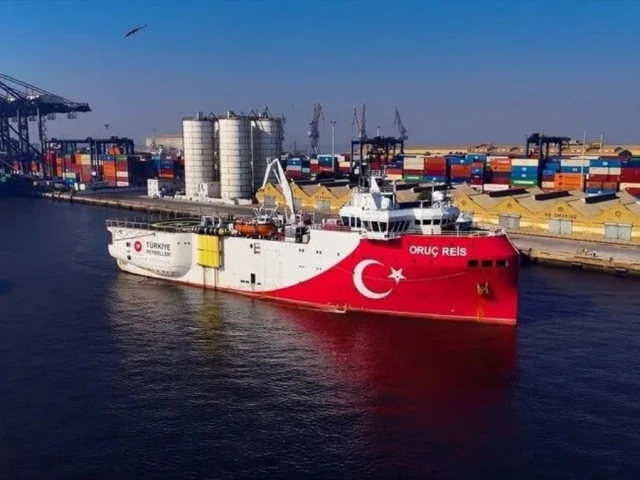
Addressing a ceremony marking the arrival of the Turkish vessel Oruç Reis in Karachi, DPM Dar said, “Sometimes people talk about Pakistan being a heavily indebted country or a debt-trap country. I always negate [that]. The total debt of Pakistan, the Government of Pakistan, is about $100 billion. If you include the liabilities in foreign exchange of private companies and public sector enterprises, the total amount is $130 billion.”

“The most conservative estimate of the things I counted — the mines and minerals, natural resources, hydrocarbons, gemstones and other God-gifted natural resources in this country — is anything between $8 trillion and $10 trillion.”

The deputy prime minister said the arrival of the vessel marked “a new chapter of scientific exploration and strategic cooperation” between Pakistan and Turkey, built on the two countries’ longstanding friendship.

“On behalf of the Prime Minister Shehbaz Sharif, our government and the people of Pakistan, I convey our deepest gratitude to Turkish President Recep Tayyip Erdogan, and to my brother, Foreign Minister of Turkey, Mr Hakan Fidan, for their personal commitment to strengthening relations between Pakistan and Turkey,” he said.

He also welcomed Turkey’s Minister of Energy and Natural Resources, Alparslan Bayraktar, and thanked the Turkish government and people for standing alongside Pakistan.

“The bond between Pakistan and Turkey predates the establishment of Pakistan itself, with roots in the solidarity extended by the Muslims of South Asia to the Turkish people during defining moments in their history,” Dar said.

“Since then, our peoples have stood together through tough times of trial and triumph. The highest tribute we can pay to our shared past is to convert that spirit into opportunities for our peoples," the deputy prime minister added.

The Oruç Reis will bring together Turkish scientific expertise and the experience of Pakistan’s national energy companies to conduct advanced exploration in the country’s offshore domain, he said.

“Every successful journey of exploration begins with knowledge. The data gathered by this vessel may deepen our understanding of the geological structures beneath the seabed and provide a stronger basis for Pakistan’s future exploration plans,” Dar said.

Earlier, addressing the same ceremony, the Turkish energy and natural resources minister said the seismic research vessel Oruç Reis would collect three-dimensional (3D) seismic data across 670 square kilometres of Pakistan’s Indus offshore basin, with exploration operations in identified fields targeted for 2027.

Bayraktar said it had arrived to assess the potential of the Indus and Makran basins, following agreements signed between the two countries in Islamabad last year.

He said a partnership had been established between Turkish Petroleum Corporation (TPAO) and Pakistan’s national energy companies — Oil and Gas Development Company Limited (OGDCL), Pakistan Petroleum Limited (PPL) and Mari Energies. Licensing processes had been completed for five blocks, comprising three offshore and two onshore blocks, and operations had begun.

“Based on the data that we are going to collect here, we aim to launch operations in the identified fields, Inshallah, next year in 2027,” Bayraktar said.

He expressed hope that the survey would lead to discoveries that would contribute to the development of both countries.

Bayraktar thanked PM Shehbaz, Chief of Defence Forces and Chief of Army Staff Field Marshal Asim Munir, Petroleum Minister Malik, Pakistani officials and technical teams for their support. He also acknowledged the Turkish and Pakistani navies for escorting the vessel during its voyage.

Describing the mission as strategically important amid disruption in global oil and gas markets, he said cooperation in Pakistan’s onshore and offshore fields would strengthen energy security and contribute to national prosperity.

Bayraktar cited Turkey’s experience in offshore exploration, recalling that it had discovered major natural gas reserves in the Black Sea in 2020 using seismic and drilling vessels. “That was the largest offshore discovery of the global market in 2020,” he said.

Turkey was currently producing around 10 million cubic metres of gas from those fields, supplying approximately four million households, he added. The country aimed to increase production to 40 million cubic metres, enough to supply 14 million households.

Bayraktar said Turkey had brought the experience, expertise and engineering capabilities gained from those operations to Pakistan. He identified energy, power and mining as areas with further potential for cooperation, adding that additional agreements between the countries’ national mining companies and institutions would be signed at the ceremony.

He expressed hope that the partnership would lead to projects that would shape energy markets, bilateral trade and the economies of both countries.

According to the Turkish Ministry of Energy and Natural Resources, the Turkish seismic research vessel Oruç Reis is a specialised survey ship equipped to collect seismic data from beneath the seabed to assess the potential presence of offshore oil and gas reserves.

During its mission in Pakistan, the vessel is expected to conduct surveys in the Indus and Makran offshore basins, gathering geological data that could help identify areas for future exploration and drilling. The survey will include 3D seismic data collection over an area of 670 square kilometres in the Indus-C Block, followed by 2D seismic surveys covering 2,353 kilometres of survey lines in the Makran blocks.

The findings are expected to provide a clearer picture of Pakistan’s offshore hydrocarbon potential, although seismic surveys alone cannot guarantee commercially viable discoveries

The Offshore Bid Round 2025 was launched in January last year after an 18-year hiatus, offering exploration licences for 40 offshore blocks in the Indus and Makran basins off Sindh and Balochistan.

Türkiye's national oil company, Turkish Petroleum Corporation (TPAO), secured a 25 per cent stake and operatorship in Offshore Block-C, signalling growing international interest in Pakistan's offshore hydrocarbon potential.

A recent basin study by US-based consultancy DeGolyer and MacNaughton (D&M) indicated substantial unexplored hydrocarbon potential in Pakistan's offshore basins, particularly in the Indus and Makran regions. Building on the findings, the government invited companies to explore various geological prospects in the areas.

Companies have committed 4,427 work units for the first phase of the initial three-year licence period, involving planned expenditure of around $80 million. During this period, they will undertake geological and geophysical studies, including seismic data acquisition and interpretation.

If initial findings are encouraging and exploration drilling proceeds, total investment under the programme could rise to between $750 million and $1 billion, according to the Petroleum Division.
 

Turkiye says it is starting offshore hydrocarbon exploration in Pakistan, plans drilling next year​

Research vessel will conduct 2D, 3D seismic data collection activities in two separate areas of Pakistani waters


Reuters/Anadolu AgencyNovember 20, 20264 min read
facebook twitter whatsup linkded email

A visual of Turkiye's Oruc Reis seismic research vessel which arrived in Pakistan on Friday. ANADOLU AGENCY


Turkiye's Oruc Reis seismic research vessel would begin exploration for hydrocarbon resources in offshore fields in Pakistan, ‌Turkish Energy Minister Alparslan Bayraktar said on Friday, adding that drilling was expected to start in 2027.

Bayraktar, who attended a ceremony to welcome Oruc Reis at Karachi Port alongside Deputy Prime Minister and Foreign Minister Ishaq Dar and Petroleum Minister Ali Pervaiz Malik, said ‌on ⁠X the vessel would carry out two- and three-dimensional seismic survey operations in the Indus and Makran basins to "uncover the potential there".


The step marked a "strong ⁠turning point" in energy cooperation between the two countries, he said, noting that it came at a ⁠time of turbulence in global oil and gas markets.


Meanwhile, Turkiye Communications Director Burhanettin Duran announced that the research vessel had arrived in Pakistan for its second intercontinental mission, following operations off the coast of Somalia.

Read: Turkish energy minister arrives in Karachi ahead of Oruç Reis offshore exploration mission

Duran said on the Turkish social media platform NSosyal that the vessel would conduct 2D and 3D seismic data collection activities in two separate areas of Pakistani waters.

The vessel, which previously carried out exploration activities in Turkish maritime zones and off the coast of Somalia, measures approximately 285 feet in length and 75 feet in width.


Duran said the Oruc Reis, equipped with advanced technology, a dynamic positioning system, and sophisticated seismic research capabilities, demonstrated Turkiye's engineering and technological capacity in energy exploration.

He emphasised that Turkiye continued to expand its national capabilities into new regions while strengthening strategic cooperation with partner countries.

"Under the leadership of our President Recep Tayyip Erdogan, we continue to strengthen our strategic cooperation with friendly and brotherly countries while bringing our national capabilities to new geographies in line with our goal of energy independence," Duran said.

He also wished the vessel's crew success in their new mission and thanked those involved in the project.

PM Shehbaz welcomes growing cooperation in energy sector

Separately, Prime Minister Shehbaz Sharif welcomed growing cooperation between Pakistan and Turkiye in the energy sector, expressing a desire to further expand bilateral collaboration in offshore oil and gas exploration, minerals and renewable energy.

The prime minister was speaking at a dinner hosted in honour of Bayraktar and his delegation, according to a statement from the Prime Minister's Office (PMO) posted on X.


PM Shehbaz said Pakistan and Turkiye enjoyed historic relations rooted in longstanding friendship, mutual trust, brotherhood and shared interests, the PMO stated.

The premier thanked Turkish President Recep Tayyip Erdogan for sending the vessel to Pakistan and extending full cooperation in the country's offshore oil and gas exploration project.

The prime minister said Pakistan wanted to benefit from Turkiye's experience and technical expertise to broaden cooperation in the energy sector.

He described the exploration of potential oil and gas reserves in Pakistan's maritime territory as an important development for the country's energy security and economic growth.

In his remarks, Bayraktar thanked PM Shehbaz for the warm welcome and hospitality extended to him and his delegation.

The Turkish energy minister said the arrival of the Oruc Reis in Pakistan marked the beginning of a new era of energy cooperation between the two countries.

Bayraktar further reaffirmed his country's commitment to utilising its technical expertise, scientific experience and engineering capabilities in collaboration with Pakistan, the PMO added.

He said the research vessel would conduct a three-dimensional (3D) seismic survey for approximately two months in the maritime areas off Sindh and Makran to identify potential oil and gas reserves.

The scientific data collected through the survey would help determine the prospects for future oil and gas exploration and drilling, Bayraktar added.

The Turkish delegation included Turkish parliamentarian and Pakistan-Turkiye Friendship Group President Ali Sahin, Turkish Ambassador to Pakistan Irfan Neziroglu and senior officials of the Turkish Ministry of Energy.

FM Dar, federal ministers Junaid Anwar Chaudhry, Attaullah Tarar, Malik and Sardar Awais Ahmed Khan Leghari, Prime Minister's Adviser Muhammad Ali, and Special Assistants Tariq Fatemi and retired Lieutenant General Muhammad Zafar Iqbal also attended the dinner.

Last month, Bayraktar said the planned ⁠operations off Pakistan had been delayed by about six months due to the war in Iran.

On December 3, Pakistan and Turkiye signed gas and mining deals, which would attract investments of over $300 million to boost mainly offshore drilling activities.
 

Users who are viewing this thread

Country Watch Latest

Back
Top