Pakistan Minerals and Mining Updates

This is a really small company and most legitimate corporates leaders from America would not go on the record with this level of chamchagiri of the Field Marshal , Prime Minister and his cabinet.

Why do a sweetheart deal instead of a competitive bidding where the biggest companies in the world are invited to participate ?

Because Pakistan want to lock in American investment in critical minerals for geopolitical reasons.
 
Because Pakistan want to lock in American investment in critical minerals for geopolitical reasons.
Then why not pick a large and experienced US company like Freeport-McMoran, Sourhern Copper, Newmont, Albemarle, MP Materials, etc, instead of an obscure company with a very limited track record ?
 
Then why not pick a large and experienced US company like Freeport-McMoran, Sourhern Copper, Newmont, Albemarle, MP Materials, etc, instead of an obscure company with a very limited track record ?

They will also come when they want. Beggars cant be choosers.
 
This is a really small company and most legitimate corporates leaders from America would not go on the record with this level of chamchagiri of the Field Marshal , Prime Minister and his cabinet.

Why do a sweetheart deal instead of a competitive bidding where the biggest companies in the world are invited to participate ?
Are you feeling jealous why the US even bothers to engage with "irrelevant" people like us?
 
To view this content we will need your consent to set third party cookies.
For more detailed information, see our cookies page.
 
ISLAMABAD: The cost of Pakistan’s flagship Reko Diq gold and copper mining project has increased by $1 billion to $7.7 billion following approvals by the boards of Oil and Gas Development Company Limited (OGDCL), Pakistan Petroleum Limited (PPL), and Government Holdings Private Limited (GHPL).

The approvals were granted during the companies’ annual general meetings on Wednesday, where shareholders endorsed the revised financial plan. The rise from the earlier $6.7 billion estimate reflects surging global construction costs, lingering supply chain challenges, and additional infrastructure requirements in Balochistan’s rugged terrain. Despite the escalation, stakeholders reaffirmed their commitment to the project, calling it vital for Pakistan’s mineral sector and foreign exchange earnings.

A source privy to the development confirmed the revised figure but noted that the $7.7bn includes contingencies that may not fully materialise, adding that the actual cost could remain closer to $7bn.


The meetings also discussed a financing arrangement through the Reko Diq Mining Company (RDMC) to provide $350 million to Pakistan Railways for the construction of a dedicated railway line connecting the mine to Port Qasim. The funding, to be extended as a loan under a sovereign guarantee from the federal government, will form part of the Main Line-III (ML-3) project. Pakistan Railways would be required to complete the railway track within three years to ensure timely mineral transport.

Mining activity at Reko Diq is scheduled to begin before the end of 2025, with commercial production expected by 2028. Over its projected lifespan, the project is anticipated to generate about $90 billion in revenues, making it one of the most significant mining ventures in Pakistan’s history.

Industry sources said the simultaneous approval of the revised financial plan and the commitment to rail financing marked an important milestone in moving the long-delayed project towards execution. They added that the railway link would address a critical logistical challenge while reducing immediate fiscal pressure on the federal government.


The Reko Diq project, located in Balochistan, is also expected to generate thousands of direct and indirect jobs, stimulate local businesses, and create new opportunities for regional development. For Islamabad, it represents both an economic lifeline and a test of its ability to implement mega-projects in collaboration with international investors.

Reko Diq Mining Company (RDMC) is jointly owned by Barrick Gold Corporation (50%), the Government of Pakistan (25%), and the Government of Balochistan (25%), with the latter split between a fully funded stake and a free-carried basis. The project was restructured under this ownership framework in December 2022 to pave the way for its revival.

Prime Minister Shehbaz Sharif has previously directed authorities to ensure the Reko Diq mining project is linked to the railway network by 2028 to support future cargo and export needs.


It is also pertinent to mention that the project is also expected to generate thousands of direct and indirect jobs, stimulate local businesses, and create opportunities for regional development in one of Pakistan’s most underdeveloped provinces. For Islamabad, it represents both an economic lifeline and a test of its ability to execute mega-projects in partnership with international investors.
 

Reko Diq set for financial closure by month-end​

By Our Correspondent
September 11, 2025


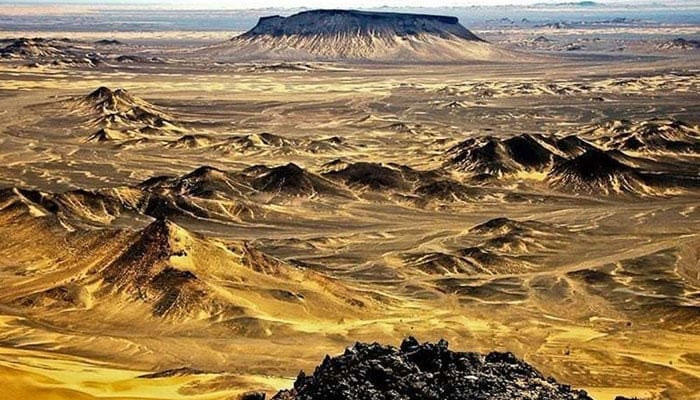
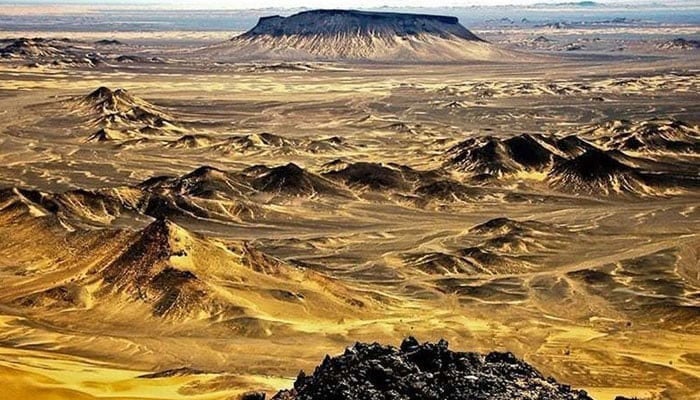
An image of the Reko Diq mines in Balochistan. — APP/File
ISLAMABAD: In a landmark development for Pakistan’s mining and investment landscape, the long-delayed Reko Diq copper and gold project is now poised to achieve financial closure by the end of September or early October, top officials confirmed.

The project, located in Balochistan’s Chagai district, is expected to bring in $74 billion in free cash flows over its 37-year life and is widely regarded as a cornerstone of Pakistan’s future economic strategy.

The Annual General Meetings and Boards of Directors of the three state-owned stakeholders—OGDCL, PPL and GHPL—formally approved $715 million in project costs, bringing the total to $7.48 billion. The increase reflects conservative assessments by lenders who have factored in inflationary pressures, global commodity volatility and additional contingency requirements. However, officials have stated that the project will still aim to be executed within the original cost estimate of $6.765 billion, thanks to tight cost controls and operational efficiencies.


Construction of the Reko Diq project is scheduled to begin in December 2025, with commercial operations targeted for 2028. The project’s financial model is structured around a 50:50 equity-to-debt ratio, allowing both local and international stakeholders to invest without over-leveraging. The Reko Diq Mining Company (RDMC), a special-purpose vehicle established to execute the project, includes a balanced partnership between Barrick Gold Corporation and the governments of Pakistan and Balochistan.

Barrick Gold, the lead operator and foreign investor, holds a 50 percent stake in the RDMC. The remaining 50 percent is split equally between the Government of Pakistan (through OGDCL, PPL and GHPL) and the Government of Balochistan, which holds a 25 percent stake, including a 10 percent free-carried interest and 15 percent fully funded share backed by the federal government. This arrangement allows Balochistan to benefit from the project without incurring financial liability, ensuring local participation and revenue sharing.

The project has attracted substantial international financial backing. The International Finance Corporation (IFC), part of the World Bank Group, has committed $700 million in funding, which includes a $400 million subordinated loan secured entirely on the balance sheets of the Pakistani SOEs—without any sovereign guarantees. This is considered a breakthrough in structuring large-scale financing while avoiding additional government debt.

Adding to this momentum, the Asian Development Bank (ADB) has approved a $300 million loan, marking its first mining-sector financing in over 40 years. The ADB has also extended a $110 million credit guarantee to the Government of Balochistan to strengthen its stake and protect against potential risks.

Meanwhile, discussions with US EXIM Bank, Export Development Canada, and Japan Bank for International Cooperation (JBIC) are in advanced stages, with more financial commitments expected soon.

In a complementary infrastructure boost, the RDMC has committed to providing $350-400 million in bridge financing for the upgrade of Pakistan Railways’ Main Line-2 (ML-2) and Main Line-3 (ML-3). These rail lines will connect the Reko Diq mine to Port Qasim, ensuring seamless transportation of minerals for export. Pakistan Railways is expected to complete the upgrade before the mine becomes operational in 2028.

“This isn’t just a mining project—it’s a transformational economic engine for Pakistan,” a senior official involved in the deal told this scribe. “Reko Diq will redefine the way we approach large-scale resource development, both financially and socially.” Once financial closure is officially reached, work will begin on contractor mobilisation, equipment procurement, and site development—setting the stage for what could be Pakistan’s most successful public-private partnership in decades.


Need stressed to tap potential of rhodium mineral in Pakistan


ISLAMABAD-Economically valuable silvery-white rhodium mineral is found in sufficient quantities in Pakistan, having the potential to fetch great economic benefits for the country if its extraction is carried out vigorously under government patronage.
Talking about the economic value and occurrence of rhodium in Pakistan, Muhammad Yaqub Shah, a principal geologist in Global Mining Company Private Limited, Islamabad, told WealthPK that it was both an industrial mineral and a business commodity. “It is one of the platinoid group of elements (PGEs) and is found in Gilgit-Baltistan (GB). Where outcrops of sulphide bodies or ultramafic rocks are exposed, the earth bears the treasure of PGEs. In GB, PGEs are found in different areas in different ratios. Rhodium can also be found in placer deposits of Pakistan, especially from the black sands in Balochistan.”
Yaqub Shah, who is also a former general manager, geology, Pakistan Mineral Development Corporation, said, as an accessory, rhodium can be found with a few other metals like nickel, copper, chromium, etc. “Such types of minerals are mined in Muslim Bagh, Kurram, Bajaur and Mohmand,” he added before saying that unfortunately, no system has been developed to check each and every concentrate found with a mineral when it is mined and exported. “It must be made mandatory to attach the lab report with every mined product. So, in case of the findings of other elements, the country may get economic benefits against it.”
Rhodium is expected to grow to $3.2 billion at the compound annual growth rate of 5.7% in 2022. South Africa, Russia and Canada produce most of rhodium worldwide. South Africa is expected to produce about 575,000 ounces of rhodium, making it the largest producer globally in 2022. In September 2022, rhodium spot price touched $14,100 per ounce, $453.33 per gram, and $453,325 per kilogramme.
Rhodium is widely used for industrial purposes like a finishing element in white gold jewellery, as a catalyst in hydrogenation reactions and to prepare nitric acid and acetic acid; as a coating of optical fibers, optical mirrors, thermocouple elements, headlight reflectors, electrical contacts, semiconductor wafers, printed circuit boards (PCBs), automobile industry, to make crucibles, cure silicones, form drug precursors, and other mission-critical components. As an alloying agent, it is used to harden and improve the resistance of platinum and palladium to manufacture electrodes for aircraft spark plugs. Its detectors are used in nuclear reactors to check the neutron flux level and are also used in mammography systems as well.

 
Reko Diq funding is actually oversubscribed!

Reko Diq secures over $5.5bn financing commitments from IFIs​

US Export-Import Bank pledges approx $1bn; RDMC expresses readiness to provide bridge financing of $400m​

By
Khalid Mustafa
|
September 17, 2025
The hills near the Reko Diq copper mine in Balochistan. — Reuters/File
  • Only most favourable loan terms to be selected from commitments.
  • Reko Diq projected to generate $74bn in free cash flows in 37 years.
  • Officials confident of executing project within original cost of $6.7bn.

ISLAMABAD: Marking a key breakthrough for Pakistan’s mining sector, Reko Diq Mining Company (RDMC) has secured over $5.5 billion in financing commitments from international financial institutions (IFIs), surpassing its actual funding requirement of $3.74 billion, The News reported on Wednesday.

The $7.48 billion project located in Balochistan's Chagai district is being developed under a 50:50 debt-to-equity model and is expected to commence construction in December 2025, with commercial operations targeted for 2028.


The US Export-Import Bank (EXIM) has committed approximately $1 billion, while the Japan Bank for International Cooperation (JBIC) has agreed to provide $300 million.

Denmark's export credit agency has also offered guarantees to support commercial bank financing or equipment procurement for the project.

According to senior relevant officials, only the most favourable loan terms will be selected from the $5.5 billion in commitments, which are said to be significantly more lenient than standard commercial loans. Financial closure is expected by the end of September or early October 2025.

The RDMC has also expressed readiness to provide bridge financing of $400 million to support the construction of railway infrastructure linking the mine site to Port Qasim via Main Line-2 (ML-2) and Main Line-3 (ML-3).

The timely completion of these railway lines is seen as critical for the efficient transport of extracted minerals. The railway upgrade is expected to be completed before the mine becomes operational in 2028.

The Reko Diq project is projected to generate $74 billion in free cash flows over its 37-year operational life, positioning it as a cornerstone of Pakistan's long-term economic strategy.

The Boards of Directors and Annual General Meetings of three state-owned entities — Oil and Gas Development Company Limited (OGDCL), Pakistan Petroleum Limited (PPL), and Government Holdings (Private) Limited (GHPL) — have already formally approved $715 million in project costs.

This brings the total project valuation to $7.48 billion, an upward revision reflecting inflation, commodity price volatility, and contingency planning by lenders.

However, officials remain confident in executing the project within the original cost estimate of $6.765 billion, citing tight cost controls and operational efficiencies.

RDMC is a special-purpose vehicle formed to execute the project. It represents a partnership between Barrick Gold Corporation (50% ownership) and the governments of Pakistan and Balochistan (the remaining 50%). Balochistan holds a 25% stake, which includes a 10% free-carried interest and a 15% fully funded share guaranteed by the federal government.

This arrangement ensures Balochistan's participation without financial liability and provides it with a share in future revenues.

In addition, the project has attracted unprecedented interest from global financial institutions.

The International Finance Corporation (IFC), a member of the World Bank Group, has pledged $700 million, including a $400 million subordinated loan backed solely by the balance sheets of Pakistani SOEs, without any sovereign guarantees — a significant achievement in structuring risk-sharing mechanisms.

The Asian Development Bank (ADB) has approved $300 million in financing, marking its first mining-sector investment in over four decades. In addition, the ADB has extended a $110 million credit guarantee to the Government of Balochistan to enhance its equity position and manage project-related risks.

"This isn't just a mining project — it's a transformational economic engine for Pakistan," said a senior official involved in the financing process. "Reko Diq will redefine large-scale resource development, both in financial innovation and socio-economic impact".

Following financial closure, RDMC is set to begin contractor mobilisation, equipment procurement, and site development, paving the way for what could become Pakistan's most successful public-private partnership to date.

 
Reko Diq funding is actually oversubscribed!

Reko Diq secures over $5.5bn financing commitments from IFIs​

US Export-Import Bank pledges approx $1bn; RDMC expresses readiness to provide bridge financing of $400m​

By
Khalid Mustafa
|
September 17, 2025
The hills near the Reko Diq copper mine in Balochistan. — Reuters/File
  • Only most favourable loan terms to be selected from commitments.
  • Reko Diq projected to generate $74bn in free cash flows in 37 years.
  • Officials confident of executing project within original cost of $6.7bn.

ISLAMABAD: Marking a key breakthrough for Pakistan’s mining sector, Reko Diq Mining Company (RDMC) has secured over $5.5 billion in financing commitments from international financial institutions (IFIs), surpassing its actual funding requirement of $3.74 billion, The News reported on Wednesday.

The $7.48 billion project located in Balochistan's Chagai district is being developed under a 50:50 debt-to-equity model and is expected to commence construction in December 2025, with commercial operations targeted for 2028.


The US Export-Import Bank (EXIM) has committed approximately $1 billion, while the Japan Bank for International Cooperation (JBIC) has agreed to provide $300 million.

Denmark's export credit agency has also offered guarantees to support commercial bank financing or equipment procurement for the project.

According to senior relevant officials, only the most favourable loan terms will be selected from the $5.5 billion in commitments, which are said to be significantly more lenient than standard commercial loans. Financial closure is expected by the end of September or early October 2025.

The RDMC has also expressed readiness to provide bridge financing of $400 million to support the construction of railway infrastructure linking the mine site to Port Qasim via Main Line-2 (ML-2) and Main Line-3 (ML-3).

The timely completion of these railway lines is seen as critical for the efficient transport of extracted minerals. The railway upgrade is expected to be completed before the mine becomes operational in 2028.

The Reko Diq project is projected to generate $74 billion in free cash flows over its 37-year operational life, positioning it as a cornerstone of Pakistan's long-term economic strategy.

The Boards of Directors and Annual General Meetings of three state-owned entities — Oil and Gas Development Company Limited (OGDCL), Pakistan Petroleum Limited (PPL), and Government Holdings (Private) Limited (GHPL) — have already formally approved $715 million in project costs.

This brings the total project valuation to $7.48 billion, an upward revision reflecting inflation, commodity price volatility, and contingency planning by lenders.

However, officials remain confident in executing the project within the original cost estimate of $6.765 billion, citing tight cost controls and operational efficiencies.

RDMC is a special-purpose vehicle formed to execute the project. It represents a partnership between Barrick Gold Corporation (50% ownership) and the governments of Pakistan and Balochistan (the remaining 50%). Balochistan holds a 25% stake, which includes a 10% free-carried interest and a 15% fully funded share guaranteed by the federal government.

This arrangement ensures Balochistan's participation without financial liability and provides it with a share in future revenues.

In addition, the project has attracted unprecedented interest from global financial institutions.

The International Finance Corporation (IFC), a member of the World Bank Group, has pledged $700 million, including a $400 million subordinated loan backed solely by the balance sheets of Pakistani SOEs, without any sovereign guarantees — a significant achievement in structuring risk-sharing mechanisms.

The Asian Development Bank (ADB) has approved $300 million in financing, marking its first mining-sector investment in over four decades. In addition, the ADB has extended a $110 million credit guarantee to the Government of Balochistan to enhance its equity position and manage project-related risks.

"This isn't just a mining project — it's a transformational economic engine for Pakistan," said a senior official involved in the financing process. "Reko Diq will redefine large-scale resource development, both in financial innovation and socio-economic impact".

Following financial closure, RDMC is set to begin contractor mobilisation, equipment procurement, and site development, paving the way for what could become Pakistan's most successful public-private partnership to date.


Saindak mine exports were $850m in 2024. Much bigger Reko Diq mine exports will be $5bn/year by 2030 and $10bn/year by 2035 when production double.

Investors know current estimate are very conservative.
 
Saindak mine exports were $850m in 2024. Much bigger Reko Diq mine exports will be $5bn/year by 2030 and $10bn/year by 2035 when production double.

Investors know current estimate are very conservative.

Interesting part is, Reko Diq only has ONE mine producing this. Exploration for additional mines and minerals in this area will start when Barrick Gold initiates work. Good times are coming for Pakistan. 2028 will be a great year when we'll re-balance our economy.
 

Users who are viewing this thread

Latest Posts

Back
Top