Pakistan Missiles - Updates, News & Discussion

Based on my experience with simulating these missiles, one of the key things that affects range is ballistic coefficient, which gemini is bunching under RV design. This is a super super classified number that can vary a lot and depending on its range of values can give widly different performance. So for my simulations for things like Fatah-2, I put in everything else that is known and then guess a ballistic coefficient that seems to give the right performance numbers (terminal speed and angle for eg). And before you say you can use the same ballistic coefficient for Shaheen3, totally different RV than Fatah-2 (obviously) and much less information is known about actual Shaheen 3 (not parade model) than Fatah-2.

Furthermore, when SPD is told make a missile with range 2750 km, they have no reason to do the risky casing design and stick with good old steel. That's my speculation. I doubt they will risk the program for a hidden range capability that they will have to actively hide and have to digest the risk for.

My opinion on this is that Shaheen-3 can certainly be launched at trajectories that have more range than 2750 km but I suspect that number is like 3000km and the trajectory for that is super useless (slow terminally).
Great post. What direction do you think our future ballistic missiles should take to ensure survivability against a potentially improved anti-ballistic missile shield? Considering boot-phase vulnerability at short ranges, should there be greater reliance on air-launched, nuclear-capable standoff munitions, particularly once we acquire J-35s?
 
Great post. What direction do you think our future ballistic missiles should take to ensure survivability against a potentially improved anti-ballistic missile shield? Considering boot-phase vulnerability at short ranges, should there be greater reliance on air-launched, nuclear-capable standoff munitions, particularly once we acquire J-35s?
I think what we are doing in terms of Fatah 1 and 2 is good. We need to scale up the numbers and have the launchers be dispersed and survivable. There is no risk of accidental nuking with these so they can be dispersed in relatively readier state. Near vertical attack with speeds upto Mach 4 will make interception super challenging, especially if the ABM have to defend things other than themselves. This is what Fatah 2/SMASH have.
 
I think what we are doing in terms of Fatah 1 and 2 is good. We need to scale up the numbers and have the launchers be dispersed and survivable. There is no risk of accidental nuking with these so they can be dispersed in relatively readier state. Near vertical attack with speeds upto Mach 4 will make interception super challenging, especially if the ABM have to defend things other than themselves. This is what Fatah 2/SMASH have.
What about the survivability of future long-range BMs?
 
I think what we are doing in terms of Fatah 1 and 2 is good. We need to scale up the numbers and have the launchers be dispersed and survivable. There is no risk of accidental nuking with these so they can be dispersed in relatively readier state. Near vertical attack with speeds upto Mach 4 will make interception super challenging, especially if the ABM have to defend things other than themselves. This is what Fatah 2/SMASH have.
Do you think Pakistan can/already have under ground networks to transfer TEL's & missiles from one firing position to another to avoid getting hit? is it possible to have them launch from under ground where it will be hard to detect from enemy radars to find its firing position?>
 
I think what we are doing in terms of Fatah 1 and 2 is good. We need to scale up the numbers and have the launchers be dispersed and survivable. There is no risk of accidental nuking with these so they can be dispersed in relatively readier state. Near vertical attack with speeds upto Mach 4 will make interception super challenging, especially if the ABM have to defend things other than themselves. This is what Fatah 2/SMASH have.
Better Fuel. The Solid fuel being used , still burns slow and throws out chunks. A better , Faster and more efficient burning fuel, will cause higher acceleration, reducing boost phase and reducing chances of Interception during boost phase. May also reduce the amount of fuel needed to be carried, leaving space for cramming in some more evasive tech in the RV .
The entire Shaheen series have sideways firing Vernier motors in the RV . These work above the Karman line , for PSAC . But there is a room for "Base bleed" style small gas generator at the bottom of the warhead, firing at random. Similar to the ones being used on Artillery shells.
Such an arrangement May not change direction of the warhead, but will change the speed abruptly at random, and increase survivability ?
 
Better Fuel. The Solid fuel being used , still burns slow and throws out chunks. A better , Faster and more efficient burning fuel, will cause higher acceleration, reducing boost phase and reducing chances of Interception during boost phase. May also reduce the amount of fuel needed to be carried, leaving space for cramming in some more evasive tech in the RV .
The entire Shaheen series have sideways firing Vernier motors in the RV . These work above the Karman line , for PSAC . But there is a room for "Base bleed" style small gas generator at the bottom of the warhead, firing at random. Similar to the ones being used on Artillery shells.
Such an arrangement May not change direction of the warhead, but will change the speed abruptly at random, and increase survivability ?
Our Propellent chemsitry is probably the same level as india had with its non canistarized missiles like Agni 3/2 , we need a switch from HTPB based AP motors to RDX or other HMX propellent mixtures , these have way more thrust , quicker ignition time and provide better isp. China can help us in this regard , cuz idk if any local talent would want to dump his years into this lowpaying industry here.
 
What about the survivability of future long-range BMs?
Heavier payloads to make room for deception ideas like decoys, MARVs, and terminal rocket motors.
This is possible with the use of better fuels (see quoted posts below) and lighter casings.

Do you think Pakistan can/already have under ground networks to transfer TEL's & missiles from one firing position to another to avoid getting hit? is it possible to have them launch from under ground where it will be hard to detect from enemy radars to find its firing position?>
This is a stupidly expensive endeavor. Some of Pakistan's production is certainly underground but we dont have underground complexes like Iran (to the best of my knowledge). I think the focus is on dispersion and mobility.

Better Fuel. The Solid fuel being used , still burns slow and throws out chunks. A better , Faster and more efficient burning fuel, will cause higher acceleration, reducing boost phase and reducing chances of Interception during boost phase. May also reduce the amount of fuel needed to be carried, leaving space for cramming in some more evasive tech in the RV .
The entire Shaheen series have sideways firing Vernier motors in the RV . These work above the Karman line , for PSAC . But there is a room for "Base bleed" style small gas generator at the bottom of the warhead, firing at random. Similar to the ones being used on Artillery shells.
Such an arrangement May not change direction of the warhead, but will change the speed abruptly at random, and increase survivability ?
The Iranian Fatah is a great example of using terminal rocket motor (base bleed configuration) to massively boost the terminal speed of the warhead.

Our Propellent chemsitry is probably the same level as india had with its non canistarized missiles like Agni 3/2 , we need a switch from HTPB based AP motors to RDX or other HMX propellent mixtures , these have way more thrust , quicker ignition time and provide better isp. China can help us in this regard , cuz idk if any local talent would want to dump his years into this lowpaying industry here.
On top of propellant chemistry we need to seriously think about the weight of our rocket casings. I'm not a composites engineer but that seems to be the general direction and it requires some engineering inputs like large enough autoclaves and clean rooms, fiber laying machines, super careful mould design for uniform cooling in an autoclave. These are just some things off the top of my head.
 
This is a stupidly expensive endeavor. Some of Pakistan's production is certainly underground but we dont have underground complexes like Iran (to the best of my knowledge). I think the focus is on dispersion and mobility.
Some thoughts on why it doesn't make sense for us to go down that road.

Iran planned to fight under enemy air dominance since they have no airforce essentially. Furthermore, their BMs (and drones) are the only thing that can reach their enemy. This makes their BM capability all of their military capability and they must ensure its survival.

For Pakistan, we thankfully have a PAF that will not let IAF establish air dominance over our territory, restricting IAF to standoff munitions to target our BMs/launchers/factories. Standoff munitions are expensive, low in numbers, can be jammed/intercepted. Additionally, IAF will not have emergency shipment of stupid amounts of munitions like Izzi. All of this is saying IAF will have nowhere near the munitions delivery that US + Israel does over Iran. Consequently, it wouldn't be a wise use of our funds to build large underground complexes against an enemy that has very limited ability to hit 100s of targets.

I may be suffering from tunnel vision but I dont think our planners plan on facing enemies besides India in any serious sense.
 
On top of propellant chemistry we need to seriously think about the weight of our rocket casings. I'm not a composites engineer but that seems to be the general direction and it requires some engineering inputs like large enough autoclaves and clean rooms, fiber laying machines, super careful mould design for uniform cooling in an autoclave. These are just some things off the top of my head.
Our main missiles like even the s3 are a lil behind in tech as compared to the likes of DPRK , Our missiles still rely on Large metal based structures and lack of composites in missile body , the use of Large base fins (inherintly not wrong but added weight causes poor effiencicy) etc etc .

We are still using Jet vanes for the first stages probably because the Flex nozzles are hard to master and require R&D which we are not doing enough , these jet vanes are not as efficient as flex nozzles and as we move to bigger motors with thicker diameters we need to get this knowledge through dprk or china . As you said we need MaRV or boosted RVs to evade ABMs , but we need quicker liftoff times to evade midcourse or even boost phase interceptions.

On the topic of Carbon fiber winding and autoclave , we are significantly behind in it probably , but sometimes i wonder how did we test the RV of our nukes to protect them from the heat of re-entry? that requires good amount of knowledge of thermal conductivity and what not. How did we did it @safriz I saw how DPRK tested its indians doing it and considering we hatched together an MIRV , is there any info about it?

Agni 5.webp
insider-images-of-components-and-systems-used-in-agni-5-v0-rc2ea01nmrae1.webp

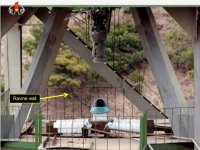
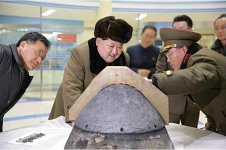
Fig5_Ravine-wall.jpgFig11_KJU.jpg
 
Our main missiles like even the s3 are a lil behind in tech as compared to the likes of DPRK , Our missiles still rely on Large metal based structures and lack of composites in missile body , the use of Large base fins (inherintly not wrong but added weight causes poor effiencicy) etc etc .

We are still using Jet vanes for the first stages probably because the Flex nozzles are hard to master and require R&D which we are not doing enough , these jet vanes are not as efficient as flex nozzles and as we move to bigger motors with thicker diameters we need to get this knowledge through dprk or china . As you said we need MaRV or boosted RVs to evade ABMs , but we need quicker liftoff times to evade midcourse or even boost phase interceptions.

On the topic of Carbon fiber winding and autoclave , we are significantly behind in it probably , but sometimes i wonder how did we test the RV of our nukes to protect them from the heat of re-entry? that requires good amount of knowledge of thermal conductivity and what not. How did we did it @safriz I saw how DPRK tested its indians doing it and considering we hatched together an MIRV , is there any info about it?

View attachment 187953
View attachment 187957

View attachment 187954View attachment 187955


About warhead design and testing, Kahuta is well known for that. There may be other facilities we dont know of.
From what i could gather, the original Pakistani Missile launched warhead on Ghauri was quite compact. Just 700 Kg. It was mentioned in the press conference of April 1998 . I cant find the video. Comparatively Indian Strategic warheads are in tons, not kilos.
So at least Pakistani nuclear weapon design is quite advanced .
Since then the warhead design changed , and what Shaheen-3 and Ababeel carry was tested on Shaheen-1A . Only after Multiple tests of Shaheen 1 A , the S 3 was tested .
So thats another strategy Pakistan has adopted. Test on smaller missiles first.
 
Heavier payloads to make room for deception ideas like decoys, MARVs, and terminal rocket motors.
This is possible with the use of better fuels (see quoted posts below) and lighter casings.


This is a stupidly expensive endeavor. Some of Pakistan's production is certainly underground but we dont have underground complexes like Iran (to the best of my knowledge). I think the focus is on dispersion and mobility.


The Iranian Fatah is a great example of using terminal rocket motor (base bleed configuration) to massively boost the terminal speed of the warhead.


On top of propellant chemistry we need to seriously think about the weight of our rocket casings. I'm not a composites engineer but that seems to be the general direction and it requires some engineering inputs like large enough autoclaves and clean rooms, fiber laying machines, super careful mould design for uniform cooling in an autoclave. These are just some things off the top of my head.
Do HGVs make sense in our case at intermediate ranges? Do we have the know how, especially material engineering know-how, to produce them?
 
Iranian missile silos proved highly resillient

To view this content we will need your consent to set third party cookies.
For more detailed information, see our cookies page.


These missile forces maybe vulnerable to special ops to infiltrate and destroy them from within? Given Iran has limited control over her airspace, this is a possibility.
 
But there is a room for "Base bleed" style small gas generator at the bottom of the warhead, firing at random
Base bleed does not provide much thrust but helps reduce drag by filling the low pressure cavity behind the projectile. That may or may not provide variable speed. But continuous gas generation most likely will help with sustaining high terminal velocity.
 
Last edited:

Users who are viewing this thread

Pakistan Defence Latest

Back
Top