Pakistan Navy | News & Discussions

@Oscar , @Ak01
Is there a possibility to use the SMASH(1st variant -not the Fatah 2) in land based battery of SRBMs for only the PN different from ARFC?? it can be deployed to sir creek region or the coastline to target IN ships and the Prized economic assets of India in Gujrat/Rajasthan.
It would be a good strategy right?

SMASH would actually be best used on land, it's a very heavy missile at most a ship might carry 4, A increase in Range to say 500KMs would allow it to further enhance PNs A2/AD strategy.
 
1) There is limited scope of 'area denial' in naval warfare now as proximity of Indian navy to our coast matters little. Indians would stay safely away , very near to their home waters and lob missiles at us.
2) Our Navy is definitely our weaker link
3) Upcoming conflict is entirely going to be missile based so this also very concerning.

Yep. Navy only has 3 naval bases. The lat,lng (coordinates) of those bases are already set into enemy missiles. The ships anchored at those bases will be rendered useless before they can even deploy. Takes 2-4 mins for Brahmos from launch to strike. On the other side, could take upto hours to move the warship which is anchored, (150 or so sailors have to get onboard). The crazy thing about PN is that their ships are usually docked parallel to each other. Like 3 tughrils will be docked in parallel to each other. So first ship can't even move until the second and third ship have moved as its working as a bridge / pathway for sailors to pass through. That is because PN never paid attention to more naval bases and has a very limited docking area. I wonder why PN leadership is extremely lazy on such critical issues when timing & readiness matters the most. Also docking warships like that means losing all in one surprise strike.

Above scenario is applicable if an attack is total surprise / ambush. In slow build up, the navy will always deploy beforehand. However, In military strategy you always prepare for worst case scenario. I never understood why PN isn't factoring in a surprise attack on its bases. PN peace time deployments ensure that 80% of the navy will be destroyed in first 2-4 mins incase of a total surprise. But its unbelievable that how they can think of "peace time" in indo-pak scenario when things can change in an instant. How about india prepares beforehand that it will do in next Op (from naval side), then create a small pretext like do a false flag op, and instantly fire super sonic vectors are already pre-defined coordinates. You will be done.
 
Yep. Navy only has 3 naval bases. The lat,lng (coordinates) of those bases are already set into enemy missiles. The ships anchored at those bases will be rendered useless before they can even deploy. Takes 2-4 mins for Brahmos from launch to strike. On the other side, could take upto hours to move the warship which is anchored, (150 or so sailors have to get onboard). The crazy thing about PN is that their ships are usually docked parallel to each other. Like 3 tughrils will be docked in parallel to each other. So first ship can't even move until the second and third ship have moved as its working as a bridge / pathway for sailors to pass through. That is because PN never paid attention to more naval bases and has a very limited docking area. I wonder why PN leadership is extremely lazy on such critical issues when timing & readiness matters the most. Also docking warships like that means losing all in one surprise strike.

Above scenario is applicable if an attack is total surprise / ambush. In slow build up, the navy will always deploy beforehand. However, In military strategy you always prepare for worst case scenario. I never understood why PN isn't factoring in a surprise attack on its bases. PN peace time deployments ensure that 80% of the navy will be destroyed in first 2-4 mins incase of a total surprise. But its unbelievable that how they can think of "peace time" in indo-pak scenario when things can change in an instant. How about india prepares beforehand that it will do in next Op (from naval side), then create a small pretext like do a false flag op, and instantly fire super sonic vectors are already pre-defined coordinates. You will be done.
Quite concerning.
If we start today then we can upgrade the other bases in ormara,gawadar,pasni etc to average standard as to house more then 2 ships at least.
I think they have probably thinked about it as you cannot just house tughrils,babur,zulfiqars and Jinnah class all in karachi with civilian shipping and we haven't included the Subs which we will have 11 by 2035 . subs dont have pens , dry docks are full , one concentrated missile strike and you cant defend Karachi anymore.
For karachi i dont think we even have good ad cover except a HQ9 battery. LOMADS are not that good and the threat of UAVs is imminent
 
To view this content we will need your consent to set third party cookies.
For more detailed information, see our cookies page.
 
To view this content we will need your consent to set third party cookies.
For more detailed information, see our cookies page.
 
To view this content we will need your consent to set third party cookies.
For more detailed information, see our cookies page.
 
@Oscar , @Ak01
Is there a possibility to use the SMASH(1st variant -not the Fatah 2) in land based battery of SRBMs for only the PN different from ARFC?? it can be deployed to sir creek region or the coastline to target IN ships and the Prized economic assets of India in Gujrat/Rajasthan.
It would be a good strategy right?
Agreed, it could be used as the Russians use the Iskander to target High Value systems e.g AD systems,HIMARS at short notice.
 
To view this content we will need your consent to set third party cookies.
For more detailed information, see our cookies page.
 

Pakistan's sea rescue goes unmanned​


Prepares to introduce UAVs to aid serach, rescue operations across coastal waters

Aftab Khan
February 06, 2026

tribune


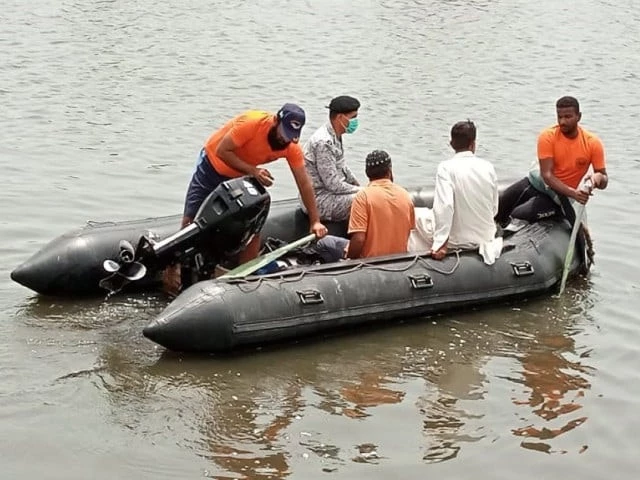
KARACHI: The unforgiving waters of the Arabian Sea, where fishing launches and merchant vessels routinely brave strong winds and towering waves, are set to receive a new guardian.

As accidents involving fishing launches and cargo vessels continue to challenge maritime responders amid strong winds and towering waves, Pakistan is preparing to introduce unmanned aerial vehicles (UAVs) to transform search and rescue operations across its coastal waters.

The Pakistan Maritime Security Agency (KSA) has decided to induct high-speed drones equipped with advanced cameras and sensors to monitor maritime emergencies, provide real-time situational awareness and assist rescue teams operating within a 200 nautical mile, or roughly 360 kilometre, radius.

Deputy Director General MSA Commodore Syed Nauman Ali said the drones will play a central role during accidents at sea, guiding operational teams, identifying exact locations and transmitting live video feeds from incident sites. The system will also allow responders to drop life jackets and floating bags directly to individuals struggling in the water.

Until now, initial rescue efforts relied on low-capacity Defender aircraft, whose deployment depended on weather conditions, fuel availability and clearance from air traffic control, often delaying operations at critical moments. The new drone fleet, expected to become operational by the end of this year, aims to remove those constraints and enable quicker, more flexible responses.

According to Commodore Nauman Ali, preparations for the project have been completed, and the unmanned systems will soon be integrated into the agency's maritime fleet.

Once deployed, the drones will immediately reach accident zones, relay audio and video updates to command centres and continuously guide fast-response boats and helicopters equipped with winching systems for human extraction.

The drones will also remain airborne over rescue locations to provide sustained operational support, allowing teams on the ground and at sea to coordinate movements with greater precision. Emergency kits, along with flotation devices, can be delivered directly to distressed individuals while larger rescue assets are mobilised.

A UAV, commonly known as a drone, operates without an onboard pilot, relying instead on remote control, computer systems or autopilot technology. These aircraft are guided through satellite links and GPS, with some capable of autonomous route identification.

They are fitted with high-resolution and thermal cameras, enabling detection of heat signatures even at night, while radar sensors allow visibility through rain, darkness and high waves.
 
To view this content we will need your consent to set third party cookies.
For more detailed information, see our cookies page.
 
To view this content we will need your consent to set third party cookies.
For more detailed information, see our cookies page.
 
To view this content we will need your consent to set third party cookies.
For more detailed information, see our cookies page.
 
To view this content we will need your consent to set third party cookies.
For more detailed information, see our cookies page.
 

Users who are viewing this thread

Pakistan Defence Latest

Back
Top