.
ADJ: What does the commissioning of the first HANGOR Class submarine signify for Pakistan Navy’s long-term maritime vision?
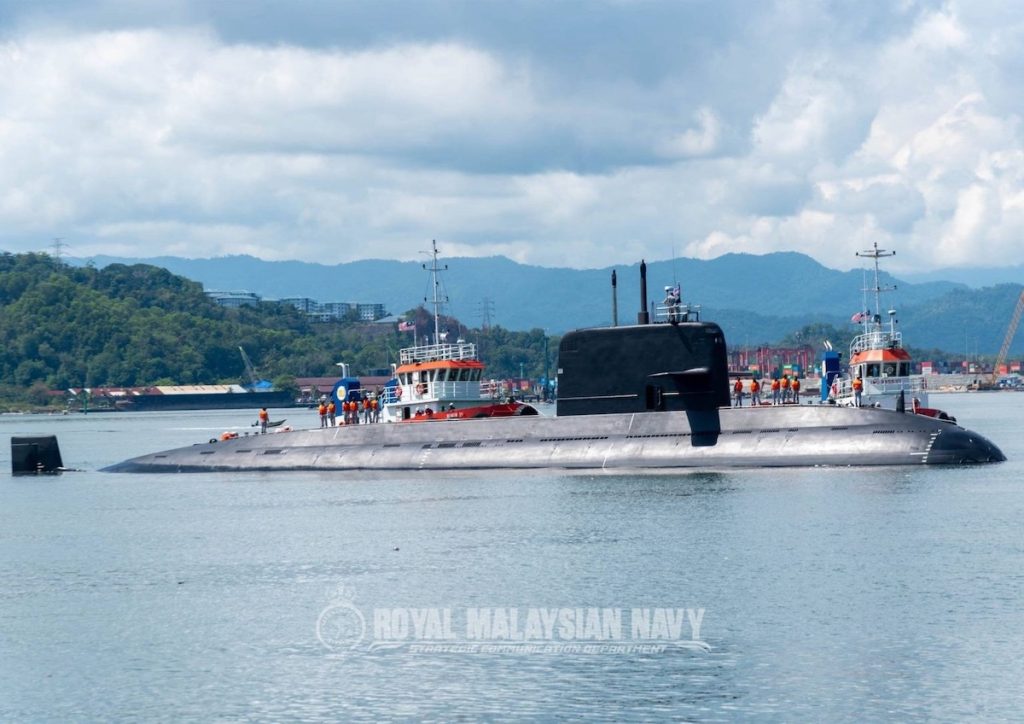
CNS: Submarine force is central to the Pakistan Navy’s Vision-2030 Roadmap and will play a crucial role in strengthening deterrence at sea and safeguarding Pakistan’s maritime interests. Commissioning of the first HANGOR Class S/M is a transformative step towards realising our vision to have a modern and numerically robust submarine fleet capable of operating effectively in the Arabian Sea and the Indian Ocean. It signifies a shift towards a modern, versatile and dependable force structure ready to meet emerging challenges.
ADJ: A central objective of the HANGOR Class Submarine Programme was to transform Pakistan into a submarine-building nation. To what extent has the Transfer of Technology (TOT) arrangement with China enabled this ambition?
CNS: The objective to become a submarine building nation started with Agosta 90 B Project wherein AIP fitted submarines were constructed in Pakistan Navy Dockyard. The aim of the HANGOR Project is to consolidate submarine building expertise achieved during the Agosta Project. For the HANGOR Project, construction yard was shifted from naval yard to commercial shipyard, Karachi Shipyard & Engineering Works (KS & EW) with the premise, not to limit the construction of submarines within the project, but to cater for future plans as well.
I may mention that independent submarine design and construction remains a cornerstone of our indigenous ship building policy. The current Transfer of Technology (TOT) arrangement with China has played a pivotal role in transforming our indigenous submarine building capacity. Through ToT, Pakistan will gain expertise in advanced submarine design, construction techniques, systems integration and quality control processes enabling KS & EW to bolster its capabilities in building and outfitting of submarines.
Pakistan is gradually reducing reliance on foreign suppliers and building a self-sustaining industrial base. Overall, the ToT has significantly advanced Pakistan’s ambition of becoming a submarine-building nation, enhancing both national defence capabilities and long-term technological self-reliance.
ADJ: Four submarines are being built at KS & EW under a ToT arrangement. How significant is this for Pakistan’s indigenous shipbuilding capability?
CNS: Building of submarines at KS & EW will significantly enhance our indigenous shipbuilding capabilities. The ToT arrangement with China is a step towards realising Pakistan’s goal of becoming a submarine-building nation which was conceived with the indigenous construction of Agosta 90B submarines. Importantly, submarine construction has been shifted from naval yard to commercial shipyard with the aim not to limit the construction of submarines as per the existing contract but to cater for similar requirements in future as well. While full independent submarine design and construction remains a future milestone, the current ToT program is a major step towards Pakistan’s long-term goal of self-reliance in undersea warfare platforms.