Skip to contentSkip to footer

Pakistan Navy Looks to Steer Original Projects to New Levels
Pakistan Navy News by Bilal Khan
Bilal Khan
One of the central attributes of the
Pakistan Navy’s (PN) ongoing modernization effort is its push for original projects, such as the
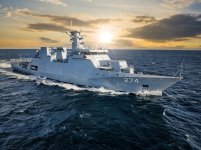
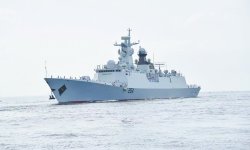
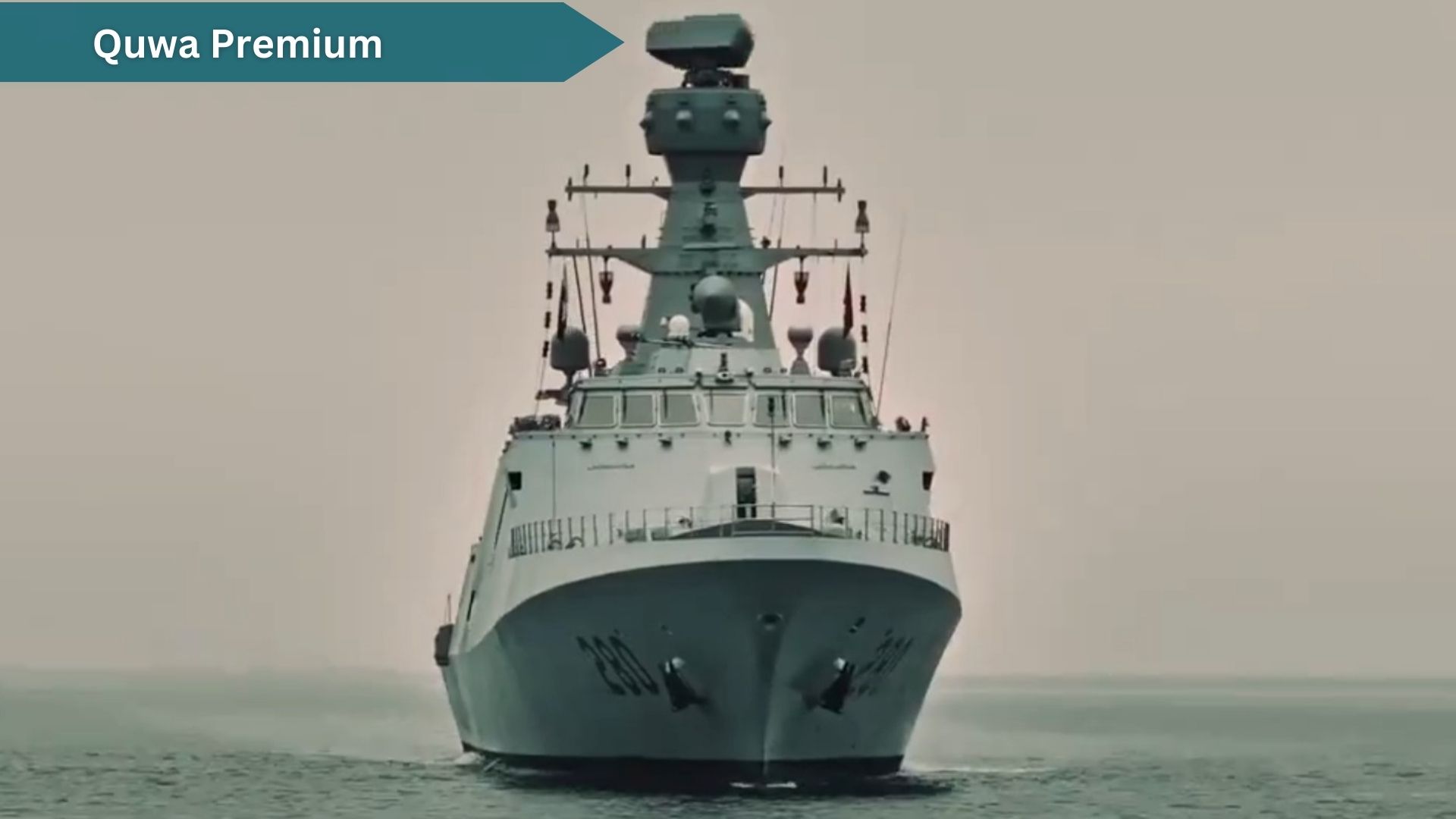
Jinnah-class frigate and
Sea Sultan long-range maritime patrol aircraft (LRMPA), among others.
Timely Defence News with Verified Insights
Get the latest Pakistani defence news with reliable research and accurate forecasting
Click Here
These original projects are distinct from typical off-the-shelf naval solutions in that they are new or unique designs developed for the specific requirements of the PN.
Some of these projects were driven by the dearth of accessible options. For example, the PN did not have a viable alternative for replacing its P-3C Orion aircraft other than to seek an original solution. The Boeing P-8 Poseidon was not on offer, while systems based on the C-295 or ATR-72 did not offer enough of capability to take over from the Orion.
In other cases, like the Jinnah-class frigate, the goal was more to acquire a design that was suited to the PN’s budget and design preferences. For example, the Jinnah-class leverages a combined diesel-and-diesel (CODAD) propulsion system rather than the combined diesel-and-gas (CODAG) configuration. For the PN, it may be easier to acquire CODAD solutions at a more accessible price point than CODAG.
By owning the intellectual property (IP) of the Jinnah-class frigate, the PN can also control other aspects of the design as a way to drive lower costs. For example, it can engage the open market for steel, propulsion, electronics, and other inputs instead of paying for the original equipment manufacturer’s (OEM) kits-of-materiels (KoM), which may involve higher cost inputs from that OEM’s choice of suppliers.
Finally, with the PN owning the designs of these original projects, the domestic industry now has a greater level of access to these programs. It can potentially compete for the input contracts. Moreover, the real possibility of supplying critical inputs — such as steel — could incentivize the private sector in raising the capacity to build such inputs in Pakistan.
It now seems that the PN leadership is aiming to build upon these original projects with a more cohesive strategy, one that drives the creation of original solutions for Pakistan’s entire maritime economy, from naval warships to supporting fisheries.
The centerpiece of this effort is the newly launched Pakistan Maritime Science and Technology Park (PMSTP), a cluster of maritime-focused research/academic institutions, industry entities, and government/public sector bodies engaging in the works described above.
However, while PMSTP’s goals are broad, it seems that the PN’s current priority is to develop the cluster’s ability to support defence programs.
To support these programs, the PN signed a series of memorandum-of-understanding (MoU) agreements with several of the world’s largest defence contractors, namely Italy’s Fincantieri, Damen Shipyard Groups from the Netherlands, and Turkiye’s Aselsan.
Pursuit for Credible Industry Partners
The MoUs with Fincantieri, Damen Shipyards Group, and Aselsan signal the PN’s push for credible industry partners to help it drive its original projects.
For example, the MoU with Fincantieri calls for joint research and development (R&D) and “potential project-based collaborations”. In other words, the MoU sets up a foundation for a possible original program similar to initiatives like the Jinnah-class frigate, in which the PN signed onto a joint development and production deal with Turkiye’s ASFAT, for example.
In comparison, the MoU with Damen Shipyards Group involves a deal to establish a local service centre in Pakistan to support Damen-built ships operating in the region (likely areas surrounding the Arabian Sea). These include both the PN’s Yarmouk-class offshore patrol vessels (OPV) and, potentially, foreign operators of civilian and/or military Damen ships.
In addition, however, the MoU with Damen Shipyards Group also calls for the “joint design and development of new vessels” for the PN. Hence, like the Fincantieri MoU, the agreement with Damen also lays the groundwork for original naval programs for the PN.
Finally, the PN’s MoU with Aselsan calls for joint R&D, technology transfers, and integration of new systems into the PN. While specific details were not provided, one can assume the MoU would center on matters related to naval electronics, such as sensors, for example.
Besides the partners involved in the PMSTP, the PN also maintains working relationships with Leonardo, Paramount Group, Swiftships, Havelsan, Meteksan, STM, and MBDA. Therefore, one can expect some of these vendors to also sign into PMSTP initiatives in the coming years.
Overall, the PN will likely leverage these agreements as pathways for engaging foreign vendors for consultancy, engineering services, critical inputs, and/or – potentially – partnerships for new naval applications, such as new combatants, auxiliary vessels, and aircraft.
Currently, the PN has outstanding requirements for a
new shallow water attack submarine (SWATS) and
a submarine rescue and salvaging vessel. In addition, one could argue that the
PN’s vision for a 50-strong surface fleet could also necessitate one or two additional tanker or auxiliary support vessels. Finally, there is also the potential for additional niche role ships, such as a new mine countermeasures vessel, among others.
Therefore, it is interesting that of the PN’s first partners are, arguably, some of the world’s leading designers and builders of the aforementioned solutions. For example, Fincantieri is a proven submarine vendor, while Damen is a credible supplier of auxiliary and niche role ships.
Submarines: The Flagship Original Project
In 2020, the PN leadership under the then Chief of Naval Staff (CNS), Admiral Zafar Mahmoud Abbassi, stated that the PN would become a
“submarine-building navy.”
This statement was made about the forthcoming induction of the
Hangor-class (S26) submarine from China. Under the contract signed with China in 2015, Karachi Shipyards and Engineering Works (KSEW) was to build four of the eight boats. These KSEW boats are under production,
with KSEW laying the keel for the sixth boat in early 2024.






 Federal cabinet gives nod to imposition of emergency in KP; summary sent to president (10 Viewers)


