Pakistan-Saudi Arabia mutual defense pact: News & Discussion

Gotta take out the shield defending Israel first.
Gives the Arabs opportunity to get rid of those bases, paving way for a new security architecture.
What Arab "shield" is this that is supposedly protecting Israel?

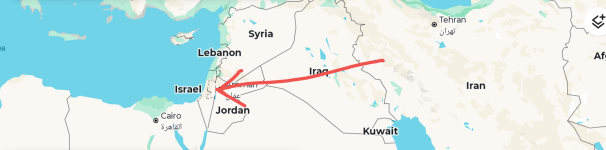
Screenshot_20260725-160922_Maps.png

Iranian ballistic missiles only need to travel through or over Iraqi and Jordanian airspace to reach their targets. Yet, instead, they seem to be busy striking countries far to the south-west of Iran. And the excuses they give afterwards to justify those attacks are something else entirely.

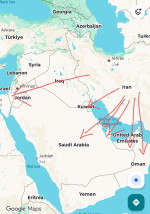
Screenshot_20260725-161740_Maps.png

Meanwhile, Iranian fanatics keep claiming that interceptor stockpiles have been exhausted since March 2026. Yet their supposedly "super-duper" precision missiles have spent the last five months repeatedly failing to destroy Al-Udeid Air Base.
 
Last edited:
@Pakistani Dragon your posts seem familiar to me, are you Pakistani Space Agency?

In any case, RSAF performance initially in 2015, is completely different from today in 2026. A lot of water has run down the wells.

This article gives a good overview of this:

Saudi Air Force

MIDDLE EAST

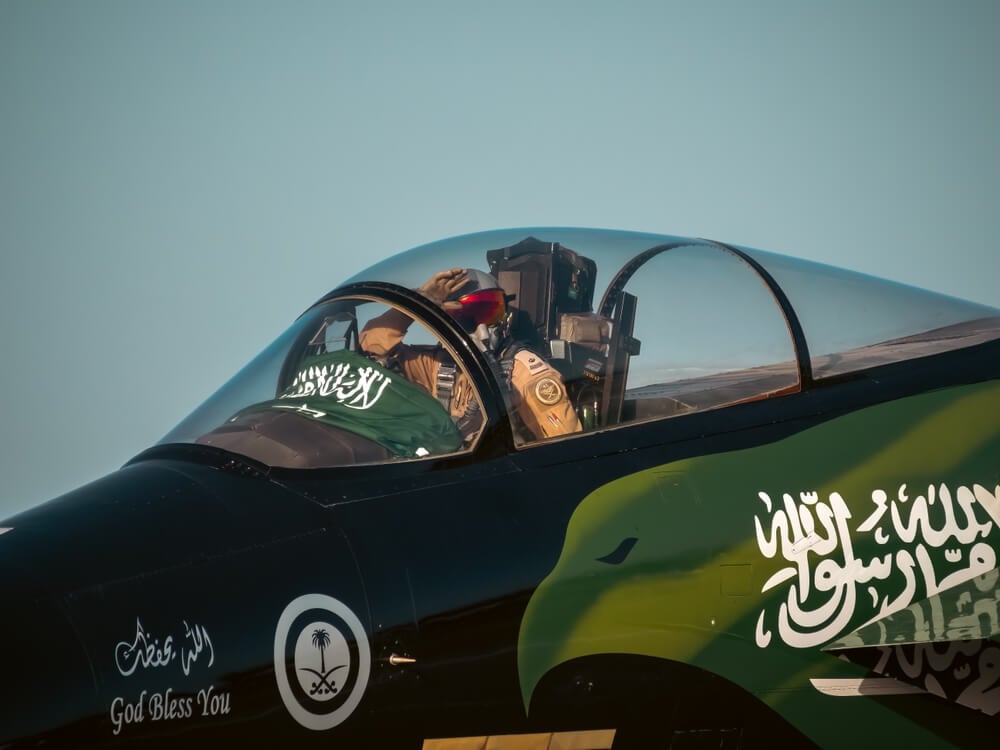
Why Saudi Arabia is building an Aerospace Force


When Royal Saudi Air Force Commander Lt. Gen. Prince Turki bin Bandar announced that the establishment of the Royal Saudi Air and Space Force (RSASF) had entered its final phase, the significance was not institutional. It was operational.

The Kingdom is now formalising a military transformation that has been developing since the beginning of the Yemen war in 2015.

The merger of the Royal Saudi Air Force (RSAF) and the Royal Saudi Air Defense Forces (RSADF), along with the incorporation of expanding military space capabilities, reflects a reality already evident on the battlefield.

Air operations, missile defence, intelligence, strategic warning, and space capabilities increasingly function as parts of the same combat system. The new force simply formalises this reality.

Saudi Arabia entered Yemen in 2015 with a large, technologically advanced, and well-equipped air force.

What it lacked was not aircraft, precision weapons, or resources. It continued to conduct warfare in a conventional manner, relying on traditional concepts of air power that were better suited to limited campaigns than to managing a prolonged and highly complex theatre.

A costly learning curve

The early years revealed significant weaknesses in targeting, intelligence fusion, command and control, and shortcomings in integrating military and political objectives.

Yemen became a steep and costly learning curve. Over the following decade, the RSAF progressed from conducting basic air operations to managing the entire battlespace.

By January 2026, that evolution was evident. RSAF operations in South Yemen demonstrated a mature, integrated C6ISR architecture operating at a level very different from the early years of the war.


The removal of the Abu Dhabi-backed Southern Transitional Council (STC) military position in South Yemen demonstrated the extent of the RSAF’s progress in surveillance, targeting, operational sequencing, and theatre command.

By 2026, the RSAF was no longer using fighter jets solely to strike targets. It was employing an integrated architecture of aircraft, intelligence, surveillance, missile defence, and C2 real-time command systems to control the battle itself.

Opposing forces were responding to Saudi decisions rather than shaping events themselves.

The scale of the Saudi challenge

The scale of the Saudi challenge is often underestimated. Saudi Arabia is the largest country in the Middle East.

It contains the world’s largest continuous concentration of energy infrastructure, sits atop the world’s largest proven conventional oil reserves, and lies astride some of the most important energy and commercial maritime corridors in the global economy.

As the conflict evolved, defending the Kingdom increasingly required maintaining awareness across all of Yemen, including Bab al-Mandab, Socotra Island, and the air and maritime routes connecting them.

The mission was no longer limited to defending Saudi national airspace. It became the management of a theatre stretching from the Gulf to the Red Sea, through the Arabian Sea, and the Gulf of Aden.

Retaliatory strikes against Iranian military

The same capability became evident during the Iran war that began in February 2026. By then, the RSAF had developed a standalone fused C6ISR capability able to operate independently across multiple theatres simultaneously.

Separate from American CENTCOM unified military operations, the RSAF demonstrated the ability to identify threats, execute strikes, and assess results within a single command process.

RSAF's retaliatory strikes against Iranian military and security targets were deliberately calibrated to deter attacks on Saudi critical energy infrastructure while maintaining escalation control.


At the same time, RSAF carried out simultaneous operations against Iranian-backed militia networks in southern Iraq responsible for missile and drone attacks on the Kingdom.

RSAF was no longer operating on a single front. It was managing Yemen, Iraq, and Iran simultaneously through an integrated C6ISR command system developed over a decade of war.

What began in 2015 as a large but operationally standard air force had, by 2026, evolved into a force capable of managing interconnected theatres across the region.

That evolution, more than any individual platform, explains the significance of the force now being established.

Strategic effect

The RSAF already has the scale needed to translate operational evolution into strategic effect.

It operates approximately 365 combat aircraft, including about 226 4.5 generation fighters composed of 154 F-15SA (Saudi Advanced) and 72 Eurofighter Tranche 2/3 Typhoons.

They are supported by approximately 59 F-15C/D 4.0+ fighters and around 80 Tornado IDS legacy 4.0 strike aircraft. Saudi Arabia is already the second-largest operator of the F-15 after the United States.

The air-defence architecture supporting this force is equally significant. THAAD (Terminal High Altitude Area Defense) provides the upper tier against higher-altitude ballistic missile threats, while Patriot batteries (PAC-2/PAC-3) form the middle layer, protecting critical infrastructure and population centres.

Beneath them lies a dense SHORAD network, including Shahine and Crotale-derived systems, which repeatedly proved effective against drones and low-flying threats during the Yemen and Iran conflicts.

Only the United States will have a larger layered air- and missile-defence architecture than Saudi Arabia once the Kingdom’s Patriot and THAAD deployments are complete.


One of the most important lessons from the wars in Yemen and Iran was that not every threat requires a strategic interceptor.

Ballistic missiles, cruise missiles, and drones require different defensive layers. Success resulted from integrating these layers rather than relying on a single defensive system.

The transformation extends well beyond combat aviation and missile defence.

Saudi Arabia has invested heavily in indigenous missile and unmanned systems production, with growing emphasis on domestic manufacturing of ballistic missiles, long-range strike systems, reconnaissance platforms, and one-way attack drones.

The objective is a more resilient defence-industrial base capable of sustaining prolonged operations and reducing dependence on external suppliers.

The Royal Saudi Strategic Missile Force (RSSMF) remains outside this restructuring and continues its own modernisation trajectory as Saudi Arabia's distinct strategic forces command.

Space – the next phase

Space is the next phase of the transformation. Saudi Arabia is investing heavily in geospatial intelligence, satellite constellations, secure communications, and strategic warning systems.

Modern military power increasingly depends on seeing further, identifying threats earlier, and responding more quickly.

This is where the transition from C6ISR to C7ISR becomes crucial. Cognition is not simply another sensor; it is the ability to convert information into action more rapidly than an adversary.

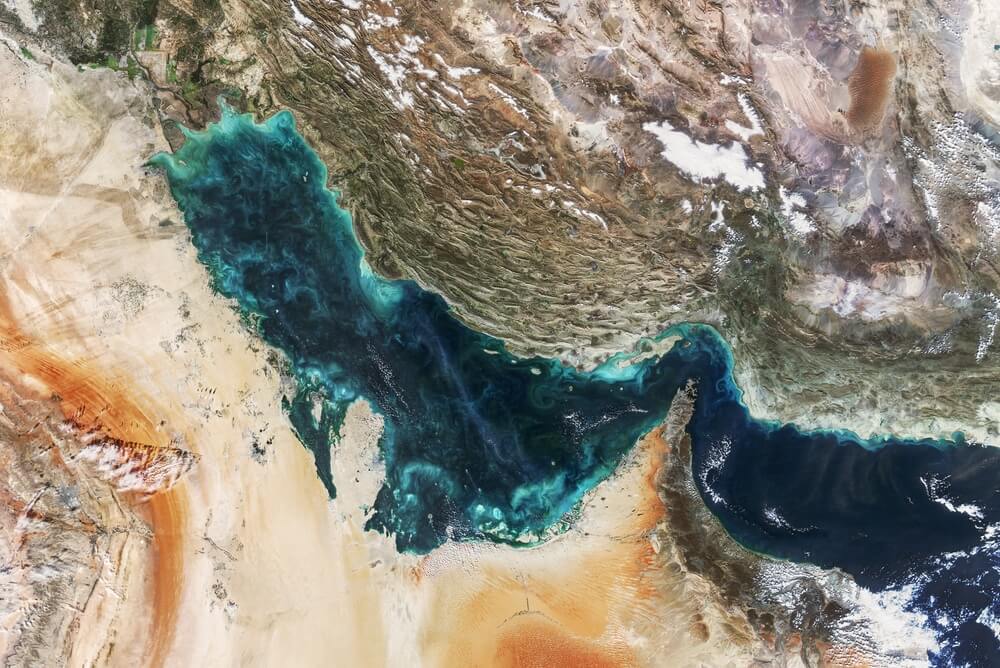
Persian Gulf Satellite
Saudi Arabia is investing heavily in geospatial intelligence, satellite constellations, secure communications, and strategic warning systems
The RSASF is integrating aircraft, missile defences, drones, intelligence systems, and space-based assets under a single command capable of managing the battlespace rather than merely participating in it.

Many programmes for modernising military systems, improving readiness, and strengthening institutional performance are underway. These reforms matter because sophisticated equipment alone does not create military power. Institutions do.

Saudi Arabia entered Yemen in 2015 with a large but operationally standard air force. A decade later, it fields a very different force.

It is supported by a layered missile defence network, increasing indigenous missile and drone production, expanding space capabilities, and an integrated command and control system tested in Yemen, Iraq, and Iran.

What RSASF is now building is the structure designed to preserve, expand, and exploit this over the next generation.

Dr Nawaf Obaid is a Senior Research Fellow at the Department of War Studies, King’s College London.

(The views expressed in this article are those of the author and do not necessarily reflect the editorial position of Tomorrow's Affairs.)

Another great example on the ground of this, in Yemen no less, is the speed, effectiveness etc. in which KSA and the RSAF liberated all of South Yemen (practically) from the UAE and the powerful UAE-aligned groups. Which the article that I posted talk about in great detail. It was no small feat.

Non-nationals cannot serve in KSA's army (not even people with Saudi Arabian mothers) let alone the RSAF which is famous for its strict selection process. Non-Saudi Arabians, if ever took part (doubtful - not seen any evidence of Pakistani pilots bombing the Houthis but I could be wrong) would be flying their own planes etc. Like during the Arab coalition in Yemen which was rather short-lived and mostly the work of KSA anyway.
Do you face recruitment problems ? In most of the well off countries people are reluctant in joining military.
 
Do you face recruitment problems ? In most of the well off countries people are reluctant in joining military.
Not really. For instance the National Guard is made up of tribes and clans that were loyal to the House of Saud and took part in the unification of KSA.


There joining the national guard is a rite of passage and something that is done by tradition.

Regular army is less traditional in the sense that it encompasses every social group and due to 65-70% of the Saudi Arabian population being under 30 years of age, (or 35, don't recall the statistics, in any case one of the youngest populations) people who do not pursue an academic career or other careers can have the army as a choice and it also gives you many benefits and there is respect around it.

But maybe this will change in the future. However boys will remain boys and probably always gravitate towards the army in some form. At least a sizable portion.

Future warfare will be dominated by drones, AI and non-humans so maybe future requests will see it like playing video games which many people in KSA do already.
 
@_Arabia_

Bro - enough of the sectarian talk. Dont go their or unfortunately will remove you from the conversation.
Keep it on point...............
No sectarian talk. Just exposing what they say themselves. I suggest watching the videos yourself. All are translated by a Persian Sunni Muslim brother based in the UK (Ebn Hussain) that I have talked to extensively. He is fluent in both Arabic, Persian, English etc. A learned person. He is just exposing their hidden beliefs and contradictions.

I can find you videos of Khomeini and Khamenei saying that they can forgive the Americans, Zionists but never forgive the imaginary "Wahhabis" (code word for Hanball Sunni Muslims - 1 of the 4 traditional Sunni madahib). Nothing is invented in his videos - all the words of their own leadership and clerics.

I don't blame the average Iranian who is not a scholar of Islam and ignorant. This is about their leadership and clerics who engage in shirk and equal Ali ibn Abi Talib (ra) as Allah (Swt) Astaghfirullah and numerous other practices that will outrage 90% of all Muslims.

I have no problem with anyone finding even remotely similar videos from any KSA scholars. I doubt that you can find such nonsense anywhere. Even our Shia clerics would be shocked by their beliefs.

All this might seem irrelevant but we must not forget that Iran has been ruled by a religious regime since 1979. Their whole legitimacy is based upon their 47 year old Wilayat al-Faqih movement.


It would be like discussing US foreign policy in the region without mentioning the elephant in the room (Israel).
 
To view this content we will need your consent to set third party cookies.
For more detailed information, see our cookies page.


It is incredible that the terrorist Al Saud regime allows such a prominent Islam hating Zionist agent into its territory

They have stopped pretending to care about the Palestinians. It is sad.
 
To view this content we will need your consent to set third party cookies.
For more detailed information, see our cookies page.

@_Arabia_
I know KSA is wise but just a precaution. The West document everything and later they use Amnesty reports etc that this/that committed war crimes and so on.
Aside from heritage sites, KSA forces mustn't attack any war-protected area.
 
@_Arabia_
I know KSA is wise but just a precaution. The West document everything and later they use Amnesty reports etc that this/that committed war crimes and so on.
Aside from heritage sites, KSA forces mustn't attack any war-protected area.
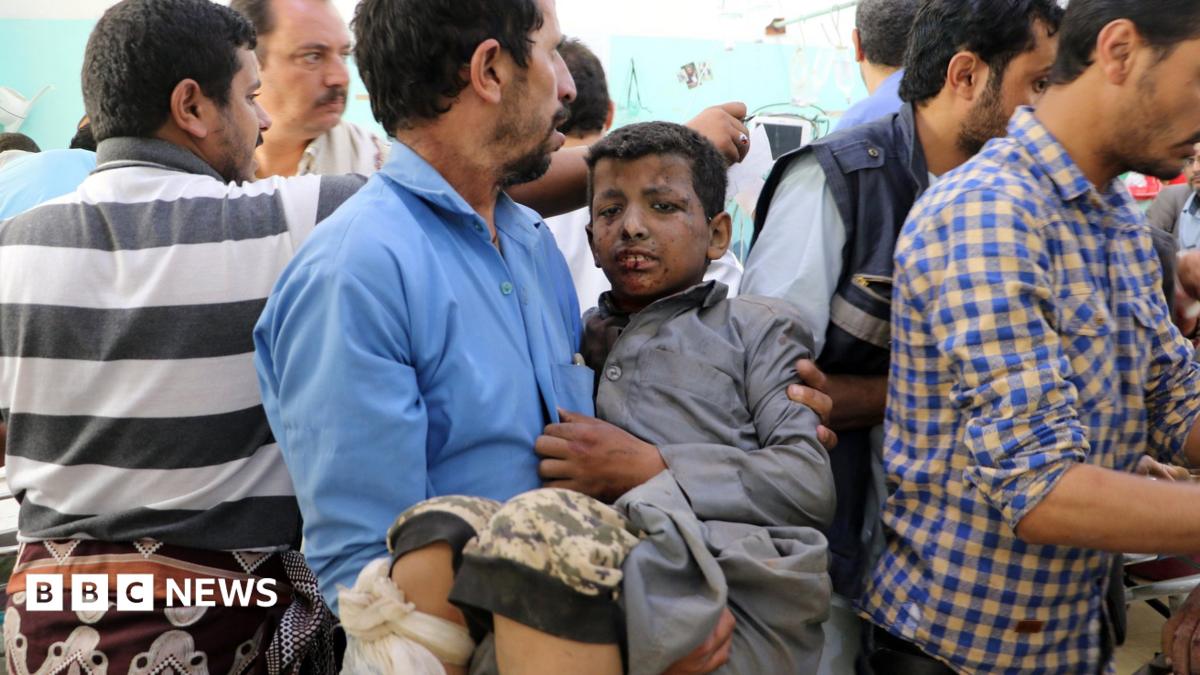
they bomb buses with school children, murdering 29 Yemeni children in seconds, and you think they care about heritage sites?

 
To view this content we will need your consent to set third party cookies.
For more detailed information, see our cookies page.


It is incredible that the terrorist Al Saud regime allows such a prominent Islam hating Zionist agent into its territory

They have stopped pretending to care about the Palestinians. It is sad.

Troll nonsense post. If she was truly anti-Muslim she would not be visiting KSA of all countries (cradle of Islam) while wearing a headscarf would she? And do you think that KSA leadership keeps track of some irrelevant online influencers? KSA has been hosting 1000's of anti-KSA leadership hardcore IRGC members and Iranian Mullah's since 1979. Even prior to 1979, apparently (probably fake news as usual), likes of Khomeini and Khamenei did their Hajj and Umrah visits.

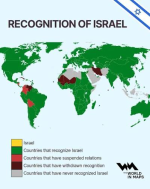
Cheap nonsense. If KSA did not care about Palestine we would have recognized Israel instead of being one of the few countries in the world never to have recognized them while KSA could gain more benefits from doing it than practically anybody else. Same KSA that hosts the regions largest Palestinian diaspora outside of Lebanon, funds and helps Palestinians and Palestine more economically than anybody else.

1784995064423.png
 
To view this content we will need your consent to set third party cookies.
For more detailed information, see our cookies page.


why was MbS such good friends with a prominent Jewish financier and sex offender? these al Sauds are very dodgy people.
 
Watch out dude, stop peddling nonsense... Pakistani are being careful and respectful towards our big minority....what Iranian proxies did in Pakistan during 80s and 90s is not something to be remembered with joy .

Bro, to be fair they're both equally to blame for spreading extremism in Pakistan, especially during those decades.

We have special relationship with both the countries, although with one it's without compromise, It's pretty obvious which one.
But they're both equally to blame when it comes to extremism, but i have to recognise Prince Salman has taken positive steps.
 
They have stopped pretending to care about the Palestinians. It is sad.

She is american. Not Israeli.

US and KSA are allies and that's a fact. KSA is oil rich and US is super power of the world. Its just geopolitics. KSA obviously wants to remain in good books of United States. Again just geopolitics.

As far as Palestine is concerned, I think we have to give KSA atleast some credit that despite US pressure, so far they have resisted to join Abraham accords and recognize Israel. Otherwise nothing was stopping KSA to join the Abraham accords like UAE and Bahrain. No one can dare challenge MBS if he makes a decision today. Otherwise I agree whole of OIC has failed Palestine multiple times and let Israelis did the genocide.
 
@_Arabia_
I know KSA is wise but just a precaution. The West document everything and later they use Amnesty reports etc that this/that committed war crimes and so on.
Aside from heritage sites, KSA forces mustn't attack any war-protected area.
That is fake news and the work of Houthis themselves. KSA has not targeted any heritage sites deliberately in Yemen because that is common Arabian/Arab heritage which is why Sana'a (old Sana'a) remains untouched. In fact KSA is the main enabler of restoration of Yemeni heritage sites and that has been the case for decades. All the funding of new archaeological excavations comes from KSA mainly and many Saudi Arabian archaeological teams have worked in Yemen to restore and help excavate heritage sites since ages ago.

As I wrote, a few RSAF squadrons could turn Sana'a into a parking lot, if that was what KSA wanted to do which is obviously not the case. It has been 11 years by now.

Compare that to how Iran and its allies were deliberately barrel bombing and carpet bombing ascent Arab cities (some of the world's oldest cities in fact with Damascus being the world's oldest capital), such as Aleppo, Homs, Damascus and others and gloating about it online.

They are pathetic trolls who are sickly obsessed about events in the Arab world even when their own country (failed largely on every front) is being carpet bombed and going to the cleaners.

I would have some respect for them if they actually joined the IRGC and Iranian army that defend their homeland but they are sitting int he very same West that attacks and sanctions their country (talk about cuck behavior) or in their small apartments within Iran itself.

they bomb buses with school children, murdering 29 Yemeni children in seconds, and you think they care about heritage sites?

Wow, genius, 1 such example during 11 years of war. The terrorist Iranian regime killed 1000's of their own civilians in January alone this very year let alone helped the Al-Assad regime kill 10.000's of innocent Syrian civilians while gloating about it in public.

Iran is the last country on earth that has the right to give any lectures along with their old ally (main In the region), Israel.

To this day your biggest accomplishment is hitting hotels and residential areas in tiny Kuwait, UAE and Bahrain and even failing severely (as usual) at that too.
 
Last edited:

Users who are viewing this thread

Country Watch Latest

Back
Top