Pakistan-Saudi Arabia mutual defense pact: News & Discussion

In 2022 alone, over 832,000 highly qualified professionals emigrated, including doctors, engineers, researchers, and IT experts, which has negatively impacted research productivity and academic institutions.

Using the military as an example shows the myopia and ignorance involved in what constitutes a nation and development.

Let’s talk to the “progression” in R&D which ironically you only see AZM as one. @JamD - I feel tired with these folks but why not because they haven’t been exposed to the black hole.

Multiple missile projects including both medium range and long range systems that never left the labs because expertise did not exist or left and basically ToT had to be done by sending engineers abroad to assemble things which they are incapable of inventing. This includes multiple failures in the entire Hatf lineup that are undeclared mostly because you did not have skilled personnel who could identify issues.

Nodong(Ghauri) repeatedly unable to function in operational capacity which required complete “origin country” personnel because you had none.

Babur failures and Tercom delays due to members of original guidance team moving abroad.

Gidhs losing multiples of UAVs over the years because one of their key aerodynamics experts moved to Bombardier and your magic “factory” had no one to replace him with

JF-17 complete failure of displays - key personnel had moved on while Chinese were not forthcoming.

First JF-17 crash because PAF no longer had the right experts and tried to bolt on systems which led to wing ripping apart in high G.

and I havent even listed all the various Pakistani published research papers on how many IT projects have failed due to lack of skilled personnel.

As for military functioning - lol
Rag tag Talibunnies massacred scores of your “functioning” military picking them off in duck shoots and you’re saying there isn’t any loss of skills.

No difference in Bhaktora mentality when they say everything is ok and this
Well, PR is something our idaray are great at. Couple that with the aura of mysteriousness that comes with classifying every single thing, the entire nation believes that SPD is the exception to the Pakistani rule. Of course, reality is that exceptions rarely exist and the laws of averages apply. So the only difference between PIA and SPD is that information about PIA is public and the bailouts that it gets are public. I mean, does anyone not wonder how every single one of our tests is successful? Like even ISPR can't believe that we believe that. But I guess some people here do.

The extent of the success of PR is people like me were on a solid track to joining this life. 99% of my friends did because of the line of work I was in. Thank God I got good advice. And I was lucky to see quite inside without actually being inside due to a lot of reasons. And damn was I in for a rude shock. Some of the things will shock people here. There are several programs that only exist because 2 or 3 people couldn't leave the country for love of country or more likely some majboori. So many things are hanging on by thin threads. Many many aren't but you'll never hear about them.
 
You didn't respond to my post. It is obvious this topic has political messaging where no matter what we say or give evidence of, the "crow will be white" when in reality, its black.

In today's world, you can't expect people to not move. Movement and immigration are common across all lower income nations. Even in the richest and hi-tech places like the USA in companies like Google, Raytheon, Lockheed Martin, it's common to lose a whole team working on a sensitive project. Do they shut down? NO! They RETRAIN from the human resources available. I can give you a dozen example and write a small book on this topic. It's not a brain drain, it's just part of the world we live in now.

Personal experience, there was a project X we were working closely with a massive US team. One of their executives left. We learned about it and said "ok". Soon enough, within 4 weeks in two batches, 18 out of 20 people left that hi-tech project, they resigned and moved directly to a competitor for a top end project on sensitive stuff. Now we were left with just 2 people. The US executives jumped in, apologized and asked for a 3 week gap so they could re-train employees. After a 4 week delay, the project was back on track. I can't write all details here but that project in PKR was worth dozens of billions rupees.

The rest of the data about the missiles and JF-17 is made up, in an effort to link it to imaginary issue of brain drain. There is no "substantive proofs" for it.

However, I will say this, if we've come across short falls and any delays in these projects, it's due to training and funding. Hopefully that won't be the case going to the future. You can't blame a "training" issue on "immigration" or people leaving.

Our education system's curriculum is extremely verbose, theory based. Our engineers read the same books they teach in other countries, but they pass their engineering exams through memorizing or "ratta". That's not a brain drain problem. That's an education system's issue to lack practicality. We need to build practical educational system that teaches practical implementation of theories throughout engineering degrees. People get to actually produce one or two REAL projects for each course they take.

The Chinese have complained a lot about this and we have had to re-train our people in multiple Polytech institutes in China. Meaning, our people had to re-take the SAME courses they had taken in their engineering degrees already. Why? Because they took the course, there was no R&D capability at the university in aviation sector specifically. So they passed the course by memorizing the book, got the job but had basic knowledge of practical implementation.

Problem here is also funding because you need money for R&D labs to be setup in Pakistan's engineering schools. So this is not a brain drain issue, this is an educational system's problem.

In US, millions of jobs were lost to Indians. People who had worked for decades even, in companies like Boeing, Disney, Honey Well, etc. They brought Indians in, made them sit next to American employees and gave them 4 weeks of training. Decades of knowledge was transferred in 4 weeks and the work continues.

How many times did we hear that a big company stopped operations because the real talent was fired in thousands and the new comers, the Indians couldn't manage it? Practical training is everything backed by funding for training.

To think that one human leaving a post will never be filled by another one is like world war II era thinking. It's like our grand parents would say, you now have a job, you'll remain here until you turn 60. It doesn't work like that in practical life. Every human is replaceable with education and training.

With our population growing so fast, we produce talent very fast. If we were a nation of 40 or 70 million people losing a few % annually, yes you could see a point. But with our 5th largest population, the brain drain isn't applicable. Sadly, you can hire basic clerks with MBA's and MS in Finance for literally 50,000-75,000 rupees. That's like $300-400 dollars a month and the talent pool is available at mass scale. So, no brain drain is applicable on Pakistan.
I have seen your posts on the forum this past month, and I normally don't engage like this. I just want to give you an unsolicited piece of advice if you are willing to take it from a brother - listen more and talk less. The world has a lot more to teach you than you have to teach it.
 
This post is by Jerusalem post. They have always written ani-Muslim narrative. Nothing new.

I opened a thread where I posted Netenyaho's speech to US law makers blaming China for trying to "besiege" Israel. Basically he says behind all the recent issues like the defense pact, GAZA becoming a global issue, is all China and Qatar. He adds a country's name in a bad context after attacking it so to make people realize there "was" something wrong. When Qatar was hosting talks to end conflict.
it is fake

Jerusalem Post/Opinion

A complex reality: Saudi-Pakistani alliance is not a hostile pact against Israel - opinion​

Israel should avoid misinterpreting the pact as a hostile alignment aimed directly at it.​

 
it is fake

Jerusalem Post/Opinion

A complex reality: Saudi-Pakistani alliance is not a hostile pact against Israel - opinion​

Israel should avoid misinterpreting the pact as a hostile alignment aimed directly at it.​


You don't have to look at a news paper and do research. Here, Netenyaho himself at 1 minute, calling out China to "besiege" Israel with Qatar.

To view this content we will need your consent to set third party cookies.
For more detailed information, see our cookies page.


Kindly try to answer my questions from the above post.
 
The biggest lesson from the Iran-Israel war is the role played by the indian population in Iran where they acted as the foot soldiers for isreal and did all the dirty work for isreal, from espionage, intelligence, sabotage etc, causing huge damage to Iran, all this when there were only a few thousand of these indians in a country.
But there are millions of indians in the Gulf states, especially Saudi Arabia, where they number around 9 million. This number has to be brought down to manageable proportions, ideally in their thousands and all those that are allowed to stay are vetted thoroughly. If this is not done, then in case of any isreali attack, the Saudis stand no chance.

We all need to understand that india has basically sold its sole to the devil ie isreal.
 
The biggest lesson from the Iran-Israel war is the role played by the indian population in Iran where they acted as the foot soldiers for isreal and did all the dirty work for isreal, from espionage, intelligence, sabotage etc, causing huge damage to Iran, all this when there were only a few thousand of these indians in a country.
But there are millions of indians in the Gulf states, especially Saudi Arabia, where they number around 9 million. This number has to be brought down to manageable proportions, ideally in their thousands and all those that are allowed to stay are vetted thoroughly. If this is not done, then in case of any isreali attack, the Saudis stand no chance.

We all need to understand that india has basically sold its sole to the devil ie isreal.

Indians pose the biggest threat to Arab nation's national security. Iran went through a massive destruction inside it's cities cause by Indian human intelligence to Israel. Same thing with Qatar and these countries don't kick out Indians, someone else could be next.

Indians earn top dollars from the USA, same through the middle east, but yet, they are loyal to India and Israel only. There is no reason why the Arab nations need to keep 9 millions of IDF soldiers. Arab countries need policy changes rapidly to kick out Indians en mass and immediately cancel ALL pending or ongoing visas similar to what Trump did to H1B. The USA has the same realization that these people milking American economy and even taking it's citizenship ONLY want control over American resources for India! That shouldn't be allowed.

Arab nations need to replace Indians with whom they are building strategic relations with and from other Muslim nations.
 
One of the best write ups so far on this

The Muslim world's answer to Nato?

By signing Saudi-Pakistan Strategic Defence and Military Agreement (SDMA), two nations not only deepened their bilateral ties but also carved out unique space in global security architecture​

By
Hina Ayra
|
September 23, 2025
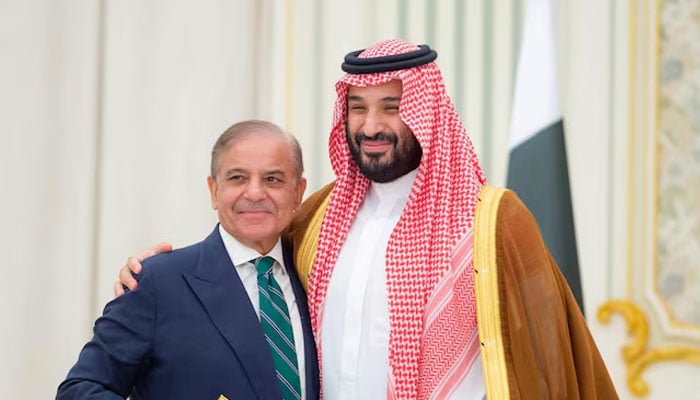
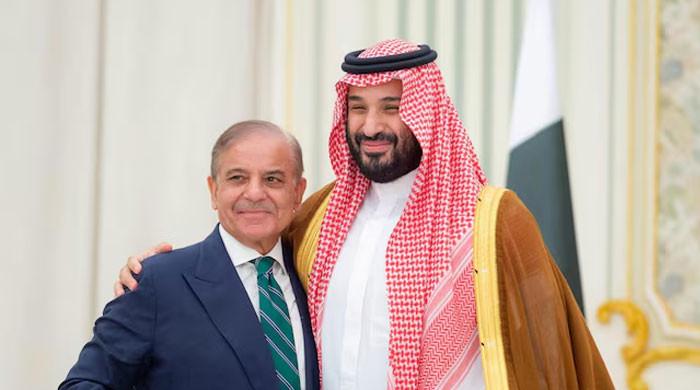
Saudi Crown Prince Mohammed bin Salman and Pakistan Prime Minister Shehbaz Sharif embrace each other on the day they sign a defence agreement, in Riyadh, Saudi Arabia, September 17, 2025. — Reuters

September 17 will be remembered as a watershed moment in Pakistan-Saudi Arabia relations, a day that introduced a new chapter of binding strategic cooperation.

With the signing of the Saudi-Pakistan Strategic Defence and Military Agreement (SDMA), both nations not only deepened their bilateral ties but also carved out a unique space in global security architecture. Analysts have compared this pact to Nato’s Article 5 commitment, where an attack on one is considered an attack on all. Yet, the SDMA goes further in its distinctiveness, aligning two asymmetric but complementary powers.


Pakistan, with its proven military muscle, nuclear capability and strategic depth, and Saudi Arabia, a leading global economic player controlling the levers of energy supply and wealth — this asymmetric alliance makes the agreement both unprecedented and consequential for the wider region.

The global landscape provides the backdrop to understand the timing and magnitude of this pact. The Middle East has been at the heart of shifting power balances in recent years, with US credibility declining amid its failure to rein in Israeli aggression against Palestinians and its chaotic exits from regional crises. Meanwhile, the East is on the rise: China’s Belt and Road Initiative (BRI) has created new corridors of influence, and the BRICS bloc has expanded into a larger economic counterweight to Western-led institutions.

In this shifting order, Pakistan and Saudi Arabia have taken the bold step of formalising their strategic convergence, offering each other a unique blend of security and economic reassurance. For Pakistan, the agreement is nothing short of a diplomatic and security breakthrough. Geographically, the pact allows Pakistan access to Saudi Arabia’s southern borders, from where Israel is barely 200 miles away. This proximity opens immense possibilities for intelligence gathering and surveillance, something that Pakistan cannot achieve conveniently from its own soil.

For decades, Pakistan’s security establishment has been wary of India’s growing defence cooperation with Israel. Joint Indian-Israeli defence production projects, particularly in drone warfare and advanced missile systems, have tilted the military balance in South Asia against Pakistan. By positioning itself closer to Israel’s neighbourhood, Pakistan gains a strategic vantage point, not just in terms of monitoring Israeli defence activities but also in planning the Saudi-Pak defence-industrial roadmap for the coming decades.

Yet, this raises difficult questions: What happens if India provokes aggression against Pakistan again? Will Saudi Arabia be ready to confront India, its long-standing economic partner and the world’s fifth-largest economy, with bilateral trade valued at over $52 billion in 2024? According to the SDMA, Riyadh is committed to supporting Pakistan in the event of military aggression. If implemented in letter and spirit, this clause gives Pakistan a powerful shield against the Indo-Israeli nexus. For Pakistan, this is strategic deterrence codified in an international agreement. For Saudi Arabia, however, it will test its balancing act, as India remains one of the largest buyers of Saudi oil and a key partner in its Vision 2030 diversification strategy.

Beyond defence, the SDMA has built-in mechanisms for logistics and joint military collaboration. This makes it a full-spectrum agreement rather than a narrow military pact. Pakistan’s military logistics expertise, honed through decades of UN peacekeeping and joint exercises, will help Saudi Arabia expand its operational readiness.

On the other hand, Pakistan benefits from Saudi Arabia's infrastructure and technological resources, which can modernise its own logistics chains. This two-way collaboration could evolve into a regional hub for defence supply and production, potentially competing with Western arms supply lines.


Another fascinating dimension is the potential financial underpinning of this alliance. Will the petrodollar system, long criticised as a Western-controlled economic tool, now be leveraged to provide Pakistan with economic relief? Pakistan has remained under the constant shadow of the International Monetary Fund (IMF), negotiating 23 bailouts since 1958, the latest being a $7 billion standby arrangement in 2023.

With Saudi Arabia committing to providing alternative financial support mechanisms, Pakistan could reduce its dependence on Western institutions. This would not only offer breathing space to Pakistan’s fragile economy, which is projected to grow at a modest 3.1% in FY2025, but also signal to the world that Riyadh is willing to rewire financial flows for strategic allies.

Equally important is the maritime dimension of this pact. Pakistan and Saudi Arabia are connected through five direct and indirect sea routes that are vital for the safe transportation of oil and goods. Saudi Arabia exports nearly 17% of global crude oil and around 60% of its oil shipments pass through waters vulnerable to piracy, regional conflict or geopolitical disruption. By cooperating with Pakistan, which maintains a capable navy with strategic depth via the Arabian Sea, Saudi Arabia gains an added layer of maritime security. For Pakistan, this provides an opening to expand its naval reach, modernise its fleet and secure its own trade routes. A joint maritime security framework could well be the next big outcome of the SDMA.

Yet, the pact cannot succeed in isolation. For Saudi Arabia, Gulf Cooperation Council (GCC) unity remains critical. No single Gulf nation can afford to break away from the collective economic and security fabric that has defined the region since the 1980s. Therefore, Riyadh will need to bring other Gulf nations on board to operationalise the full potential of the SDMA. Similarly, Pakistan will need to carry out significant domestic legislative adjustments to ensure the smooth implementation of the pact. Issues such as joint troop deployment, intelligence-sharing protocols and arms transfers require parliamentary oversight and legal clarity. Without domestic buy-in, especially from Pakistan’s fractious political class, the agreement risks remaining a paper tiger.

US President Donald Trump accelerated the unravelling of the Western-led order by challenging Nato’s cohesion, questioning traditional alliances, and adopting unilateralist policies. The unconditional support extended by Washington to Israel, even as it continues its military campaign against Palestinians, resulting in over a million deaths in Gaza since October 2023, has disillusioned much of the Muslim world.

Finally, an attack on Doha by Israel and the US has led to the boldness of signing the SDMA by Saudi Arabia, stemming from a broader collapse of the old Western-led order. For Saudi Arabia, this became a moment of reckoning. Instead of relying on Washington, Riyadh is diversifying its strategic bets, drawing closer not only to Beijing and Moscow but also cementing a defence partnership with Islamabad.

Pakistan, too, recognises that the world is no longer unipolar. China’s rise, Russia’s reassertion, BRICS+ expansion, and the emergence of new trade and energy corridors are redefining global power. In this context, the SDMA is more than just a defence pact; it is Pakistan’s ticket to be part of the new security architecture that is being built outside the shadow of Washington and Brussels. For Saudi Arabia, it is a hedge against overdependence on Western powers that have often used Riyadh as a client state rather than as a partner.

Still, challenges abound. The agreement will be tested not just by external aggression but also by internal coherence. Pakistan’s economic fragility, political instability and governance deficits may dilute its ability to uphold commitments. Saudi Arabia’s balancing act with India, Israel and the US may pull it in different directions. Yet, the very fact that two asymmetrical powers have decided to anchor their futures together shows an awareness of the shifting sands of geopolitics.

Ultimately, September 17, 2025, may be remembered not just as the day Pakistan and Saudi Arabia signed a pact, but as the day the Muslim world took a bold step toward forging its own security and economic bloc. The SDMA has the potential to become the nucleus around which other regional players can rally, much like Nato became the umbrella for Western Europe. Whether it achieves this depends on how deftly both countries navigate the complexities of their respective internal and external challenges.

But one thing is clear: the world after the SDMA will not be the same. In an era where the old order is collapsing and the new one is being written, Pakistan and Saudi Arabia have chosen to write their own chapter together. And for Islamabad, this marks a rare moment where strategy, diplomacy and economics converge into a decisive win.

 
Indians pose the biggest threat to Arab nation's national security. Iran went through a massive destruction inside it's cities cause by Indian human intelligence to Israel. Same thing with Qatar and these countries don't kick out Indians, someone else could be next.

Indians earn top dollars from the USA, same through the middle east, but yet, they are loyal to India and Israel only. There is no reason why the Arab nations need to keep 9 millions of IDF soldiers. Arab countries need policy changes rapidly to kick out Indians en mass and immediately cancel ALL pending or ongoing visas similar to what Trump did to H1B. The USA has the same realization that these people milking American economy and even taking it's citizenship ONLY want control over American resources for India! That shouldn't be allowed.

Arab nations need to replace Indians with whom they are building strategic relations with and from other Muslim nations.
yes and replace them with Pakistanis , and they should cancel their investments in India to show the world they are serious about this
 
yes but the difference is we have nukes

If any Muslim intelligence agency can take the fight to Israel it is ISI. We wont just be sitting waiting for Mossad.

If they try and hit us we can and will hit them back hard. Really is not beyond the reach and imagination of ISI to look into using Indian assets that work with Israel to target Israeli companies, scientists and tech in Israel itself. Pretty sure this message will have been discreetly made behind the scenes....
 
If any Muslim intelligence agency can take the fight to Israel it is ISI. We wont just be sitting waiting for Mossad.

If they try and hit us we can and will hit them back hard. Really is not beyond the reach and imagination of ISI to look into using Indian assets that work with Israel to target Israeli companies, scientists and tech in Israel itself. Pretty sure this message will have been discreetly made behind the scenes....
yeah and i don't even think Americans could do much . army knows how important nukes are to Pakistan
 

Users who are viewing this thread

Back
Top