Pakistan forms committee to seek settlement on stalled Iran gas pipeline
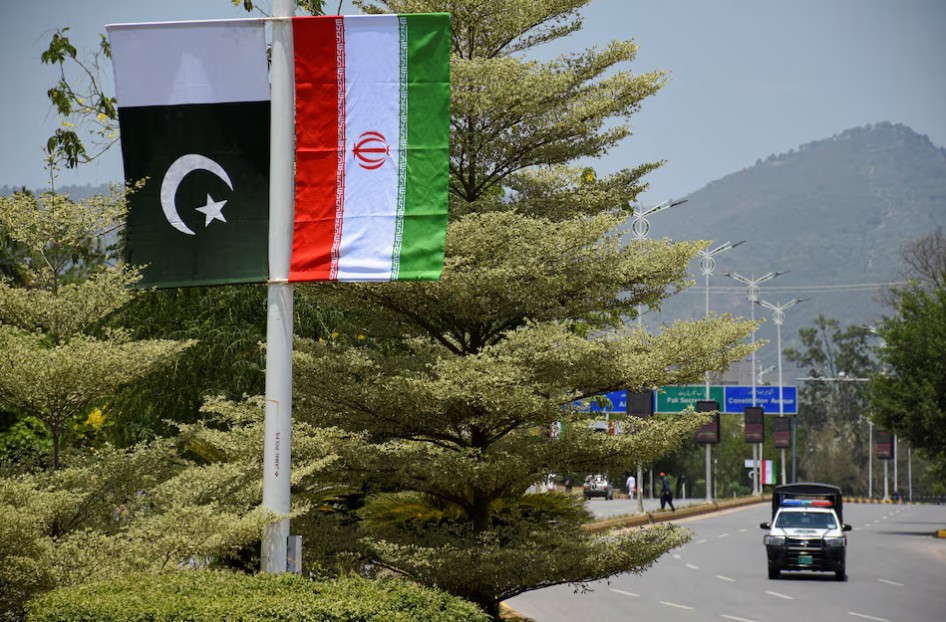
Pakistan formed a high-level committee to negotiate a settlement on the long-stalled Iran-Pakistan gas pipeline. It will review legal, financial and energy issues amid an ongoing arbitration case in Paris.
The government has constituted a high-level committee to find a mutually acceptable way forward on the long-delayed Iran-Pakistan (IP) gas pipeline project, Petroleum Minister Ali Pervaiz Malik told the Senate on Tuesday.
Responding to a calling attention notice moved by Senator Talha Mahmood, Malik said the committee was reviewing the project’s legal, financial and energy-related aspects, including the potential liability Pakistan could face through international arbitration.
He said the government was seeking a negotiated settlement with Iran to avoid further complications from litigation while also taking into account Pakistan’s future energy requirements.
“The committee is looking at the potential liability facing Pakistan, the implications of litigation and the country’s future energy requirements,” the minister said.
The project has been the subject of an international arbitration case in Paris after Iran initiated proceedings in 2024 over Pakistan’s failure to complete its portion of the pipeline.
Malik said Iran remained a “brotherly country” and that the leadership of both countries was engaged in efforts to reach an amicable settlement. He added that Iran had already made substantial progress on its side of the project, including bringing gas from the South Pars field to a major Iranian city near the Pakistani border.
The minister’s remarks come days after Pakistan asked Iran to reduce the price of gas by 50% and lower the proposed supply volume under the IP pipeline project.
The government has said different sectors in Pakistan have shown limited interest in purchasing imported gas at existing prices. Local distribution companies currently supply gas to fertiliser plants at Rs1,500, or $5.7, per million British thermal units (mmBtu), while domestic consumers are charged Rs1,000, or $3.57, per mmBtu.
Power producers, meanwhile, have said they cannot purchase imported gas at prices exceeding Rs2,000 per mmBtu, equivalent to $7.14. The government has identified this price as a commercially sustainable market benchmark for gas supplied through the IP pipeline.
Authorities have also indicated that Pakistan would proceed with the project if US President Donald Trump grants a waiver allowing transactions with Iran despite US sanctions.
The Peace Pipeline was originally conceived to supply Iranian natural gas to Pakistan and help meet the country’s growing energy requirements. Iran has completed a substantial section of the pipeline within its territory, but Pakistan did not complete its portion by the December 2014 deadline.
The project has remained stalled for more than a decade amid US sanctions on Iran, difficulties in securing financing and wider geopolitical concerns.
Separately, Malik told the Senate that Prime Minister Shehbaz Sharif had directed him to engage with stakeholders in Balochistan over the province’s gas-related concerns.
He said another high-level committee, headed by Deputy Prime Minister and Foreign Minister Ishaq Dar, was examining Balochistan’s gas issues, including technical and payment-related matters.
Pakistan formed a high-level committee to negotiate a settlement on the long-stalled Iran-Pakistan gas pipeline. It will review legal, financial and energy issues amid an ongoing arbitration case in Paris.

profit.pakistantoday.com.pk