hydrabadi_arab
Trusted Member

Pakistan’s solar boom squeezes grid demand, Chinese power projects: Bloomberg
Grid electricity consumption falls as businesses turn to cheaper solar; overdue payments to Chinese power plants exceed $1.5bnPakistan’s accelerating shift towards solar power is cutting demand for grid electricity and adding pressure on the country’s power-sector finances, including Chinese-backed coal projects, Bloomberg reported on Thursday.
Electricity consumption across Pakistan’s distribution companies was almost 12% lower in the 12 months to July 2025 compared with three years earlier, according to NEPRA data cited by the report, as households and businesses increasingly turn to distributed solar generation.
Solar accounted for about 20% of Pakistan’s electricity generation in 2025, compared with around 3% at the beginning of the decade, Bloomberg reported, citing energy think tank Ember.
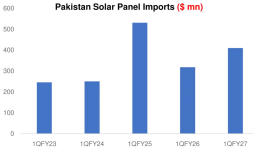
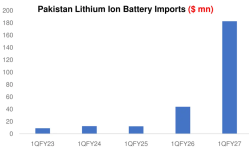
High grid tariffs, unreliable electricity supply and falling solar equipment costs have accelerated adoption. Pakistan became China’s third-largest solar export market last year, while imports of battery storage systems are also rising rapidly.
Customs data cited by Bloomberg showed Pakistan’s battery imports from China jumped nearly 150% in the first half of the year to about $392 million.
The shift is particularly visible in industrial areas. At Port Qasim, near Karachi, rooftop solar systems have spread across an industrial zone housing around 400 companies, alongside a Chinese-backed coal-fired power station.
Zaheer Allana, owner of a packaging factory in the area, said rooftop panels currently meet around one-fifth of his facility’s electricity requirements at less than one-third of the cost of grid electricity.
-
However, falling grid demand is worsening financial pressure on utilities because fixed power-sector costs have to be recovered from a shrinking pool of grid electricity sales.
The trend is also complicating the economics of Chinese-financed power projects. Overdue payments to Chinese electricity plants had exceeded $1.5 billion by August, while outstanding project debt linked to China-financed coal assets stood at $3.1 billion last year, according to figures cited by Bloomberg.
At the Port Qasim coal-fired power plant alone, overdue payments had reached nearly $300 million by June. The facility is among seven coal-fired plants delivered by China in Pakistan since 2017 at a combined cost of around $9.6 billion.
Energy Minister Awais Leghari told Bloomberg that Pakistan is seeking longer repayment periods for power-sector debt rather than reductions in the amounts owed.
“We are not expecting any haircuts in those terms and conditions,” Leghari said, adding that Islamabad had instead sought an extension of the debt repayment period.
Chinese officials have so far been reluctant to make major concessions that could impose losses on Chinese state-owned companies and banks, according to the report. Options being discussed include refinancing debt and repurposing under-utilised power plants.
The rapid expansion of distributed solar has consequently created a new challenge for Pakistan’s power sector: while consumers and businesses can reduce electricity costs by generating their own power, declining grid demand leaves utilities with fewer units over which to spread fixed capacity and infrastructure costs.